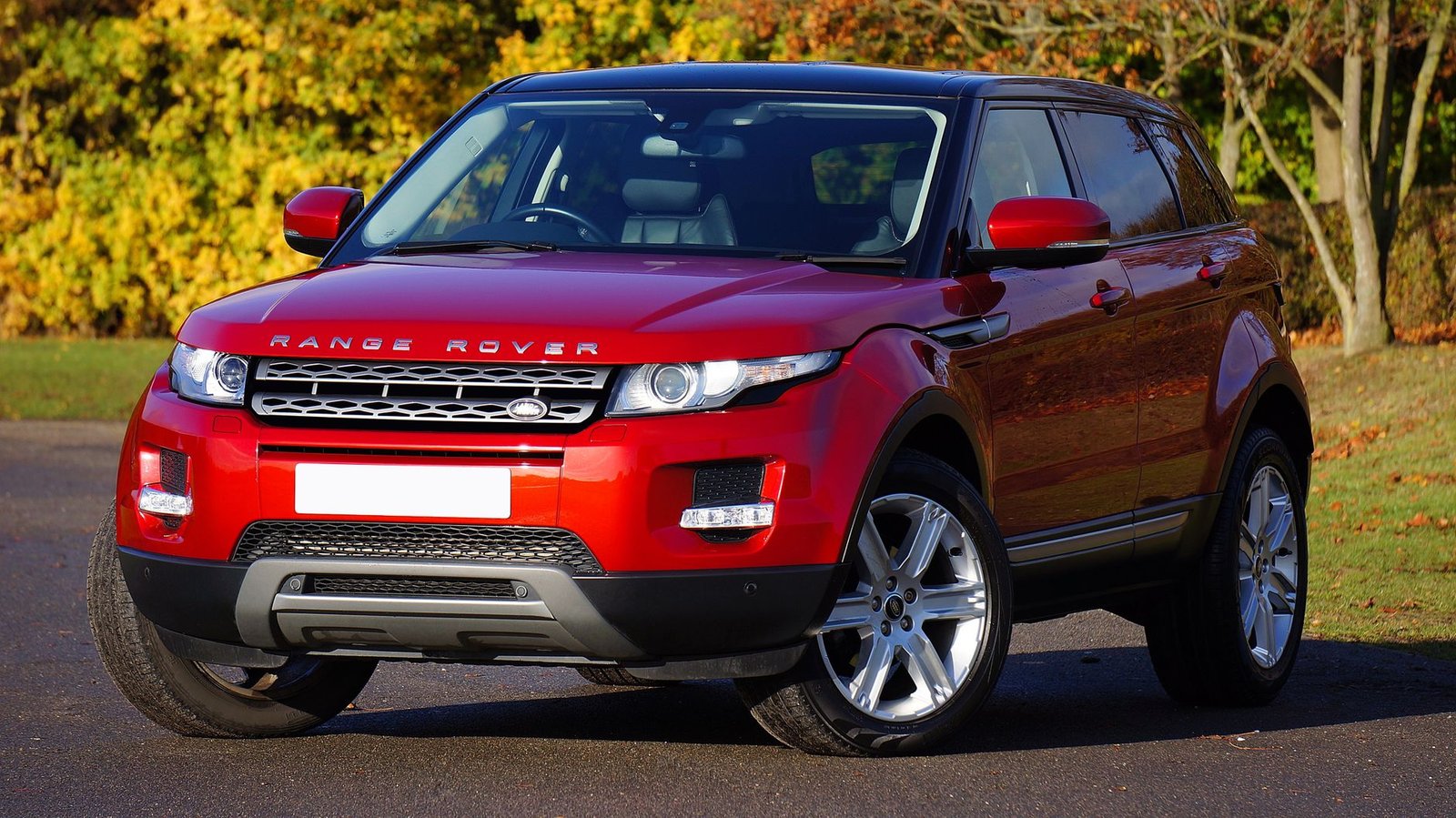
JLR plans to build an electric Range Rover Sport around a 118.5 kWh battery pack targeting 330 miles of EPA range. The company claims it will launch later this year with dual in-house motors producing either 444 or 542 horsepower. Strip away the press release language and you’re left with a $100,000+ SUV carrying roughly a quarter less range than the Lucid Gravity on slightly less battery capacity. That efficiency gap reveals the hidden cost of electrifying luxury vehicles: physics doesn’t care about your brand.
The automaker announced the electric Range Rover Sport will share its 800-volt architecture with the larger Range Rover EV, both targeting the same demographic currently considering the Lucid Gravity. On paper, the specs look competitive. In practice, JLR is spending capital to chase a market segment where the rules of engagement have already been written by manufacturers who started with electrons, not combustion.
The Platform Math Doesn’t Add Up
JLR’s approach packages battery electronics in the transmission tunnel to preserve interior space matching the gas and plug-in hybrid models. This sounds like clever engineering until you realize it’s optimizing for the wrong constraint. The company is designing an EV to fit inside an ICE vehicle’s spatial envelope instead of building from a clean sheet around battery packaging. Lucid achieves an EPA-rated 450 miles with a roughly 123 kWh pack because the Gravity started as an electric platform. Range Rover is retrofitting electricity into a body designed for a driveshaft.
The efficiency penalty shows up in the numbers. Lucid’s Gravity delivers about 3.66 miles per kWh. JLR’s projected 330 miles from 118.5 kWh works out to 2.78 miles per kWh. That’s roughly a 24% efficiency deficit, and it compounds across every charging cycle, every road trip, every cold weather commute. Mass is part of the story but not all of it. The real penalty comes largely from aerodynamics optimized for presence rather than efficiency.
Air suspension and luxury appointments add mass, but the coefficient of drag matters more at highway speed. The boxy, upright stance that signals Range Rover costs energy at 70 mph. Purpose-built EVs like the Gravity trade some of that visual authority for slipstream efficiency. You can prioritize aesthetics or range, but it’s hard to maximize both with a 120 kWh pack.
The Battery Capacity Trap
An 800-volt architecture supporting fast DC charging looks good in a specifications table. It tells you JLR understands that luxury EV buyers expect DC fast charging comparable to filling a tank. But charging speed only matters in context: a smaller usable range means buyers hit the charger sooner and more often. A 330-mile car will typically arrive at a DC fast charger with less range in reserve than a 450-mile car covering the same route, which shapes the practical charging experience.
The competitive problem emerges on road trips. Lucid’s 450-mile range means arriving at chargers with more absolute miles remaining, which translates to arriving with more usable state of charge. A Gravity driver can pull a longer first leg before stopping and spend less time charging overall across a 600-mile journey. Range Rover EV buyers will stop more frequently. Peak charging speed matters less than pack size when you’re managing charging curves across a full trip.
CATL and other suppliers now deliver cells capable of high charging rates, but that capability is gated by thermal systems, pack design, and state of charge. JLR’s in-house motor development is notable, but battery pack integration determines the real-world charging experience more than peak power specifications.
What Buyers Actually Optimize For
The $100,000+ SUV segment contains two buyer profiles with different optimization functions. One group buys Range Rover for the badge and the interior materials. They park at the country club and drive 30 miles per day. For them, 330 miles is fine because they’ll charge at home and rarely see a public fast charger. The other group wants seven seats, luxury, and genuine road trip capability. They consider the Gravity because 450 miles means fewer charging stops with kids in the back.
JLR is betting the first group is large enough to absorb the development costs of this platform. That calculation depends on customer acquisition cost and transaction prices holding up in a market where EV incentives are policy-dependent and brand loyalty is being stress-tested. The traditional Range Rover buyer accepts poor fuel economy as the cost of capability and presence. Will they accept inferior range as the cost of electrification, or will they defect to brands that optimized for electrons first?
Lucid spent more than a decade and billions in capital to build a skateboard platform that makes 450 miles possible. JLR is adapting existing architecture to accommodate batteries. One approach is capital-efficient in the short term. The other is a bet on durable advantage. The market will render its verdict through transaction volume and resale values, not press releases.
Capital Allocation in a Shrinking Window
Every dollar JLR invests in this Range Rover EV platform is a dollar not spent on a next-generation dedicated EV architecture or on improving profitability of their core ICE business. The company faces the classic incumbent’s dilemma: electrify too fast and you cannibalize profitable ICE sales; move too slowly and you cede the luxury EV segment to new entrants. The Range Rover Sport EV splits the difference by offering electric propulsion without abandoning platform commonality with gas and hybrid variants.
This strategy works if EV adoption follows a gradual S-curve where buyers slowly migrate from ICE to electric. It fails if adoption accelerates or if policy changes suddenly make ICE vehicles less viable in key markets. JLR is essentially buying an option on moderate EV growth while hedging with platform flexibility. The cost is efficiency and the risk is being stuck with a compromised platform if the market shifts faster than expected.
Tesla and Lucid don’t have this problem because they never built the ICE business that needs protecting. They can optimize purely for electric performance. Legacy manufacturers like JLR have to manage the transition, which means accepting suboptimal EV specifications to preserve capital and maintain platform leverage. The question is whether that trade-off remains viable as battery costs decline and buyers become more sophisticated about range and charging.
The Efficiency Tax Compounds
A 24% efficiency deficit isn’t just about range. It’s about cost structure. At an assumed $0.15 per kWh for home charging, the Range Rover Sport would cost roughly $2.70 to travel 50 miles, versus about $2.05 for the Gravity. Over 100,000 miles of ownership, that’s a fuel cost penalty on the order of $1,300. For buyers spending six figures on a vehicle, that’s negligible. But multiply it by fleet volume and you see how efficiency compounds into total cost of ownership.
Resale values will eventually reflect these operating cost differences. The used EV market is starting to price in efficiency as buyers learn which vehicles deliver real-world range that matches EPA estimates. A Range Rover EV that delivers well under its rated range in cold weather will trade at a discount to vehicles that hold their range under the same conditions. Depreciation curves matter more than purchase price for luxury vehicles, and efficiency increasingly drives depreciation.
JLR’s bet is that brand equity and interior quality will offset the efficiency penalty. That works until it doesn’t. Jaguar tried a version of this strategy with the I-PACE and discovered that brand loyalty has limits when buyers can get more range and better charging performance from competitors.
What This Reveals About Legacy Strategy
The Range Rover Sport EV is a case study in how legacy manufacturers approach electrification when they’re optimizing for financial efficiency rather than product efficiency. Share the platform, reuse the tooling, preserve the dealer margin structure, and deliver enough EV capability to meet regulatory requirements and capture early adopters. It’s rational capital allocation if your goal is managing decline gracefully. It’s a losing strategy if your goal is winning the luxury EV segment outright.
Tesla proved you could build a luxury EV brand from scratch. Lucid is attempting the same with even higher efficiency benchmarks. Rivian showed buyers will pay premium prices for capability and software integration. JLR is trying to defend existing market share by offering electric propulsion in a familiar package. One approach is playing offense. The other is playing defense.
The capital markets will eventually force a choice. JLR can’t simultaneously invest in next-generation dedicated EV platforms, maintain their ICE business, and fund the transition of existing architectures without straining resources. Something has to give. The Range Rover Sport EV buys time, but time isn’t a strategy when your competitors are investing billions in efficiency gains that compound every model year.