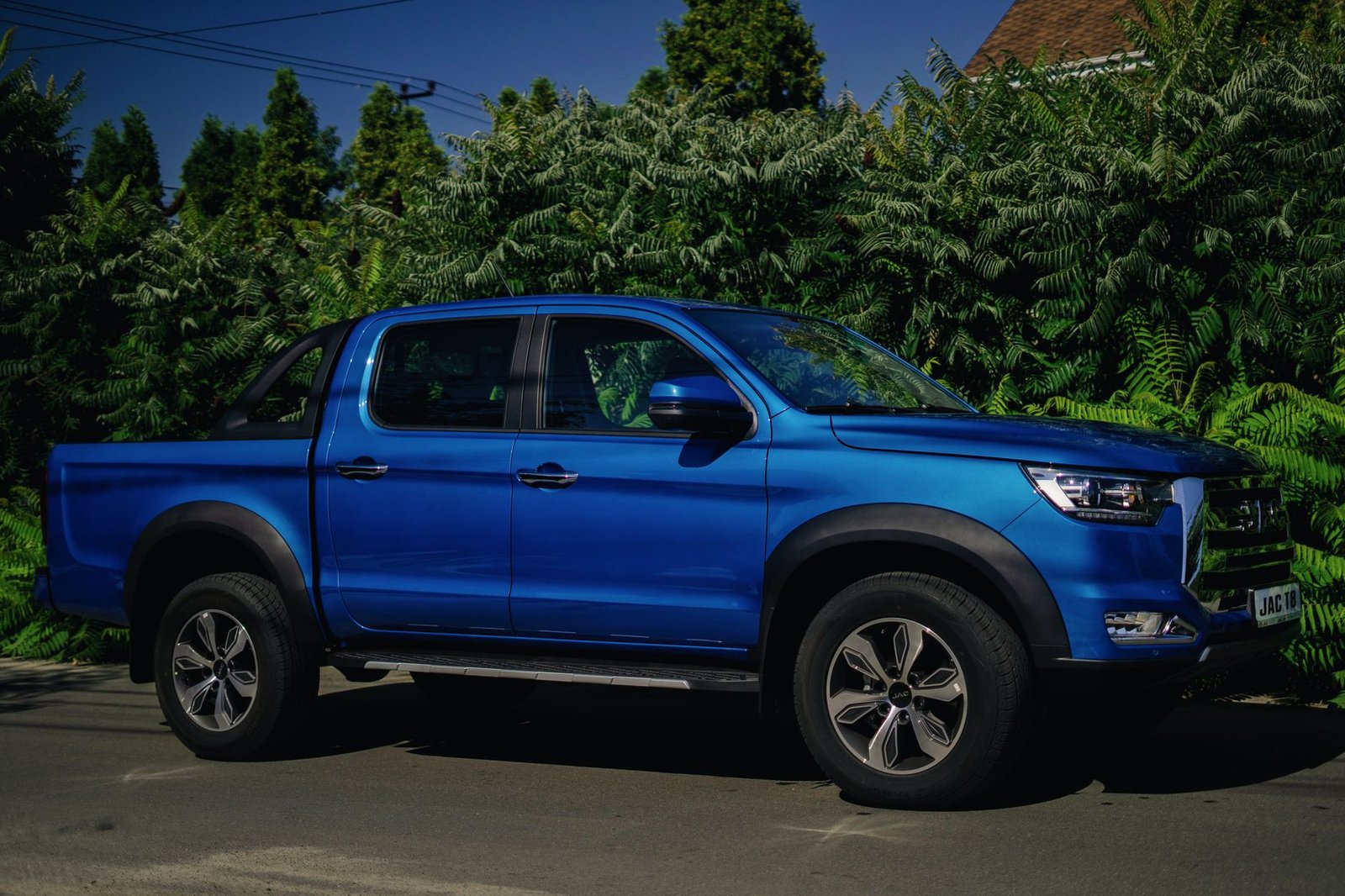
Excerpt: The BYD Shark promises 56 miles of electric range in a pickup truck body. Understanding how plug-in hybrid systems work explains why that number matters more than the headline price.
The Question Nobody Asks at Launch Events
A Chinese automaker announces a pickup truck for the UK market at around £50,000. Press releases mention “Super Hybrid” technology and 56 miles of electric range. Car blogs run the numbers against a Ford Ranger. Everyone compares prices and range figures. Nobody explains what you’re actually buying when you choose a plug-in hybrid pickup instead of a diesel or full EV.
The BYD Shark pickup uses a plug-in hybrid powertrain, not a pure battery system. That distinction matters more than the spec sheet suggests. When you plug in a PHEV like the Shark, you’re not just adding electric capability to a combustion truck. You’re buying a vehicle with two complete propulsion systems that have to work together without duplicating weight, cost, or complexity. Understanding how that works (and why it’s difficult) changes how you read every announcement about hybrid pickups.
This isn’t about whether the BYD Shark specifically succeeds or fails. It’s about what actually happens inside a plug-in hybrid drivetrain, why the engineering is harder than bolting a battery to an engine, and what those 56 miles of electric range actually mean when you’re hauling plywood or towing a trailer.
Two Drivetrains in the Space of One
A plug-in hybrid pickup contains a combustion engine (typically 1.5 to 2.0 liters), an electric motor or motors, a battery pack (roughly 20-30 kWh is common for this class), a generator, power electronics to manage both systems, and a drive unit that can route power from either source to the wheels. The whole assembly has to fit in roughly the same chassis dimensions as a conventional pickup.
The battery sits under the truck bed or along the frame rails. It’s much larger than a mild hybrid’s battery (which might be under 1 kWh) but much smaller than a full EV’s pack (which would be 80-150 kWh for comparable capability). That capacity range isn’t arbitrary. Go smaller and you don’t get enough electric-only range to matter for daily driving. Go larger and the battery adds so much weight and cost that you might as well build a full EV.
The electric motor handles acceleration from a stop. Electric motors produce peak torque instantly, which matters when you’re merging onto a motorway or pulling away from a traffic light with a loaded bed. The combustion engine runs primarily as a range extender and highway cruiser. When the battery depletes, the engine takes over, often driving a generator to keep the electric motor supplied rather than always turning the wheels directly. When you need maximum power (full throttle, steep grades, heavy towing), both systems run simultaneously.
The power-blending hardware is where this gets complex. A conventional automatic gearbox isn’t designed to blend power from two sources with completely different torque curves. Most PHEVs use either a planetary gearset (like Toyota’s Hybrid Synergy Drive), a dedicated hybrid transmission, or a dual-clutch transmission with an integrated electric motor. All add weight, cost, and potential failure points compared to a conventional powertrain.
The Weight Problem Nobody Mentions
Adding a complete electric drivetrain to a truck that already has an engine means adding roughly 200-300 kg (440-660 pounds) compared to a diesel equivalent. That weight comes from the battery pack, the electric motor and power electronics, and reinforced structural components to handle the added mass.
Pickup buyers care about payload capacity, the maximum weight you can legally carry in the bed and cabin. Many midsize trucks offer around 800-1,000 kg of payload, though PHEV pickups often fall short of this. If your hybrid system adds 250 kg of components, you’ve lost a meaningful share of your carrying capacity before you load a single toolbox. Manufacturers can compensate by strengthening the frame and suspension, but that adds more weight, which requires a larger battery to maintain range, which adds more weight. You see the problem.
BYD’s Blade Battery technology uses lithium iron phosphate (LFP) chemistry, which is heavier per unit of energy than nickel-based batteries but cheaper and more thermally stable. For a vehicle that might spend years on construction sites in summer heat, thermal stability matters more than shaving a few kilograms off the pack weight. The tradeoff is energy density: LFP stores roughly 160 Wh/kg at the cell level versus 250+ Wh/kg for the best nickel chemistries. To get 56 miles of range, BYD likely installed a pack in the 20-30 kWh range, which at pack level weighs on the order of 150-250 kg.
This is why plug-in hybrid pickups tend to cluster around 40-60 miles of electric range. Go much higher and the weight penalty eats into the vehicle’s utility as a truck. Stay around 50 miles and you cover most daily driving without pushing the payload limit that makes buyers choose a diesel instead.
What 56 Miles Actually Gets You
The number “56 miles” appears in marketing as pure-electric range, measured under WLTP testing. That’s roughly the distance the truck can drive on electricity before the combustion engine is needed, under relatively gentle conditions with limited load. Real-world range will typically be lower.
Fifty-six miles comfortably covers the average daily commute in the UK (very roughly 20 miles each way). If you plug in nightly, you can run on electricity for routine trips: job site to supplier, home to the hardware store, daily work routes. The combustion engine becomes an occasional feature, not a daily necessity. Your effective fuel consumption drops dramatically for local driving, assuming you actually plug in.
The “assuming you plug in” part is critical. Studies of PHEV owners show that many charge far less often than the test assumptions require, treating them as conventional hybrids with a heavy, expensive battery they never fully use. The electric range only matters if your daily routine includes regular access to charging. Park on the street with no home charger? That 56-mile capability becomes largely irrelevant. You’re driving a heavier, more expensive truck with limited benefit over a conventional hybrid.
Towing sharply reduces electric range. A heavy trailer can roughly double energy consumption. Your 56-mile range can fall to 25-30 miles or less before the engine kicks in more aggressively. For weekend camping trips, that might be fine. For contractors who tow equipment daily, the electric range becomes more of a marketing feature than a practical capability.
The Price Comparison That Misses the Point
Coverage focuses on the roughly £50,000 price against diesel competitors. A Ford Ranger diesel starts around £35,000 before options. The premium buys you the hybrid system, larger battery, and electric drivetrain. Whether that’s worth it depends heavily on your usage pattern, not abstract “value” calculations.
If you drive around 30 miles daily, charge at home, and rarely tow, the electric operation can save a meaningful amount monthly in fuel costs (UK petrol has been around £1.40-£1.50 per liter, with home electricity commonly around £0.25-£0.30 per kWh). At typical savings, recovering the price premium in pure fuel terms takes several years, assuming no battery degradation or increased maintenance costs. That’s often longer than commercial buyers keep a truck.
But this math ignores tax incentives, benefit-in-kind rates for company vehicles, and congestion charges. In London, the Congestion Charge is currently £15 per day, and cleaner vehicles that previously enjoyed a discount are losing that exemption over time, so the exact benefit depends on the rules in force. For a business operating in the charging zone every working day, the charge adds up to thousands of pounds annually, which can change the payback calculation. The BYD Shark pickup makes economic sense for specific use cases, not as a universal diesel replacement.
Where the Technology Falls Short
Most coverage presents plug-in hybrids as a bridge technology, combining EV benefits with combustion backup. That framing obscures their actual limitation: they’re optimized for nothing. Pure EVs offer stronger sustained electric performance, lower maintenance, and simpler drivetrains. Diesels offer better payload, towing capacity, and lower purchase prices. PHEVs sit in the middle, compromising on most metrics to achieve versatility.
The versatility matters if your needs genuinely vary (daily urban driving plus occasional long-distance trips), but many truck buyers have predictable patterns. You either tow regularly or you don’t. You either drive long distances frequently or you don’t. For buyers with consistent needs, a more specialized tool (pure diesel or pure EV) often outperforms the compromise solution.
Battery degradation can be a relatively larger concern for PHEVs because the modest pack cycles more often per mile of electric driving. A pure EV with a large pack cycles slowly; a small PHEV pack cycles fully every 50-odd miles of electric driving, so it can accumulate more full-equivalent cycles over the same distance. More cycles tend to mean faster capacity loss, so your usable electric range shrinks over the years. The combustion backup masks this degradation (the truck still works), but the economic value of the hybrid system can erode faster than buyers expect. LFP chemistry does help here, as it generally tolerates more cycles than nickel-based cells.
What Actually Signals Progress
Watch charging behavior data, not announced range figures. If manufacturers start publishing statistics on how often owners actually plug in their PHEVs, that indicates confidence in real-world usage. Silence on this metric suggests the numbers aren’t favorable.
Watch for electric range under load testing. Marketing materials show unloaded range. Engineering progress shows up when manufacturers publish range figures with meaningful payload or while towing. That indicates they’ve addressed the weight and efficiency problems that currently make PHEV pickups marginal for actual truck work.
Watch payload specifications carefully. If the BYD Shark pickup maintains a strong payload despite the hybrid system, that suggests genuine engineering progress in lightweight components. If payload drops well below its diesel rivals, the hybrid system has compromised the vehicle’s core utility as a truck, regardless of how impressive the electric range sounds.