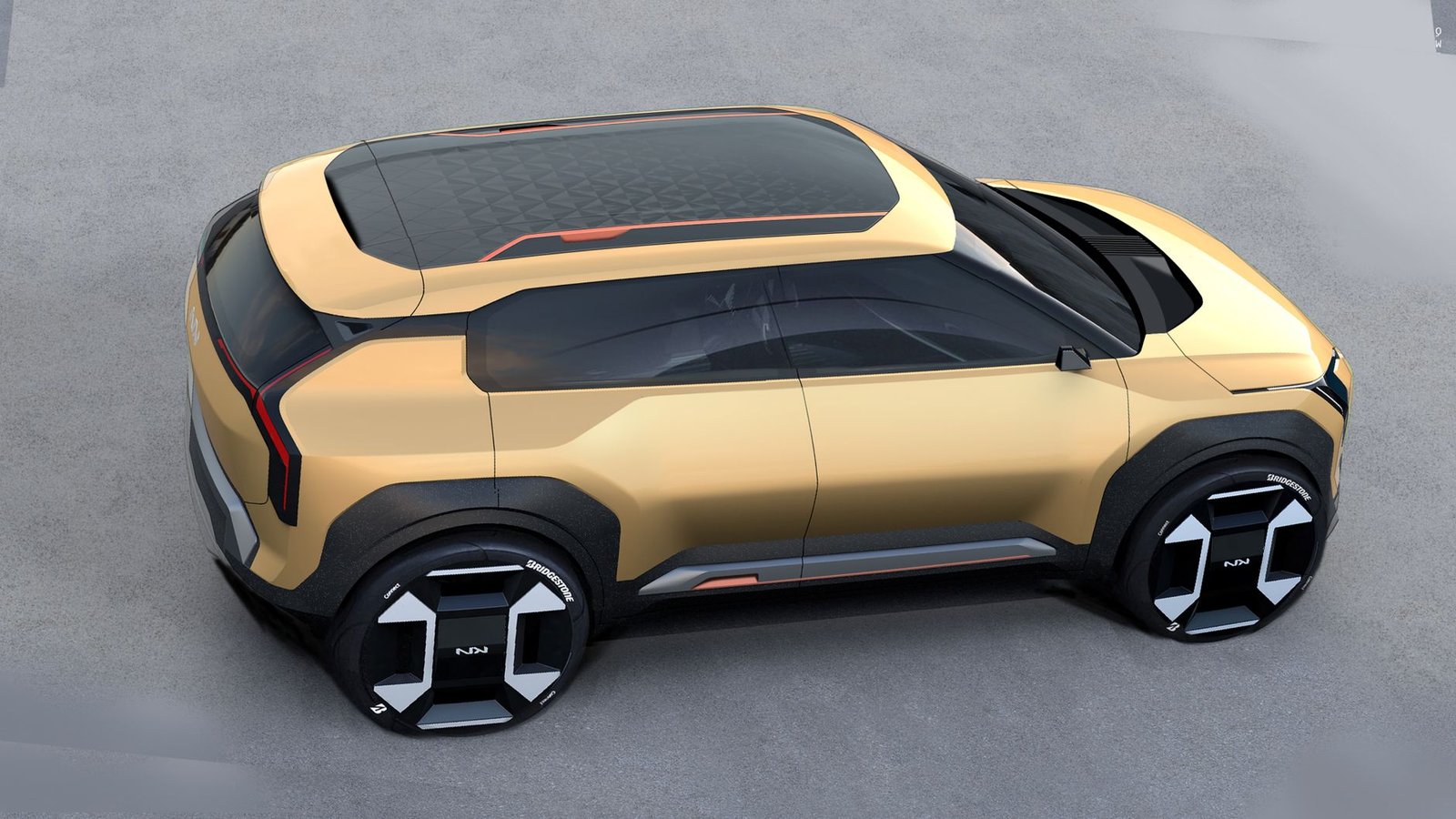
Xiaomi announced the SkyNomad N90 this week, a three-row extended-range electric vehicle designed to compete with vehicles like the Nio ES8 and Li Auto L9. The company’s CEO, Lei Jun, described it as a vehicle that can “adapt freely, the way you want to,” with teaser images showing rotating front seats and flexible interior configurations. What Lei Jun didn’t mention: the physics of building large vehicles with premium interiors means Xiaomi is entering one of the most capital-intensive, thinnest-margin segments of the EV market at a difficult moment.
The automotive industry has spent the past several years learning an expensive lesson about premium three-row vehicles. Build costs scale with mass and complexity. A three-row crossover requires substantially more material than a sedan, yet buyers expect pricing that’s only modestly higher. That math works only if you’re amortizing development costs across large volume. Xiaomi sold its SU7 sedan on the strength of aggressive pricing and rapid iteration. The SkyNomad N90 represents a bet that the same playbook scales upward. The unit economics suggest that’s a harder proposition.
What Xiaomi Actually Built
The N90 measures approximately 208 inches in length, making it a few inches longer than a Kia EV9. According to InsideEVs, which reviewed China’s MIIT regulatory filings, the vehicle uses a 1.5-liter turbocharged gas engine paired with electric motors in an extended-range configuration. This design, similar to systems from Li Auto and Aito, uses the gasoline engine primarily as a generator to charge the battery rather than directly powering the wheels.
Xiaomi hasn’t confirmed final specifications for the electric motors, gas engine output, or battery capacity. The company positioned the vehicle as its first entry in the new SkyNomad sub-brand, separate from its existing SU7 and YU7 models. The interior layout emphasizes flexibility, with front seats that rotate and a modular rear cargo area shown in teaser animations.
The competitive set tells you everything about the capital requirements. The Nio ES8, Aito M9, and Li Auto L9 all occupy the same premium three-row segment. Each manufacturer has spent years refining these platforms, iterating on battery chemistry, thermal management, and structural efficiency. Xiaomi enters this fight with no production-proven large-vehicle architecture and a supply chain that hasn’t yet been tested for components at this scale.
The Hidden Cost of Size
Large vehicles expose every inefficiency in your cost structure. A three-row crossover like the Xiaomi SkyNomad N90 requires structural rigidity that grows faster than length alone would suggest. Adding a foot of length doesn’t increase material costs linearly. Torsional stiffness demands thicker stamping dies, heavier gauge steel, and more complex body-in-white engineering. Each of these changes ripples through the supply chain.
Extended-range systems compound the problem. You’re paying for two powertrains: an electric drive unit with battery thermal management, plus an internal combustion engine with all its supporting systems. The 1.5-liter turbo mentioned in the MIIT filing needs its own cooling loop, exhaust treatment, and NVH isolation. That’s duplicate engineering across disciplines, duplicate testing cycles, and duplicate failure modes.
Battery packaging in three-row vehicles creates structural compromises that sedans avoid. The SU7 can optimize its floor pan around a single rectangular pack. The N90 must accommodate third-row seating while maintaining crash protection for a battery that runs much of the length of the vehicle. This can force manufacturers toward more complex pack geometries or additional interconnects, which tends to raise cost per kilowatt-hour relative to the raw cell price.
Thermal management becomes non-negotiable at this mass. A vehicle of roughly 2.5 tons with dual motors and a range-extending engine generates heat loads that require active cooling even in moderate climates. That means dedicated coolant pumps, larger radiators, and control logic sophisticated enough to manage battery temperature safely under load. Compare that to Tesla’s approach with the Model Y, where the company spent years refining a heat pump system to reduce parasitic losses. Xiaomi is attempting this level of integration with a clean-sheet architecture on a compressed timeline.
What the Market Actually Rewards
Chinese EV buyers in the premium three-row segment tend to prioritize interior space and feature density over driving dynamics. This creates a bind for new entrants. You must match incumbents on soft-touch materials, rear entertainment systems, and configurable seating while undercutting them on price to gain share. Li Auto built its business on this formula, accepting slim margins in exchange for volume growth.
The rotating front seats and flexible cargo area that Lei Jun highlighted suggest Xiaomi understands the feature arms race. But these elements add cost without adding defensible differentiation. A rotating seat mechanism requires reinforced floor mounts, additional wiring harnesses for power and data, and safety interlocks to prevent rotation while driving. You’re adding complexity that increases warranty exposure on a vehicle with no field data to predict failure rates.
Buyers in this segment show real price sensitivity given the absolute amounts involved. A vehicle competing with the Nio ES8 needs to price within striking distance of comparable models or offer materially different technology. Xiaomi has neither the brand equity in large vehicles nor a clear battery cost advantage to justify premium pricing. That leaves volume-based pricing, which works only if you can achieve scale quickly enough to outrun the learning-curve costs.
Where Capital Goes to Die
Building an extended-range three-row crossover requires tooling investments that dwarf sedan production. Stamping presses and their associated die sets for large body panels run into the tens of millions of dollars per line. Assembly line modifications to handle increased mass and longer wheelbases require specialized lifting equipment and revised ergonomics for workers. These are largely sunk costs that don’t scale down if initial sales disappoint.
The smarter capital allocation would have been iterating on the SU7 platform. Xiaomi could have introduced a wagon variant or stretched-wheelbase version, amortizing existing tooling while learning about customer preferences in adjacent segments. Instead, the company is betting that brand momentum from the SU7 sedan transfers to a completely different vehicle category with different buyer expectations.
Extended-range architecture makes this gamble more expensive. If the market shifts toward pure battery-electric vehicles (as it has in segments where charging infrastructure is mature), Xiaomi owns tooling for an ICE engine that risks becoming stranded capital. If range anxiety persists and extended-range proves durable, the company still needs to refine an architecture against competitors who have been iterating for years. Neither scenario clearly rewards early, aggressive investment.
The timing amplifies the risk. China’s EV market has shifted from growth-at-any-cost toward sustainable unit economics, amid a brutal price war that has pressured margins across the industry. Manufacturers that expanded capacity aggressively in 2022-2023 are now contending with excess capacity. Xiaomi largely avoided this trap with the SU7 by focusing on a single model with clear demand signals. The SkyNomad N90 represents a return to portfolio expansion before proving the business model at scale.
The Allocation Question
Capital discipline means asking whether each investment moves you toward durable competitive advantage. For Xiaomi, the advantage in EVs comes from vertical integration in software, battery management systems, and the consumer electronics ecosystem. The SU7 showcased this integration: smartphone connectivity, over-the-air updates, and user interface consistency across devices.
None of these advantages scale strongly with vehicle size. The value proposition for a three-row family hauler prioritizes interior volume, ride quality, and total cost of ownership. Software integration matters, but it’s closer to table stakes than differentiation here. Buyers choosing between the Xiaomi SkyNomad N90 and a Li Auto L9 will focus on third-row legroom and real-world range, not smartphone mirroring latency.
A better capital deployment would have been deepening the moat around the SU7. Invest in next-generation battery chemistry that reduces cost per mile. Build out charging partnerships or infrastructure in urban corridors where SU7 owners concentrate. Use the cash flow from sedan sales to fund R&D that applies across the portfolio, not tooling for a single high-risk model.
What This Signals
The Xiaomi SkyNomad N90 announcement suggests the company believes brand momentum is transferable across segments without intermediate steps. Something similar worked for Tesla, which leveraged Model S credibility into Model X and Model 3 sales. But Tesla built that credibility over the better part of a decade of production, not eighteen months. Xiaomi is compressing the timeline, assuming that buyers extrapolate from sedan quality to crossover execution.
The market will test this assumption quickly. If the N90 reaches volume production on schedule and delivers the interior flexibility shown in teasers, Xiaomi proves it can scale complex vehicles quickly. If development slips or early units suffer quality issues, the capital tied up in tooling becomes a drag on the overall business.
The lesson isn’t that large EVs are uneconomical. It’s that entering capital-intensive segments requires either massive scale or differentiated technology that justifies premium pricing. Xiaomi has neither locked in for the SkyNomad N90 yet. The company is betting that execution speed creates the scale needed to make the economics work. That’s possible, but it’s not disciplined capital allocation. It’s a growth gamble dressed up as product strategy.