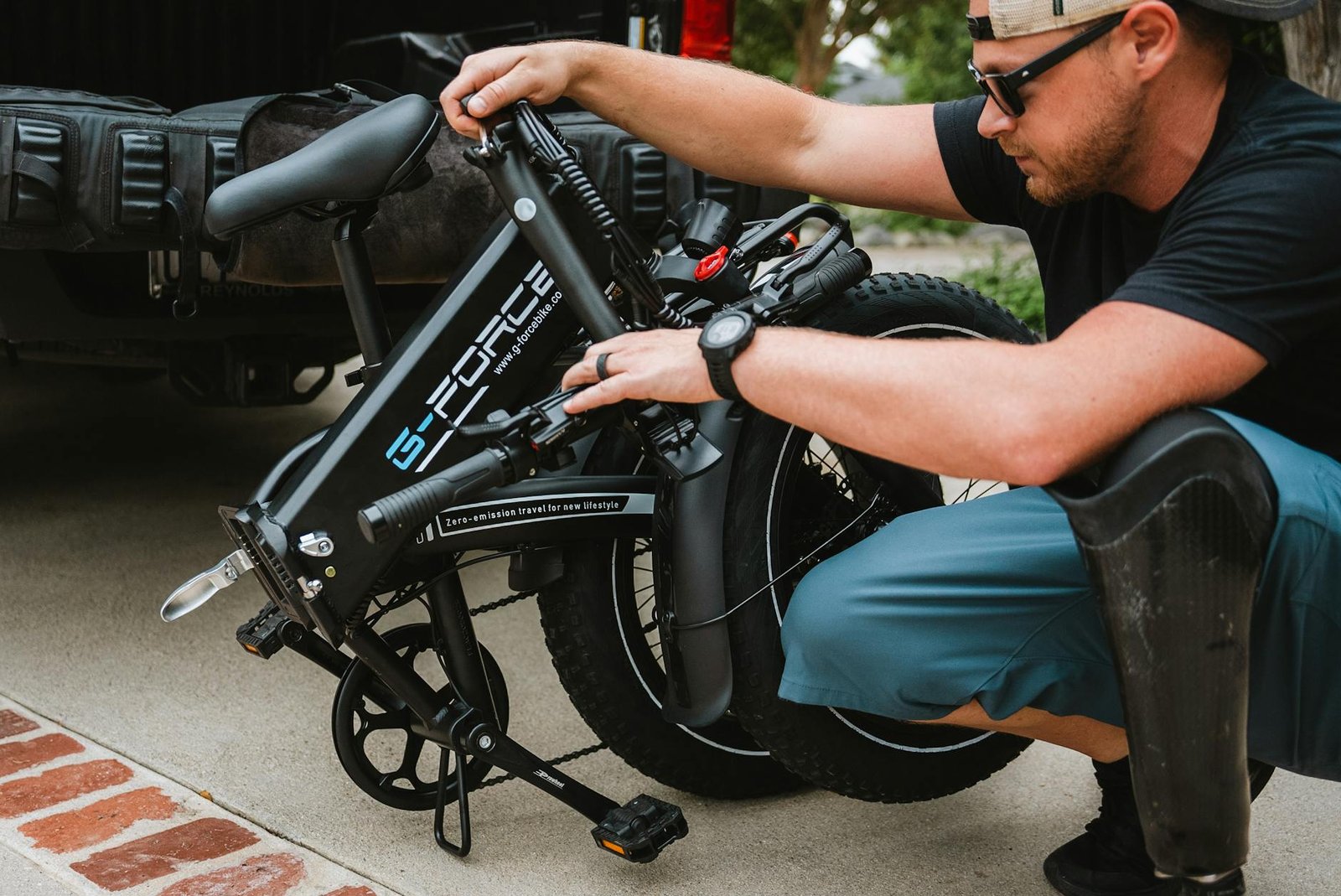
A 32-year-old software engineer stands in his apartment elevator, wrestling a 65-pound folding electric bike through the door while his neighbor holds the button. He bought it six months ago after reading spec sheets that promised “compact portability.” The bike folds, technically. He can lift it, technically. But he hasn’t actually folded it since the second week. It lives in his living room now, taking up the same floor space as a regular bike, because the 90-second folding ritual and the weight make the daily elevator trip more hassle than it’s worth. This is the gap between how folding electric bikes are sold and how they’re actually used.
The folding e-bike market splits into two categories that manufacturers rarely acknowledge: bikes designed to fold occasionally for storage, and bikes designed to fold multiple times per day for multimodal commuting. Most buyers don’t realize they’re choosing between these paradigms until after purchase. The spec sheets list the same metrics for both: folded dimensions, weight, motor power, range. A bike optimized for weekly apartment storage makes different tradeoffs than one built for train commuters who fold twice daily. The friction cost of those tradeoffs doesn’t appear in any product listing.
The Numbers Buyers Obsess Over
Walk into any discussion of folding electric bikes and you’ll hear the same stats repeated. Weight: 35 to 70 pounds. Folded size: usually around 30 by 30 by 15 inches, give or take. Wheel size: 16 or 20 inches. Motor: 250 to 750 watts. Range: 15 to 45 miles. Price: $600 to $3,500. These numbers dominate buyer research because they’re easy to compare across models.
The weight figure gets particular attention. Buyers search for the lightest option they can afford, assuming lighter always means more portable. A 48-pound bike seems obviously better than a 62-pound bike if both claim to be portable. Speed of the folding mechanism becomes another competitive metric: a 15-second fold beats a 45-second fold. Wheel size becomes a proxy for ride quality, with 20-inch wheels marketed as the sweet spot between portability and stability.
Battery capacity and range estimates follow the same pattern as regular e-bikes: manufacturers quote best-case scenarios under ideal conditions. A claimed 40-mile range typically delivers 25 miles of real-world mixed use. Motor wattage becomes a speed and hill-climbing proxy, though actual performance depends more on torque, gearing, and controller programming than raw power numbers.
What the Purchase Decision Actually Requires
The spec sheet can’t tell you whether you’ll actually fold the bike. Three questions predict usage patterns better than any technical specification: How many physical barriers separate your bike from where you ride it? How much time and effort are you willing to spend on those barriers per trip? What happens if you don’t fold?
A fourth-floor walkup apartment dweller faces different math than someone with a ground-floor garage. The apartment dweller might need to carry the bike through a building door, up four flights of stairs, down a hallway, and into a living space where floor area costs money. That’s at least four physical transitions. A bike that folds in 15 seconds but weighs 65 pounds creates substantial lifting effort across those transitions. The weight matters more than the fold time. A rider storing the bike in a ground-floor garage might fold it once per week to reclaim car space. For them, a 90-second fold on a 70-pound bike is manageable. A more robust frame that doesn’t develop fold-point looseness over time becomes the priority.
Train commuters represent the extreme use case: two folds per day, five days per week, 520 folds per year. At that frequency, even small friction adds up. A fold mechanism that requires removing the battery first becomes 1,040 extra steps per year. A bike that’s awkward to wheel when folded means struggling through train aisles twice daily. These riders need genuinely portable machines: lighter weight, faster folds, better wheeling characteristics when folded. They’re also the smallest buyer segment, but manufacturers market all folding electric bikes as if this extreme portability is the universal need.
The penalty for not folding varies wildly. An apartment dweller who stops folding loses living space but keeps riding. A train commuter who stops folding can’t take the bike on transit at all, defeating the entire purchase rationale. A car camper who bought a folding e-bike to fit in an SUV cargo area can probably fit a regular bike with the front wheel removed. Most buyers don’t map their actual penalty structure before purchase.
The Two Bikes the Market Actually Offers
Despite dozens of models, the folding electric bike market really sells two archetypes. The storage folder prioritizes ride quality and range over portability. It weighs 55 to 70 pounds, folds in 30 to 90 seconds, uses 20-inch wheels, and costs $1,200 to $3,000. The frame is robust enough to handle daily riding without developing play in the fold points. The battery is large, delivering genuine 30 to 40-mile range. Riding position resembles a regular bike. This category includes most mid-range folding e-bikes from established brands.
The commuter folder optimizes for fold frequency and true portability. Weight drops to 35 to 50 pounds. Folding takes 10 to 20 seconds. Wheels shrink to 16 inches in many models. Price ranges from $800 to $2,200. The frame makes more compromises: fold mechanisms wear faster, ride quality on rough pavement suffers, battery capacity is smaller (15 to 25-mile real range). But a rider can genuinely fold it twice daily without hating life. The bike wheels reasonably well when folded and fits through narrow spaces. Some models use smaller motors (250 to 500 watts) to save weight, accepting lower hill-climbing performance.
Both categories are marketed with the same portability promises. A 68-pound storage folder will be photographed being carried onto a train by a fit 28-year-old for the product listing. The copy emphasizes the folded dimensions. Buyers assume if it’s marketed as portable, it must be portable for their use case. Then they discover that portable for occasional car trunk storage and portable for daily train commuting are completely different requirements.
The Variable That Should Drive Your Choice
Ignore the specs for a moment. Count your folds per month. If the answer is four or fewer, you’re buying storage compactness. Get the heavier bike with better range and ride quality. The fold time is irrelevant. The weight penalty spread across four folds per month is minimal. You’re optimizing for a bike that doesn’t feel like a compromise when you’re actually riding it.
Folding 40-plus times per month puts you in a different market. Weight becomes the dominant variable. Every pound costs you effort 40 times over. A 10-pound difference is 400 pounds of cumulative lifting per month. Fold time compounds because 30 extra seconds per fold is 20 minutes of friction monthly. You need a bike engineered for repeated folding: better latches, simpler mechanisms, genuine one-person portability. Accept the range and ride quality compromises, because the alternative is you stop using the bike altogether.
Between four and 40 folds monthly, the decision depends on fold tolerance and physical capability. A strong rider with high friction tolerance can make a storage folder work for moderate-frequency commuting. Someone with lower friction tolerance or physical limitations needs the lighter option even at 10 folds per month. Most buyers in this middle range would be better served by a regular e-bike and solving the storage problem differently: ground-floor lockup, building bike room negotiation, or accepting the living space cost.
What Most Buyers Should Actually Do
For at least 60 percent of folding electric bike buyers, a regular e-bike with the front wheel quick-released would solve the storage problem with less compromise. A regular e-bike with a 26-inch or 27.5-inch front wheel removed occupies similar floor space to most folded e-bikes. It’s easier to move around because the wheels still roll. It rides better because the frame doesn’t have fold points. It costs less because you’re not paying for folding mechanisms. The only thing you lose is the ability to carry it folded, which most storage-focused buyers never actually do.
Genuine daily-fold commuters need the lightest option they can afford. Weight trumps every other specification. A 40-pound bike with 20-mile range and modest hill climbing beats a 62-pound bike with 45-mile range and powerful motor. If the light bike doesn’t have enough range or power for your commute, a folding e-bike isn’t the right solution. You need a regular e-bike and a different mobility strategy.
The occasional folder who actually needs folding capability (for car camping, air travel, or RV use) should buy based on ride quality and durability rather than fold speed or weight. You’re going to ride this bike far more than you fold it. A robust storage folder that’s pleasant to ride for 30 miles beats a compromised commuter folder that folds quickly but feels unstable at speed. Test ride with attention to how the bike handles, not how impressively it folds.
**Excerpt:** Most folding electric bike buyers choose based on specs that don’t predict whether they’ll actually fold the bike. The decision should start with counting folds per month, not comparing weight figures.