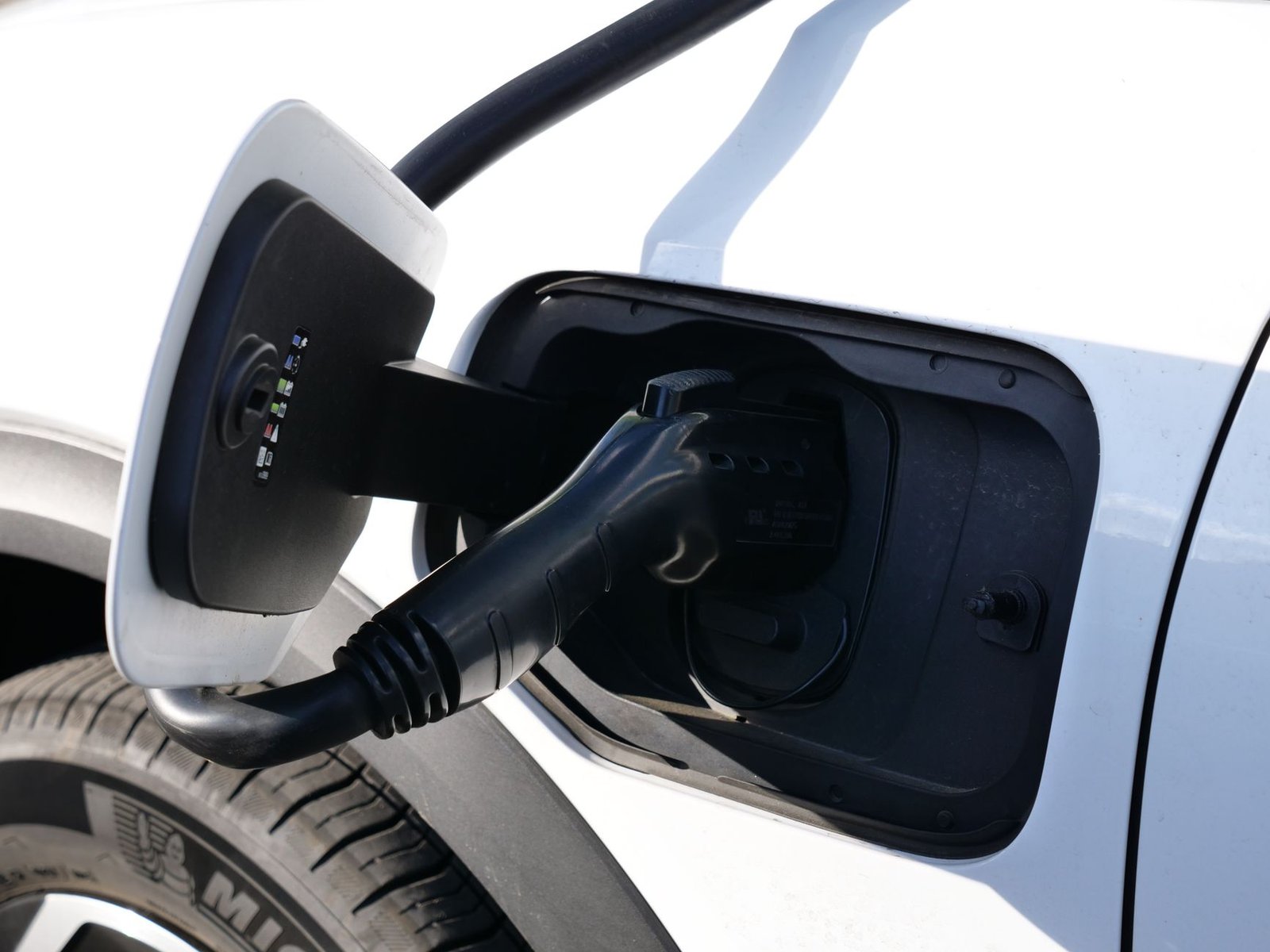
You’re standing at a 350-kilowatt charger in Nebraska. Your Volvo EX90 is plugged in. The screen says “charging,” but your phone app says you’re getting 47 kilowatts. The station operator is Electrify America. Your credit card is on file. Plug & Charge is enabled. Everything should work seamlessly. Instead, you’re watching other EVs come and go while your $80,000 SUV trickles electrons like it’s sipping through a cocktail straw. This is the gap between what automakers promise about fast charging and what the electrical grid can actually deliver when you need it.
Volvo recently announced that both the EX90 and upcoming EX60 will support Plug & Charge across over 35,000 charging stations in the United States, including Tesla Superchargers and the nascent Ionna network. The EX60, built on Volvo’s 800-volt SPA3 platform, claims a maximum charging rate of 370 kilowatts and can theoretically add 173 miles of range in 10 minutes at a suitably powerful charger. The authentication friction is gone. You plug in, the car and charger shake hands digitally, billing happens automatically. No app. No card tap. Just electrons.
But that convenience masks a deeper infrastructure constraint that no amount of software integration can solve: the gap between nameplate charging capacity and what stations actually deliver under real-world grid conditions.
The Numbers Everyone Repeats
When manufacturers talk about Volvo EX90 charging speeds, they cite peak power figures. The EX60’s 370-kilowatt maximum. The 10-to-80 percent charge time of roughly 20 minutes. These numbers assume near-ideal conditions: a well-maintained charging station with fresh cables, moderate ambient temperature, a battery preconditioned to the right temperature, and most critically, a charging cabinet that isn’t sharing power with several other vehicles actively charging.
Industry reporting frames Plug & Charge as solving the “payment friction” problem. And it does. The feature works largely as advertised when it comes to billing and authentication. What it doesn’t solve, and what automakers carefully avoid discussing, is power delivery consistency. Many fast chargers are deployed in cabinets that pair two dispensers, so a charger rated for full power when one vehicle is connected can split that power when a second car plugs into the adjacent stall. During peak afternoon demand, when the local grid is already stressed, dynamic load management can cut per-vehicle rates further still.
The EX90 currently uses a CCS1 charging port and reaches the Supercharger network via a NACS adapter. The EX60 is expected to ship with a native NACS port, giving it direct access to Tesla’s Supercharger network without an adapter. This expands the nominal number of compatible fast-charging locations, but it doesn’t change the underlying constraint: electrons have to come from somewhere, and the grid feeding these stations wasn’t built for simultaneous peak-power draws at every parking space.
The Constraint Automakers Don’t Market
Fast-charging infrastructure expansion has, in many regions, run ahead of grid capacity upgrades. Charging networks like Electrify America, EVgo, and even Tesla have installed high-power cabinets in visible locations near highways and urban centers. But the electrical service feeding these sites often hasn’t been upgraded to match. A charging plaza with eight 350-kilowatt stalls might have a grid interconnection that supports well under the roughly 2.8 megawatts those stalls could theoretically draw at once. That’s fine if two cars are charging. It becomes a rationing problem when six arrive simultaneously.
Charging operators manage this with dynamic power allocation. The system splits available capacity across active sessions. Your EX90’s display might show a rate well below the charger’s nameplate not because the battery can’t accept more, and not because the charger is broken, but because the site is managing scarce grid capacity. This is largely invisible to the driver. There’s no screen that says “grid-constrained.” The car just charges slower, and you add an extra 15 minutes to your road trip.
The 800-volt architecture in the EX60 helps, but only marginally against this particular problem. Higher voltage allows the same power transfer at lower current, which reduces resistive losses in cables and connectors and enables higher peak rates when conditions allow. But it doesn’t create electrons that don’t exist. If the transformer feeding the charging site is maxed out, your 800-volt EV charges roughly as slowly as a 400-volt competitor sharing the same constrained feed.
Volvo’s Android Automotive system integrates Google Maps with charging stop suggestions, routing drivers to stations based on availability and theoretically optimal charging speed. But the routing algorithm doesn’t account for real-time grid constraints. It routes you to a station with eight stalls and assumes you’ll get peak power. It can’t predict that a utility issue or a construction project has temporarily limited service capacity.
Who This Actually Affects
If you’re a local commuter who charges overnight at home, none of this matters. Plug & Charge convenience is largely irrelevant when you’re using a Level 2 charger in your garage. You wake up with a full battery every morning. Grid constraints at public fast chargers are someone else’s problem.
But if you’re buying an EX90 or planning to order an EX60 because you need a three-row SUV that can handle 400-mile road trips without painful charging delays, the infrastructure constraint becomes your constraint. You’re the buyer Volvo is targeting with the 173-miles-in-10-minutes claim. And you’re the buyer who may stand at that charger in Nebraska watching your actual charge rate hover well below the advertised maximum.
Fleet buyers face this asymmetrically. A corporate fleet charging at a dedicated depot with sized electrical service gets predictable charging performance. A fleet of EX90s used for client transport or field service, relying on public infrastructure during business hours, will experience variable charge times depending on time of day and location. A business case built on a best-case 20-minute charging stop falls apart when the real-world median runs significantly longer.
Long-distance travelers in high-traffic corridors face the worst version of this. Interstate rest stops during holiday weekends. Charging plazas near national parks on summer Fridays. These are exactly the locations where grid capacity constraints bite hardest, because everyone arrives at once and the local utility never planned for that much instantaneous EV load at 2 PM on a Saturday.
The Variable That Determines Charging Reality
The constraint that should drive your EX90 charging expectations isn’t the vehicle’s maximum charge rate. It’s the electrical infrastructure at the specific stations along your actual routes. A 350-kilowatt charger in a rural town with limited grid capacity might deliver a modest average during peak hours. A lower-rated charger at a station with dedicated utility service or local battery buffering might consistently deliver close to its full rating.
This makes the nameplate charging speed nearly irrelevant for real-world trip planning. What matters is consistent power delivery at the stations you’ll actually use. And the only way to know that is to charge there repeatedly and track real-world performance, or rely on crowdsourced charge logs, because no routing app exposes this data directly.
The Plug & Charge feature Volvo is rolling out solves user experience friction. It makes the charging session start faster and removes payment steps. But it doesn’t change how many kilowatt-hours the grid can deliver in the 30 minutes you’re parked at the station. Convenience and throughput are separate constraints.
What You’re Actually Buying
If you charge primarily at home and use fast charging only for occasional road trips during off-peak hours, the EX90’s charging capability is adequate. The Plug & Charge convenience is a genuine improvement. The access to Tesla’s network through NACS on the EX60 expands your options, particularly in regions where Supercharger density is higher. For that buyer, the infrastructure constraint rarely bites hard enough to matter.
If your use case involves frequent long-distance travel, particularly during high-traffic periods, your charging experience will be determined more by grid capacity at specific stations than by your vehicle’s theoretical maximum charge rate. In that scenario, an EX90 or EX60 charges no faster than a 400-volt competitor when both are constrained by the same limited grid feed. The premium you paid for the 800-volt architecture buys you little in that moment.
The decision that actually matters is whether your typical routes have charging infrastructure with adequate electrical service capacity, not whether the vehicle supports Plug & Charge or has a 370-kilowatt maximum. Until charging networks invest in grid upgrades at the same pace they install high-power cabinets, the bottleneck stays in the transformer, not the vehicle.