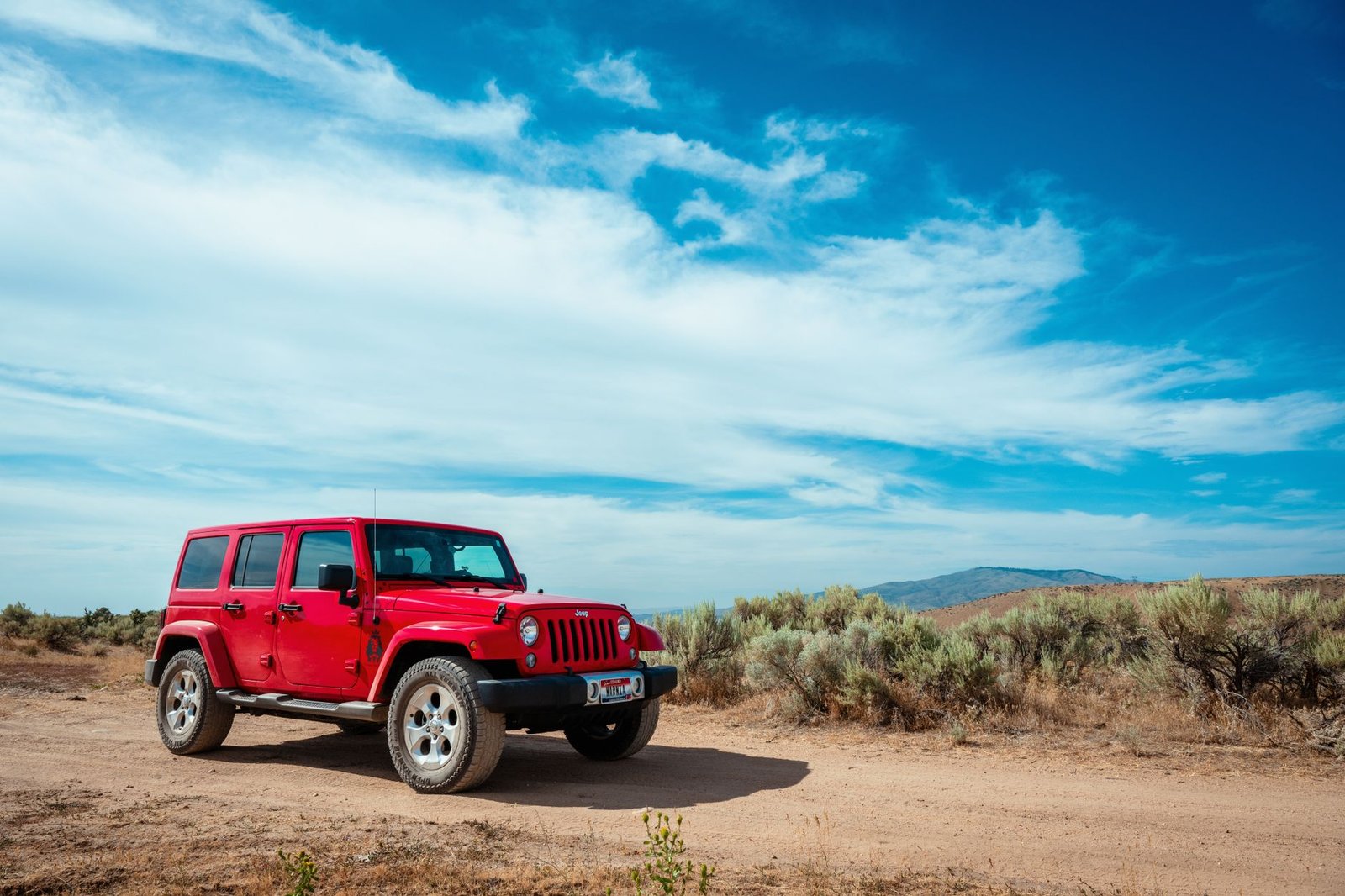
You’re configuring a Jeep Recon EV online at 11 PM, toggling between the base model and the loaded trim. The EPA range estimate keeps staring back at you: roughly 250 to 270 miles, and likely closer to 200 in real-world cold-weather conditions. You refresh the Ford Bronco configurator in another tab. Then the Rivian R1S. The question isn’t whether electric off-roading works. It’s whether buying an off-road EV before the charging infrastructure catches up to the trails locks you into a vehicle that can’t actually go where you want it to.
The Jeep Recon EV represents a bet that off-road buyers will accept range compromises for capability. But the comparison that matters isn’t Recon versus other EVs. It’s Recon versus keeping a conventional 4xe plug-in hybrid for another three years while the fast-charging network fills in the gaps between pavement and trailheads. One path gives you electric torque now but tethers you to charging anxiety. The other delays full electrification but keeps your options open. The order in which you adopt matters more than the specs suggest.
The Part Everyone’s Already Debating
At roughly $67,000, the Jeep Recon EV slots between the Bronco Sport (not a serious off-roader) and the Rivian R1S (more expensive, larger). The range will likely land around 250 to 270 miles EPA, which translates to roughly 180 to 200 miles at highway speeds in winter. The battery pack is reported to be in the 90-plus kWh range. It has features like a removable roof, available swing-gate practicality, and enough ground clearance to handle moderate trails.
The immediate comparison is the Ford Bronco, which starts in the low $40,000s for a gas model. The Bronco’s advantage is simple: when you run out of fuel, you refill at any gas station. The Recon’s advantage is instant torque delivery and no conventional transmission to grenade on rock ledges. Both have competitive approach and departure angles. Both appeal to people who want to look like they go off-road whether they actually do or not.
But this framing misses the infrastructure dependency that makes early adoption risky.
What Happens When the Trail Ends 100 Miles From Home
Off-road driving uses dramatically more energy than highway cruising. Crawling over rocks at 3 mph in low range, running tire compressors, powering winches, and climbing steep grades can drain energy at several times the rate of normal driving relative to distance covered. The upside is that trail miles accumulate slowly, so absolute range loss on a single day of crawling is often modest. The real exposure is the drive to and from the trailhead. That math works fine if you trailer the vehicle to the trailhead. It falls apart if you’re driving 100 miles to Moab, running trails for a day, then driving home with no reliable charging in between.
The real constraint is fast-charging density near recreation areas. DC fast chargers cluster along interstates and in urban centers. They do not cluster near national forests, BLM land, or desert trail systems. A Recon owner planning a weekend trip to Johnson Valley has to route through Barstow or Victorville to charge, adding time and miles to a trip that’s already range-constrained. A Bronco owner stops for gas in Yucca Valley and moves on.
This isn’t a temporary problem that gets solved in 12 months. Charging infrastructure follows population density and traffic volume. Rural recreation areas will be among the last places to get reliable fast-charging coverage because the utilization rate doesn’t justify the capital expense. The gap between where people want to use off-road vehicles and where they can reliably charge them will persist for years.
Buying the Jeep Recon EV in 2025 or 2026 means either accepting those constraints or planning around them. Buying a 4xe now and waiting until 2028 or 2029 to go full electric means the infrastructure has more time to catch up to your use case instead of the other way around. The sequence matters because the earlier you commit, the longer you live with the mismatch.
Who the Recon Actually Works For
The Jeep Recon EV makes sense for a narrow buyer profile. You live within 30 miles of off-road trails. You have home charging. Your weekend trips stay within a 100-mile radius. You rarely tow, or when you do, it’s light loads over short distances. You value instant torque and quiet operation more than unlimited range. You can afford a second vehicle for longer road trips.
That describes someone in Moab, Durango, or Flagstaff who treats off-roading as a regular weekend activity, not an annual pilgrimage. It does not describe the suburban Phoenix or Denver buyer who drives to trails twice a year and spends the rest of the time commuting. For that buyer, the Recon’s limitations surface constantly. Every trip requires charge planning. Every detour adds anxiety. The vehicle that’s supposed to enable adventure ends up constraining it.
The plug-in hybrid path serves that second buyer better. A Wrangler 4xe gives you around 20 miles of electric-only driving and unlimited gasoline range for trail trips. It’s less capable in pure electric torque delivery, but it eliminates the infrastructure dependency. You’re not waiting for a charging provider to install a station in Moab. You’re using the gas network that already exists.
The calculus flips if you’re the first buyer and you know charging will improve in your area within two years. Early adoption makes sense when the infrastructure gap is closing faster than your ownership timeline. It makes no sense when the gap stays wide for five years and you’re stuck with a vehicle that can’t do what you bought it for.
The Infrastructure Bet You’re Actually Making
Every EV purchase is a bet on infrastructure growth, but off-road EVs make that bet explicit. You’re not just betting that charging gets better. You’re betting it gets better in low-density recreation areas that historically lag behind urban markets. You’re betting that utilization rates justify buildout in places where a handful of vehicles per day might use a charger instead of dozens.
That bet might pay off if federal funds or state initiatives specifically target recreation corridors. It probably doesn’t pay off if charging networks follow profit-maximizing placement that prioritizes high-traffic routes. The order in which charging infrastructure expands determines whether the Recon becomes more useful over time or stays range-limited for much of its ownership cycle.
The alternative is accepting that off-road electrification happens in two phases. Phase one is plug-in hybrids that bridge the gap while infrastructure builds out. Phase two is full EVs once fast chargers reach recreation areas with enough density to eliminate planning friction. Jumping to phase two early works only if you fit the narrow use case or you’re willing to adjust your behavior around the vehicle’s limitations.
The Choice That Determines What Happens Next
If you’re the suburban buyer who wants electric capability but needs gasoline flexibility, the 4xe is the safer bet until 2027 or 2028. You avoid locking yourself into infrastructure constraints that won’t resolve during your ownership period. You keep options open for longer trips without charge planning.
If you’re the rural or small-town buyer who lives near trails and rarely drives outside a 150-mile radius, the Jeep Recon EV works now. You’re not waiting for infrastructure because your use case doesn’t depend on it. The vehicle fits the mission from day one.
The decision isn’t about specs. It’s about whether the infrastructure trajectory matches your ownership timeline. If it does, early adoption works. If it doesn’t, you’re better off waiting for phase two when the charging network catches up to where you actually want to drive. Path dependence cuts both ways: adopt too early and you’re stuck with constraints, adopt too late and you miss the learning curve that makes phase two vehicles better. The Recon forces you to pick which risk you’re willing to take.