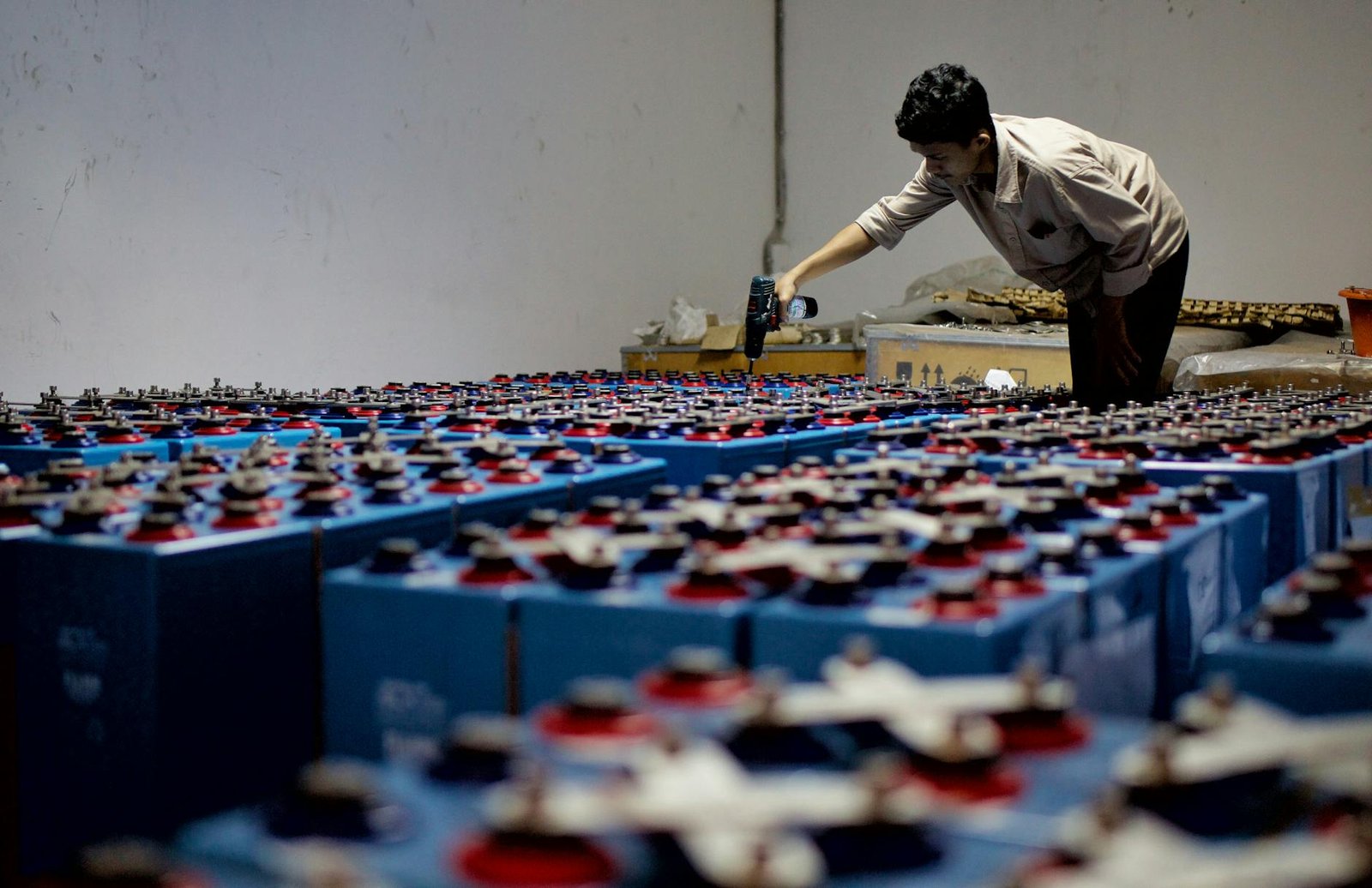
BAIC just announced a sodium-ion battery that charges in 11 minutes and delivers 450 km of range. CATL already put a sodium-ion pack in a production car last year. Both companies cite lower costs and better cold-weather performance. Yet if you ask most EV shoppers what chemistry powers their battery, you get blank stares. The industry is solving an economic problem that customers don’t perceive as theirs.
Sodium-ion batteries replace lithium with sodium, an element so common it’s extracted from seawater and salt flats. The energy density now reaches 160-170 Wh/kg, approaching lithium iron phosphate cells at 170-190 Wh/kg. CATL’s first-generation pack manages 250-300 km today with projections of 400-500 km as the chemistry matures. BAIC’s version charges at 4C, completing a 10-80% charge in approximately 11 minutes. Both maintain over 90% capacity at minus 20°C and function down to minus 40°C. Sodium-ion batteries deliver everything the mass market needs at a lower raw material cost.
EV customers don’t shop by chemistry. They shop by range number, charging time, and total price. The chemistry only matters when it limits one of those three variables or when it creates a liability the buyer has heard about. Lithium batteries occasionally catch fire, so buyers ask about thermal runaway. Nickel-rich chemistries degrade faster, so lease return values drop. Sodium-ion batteries have no comparable customer-facing weakness, which means they also have no customer-facing salience.
The Commodity Chemistry Problem
Batteries compete on specifications that customers can verify. A 60 kWh pack is a 60 kWh pack. If it delivers 400 km of range, charges in 20 minutes, and costs $25,000 in a vehicle, the customer doesn’t care whether it uses lithium, sodium, or compressed air. Sodium-ion batteries could reduce manufacturing costs by 20-30% by eliminating lithium and cobalt, but unless that savings shows up in the sticker price or enables a better range-to-price ratio, the buyer has no reason to prefer it.
CATL and BAIC are manufacturing-side entities. Their customer is the automaker, not the driver. The automaker cares about cell cost, supply chain risk, and warranty exposure. The driver cares about whether the car gets them to work and back without stopping. Sodium-ion batteries solve the automaker’s problem. Global shipments grew from negligible volumes to roughly 2 GWh in 2023 with projections of 20-30 GWh by 2025. That growth reflects procurement decisions, not consumer pull.
The market structure doesn’t help. Chinese automakers like Chery and JAC now offer sodium-ion options in compact EVs. The buyer sees a price, a range number, and a model name. Unless the dealership trains salespeople to explain why sodium-ion matters, or unless the automaker markets it as a feature, the chemistry disappears into the spec sheet. Lithium batteries benefited from a decade of press coverage about energy density improvements and fire risks. Sodium-ion batteries arrived after that news cycle ended.
What Cold Weather Performance Actually Buys
BAIC’s claim of 90% capacity retention at minus 20°C sounds significant until you examine how customers experience winter range loss. Most lithium iron phosphate batteries retain 60-70% capacity at the same temperature. A 400 km summer range drops to 240-280 km in winter. A sodium-ion battery with the same 400 km summer range would maintain 360 km in winter. The difference is 80-120 km, or about 50-75 miles.
Does that delta change behavior? If the customer’s daily round trip is 200 km, both chemistries work fine in winter. If the daily trip is 350 km, the lithium pack forces a charging stop while the sodium pack might not. The sodium-ion advantage matters in that specific range band where the lithium pack falls short but the sodium pack doesn’t. That band exists, but it’s not large enough to drive showroom conversations.
Cold weather performance becomes a marketing problem. Automakers could advertise “winter range within 10% of summer range,” but customers don’t frame their needs that way. They ask, “Will this car get me through a Minnesota January without hassle?” The answer depends on charging infrastructure, not chemistry. A lithium pack with access to fast chargers beats a sodium pack without access, even if the sodium pack retains more energy in the cold.
The operational temperature range of minus 40°C to 60°C matters more for commercial fleets operating in extreme climates than for passenger cars. A delivery van in Yakutsk or a taxi in Phoenix benefits from extended thermal tolerance. Fleet buyers already optimize on total cost of ownership. If sodium-ion batteries reduce upfront costs or extend service life in harsh conditions, fleet buyers will adopt them based on spreadsheet math, not because customers demanded it.
When Charging Speed Doesn’t Compensate
BAIC’s 11-minute 10-80% charge at 4C charging rate matches the fastest lithium batteries, which manage similar charging profiles under ideal conditions. But charging speed is infrastructure-limited, not chemistry-limited. A 4C charge rate on a 60 kWh pack requires 240 kW of sustained power delivery. Most public chargers in China top out at 120-150 kW. Europe and North America have even slower averages. The battery can accept the power, but the charger can’t supply it.
Customers experience charging speed as “how long I wait at this specific charger.” If the charger delivers 50 kW, the sodium-ion battery and the lithium battery both take 45-50 minutes to charge 10-80%. The battery’s capability becomes irrelevant. Automakers could install higher-power onboard systems to take advantage of rare high-power chargers, but that adds cost and weight for a feature most buyers will use occasionally.
The charging speed advantage only manifests when infrastructure catches up. That’s a five to ten year timeline in developed markets and longer elsewhere. By the time 250+ kW chargers are common, lithium batteries will have improved as well. Solid-state lithium chemistries promise similar or better charge rates. Sodium-ion batteries are keeping pace in a contest where the finishing line keeps moving.
The Price Argument Customers Don’t Hear
Automakers face lithium price volatility. Lithium carbonate hit $80,000 per ton in late 2022 before dropping to $10,000-15,000 per ton in 2024. Sodium costs remain stable at $200-300 per ton because supply vastly exceeds demand. That stability reduces procurement risk and should reduce battery pack costs by 20-30% at scale. Customers don’t see the raw material price sheet. They see the vehicle’s MSRP.
If a sodium-ion battery pack costs $4,000 instead of $6,000, the automaker has three options. First, reduce the vehicle price by $2,000 and compete on affordability. Second, keep the price stable and improve margin. Third, reinvest the savings into other features like a larger pack or better interior. Most automakers choose option two or three because the market doesn’t reward option one enough to offset the margin loss.
Chinese automakers operate in a price-competitive environment where shaving $2,000 off an EV might shift significant volume. That’s why CATL and BAIC are pushing sodium-ion batteries hard in the domestic market. Western automakers face different competitive dynamics. A $2,000 reduction on a $45,000 EV is a 4.4% price cut. That might move some marginal buyers, but it doesn’t redefine the market the way a 30% cost reduction would.
The economic benefit of sodium-ion batteries accrues to the manufacturer unless competitive pressure forces it downstream. In a tight market with multiple EV options at every price point, that pressure exists. In a loose market where most customers still default to internal combustion, the pressure doesn’t. Sodium-ion batteries will reduce costs, but whether those savings reach the buyer depends on market structure, not chemistry.
What Most Coverage Overestimates
The technical press treats sodium-ion batteries as a breakthrough that will accelerate EV adoption. The logic is that lower costs mean lower prices mean more buyers. Cost reductions don’t translate linearly into adoption when the primary barrier isn’t price. In the United States, EVs represent 7-8% of new vehicle sales despite multiple models priced below $40,000. The constraint for most holdouts isn’t affordability. It’s charging access, range anxiety, and habit inertia.
A sodium-ion battery that costs $4,000 instead of $6,000 doesn’t solve charging access. It doesn’t change the fact that many buyers can’t install home charging. It doesn’t address the perception that EVs require lifestyle compromises. Those barriers sit outside the battery entirely. Sodium-ion batteries make EVs cheaper to produce, which helps automakers hit margin targets or comply with emissions regulations. That’s valuable for manufacturers, but it doesn’t remove the adoption barriers customers actually face.
The other overestimation is speed of deployment. The sodium-ion battery market was roughly 2 GWh in 2023. The global EV battery market consumed approximately 700 GWh. Sodium-ion batteries represent less than 0.3% of total volume. Even with aggressive growth projections, it takes years to reach meaningful market share. Lithium battery production continues scaling faster in absolute terms, which means the gap widens even as sodium-ion grows in percentage terms.
The Metrics That Signal Real Traction
Watch for sodium-ion battery adoption in vehicles priced below $25,000. If BAIC or CATL can deliver a compact EV with 300-400 km range and an $18,000 price tag, that’s a market-structure change. The chemistry enabled a product category that didn’t exist, which means customers will notice even if they don’t care about the chemistry itself. Until then, sodium-ion batteries remain a cost optimization for automakers.
Track charging infrastructure deployment at power levels that match the battery’s capability. If networks install 200+ kW chargers in volume, the 11-minute charging claim becomes real rather than theoretical. Infrastructure determines whether the spec sheet translates into customer experience.
Monitor sodium-ion adoption in commercial fleets. If logistics companies replace lithium packs with sodium in cold-climate routes, that’s validation of the thermal performance advantage in a context where it matters.
Watch for sodium-ion batteries in energy storage systems. Grid storage doesn’t care about energy density. It cares about cost per kWh and cycle life. If sodium-ion batteries undercut lithium on lifetime economics in stationary applications, that’s proof the chemistry works at scale. Passenger EVs are a harder sell because customers optimize on different variables. Energy storage is where sodium-ion batteries should win first.