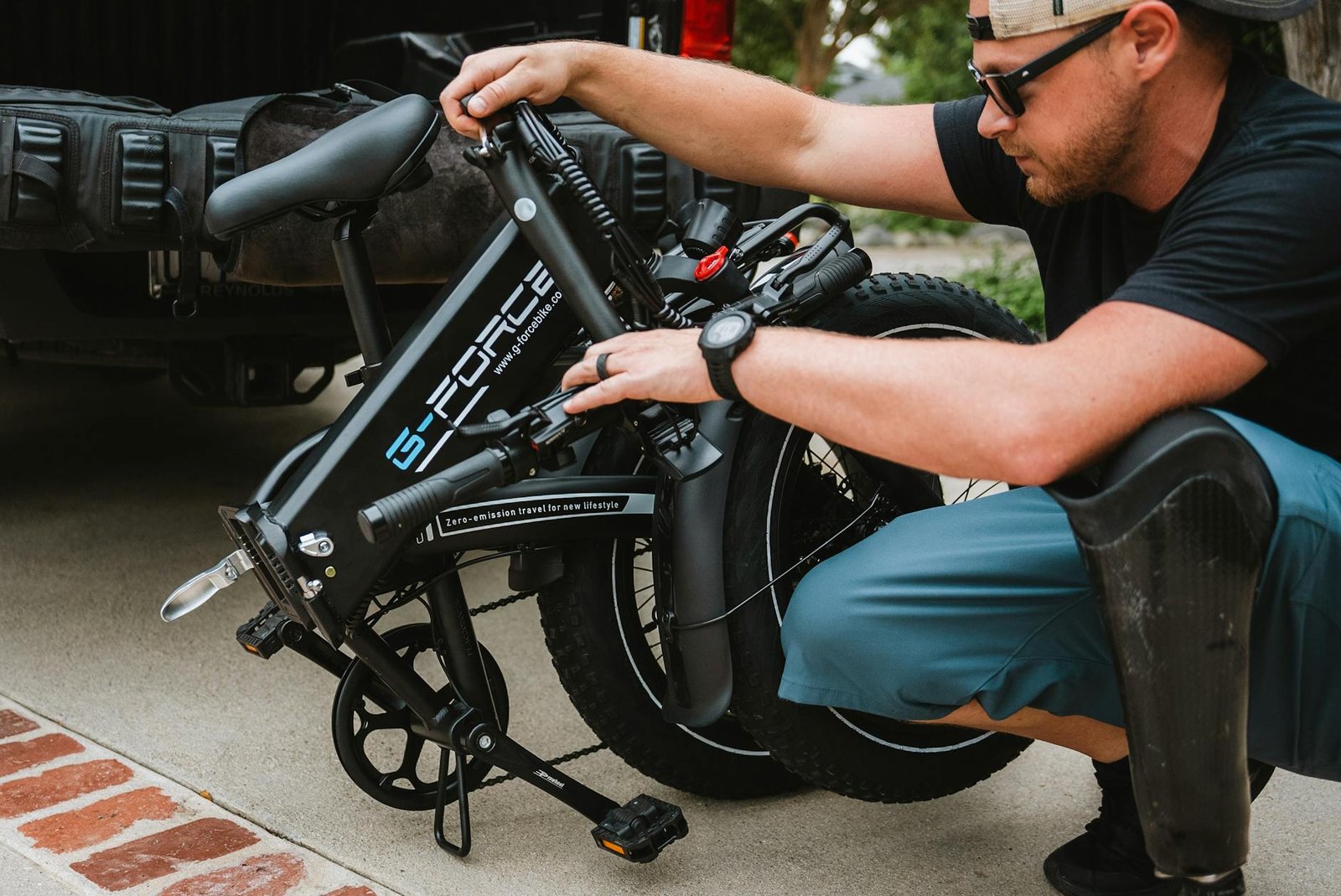
You’re staring at two e-bikes on your screen. One folds in half in 15 seconds. The other doesn’t fold at all. The folding electric bike costs $949. The full-size costs $1,200. Both claim 40-mile range. Both have 500W motors. On paper, the folder seems like the obvious choice: same performance, less money, and you can stuff it in a car trunk. The spec sheet is lying to you about what actually matters for a daily commute.
Folders represent about 20% of all e-bike sales in urban markets, but return rates run nearly double that of full-size bikes. The promise of portability collides with the reality of riding the same route 200 times a year.
The Numbers That Show Up on Amazon
A typical folding electric bike in the $900-$1,200 range comes with 16-inch or 20-inch wheels, a 500W rear hub motor, and a 48V battery rated for 35-50 miles. Weight sits around 55-65 pounds. Folded dimensions average 35 x 18 x 28 inches. Full-size commuter e-bikes in the same price range mount 27.5-inch or 700c wheels, use the same 500W motor configuration, carry similar batteries, but weigh 5-10 pounds more and obviously don’t fold.
Frame geometry differs significantly despite looking similar in photos. Both use mechanical disc brakes, 7-speed drivetrains, and basic LCD displays. The folder advertises its hinge mechanism as a feature. The full-size lists its integrated rear rack as a selling point. Neither spec sheet mentions what happens at 18 mph on pavement with expansion joints.
What Breaks Down After Mile 500
Wheel diameter determines ride quality more than suspension ever will. A 16-inch wheel hits a half-inch crack at effectively double the angle of impact compared to a 28-inch wheel. Your wrists absorb this as repeated shock loading. After six months of daily commuting, riders report numbness and fatigue that no amount of grip padding fixes. The smaller wheel also requires higher rotational speed to maintain the same ground speed, which means more motor strain and faster bearing wear.
Hinge mechanisms add two primary failure points that don’t exist on a conventional frame: the main hinge pivot and the locking mechanism. Each experiences cyclical stress every time you hit a pothole. Most folding electric bike manufacturers specify maximum rider weight around 220 pounds, but they don’t mention that this assumes smooth roads. Add 15 pounds of groceries in a pannier bag, hit a curb at speed, and you’ve just exceeded the hinge’s shock load rating. The joint doesn’t fail catastrophically. It develops play. A quarter-millimeter of slop translates to a steering wobble you feel in your hands at any speed above 15 mph.
Battery placement on folders typically centers low in the frame to maintain balance when folded. Sounds smart until you ride through a puddle. The battery case sits 4-6 inches off the ground versus 8-10 inches on a full-size frame. Water ingress ratings mean nothing when you’re commuting through slush for three months. The connection port takes the spray directly.
Folding handlebar stems use a quick-release clamp system rather than the fixed bolts of conventional stems. Torque specs matter here because the clamp must be tight enough to prevent rotation under braking force but loose enough to fold without tools. Most riders err toward loose because they fold the bike daily. After 200 fold cycles, the clamp face wears enough that it no longer holds the original torque. Under hard braking, the handlebar rotates forward. Not by much. Just enough that your hand position shifts and you miss the brake lever in the moment you need it.
Who Each Design Actually Serves
Folders make sense for multimodal commutes where the bike spends significant time on trains, buses, or in car trunks. If you drive 15 miles to a park-and-ride, then ride 3 miles to the office, the folder works because you’re optimizing for storage time rather than ride time. The bike spends 20 minutes riding and 9 hours folded. That math favors portability.
RV owners and boat users need occasional mobility at campsites or marinas but have zero dedicated bike storage. The folder lives in a compartment that otherwise holds camping chairs. The compromised ride quality doesn’t matter because trip distance averages under 2 miles and speed never exceeds 12 mph.
Full-size e-bikes serve anyone commuting more than 5 miles each way on public roads. The larger wheels handle pavement defects without telegraphing every impact to your hands. The rigid frame maintains consistent geometry under load, which means predictable handling when you’re carrying a backpack and a grocery bag. The higher bottom bracket clears curbs and speed bumps without scraping the motor housing.
If you exceed 200 pounds or regularly carry cargo, you need a full-size bike. A welded frame with a rear rack rated for 50 pounds will haul that load indefinitely. A folder with the same rating will haul it for six months before the hinge develops play and the handling degrades.
Storage Space Versus Ride Quality
The decision hinges on whether you have 6 feet of horizontal space somewhere. A full-size e-bike needs a 6-foot wall, a floor mount, or a corner of a garage. A folder needs 3 cubic feet of closet space. If you live in a 500-square-foot apartment with no balcony and no bike room, the folder might be your only option regardless of its compromises.
If you have the space, the math shifts. A full-size e-bike that costs $300 more will last twice as long because it has fewer mechanical joints to wear out. Spread that premium over 5 years of daily use, and you’re paying an extra $60 per year to avoid numb hands and wobbly steering. Most people will pay that once they understand the tradeoff.
Buy the Folder Only If You Must Store It Daily
If your commute involves carrying the bike up stairs, onto trains, or into an office where it must fit under a desk, buy the folding electric bike. Accept that you’re trading ride quality for portability. Budget for replacement parts around the hinge mechanism after 18 months of daily use.
If you have floor space at home and your office has a bike rack, buy the full-size bike even if it costs more. You’ll spend less on maintenance and ride with more confidence at speed. The folder’s portability advantage only matters if you actually need to fold it. If it lives unfolded in the same corner for weeks at a time, you’ve paid for a feature you don’t use and accepted compromises you didn’t need to make.