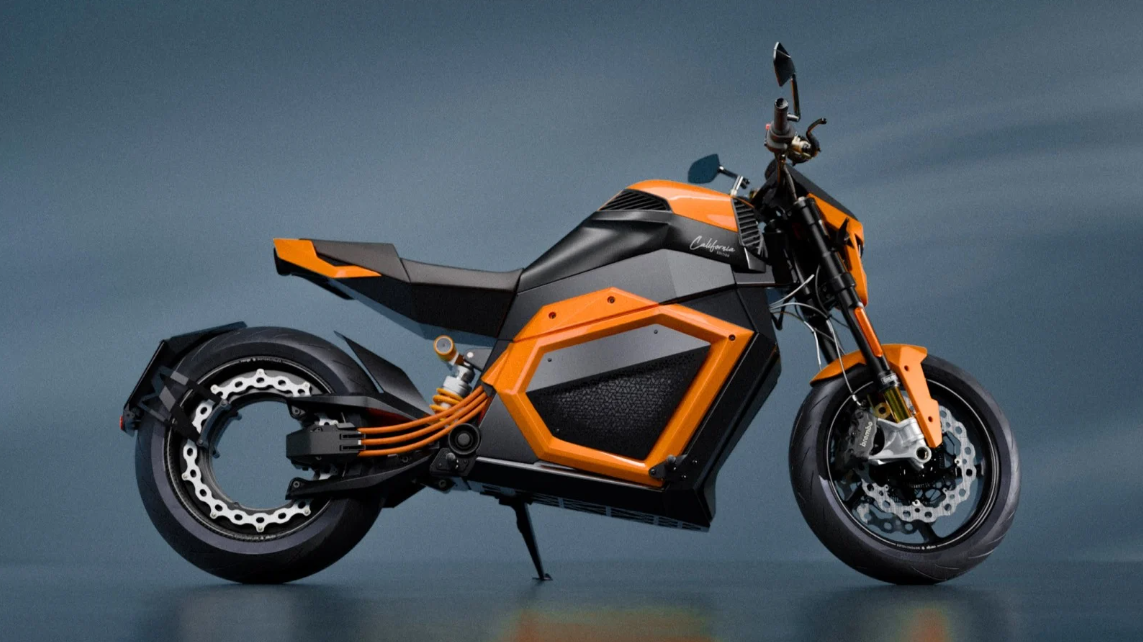
The past year delivered two distinct battery announcements that seem promising. CATL began mass production of its Naxtra sodium-ion battery in late 2025, already shipping into production vehicles. Donut Lab claimed at CES 2026 that it has production-ready solid-state batteries delivering 400 Wh/kg, destined for motorcycles this quarter. One represents incremental progress on a proven path. The other requires extraordinary scrutiny.
What Actually Changed With Sodium-Ion
CATL launched commercial production of its Naxtra sodium-ion platform in April 2025. The battery achieves 175 Wh/kg energy density and operates from -40°C to +70°C, retaining 90% capacity at the extreme cold end. The company projects over 10,000 charge cycles and quotes a 500-kilometer range for passenger vehicles.
Sodium ion solves a narrow but persistent problem: lithium while being the forth most abundant metal on the planet, still is produced at scale by only a handful of countries, and its price swings wildly. When lithium carbonate (from which lithium is sourced) prices surged over 50% in late 2025, reaching $15,000 per ton, battery manufacturers started looking at cathode alternatives to lithium ion such as sodium ion. Sodium is everywhere, and is easily extractable from seawater or salt deposits on every continent thus eliminating the supply chokepoints that make lithium volatile.
CATL has long been working on sodium ion battery chemistries but has only now made the chemistry mass production ready. It was able to do it by leveraging it’s existing LFP battery manufacturing infrastructure – that’s all it took CATL, it did not require any major scientific breakthrough.
How Sodium-Ion Compares to Other Battery Chemistries
| Specification | Sodium-Ion (Naxtra) | LFP | NMC |
|---|---|---|---|
| Energy Density | 175 Wh/kg | 150-205 Wh/kg | 230-300 Wh/kg |
| Cycle Life | 10,000+ | 3,000-5,000 | 1,000-2,000 |
| Cold Capacity (-20°C) | 90% at -40°C | 60-70% | 50-60% |
| Supply Chain Risk | Very Low | Low | High |
| Raw Material Cost | Lowest | Low | High |
| Application | Sodium-Ion | LFP | NMC |
|---|---|---|---|
| Budget EVs | Excellent | Good | Poor |
| Long-Range EVs | Poor | Moderate | Excellent |
| Cold Climate | Excellent | Poor | Poor |
| Commercial Fleets | Excellent | Good | Moderate |
| Grid Storage | Excellent | Excellent | Poor |
The tables reveal that sodium-ion does not compete with NMC for range-focused applications. It occupies a distinct niche where cold-weather performance, cycle life, and supply chain stability outweigh energy density. No single chemistry optimizes all variables. Trade-offs are inherent.
Market Reality: Sodium-Ion as Insurance
Chinese automakers view sodium-ion as supply chain insurance and a cost enabler for budget models. Fleet operators in cold climates prioritize winter performance over energy density when vehicles return to depot charging nightly.
Where does that leave lithium ion batteries?
Buyers won’t abandon lithium-ion any time soon. LFPs, especially, are now the battery chemistry of choice for both EV and battery storage applications. . They have already achieved economies of scale and are cost effective, making it difficult for sodium-ion chemistries looking to break into the market.
Solid-State Claims: Separating Signal from Noise
The most newsworthy development in the battery world didn’t come from CATL or any of the more traditional battery chemistries. Solid state batteries, which use a solid electrolyte (vs. a liquid electrolyte) have long been held as the holy grail for batteries. But the understanding in the industry has always been that this is a 5 – 10 year project vs. something in the immediate near term.
Given all this, the industry was surprised when a relatively obscure EV battery startup called Donut Labs announced its solid-state battery. The battery would have an extremely high energy density of 400 Wh/kg. It would fully charge in five minutes, last for a 100,000 cycles (vs. 4,000 – 10,000 cycles for batteries currently in use today), and more surprisingly, it would enter production this quarter. But somewhat disappointingly, the company provided no chemistry details and no third-party validation.
For context, the broader solid-state market operates on a much longer timeline. QuantumScape is just about to commence its pilot production of solid state batteries in February 2026 – mass production is still a few years away. Toyota, which has been promising every year that solid state batteries are just a few years away is aiming for 2027-2028. Samsung SDI targets 2027. These programs represent multi-billion dollar investments over a decade.
And its not just that, the problem with solid state batteries has never been laboratory demonstration. It has been manufacturing at scale. Ceramic electrolytes crack under mechanical stress and thermal cycling. Maintaining electrode contact across thousands of cycles requires process control that does not yet exist.
Liquid electrolytes in conventional cells naturally conform to electrode surfaces, maintaining ionic pathways as materials expand and contract during charge cycles. Solid electrolytes on the other hand cannot deform, any nanometer-scale gap at the electrode-electrolyte interface blocks ion flow, creating resistance that increases with each thermal or mechanical cycle. Manufacturing must achieve near-perfect contact across millions of square millimeters while accommodating 3-10% volume changes per charge cycle, requiring process control tolerances that don’t yet exist in battery production infrastructure.
Donut Lab claims to have solved these problems in an undisclosed chemistry, with an undisclosed production line, and has asserted that it can deliver motorcycles that use this technology in a matter of weeks. Extraordinary claims require extraordinary evidence. For Donut Labs and Verge motorcycles to be considered as serious players, they must ship in Q1 2026, and they must employ third-party labs to assess and validate their technology.
The Actual Lesson
Battery progress occurs along two axes: incremental improvements to proven chemistries and discontinuous leaps requiring new technology and manufacturing. Sodium-ion represents the former, CATL leveraged existing infrastructure to commercialize a chemistry with specific advantages, accepting energy density trade-offs. This is how battery technology typically advances.
Solid-state represents the second path, and established programs acknowledge the difficulty with decade-long timelines and phased commercialization. Sodium-ion batteries are in production vehicles now because the chemistry fits existing manufacturing.
Solid-state batteries face a fundamental manufacturing constraint: the production infrastructure doesn’t yet exist at scale. The technology requires several more years of development before commercial viability. Premature announcements or inadequately validated claims risk eroding market confidence, creating skepticism that could impede adoption even once the underlying technology matures.
Data sources: CATL Naxtra specifications (2025), industry benchmarks for LFP and NMC chemistries