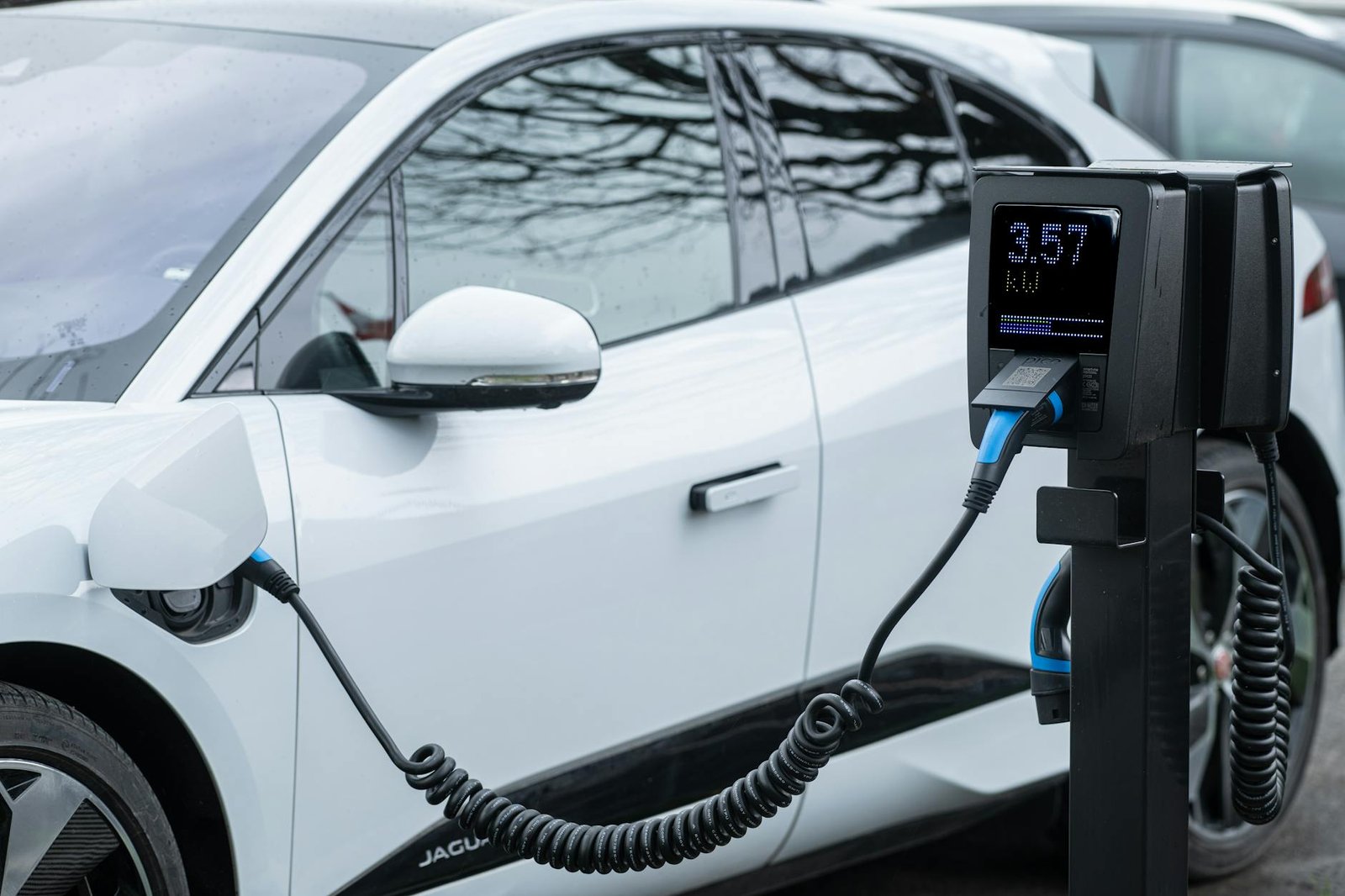
BYD’s promotional materials for the Denza Z9 GT promise something that sounds impossible: a 122 kWh battery pack that charges from 10% to 80% in under 11 minutes. The announcement comes with a celebrity endorsement and claims of 630 kW charging power. We need to separate what is physically possible from what is practically deployable. The question is not whether ultra-fast charging can exist in a laboratory. The question is whether it can exist at scale in a way that actual customers will use.
The Ultra-Fast Promise
The claim is specific: charge the BYD Denza Z9 GT from 10% to 80% in 10 minutes 30 seconds using up to 630 kW of charging power. That translates to adding roughly 85 kWh of energy in 630 seconds. The math checks out on paper. At 630 kW peak power with a realistic charging curve, you would indeed deliver that much energy in about 11 minutes. The vehicle is scheduled for a European launch with this capability as a centerpiece feature. BYD has released thermal runaway test videos showing their Blade Battery 2.0 withstanding extreme heat without fire, suggesting the chemistry can handle aggressive charging without catastrophic failure.
The marketing narrative positions this as a breakthrough that eliminates range anxiety. If you can add 70% of a 620-mile CLTC range (roughly 497 miles WLTP) in less time than it takes to grab a quick meal, electric vehicles have substantially closed the gap with gasoline cars. The promotional campaign recruited Daniel Craig specifically to embody this confidence. Charging speed is no longer a major compromise.
Where the Engineering Gets Complicated
Delivering 630 kW to a single vehicle requires infrastructure that does not currently exist in Europe or anywhere else at commercial scale. The fastest widely deployed charging standard today is 350 kW, and even those stations are rare. A 630 kW charger needs electrical service equivalent to powering roughly 500 average homes simultaneously. The cable must carry over 800 amps at 800V system voltage. The physical connector becomes a significant engineering challenge.
High current means heat. High voltage means arc risk and insulation requirements.
BYD has not detailed the cooling systems required for both the vehicle inlet and the charging cable. Liquid-cooled cables exist for 350 kW charging, but scaling that cooling capacity by nearly a factor of two introduces weight, complexity, and failure modes. The Denza Z9 promotional material mentions charging at negative 30 degrees Celsius taking only three minutes longer than room temperature charging, which suggests sophisticated thermal management. Sophisticated thermal management in a vehicle is different from sophisticated thermal management in thousands of roadside charging stations across a continent.
The electrical grid connection for a multi-stall charging plaza with 630 kW chargers would rival a small industrial facility. You cannot simply install these chargers wherever there is a parking lot. You need transformer capacity, utility coordination, and in many cases, grid upgrades that take years to permit and construct. The limitation is civil engineering and electrical infrastructure deployment at scale, not battery chemistry.
What Is Actually True About Fast Charging
Battery chemistry has improved substantially. BYD’s lithium iron phosphate cells can handle higher charge rates than older battery designs without the same degradation penalty. The thermal runaway test showing stability at 200 degrees Celsius is real evidence that the cells tolerate thermal stress. Tesla’s 4680 cells and other recent designs similarly show improved fast-charging capability. The physics allows for very fast charging under controlled conditions with appropriate cooling.
Cold weather charging performance has genuinely improved. The claim that charging at negative 30 degrees takes only three additional minutes suggests active thermal management that warms the pack before accepting high current. This addresses a real historical problem where fast charging in winter either damaged batteries or proceeded extremely slowly. If the BYD Denza Z9 system delivers on this specification, it represents meaningful progress.
Most EV charging happens at home or work at much slower rates. The ultra-fast charging capability matters primarily for long-distance travel, which for most drivers represents less than 10% of their annual mileage. Fast charging infrastructure is disproportionately important for EV adoption psychology, but disproportionately unimportant for actual energy delivery. The majority of electrons flow through Level 2 chargers overnight.
Why the Myth Persists
Automakers face a marketing problem. Consumers compare EVs to gasoline vehicles on refueling time, even though the comparison is flawed. Nobody refuels a gasoline car at home overnight. The actual refueling experience for most EV owners is plugging in at home and waking up to a full battery. But this behavior is invisible and unexciting. It does not translate into advertisement copy.
Ten-minute charging translates into advertisement copy.
Press releases conflate peak capability with typical experience. A vehicle that can charge at 630 kW under optimal conditions will rarely encounter a 630 kW charger. Even if such chargers exist, they will often be occupied, out of service, or throttled due to grid constraints or thermal limits. The number in the specification sheet becomes a theoretical maximum rather than a realistic expectation. But the theoretical maximum is what gets reported.
The myth also persists because it serves both manufacturers and charging network operators. BYD can claim a leadership position in charging technology. Charging networks can announce ultra-fast infrastructure without explaining how many years before it reaches meaningful coverage. Neither party has an incentive to emphasize the difference between a demonstration unit and a scaled deployment.
What the Deployment Reality Actually Looks Like
Ultra-fast charging will arrive in limited corridors along major highways for flagship vehicles like the Denza Z9. These stations will serve as proof of concept and marketing showcases. They will work when conditions are ideal: moderate temperature, low battery state of charge, compatible vehicle, charger functioning correctly, and sufficient grid capacity. Under those conditions, yes, you will get close to the advertised 11-minute charge time.
This is not vaporware.
But for the next several years, the typical fast charging experience in Europe will remain 150 kW to 350 kW, which means 20 to 35 minutes for a 10% to 80% charge on large battery packs. That is still acceptable for long-distance travel with proper trip planning. It is not 11 minutes. The gap between what is possible in a press release and what is available at a randomly selected highway rest stop will remain large.
The BYD Denza Z9 will be a capable vehicle whether or not 630 kW chargers proliferate. The 122 kWh battery provides genuine long range. The 960-horsepower tri-motor powertrain delivers strong performance. The vehicle does not depend on ultra-fast charging to be useful, but the marketing depends on ultra-fast charging to be compelling. Understand that distinction, and you understand why the 11-minute charging claim is both technically true and practically misleading.