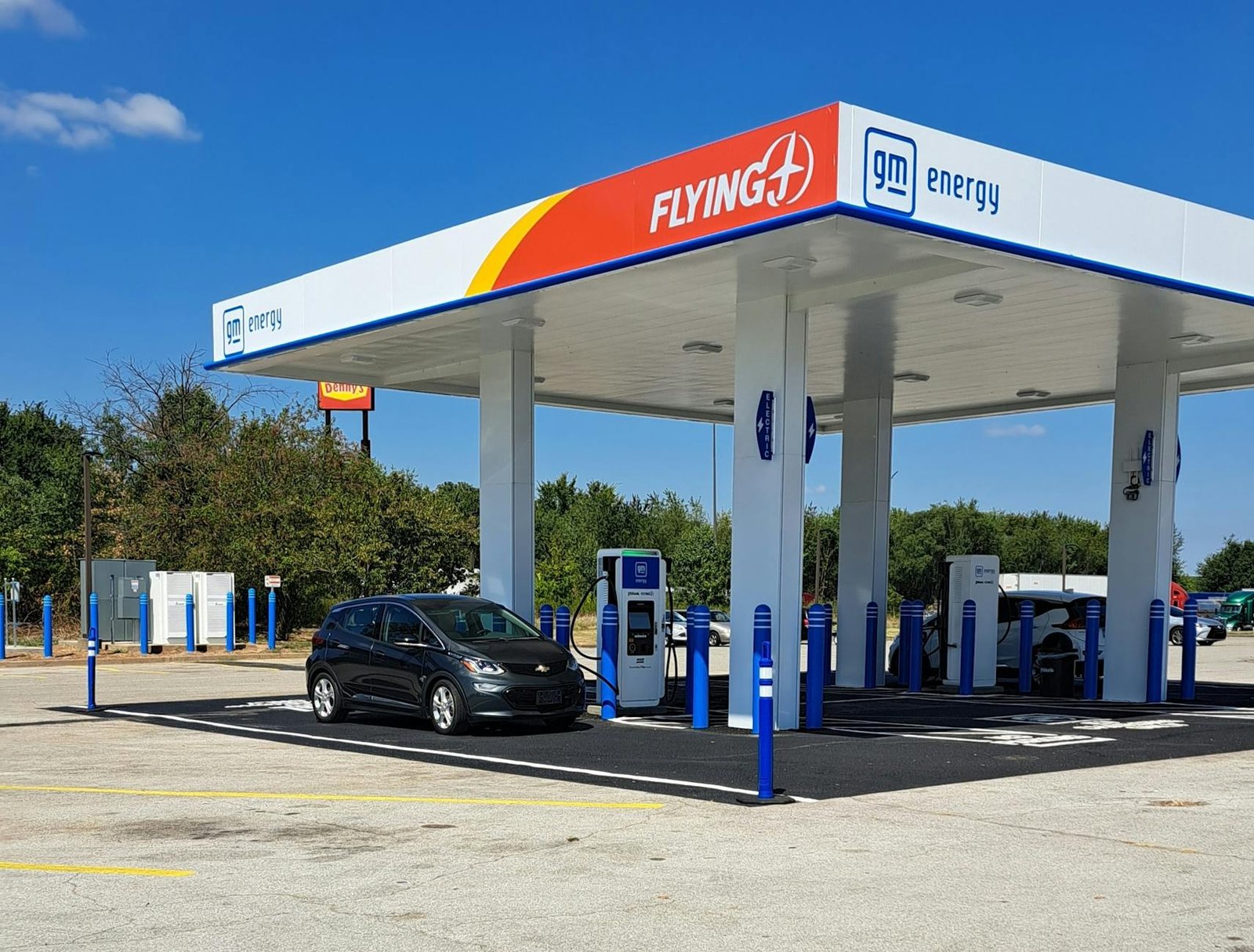
BYD claimed its fast charging stations would add 193 units in the first week of April. That’s 27 stations per day, every day, for seven days. The logistics alone require explanation. Each station consumes roughly 600 kW at peak draw, which means coordinating with grid operators, securing transformer capacity, and managing installation crews across hundreds of locations simultaneously. Capital deployment at industrial scale, timed to coincide with the launch of Blade Battery 2.0 technology that charges from 10% to 80% in under ten minutes. The question: does the money being spent to build it create durable value or merely win a headline cycle?
What Changed in the Charging Arms Race
BYD installed 5,193 fast-charging stations across 310 Chinese cities by early April 2024, then announced plans for 20,000 stations by the end of 2027. CATL responded days later with a partnership aimed at sub-10-minute charging from 10% to 80%. BYD’s newest stations deliver 600 kW, double the power of typical 300 kW fast chargers. The Blade Battery 2.0 handles this power without thermal degradation, at least according to the controlled demonstration.
Going from 30-minute charging to 10-minute charging changes the refueling experience from “enough time to eat” to “barely enough time to pay.” The operational difference matters for fleet operators running tight schedules and consumers who treat charging as lost time rather than break time. BYD framed this as enabling fast charging even in cold conditions, with charging times increasing modestly at sub-zero temperatures.
Building 20,000 stations in three years requires permitting, grid upgrades, real estate, and installation labor at unprecedented speed. BYD did not disclose per-station costs, but comparable high-power installations in developed markets run $300,000 to $500,000 per unit when accounting for transformers and grid connection fees. Even assuming lower Chinese construction costs, the scale suggests billions in capital allocation before the first vehicle plugs in.
The Grid Constraint No One Mentions
A 600 kW charging station draws as much instantaneous power as roughly 400 American households use on average. Ten stations operating simultaneously equal a small commercial district. BYD’s target of 20,000 stations could theoretically draw 12 gigawatts if every charger ran at peak capacity, roughly equivalent to 12 large power plants running at full output. China’s grid can handle this because the utilization curve never approaches that theoretical maximum. Most chargers sit idle most of the time.
Battery chemistry imposes its own limits. Lithium iron phosphate (which BYD uses in the Blade Battery) tolerates high charge rates better than nickel-rich chemistries, but only within a specific state-of-charge window. The 10% to 80% window charges fastest because internal resistance remains low and thermal runaway risk stays manageable. Pushing beyond 80% requires tapering the charge rate significantly, which explains why BYD focuses on the 10-80% metric rather than full capacity. The final 20% can take nearly as long as the first 70%.
An operational mismatch emerges. If drivers leave at 80% to save time, the station’s effective throughput increases but drivers get less total range. If drivers wait for 100%, the station’s capital productivity drops because each vehicle occupies the charger longer. BYD has not published data on average session duration or utilization rates, making it impossible to evaluate the infrastructure’s return on capital from the outside.
The cold-weather performance reveals careful engineering but also specific conditions. Battery heating at freezing temperatures consumes significant energy before charging can begin. Fast charging in extreme cold likely assumes some preconditioning, either from active thermal management during the drive or from grid power while connected. Solvable, but adds cost and complexity to both the vehicle and the charging infrastructure.
How Batteries Actually Age Under Fast Charging
Charging at 600 kW subjects the battery to thermal and mechanical stress that accumulates over hundreds of cycles. Lithium plating occurs when lithium ions deposit on the anode surface rather than intercalating into the graphite structure. This happens when charge rates exceed the anode’s ability to absorb ions, which is temperature-dependent and accelerates at low states of charge. The Blade Battery’s cell-to-pack design improves thermal management by increasing surface area contact with cooling plates, but it does not eliminate the underlying electrochemical limits.
BYD has not released cycle life data for Blade Battery 2.0 under repeated fast charging. The absence does not imply failure, but it does suggest the testing regimen is incomplete or the results are not yet competitive with slower charging protocols. Battery warranties typically cover 70% capacity retention after eight years or 150,000 kilometers, but these guarantees assume mixed charging behavior (mostly Level 2, occasional DC fast charging). If 10 minute EV charging becomes the primary refueling method, warranty exposure increases unless the cell chemistry proves more durable than existing chemistries.
CATL’s partnership with SAIC-GM and other automakers adds another variable. CATL holds roughly 37% global battery market share compared to BYD’s 17%, giving it more leverage with automakers. If CATL develops a competing fast-charge solution and licenses it broadly, BYD’s infrastructure investment becomes less differentiated. The network effect only works if BYD vehicles dominate the installed base in regions where its chargers operate. In markets where multiple brands compete, proprietary charging networks fragment the customer experience and reduce utilization rates across all networks.
What Drivers Actually Do at Charging Stations
Time-series data from existing DC fast charging networks shows most sessions end before reaching 80% state of charge. Drivers optimize for total trip time, not battery fullness. If a 10-minute stop provides enough range to reach the destination or the next charger, adding more minutes for extra capacity makes no sense. This behavior undermines the business case for ultra-fast charging because the expensive infrastructure goes underutilized.
Highway corridors where charger spacing forces drivers to top up regardless of preference are the exception. This is where BYD’s 5,193 existing stations matter more than the charging speed. Network density reduces range anxiety more effectively than charging speed because it lowers the penalty for miscalculation. A driver who arrives at 5% instead of 15% still completes the trip if stations appear every 100 kilometers. If stations appear every 300 kilometers, that same driver gets stranded.
BYD’s focus on the Chinese market reflects this logic. China’s highway network is newer and more uniform than European or American infrastructure, making systematic charging deployment cheaper per kilometer covered. The 310-city footprint suggests BYD targeted second and third-tier cities where competition is light and local governments offer incentives for charging infrastructure. Rational capital allocation if the goal is market share rather than immediate profitability.
The Real Competitive Question
Fast charging solves a problem that matters for roughly 10% of driving: long-distance highway trips where time pressure outweighs cost. The other 90% happens within daily commuting range, where overnight Level 2 charging at home or work eliminates the need for public infrastructure entirely. BYD’s 20,000-station target makes sense only if it expects a significant share of its customers to lack home charging access, which holds true in dense urban areas but not in suburban or rural markets.
Utilization determines whether the capital math works. If each station serves 20 vehicles per day at $15 per session, annual revenue per station runs approximately $109,500. Assuming 40% gross margin after electricity costs and maintenance, the payback period exceeds eight years even at Chinese construction costs. This only pencils out if BYD treats charging infrastructure as a customer acquisition cost rather than a profit center, subsidizing operations until the vehicle installed base grows large enough to support commercial charging rates.
CATL’s approach avoids this trap by partnering with automakers rather than building proprietary networks. If CATL-supplied batteries support 10 minute EV charging across multiple brands, the infrastructure investment gets shared across a larger vehicle population, reducing per-manufacturer capital intensity and increasing charger utilization. But it also commoditizes the charging experience. BYD’s integrated model works only if vertical integration creates enough cost advantage or customer lock-in to justify the capital burden.
Paying for Speed You Don’t Always Need
The Volvo FH Electric illustrates the alternative path: add battery capacity instead of charging speed. With 540 kWh installed capacity, the truck achieves up to 300 miles of range, enough for most regional haul duty cycles without mid-route charging. Charging takes approximately 2.5 hours using a 250 kW charger, which sounds slow compared to BYD’s ten-minute passenger car experience, but the operational context differs. Truck drivers take mandatory rest breaks, during which charging happens automatically. Paying for faster charging infrastructure delivers no operational benefit if the driver cannot legally reduce break time.
An ordering error emerges in the fast-charging arms race. For personal vehicles, home charging already eliminates 90% of public charging demand. For commercial vehicles, duty cycle and regulation constrain utilization regardless of charge speed. The remaining use case (road trips without home charging access) is real but narrow. Spending billions to optimize for this edge case makes sense only if the capital has no better alternative use, such as reducing vehicle purchase price, improving energy density, or extending cycle life.
BYD’s fast charging network might still prove rational if it accelerates EV adoption in markets where home charging is impractical and buyers treat public charging speed as a primary purchase criterion. The data to evaluate this claim does not yet exist. Until utilization figures and customer retention rates become public, the infrastructure remains a bet on future behavior rather than a response to demonstrated demand.