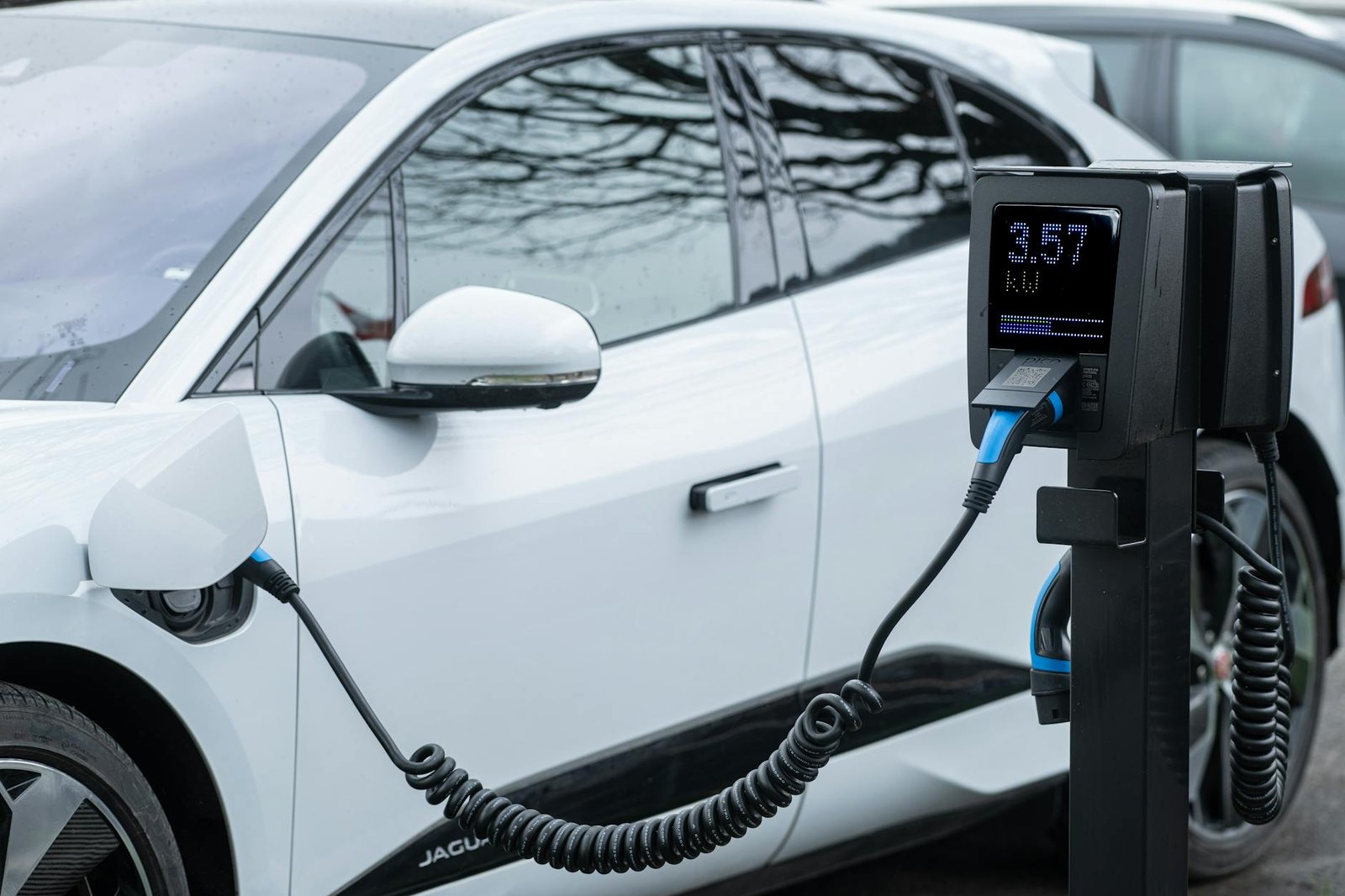
BYD flash charging technology promises to add nearly 400 miles of range in ten minutes. The announcement landed in spring 2025, rolling out first in luxury models before reaching mass-market vehicles. But there’s a physics problem nobody wants to talk about: the electricity has to come from somewhere, and the infrastructure required to deliver it at scale makes Tesla’s Supercharger network look like a science fair project.
The numbers on paper sound transformative. Ten minutes to charge instead of thirty. Range anxiety eliminated. The EV experience finally matching gasoline’s convenience. BYD isn’t making this up; the charging rate is real and the battery chemistry works. But the constraint isn’t battery technology. It’s the power grid, the transformer capacity, and the economics of building out charging stations that can deliver electricity faster than most industrial facilities consume it.
The Power Delivery Problem
To understand why BYD flash charging creates an infrastructure nightmare, start with the power requirements. A ten-minute charge delivering 400 miles of range requires moving roughly 100-120 kWh of energy into a battery pack in 600 seconds. That works out to approximately 600-720 kilowatts of sustained power delivery.
For reference, a typical commercial building draws 200-500 kilowatts at peak load. A standard residential home uses 1-2 kilowatts on average, peaking at maybe 10 kilowatts when the air conditioner and electric dryer run simultaneously. A single BYD flash charging stall requires the electrical service of a small factory.
Now multiply that by six or eight stalls at a typical highway charging plaza. You’re looking at 4.3-5.8 megawatts of peak demand. That’s equivalent to the electrical load of a small data center or a large hospital complex. The transformer alone would be the size of a shipping container, and it needs its own dedicated substation connection.
This isn’t a battery problem. The chemistry works. Silicon-dominant anodes can accept charge at these rates without significant degradation if the thermal management is good enough. BYD has solved the cell-level engineering. The constraint is everything upstream of the charging cable.
Why Highway Charging Gets Expensive Fast
Building a 600+ kilowatt charging station costs roughly $500,000-1 million per location, and that’s before you factor in the grid connection fees. In most markets, utilities charge demand charges based on peak consumption. Those fees can run $10-20 per kilowatt of peak monthly demand.
A charging plaza with eight flash charging stalls would face demand charges of $43,000-116,000 per month just for having the capacity to run all stalls simultaneously. That’s over $1 million per year in fixed costs before selling a single kilowatt-hour of electricity. The capital investment starts making sense only at utilization rates that require constant traffic, which limits viable locations to the busiest highway corridors.
The economics get worse in rural areas or secondary routes where traffic volumes don’t justify the infrastructure spend. A conventional 150 kW fast charger costs perhaps $100,000 installed and generates demand charges of maybe $1,500-3,000 monthly. The business case works at much lower utilization. But a 600+ kW charger needs to serve roughly four to five times as many vehicles to generate the same return on investment.
This creates a chicken-and-egg problem. BYD can build vehicles capable of ten-minute charging, but unless charging operators deploy high-power stations, drivers can’t use the capability. And charging operators won’t build these stations unless enough BYD vehicles are on the road to justify the capacity. The technology works, but the deployment path is unclear.
The Grid Connection Reality
Most discussions of fast charging focus on the charger hardware or battery chemistry. The real constraint is securing grid capacity. In mature electrical markets like California or Germany, getting a multi-megawatt connection often requires a two-to-four-year timeline. You’re not just running a bigger wire. You’re requesting capacity that may require utility infrastructure upgrades blocks or miles away from your site.
Utilities plan grid capacity years in advance based on forecasted load growth. A sudden request for 5 megawatts of new demand in a highway corridor doesn’t fit into most planning cycles. The utility has to evaluate whether upstream transformers can handle the load, whether transmission lines need reinforcement, and whether substation capacity exists. If the answer is no, someone pays for the upgrade, and it’s usually the entity requesting the new service.
In some jurisdictions, grid connection costs are socialized across all ratepayers. In others, the charging operator pays the full freight for any required infrastructure work. Those costs can easily exceed the charging station construction budget. A $1 million charging plaza might require $2-3 million in utility infrastructure upgrades if you’re unlucky with the location.
This explains why Tesla focused on building Supercharger stations with 150-250 kW stalls rather than higher-power charging. The grid connection is manageable, the demand charges are tolerable, and the station can pencil out financially at reasonable utilization rates. Tesla’s constraint was always infrastructure rollout speed, not battery chemistry. They optimized for stations they could actually build.
Battery Degradation Still Matters
BYD claims its flash charging technology doesn’t significantly accelerate battery degradation. That’s probably true for the first few hundred cycles under ideal conditions. But 600+ kilowatt charging generates tremendous heat, and thermal management becomes the critical variable.
Lithium-ion batteries degrade faster at elevated temperatures. A 600+ kilowatt charge heats the battery pack significantly even with aggressive cooling. If ambient temperatures are high (summer highway travel) or if the cooling system performance degrades over time, accelerated aging becomes inevitable. The question isn’t whether fast charging degrades batteries faster than slow charging; thermodynamics says it must. The question is whether the degradation rate is acceptable over a typical vehicle ownership period.
BYD likely engineers for minimal degradation during warranty periods of perhaps eight years or 150,000 kilometers. What happens after that depends on how the cooling system ages and how well the battery management software compensates for capacity loss. Real-world data won’t exist for years because the technology is new. Early adopters are beta testing durability at scale.
This matters for residual values and secondary market pricing. If flash-charged BYD vehicles show accelerated battery degradation after 100,000 miles, used car prices will reflect that risk. Buyers will discount heavily for uncertainty about remaining battery life. The technology may work perfectly for first owners but create problems for subsequent buyers who can’t verify charging history or degradation rates.
What China’s Infrastructure Advantage Reveals
BYD can roll out flash charging in China faster than anywhere else because Chinese utilities can approve and build grid infrastructure on timelines that would be impossible in Western markets. A substation upgrade that takes four years in California might take eight months in Guangdong. Environmental reviews are streamlined, permitting is faster, and utilities have stronger mandates to support EV infrastructure.
This isn’t just regulatory flexibility. Chinese electrical grid planning incorporates EV charging demand explicitly. Western utilities still treat vehicle charging as unpredictable load growth requiring conservative forecasting. Chinese grid operators assume EVs will dominate and plan capacity accordingly. The infrastructure already exists or is actively under construction.
BYD’s flash charging announcement makes sense as a China-first strategy. The charging network can scale quickly enough to match vehicle deployment. Export markets face a different calculus. European and North American charging operators move slower, face higher costs, and serve markets with less policy support for rapid infrastructure buildout. BYD can sell flash-charging-capable vehicles globally, but drivers will only access the full capability in select markets where infrastructure exists.
What Actually Happens Next
The 600+ kilowatt charging standard will roll out selectively in high-traffic corridors where utilization can justify the infrastructure cost. Expect to see it first on the busiest highways connecting major Chinese cities where traffic volumes support continuous station usage. Secondary routes will stick with 150-350 kW charging for years because the economics don’t work otherwise.
In export markets, BYD will advertise flash charging capability but most drivers will rarely use it. The vehicles will charge at conventional fast charging speeds because that’s what the infrastructure supports. This creates a marketing problem: customers paying for capability they can’t access will feel misled, even if BYD never explicitly promised ubiquitous high-power charging.
Battery degradation data will emerge slowly as high-mileage vehicles age. Watch for shifts in warranty terms or charging recommendations. If BYD starts suggesting drivers limit flash charging to specific circumstances, that signals thermal management concerns. If warranty battery replacements spike after three years, degradation rates are higher than projected.
The real indicator to watch is charging network operator behavior. If companies like Electrify America or IONITY announce 600+ kilowatt charging station construction, that validates the economics. If they stick with 350 kW as the standard maximum, the business case doesn’t work yet. Charging operators have better data on utilization rates and infrastructure costs than anyone. Their deployment decisions reveal the market reality behind the press releases.