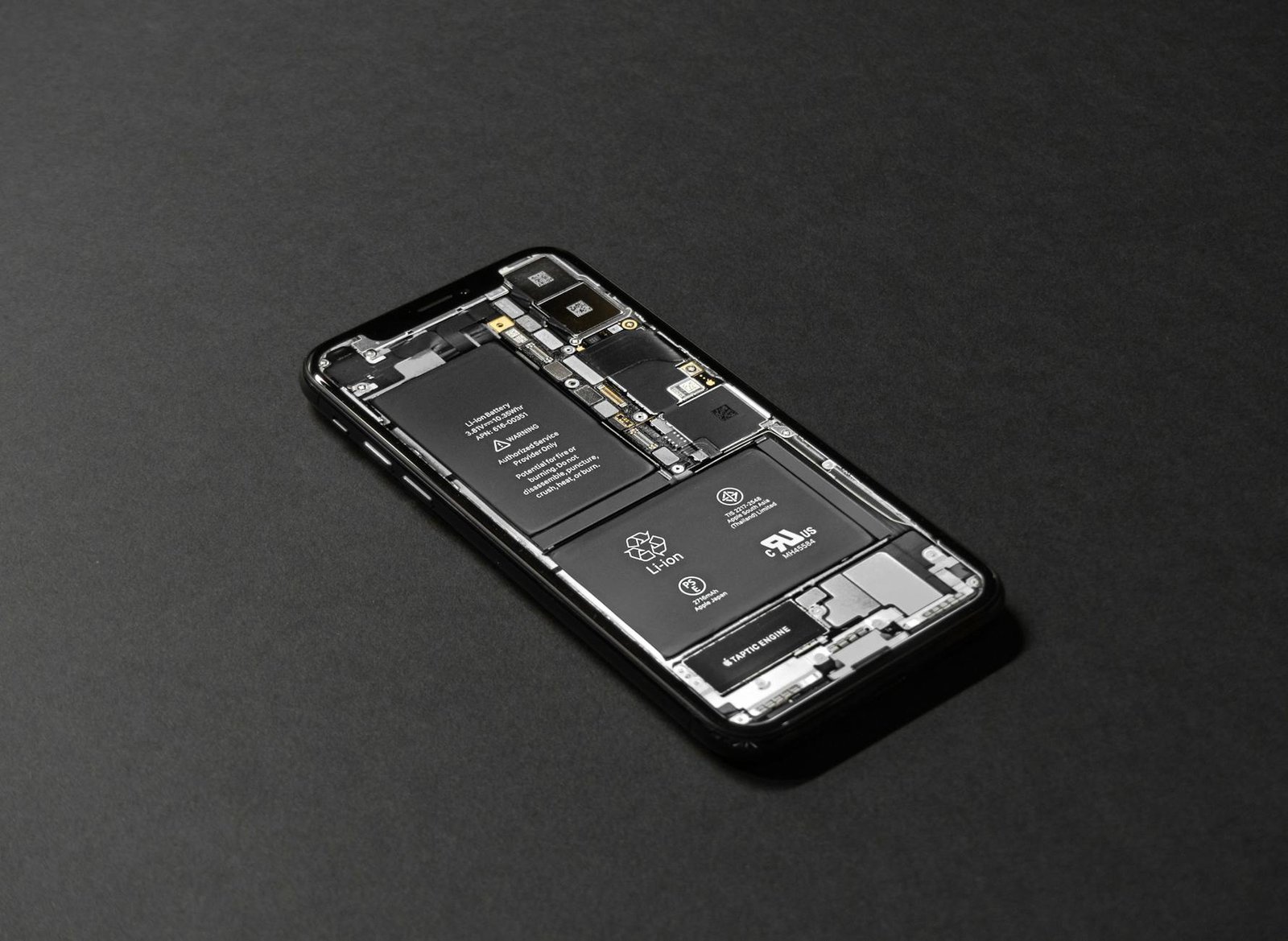
MG Motor launched deliveries of the MG4 Urban with a semi solid state battery in China in December 2024, priced at 102,800 yuan ($14,100). European versions will arrive by late 2025 at roughly £23,495, matching the current LFP-equipped model’s price. Most coverage frames this as a technology race, with Chinese automakers deploying advanced batteries before Western rivals. But MG chose to deploy this battery in its cheapest model first, not its flagship. That sequencing decision reveals constraints that most coverage overlooks.
The Volume-Before-Premium Reversal
Traditional automakers introduce new battery technology in expensive models first. BMW deployed solid-state prototypes in concept vehicles. Mercedes announced solid-state batteries for its high-end EQS lineup. Premium buyers tolerate higher costs and early adopter risks, subsidizing the technology until scale drives prices down.
MG reversed that sequence. The semi solid state battery debuted in the MG4 Urban, the entry-level variant of an already affordable model. Li Zheng, MG’s chief battery scientist, explained the reasoning to Automotive News Europe: “For our new technologies, the main challenge is the supply chain. If we choose to deploy first in a top model, we cannot afford the volume of the materials, and we cannot assure the quality.”
That statement contains more information than it appears to.
MG lacks the supply chain depth to manufacture a small batch of semi-solid batteries at acceptable quality. The company can only guarantee quality by manufacturing at volume. Volume requires a high-production model. High-production models are cheap models, not flagships. So the battery goes into the cheapest car first.
Why Supply Chains Lock In Backwards
Battery manufacturing operates under different constraints than vehicle assembly. A final assembly line can switch between trim levels with minimal retooling. Battery cell production cannot. The electrode coating process, electrolyte mixing ratios, and formation cycling protocols all lock in at the factory level. Changing formulations mid-production requires stopping the line, purging equipment, and revalidating quality control procedures.
Semi-solid batteries contain roughly 5-10% liquid electrolyte compared to 20-30% in conventional lithium-ion cells. That difference changes mixing viscosity, coating uniformity, and cell compression parameters. A supplier cannot produce 10,000 conventional cells and 500 semi-solid cells on the same line without significant changeover costs. They need dedicated capacity running continuously.
Continuous production at battery-grade quality requires minimum annual volumes. Industry estimates place that threshold around 50,000 to 100,000 battery packs per year for a new chemistry. Below that volume, defect rates climb and per-unit costs balloon. MG’s total European sales across all models reached roughly 150,000 units in 2023. Allocating 50,000 units to a flagship model would require that model to represent 33% of total production. Most automaker flagships sit closer to 5-10% of volume.
The MG4 Urban, as the entry-level variant, can absorb that volume requirement. If MG targets 80,000 European MG4 sales annually and allocates 60% to the Urban trim, that provides 48,000 semi-solid battery packs per year. The math works. Put the same battery in a low-volume flagship and the supplier cannot achieve quality at scale.
The Manganese Bet and Material Availability
MG’s semi solid state battery uses manganese-based chemistry, not the nickel-rich cathodes common in premium EVs. Manganese offers lower energy density but better thermal stability and lower material costs. That chemistry choice also locks in a path dependency.
Manganese cathodes work well in the 50-55 kWh capacity range that budget EVs require. The MG4 Urban’s 51 kWh pack delivers 350 km CLTC range in China, expected to translate to roughly 280 km WLTP in Europe. That range suffices for urban and suburban use cases, the MG4 Urban’s target market.
Scaling the same chemistry to 75-90 kWh for a flagship SUV runs into packaging constraints. Manganese’s lower energy density requires more cells for the same capacity, which adds mass and volume. Those extra cells eat into the interior space and efficiency that flagship buyers expect. MG could switch to nickel-rich cathodes for larger packs, but that would require developing a second semi-solid formulation, doubling the supply chain qualification burden.
The material choice determines the viable vehicle platform. Manganese semi-solid batteries fit compact cars and crossovers, not large SUVs. MG plans to extend the technology to the MG ZS compact SUV, which shares a similar size segment and likely uses a similar battery size. The technology roadmap follows the chemistry constraints.
Customer Risk Tolerance and Warranty Exposure
Battery warranties create asymmetric risk for automakers. A battery failure in year seven of an 8-year, 160,000 km warranty costs the manufacturer the full replacement expense, typically $5,000 to $15,000 depending on pack size. Early battery technologies carry higher failure risk because long-term degradation patterns remain unknown.
Deploying unproven battery technology in a $60,000 flagship amplifies that warranty exposure. Premium buyers drive more miles, operate in more varied conditions, and expect rapid warranty service. A 1% field failure rate across 20,000 flagship sales with $12,000 average battery replacement costs creates $2.4 million in unexpected warranty expense.
The same 1% failure rate across 48,000 budget EV sales with $6,000 replacement costs creates $2.88 million in exposure, but the risk profile differs. Budget EV buyers typically drive fewer annual miles, reducing the probability of early degradation. Warranty claims arrive later in the vehicle lifecycle when total exposure matters less to quarterly financials. Lower absolute vehicle prices also create different customer expectations around repair timelines and service quality.
MG’s approach spreads warranty risk across higher volume at lower per-unit exposure. If the semi solid state battery proves reliable in 48,000 MG4 Urbans over three years, MG gains validated field data before scaling to premium models. If early degradation issues emerge, the company can refine the chemistry while managing warranty costs at the budget-vehicle price point.
What This Means for Full Solid-State Timelines
Semi-solid batteries with 5-10% liquid electrolyte are not full solid-state batteries with 0% liquid content. The gap between those two specifications matters more than most coverage suggests. Reducing liquid electrolyte from 20-30% to 5-10% primarily improves thermal safety and allows slightly higher energy density through tighter cell compression. Moving from 5-10% to 0% requires solving lithium dendrite formation, solid electrolyte interface stability, and room-temperature ionic conductivity at production scale. Those challenges remain unsolved.
MG’s deployment of semi-solid technology does not accelerate full solid-state timelines. Building supply chain capacity for semi-solid batteries requires several years and dedicated production volume. Full solid-state batteries will require the same supply chain development process, starting from zero.
Automakers claiming full solid-state production by 2027 or 2028 face the same constraint MG’s battery scientist articulated: you cannot assure quality without volume, and you cannot achieve volume without dedicated supply chains. No automaker has announced the 50,000+ annual production volumes needed to validate solid-state quality. Until those announcements arrive with specific supplier agreements and factory capacity, solid-state timelines remain aspirational.
The Actual Competitive Dynamic
European automakers planning premium solid-state deployments face a sequencing problem. They need volume to achieve quality, but their premium-first product strategies cannot generate that volume in the early deployment phase. By the time Western automakers scale solid-state production to budget models, Chinese manufacturers will have accumulated five to seven years of semi-solid field data and supply chain optimization.
That experience gap compounds. Battery development cycles run 36 to 48 months from chemistry refinement to production validation. MG’s semi solid state battery, developed with Qingtao Energy, began field deployment in late 2024. Lessons learned from that deployment feed into the next chemistry iteration starting now, creating a production advantage that Western automakers cannot overcome by deploying similar technology later at lower volumes.
The competitive gap does not stem from technology capability. Western battery suppliers can formulate semi-solid and solid-state chemistries. The gap lies in production sequencing. Chinese automakers chose volume-first deployment, accepting lower margins on budget models to build supply chain scale. Western automakers chose premium-first deployment, preserving margins but constraining volume. Those different paths lock in different learning rates.
Thinking About Adoption Sequences Correctly
Battery technology does not progress from prototype to premium to mass market in a clean linear path. Production constraints force choices about volume, quality, and platform allocation. Those choices create dependencies that determine which technologies can scale and when.
MG’s decision to deploy semi solid state batteries in the MG4 Urban first was the only sequencing that allowed the company to manufacture the battery at acceptable quality levels given current supply chain maturity. That constraint-driven logic applies to all new battery chemistries. Full solid-state batteries will require even higher production volumes to achieve quality, pushing deployment toward higher-volume platforms regardless of automaker preferences.
The Western premium-first approach may preserve short-term margins, but it delays the supply chain development needed for eventual mass-market deployment. By the time European automakers deploy solid-state batteries in budget EVs around 2030, Chinese manufacturers will have spent six years refining semi-solid production at scale. That operational lead compounds faster than technology gaps close.