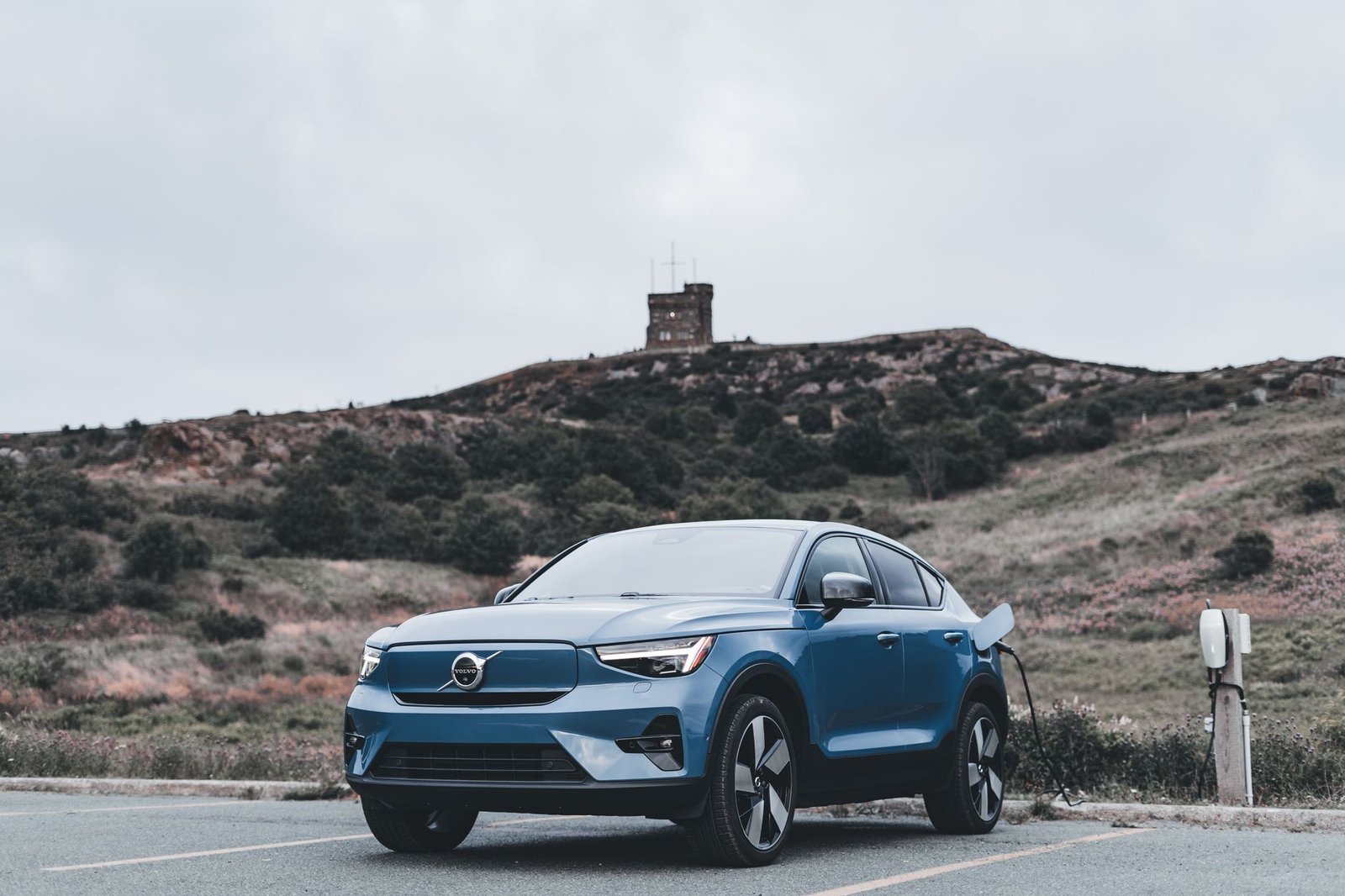
You’re standing in a Volvo showroom, calculator app open, trying to decide between the gasoline XC60 and the T8 plug-in hybrid. The salesperson mentions that future versions might get triple the electric range. Your spouse asks the question that actually matters: “Will we plug it in every night?” That question, not the EPA rating, determines whether the Volvo XC60 plug-in hybrid makes financial sense for your family.
Reports suggest the 2028 XC60 T8 could jump from 35 miles of electric range to somewhere near 100 miles. That sounds transformative. Triple the range means triple the electric driving, right? Not quite. The physics are straightforward, but the economics reveal a constraint most buyers miss: the marginal value of each additional electric mile collapses faster than you’d expect.
The Numbers Everyone Will Quote
The current Volvo XC60 plug-in hybrid uses a 14.9 kWh battery to deliver 35 miles of EPA electric range. To triple that, you need roughly triple the battery capacity, somewhere around 45 kWh. That’s entering the territory of pure battery electric vehicles like the base Chevy Equinox EV, which starts at 55 kWh.
A 45 kWh battery adds approximately 600 pounds compared to the current setup. It costs roughly $5,850 to $6,750 more at current battery prices of $130 to $150 per kWh. The vehicle carries this weight permanently, even when you’re running on gasoline after depleting the battery. Highway fuel economy on gas power drops from the mid-30s to the high-20s mpg range because you’re hauling around battery mass you’re not using.
Charging time extends proportionally. The current T8 needs about 3 hours on a Level 2 charger. A 45 kWh pack needs closer to 8 hours at the same 5.5 kW charging rate most home installations provide. If you forget to plug in one night, you’ve lost most of your electric range for the next day.
What the Specs Hide About Daily Charging
Here’s the constraint the range number obscures: the value of electric miles depends entirely on charging discipline, and charging discipline decays with range. Call it the laziness gradient.
With 35 miles of range, most plug-in hybrid owners develop a routine. You plug in every night because you need every electron to cover your commute. The daily ritual becomes automatic. You burned through the battery by lunchtime, so plugging in tonight is obvious.
At 100 miles of range, the calculus shifts. Your 25-mile commute only consumed a quarter of the battery. You could skip tonight and still make it to work tomorrow. Then it rains, and you don’t want to walk to the garage. Then you’re tired. Then you’re traveling for three days and the car sits unplugged. Within six months, you’re plugging in twice a week instead of daily, and running on gasoline 60 percent of the time.
Real-world data from current plug-in hybrid owners shows this pattern. Studies tracking actual charging behavior find that vehicles with 20 to 30 miles of range get plugged in more consistently than those with 40 to 50 miles. The psychological threshold shifts: smaller batteries create urgency, larger batteries create complacency.
The second constraint is geographic. If your daily driving genuinely exceeds 100 miles, you’re in the minority of American drivers. Census data shows the average one-way commute is 27 miles. Even accounting for errands, most households stay under 60 miles of daily driving. A 100-mile plug-in hybrid is over-provisioned for typical use, which means you’re paying for and hauling around capacity you rarely fully utilize.
Who Each Configuration Actually Serves
The current 35-mile Volvo XC60 plug-in hybrid works for a specific buyer: someone with a 25 to 35 mile daily routine, reliable overnight charging, and occasional long highway trips where the gasoline engine eliminates range anxiety. You’re a suburban commuter who drives to the train station, or a parent doing school dropoffs within a predictable radius. The constraint matches the capacity.
You tolerate slightly worse gasoline fuel economy than the base XC60 because you rarely use gasoline. Your electric rate is $0.12 per kWh, giving you fuel costs around $0.04 per mile electric versus $0.15 per mile on premium gasoline. The battery pays for itself in three to four years of disciplined charging.
The hypothetical 100-mile version targets a different buyer who might not exist in large numbers: someone whose daily driving genuinely ranges from 40 to 90 miles, who has reliable home charging but values the flexibility of occasional longer electric-only trips, and who still needs gasoline backup for weekend trips. That’s a narrow slice. Most people in this category would be better served by a 250-mile battery electric vehicle that eliminates the complexity of two powertrains.
The engineering makes sense for Volvo’s compliance and fleet average fuel economy requirements. Larger batteries generate bigger emissions credits under European and California regulations. But the buyer case weakens. You’re paying luxury pricing for a vehicle that’s heavier, more complex, and requires behavioral discipline most owners won’t maintain.
The Charging Infrastructure You Actually Have
This comparison assumes you can charge at home. Remove that assumption and the value proposition collapses entirely. A 45 kWh battery at a public Level 2 station costs $15 to $20 for a full charge, depending on local rates and network fees. That’s $0.15 to $0.20 per mile, the same as or worse than running on gasoline. You’ve added weight, complexity, and purchase cost with zero operating savings.
The current smaller battery at least charges fast enough that you might top up during a grocery run. Eight hours ties you to workplace charging or overnight sessions. If you’re an apartment dweller hoping to charge at the gym twice a week, this battery size becomes a liability.
The Version That Makes Sense
For most buyers cross-shopping the Volvo XC60 plug-in hybrid, the answer is counterintuitive: you want the smallest battery that covers your daily driving, not the largest. A 40 to 50 mile range hits the sweet spot. It covers the 80th percentile of daily trips, charges in four hours, costs $2,000 to $3,000 less than the 100-mile version, and weighs 300 fewer pounds.
If your daily driving regularly exceeds 60 miles, skip the plug-in hybrid complexity entirely. Buy a 300-mile battery electric vehicle if you have home charging, or stick with an efficient gasoline vehicle if you don’t. The hybrid middle ground only works when the electric range closely matches your routine.
The Volvo XC60 plug-in hybrid will likely get its range boost because regulations reward it, not because buyers need it. That’s fine for Volvo’s spreadsheet. But if you’re the person standing in the showroom, your constraint is simpler: how often will you actually plug it in?