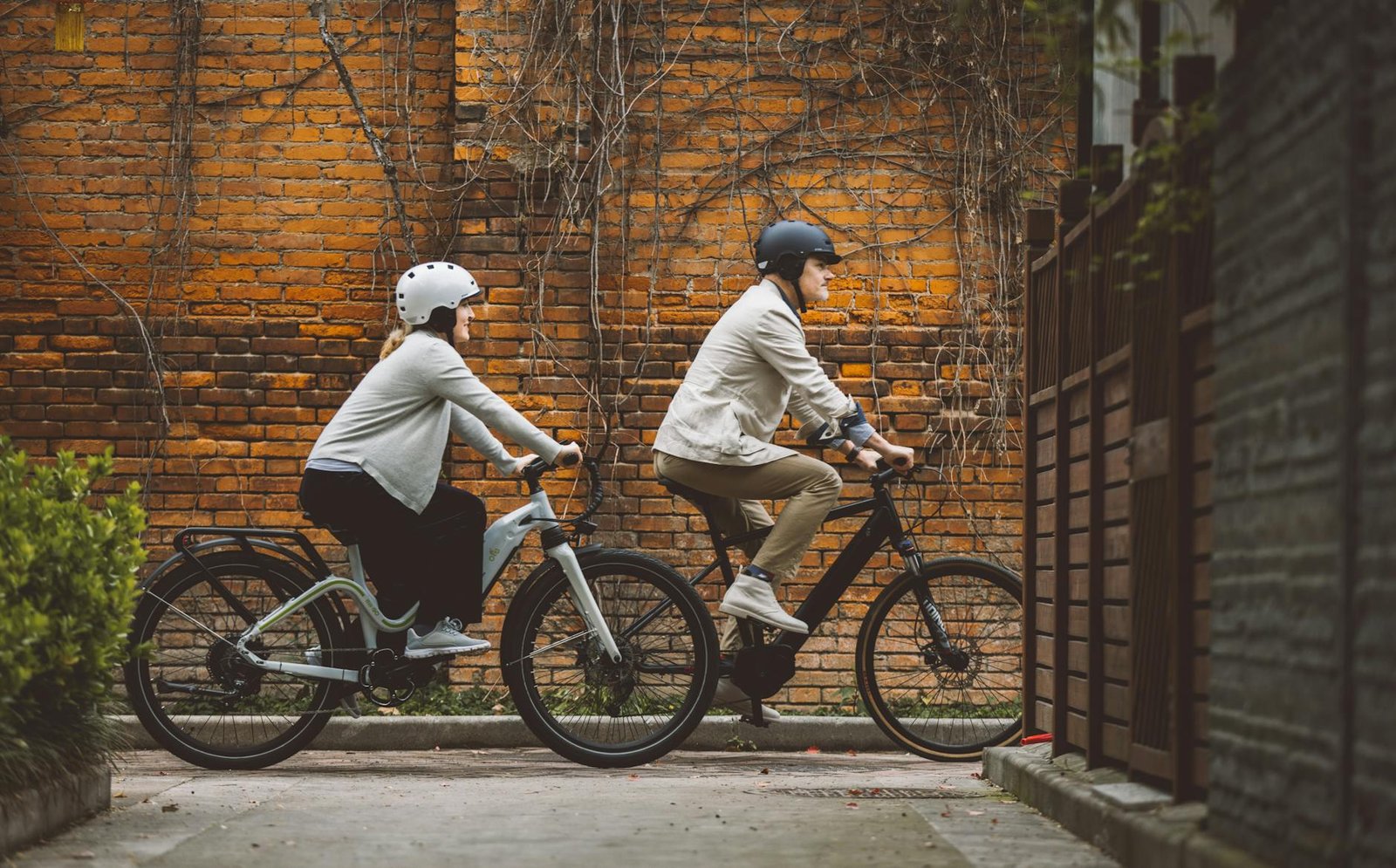
You’re standing in a bike shop, phone in hand, ready to order one of the best electric bikes your budget allows. The salesperson just asked a question that seems simple: “Do you want Class 1 or Class 3?” You pause. One tops out at 20 mph with pedal assist only. The other hits 28 mph and costs $400 more. The specs tell you the speed difference. What they don’t tell you is that your answer just locked in where you can legally ride for the next five years, which charging infrastructure you’ll need, and whether your city will reclassify your bike as a “motorized vehicle” next legislative session. The choice isn’t about speed. It’s about path dependence.
The Number Everyone Shops By
Class 1 e-bikes provide pedal assist up to 20 mph. No throttle. Class 3 e-bikes provide pedal assist up to 28 mph, sometimes with a throttle that works up to 20 mph. The price premium for Class 3 ranges from $300 to $600 depending on the manufacturer. Battery capacity is often identical. Motor wattage is usually the same, just governed differently by the controller software.
When people compare the best electric bikes available, they fixate on that 8 mph gap. It sounds meaningful. On a 10-mile commute at steady pace, Class 3 saves you about 6 minutes versus Class 1 (21 minutes versus 27 minutes, assuming no stops). On a 5-mile trip, the difference shrinks to 3 minutes. These calculations assume flat ground, no wind, and that you’re comfortable sustaining 28 mph on a bike path shared with pedestrians and dogs on retractable leashes.
The specs are accurate. The frame is incomplete.
The Lock-In the Spec Sheet Hides
Class 3 e-bikes are banned on most multi-use trails in the United States. The federal designation that allows Class 1 and Class 2 e-bikes on paths where traditional bicycles are permitted explicitly excludes Class 3. State laws vary, but the pattern holds: if you buy Class 3, you’re often restricted to road riding or dedicated bike lanes.
This isn’t a temporary regulation you can wait out. It’s path-dependent infrastructure lock-in. Cities that built separated bike paths in the 2010s designed them for 15 mph average speeds. Sight lines at intersections, curve radii, and surface materials assumed traditional bike velocities. Widening those paths or re-engineering every blind corner would cost millions per mile. So the regulatory response defaults to exclusion: keep the faster bikes off the paths rather than rebuild the paths.
You might think, “I’ll just ride on the road.” That works until your city reclassifies Class 3 e-bikes. Some municipalities now require registration, insurance, or a driver’s license for Class 3 bikes. New York City briefly required Class 3 registration. California counties continue debating helmet requirements that apply only to Class 3 riders. Once you’re on the Class 3 path, you’re subject to whatever regulatory changes come next, and the trend is toward more restrictions, not fewer.
The battery and motor ecosystems diverge too. Class 1 dominates the rental and bike-share market because operators need trail access. That installed base drives spare parts availability, third-party battery compatibility, and used market liquidity. If your Class 3 motor controller fails in three years, you’re hunting for a proprietary replacement. If your Class 1 motor fails, you have options.
How Your First E-Bike Decides Your Second
The path-dependence trap tightens when you consider how people actually use e-bikes over time. First-time buyers optimize for their daily commute. They calculate the time saved on their specific 8-mile route and pay the premium for Class 3. Then they discover they want to ride recreationally on weekends. The rail trail 2 miles from their house bans Class 3. The beach path their family bikes on every summer bans Class 3. They’re locked out.
The economically rational response is to buy a second bike. Now you own a Class 3 for commuting and a Class 1 for everything else. You’re storing two bikes, maintaining two battery systems, and you’ve spent $3,500 total instead of $2,000 for a single Class 1 that works everywhere. The initial choice created the constraint.
This compounds in households. If your partner buys a Class 1 because they want trail access, and you bought Class 3 for commuting speed, you now can’t ride together on half the infrastructure in your area. Family rides require either route compromises or someone leaving their preferred bike at home. The best electric bikes for your household aren’t necessarily the fastest ones.
Resale values reflect this. Class 1 bikes hold value better in the used market because the buyer pool is larger. A used Class 3 bike can only sell to someone with road access and no desire for trail riding. A used Class 1 can sell to anyone. Check secondary markets: three-year-old Class 1 bikes from reputable brands sell for 55-60% of original MSRP. Equivalent Class 3 models fetch 45-50%.
The Use Cases Where Speed Actually Delivers
Class 3 makes sense in specific, constrained scenarios. If you’re commuting 15+ miles each way on dedicated bike lanes or low-traffic roads, and your city has stable Class 3 regulations, the time savings compound. At 30 miles round-trip, five days a week, you’re saving 30 minutes daily, which is 2.5 hours weekly. Over a year, that’s 130 hours. If your time is worth $30/hour, the Class 3 premium pays back in value within 4-6 months.
Rural and suburban riders with direct road access and no interest in recreational trail riding also fit. If you’re using an e-bike to replace short car trips on 45 mph roads, hitting 28 mph feels less precarious than 20 mph. You’re matching traffic flow more closely, which can be safer than being a slow-moving obstacle.
Delivery and gig economy workers optimize differently. Speed equals more deliveries per hour. But the path dependence still bites: if your city suddenly requires Class 3 insurance and registration, your operating costs jump immediately. Some delivery workers are switching back to Class 1 or Class 2 bikes to avoid regulatory risk, even though it costs them speed.
The Constraint That Should Drive the Choice
The decision hinges on one question: where will you ride three years from now? Not where you plan to ride today. Where your actual usage will settle once the novelty wears off and the bike becomes a tool instead of a toy.
If any plausible future use case involves multi-use trails, rail trails, national park paths, or riding with family members who want trail access, buy Class 1. The $400 premium for Class 3 speed buys you nothing if you’re locked out of 40% of the riding infrastructure in your region. The speed advantage evaporates the first time you have to detour 3 miles on surface streets to avoid a trail you can’t legally use.
The regulation risk is asymmetric. Cities are more likely to restrict Class 3 further than to liberalize access. No municipality is widening bike paths to accommodate 28 mph speeds. Some are adding Class 1 access to paths that previously banned all e-bikes. The regulatory momentum runs one direction.
The Call You Can’t Take Back
Buy Class 3 if your daily route is fixed, road-based, and long enough that 8 mph matters. Buy it if you live somewhere with stable regulations and minimal trail infrastructure. Buy it if you’re certain you’ll never want to ride anywhere but roads for the life of the bike.
Otherwise, buy Class 1. The best electric bikes aren’t the fastest ones. They’re the ones you can ride where you actually want to go. The $400 you save covers a better battery, better components, or a weekend trip where you can legally ride the bike you just bought. Speed is a spec. Access is a constraint that compounds every time you ride.