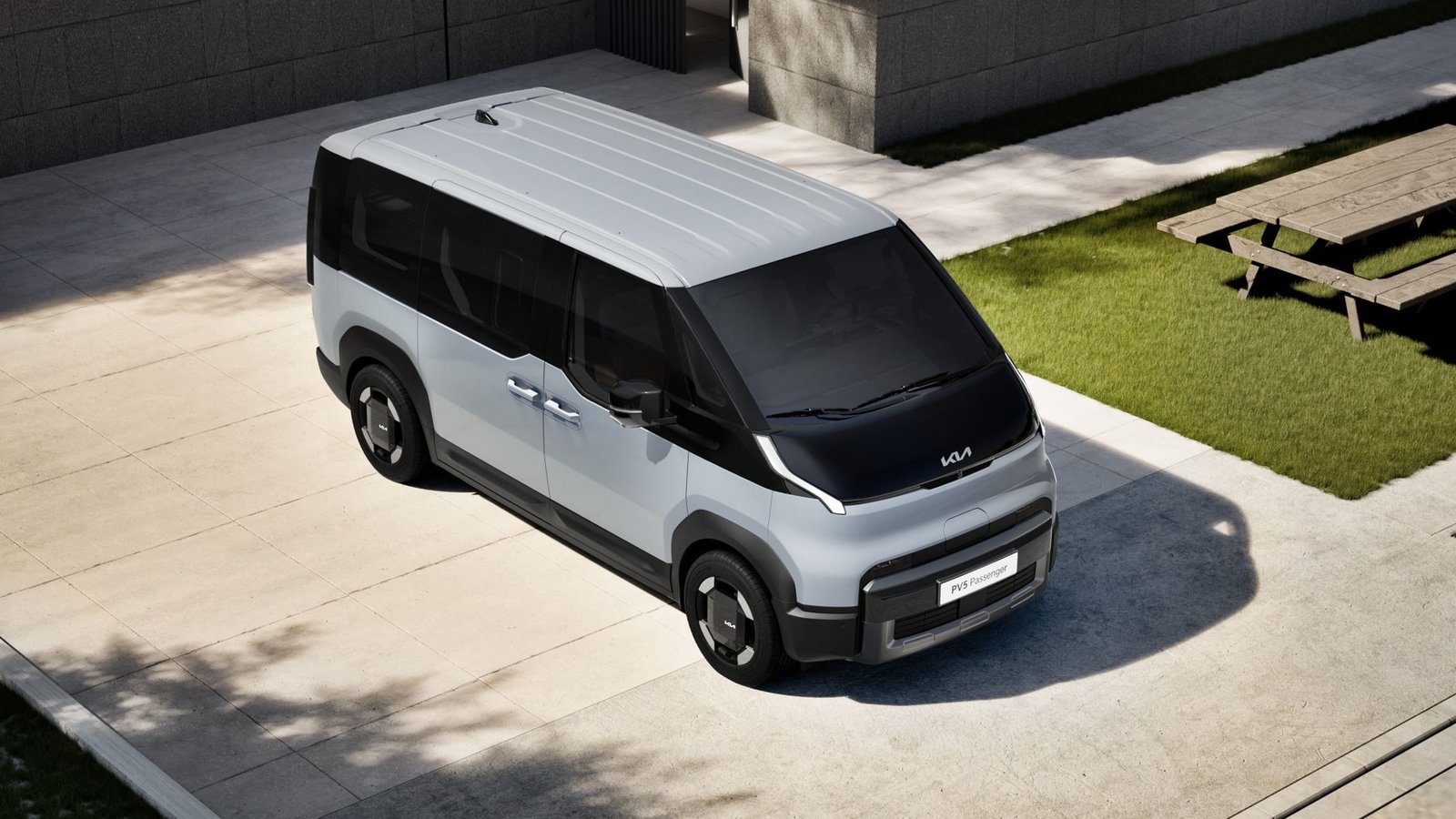
The Kia PV5’s 260-mile real-world range sounds impressive until you realize most commercial van buyers never drive that far in a single shift. The constraint isn’t the battery pack. It’s the charging infrastructure at the fleet yard, where 40 vans need to plug in at 6 PM and be ready by 5 AM. That’s when the math stops working.
Kia announced the PV5 electric van with a stated 260-mile range under real-world driving conditions, positioning it as a competitor in the commercial delivery market. The vehicle features fast-charging capability and a spacious interior designed for cargo or passenger configuration. On paper, it checks every box. In practice, it exposes a different bottleneck entirely.
What the Range Number Hides
The 260-mile figure represents range under favorable conditions. Strip away the marketing and you’re looking at a van that, in commercial use with typical payload, climate control running, and stop-and-go delivery routes, will realistically deliver 180 to 200 miles per charge. That’s still adequate for most urban delivery routes, which average roughly 80 to 120 miles daily.
The disconnect emerges when you scale from one van to one hundred. A single PV5 charging overnight on a standard Level 2 plug works fine. With a roughly 71 kWh usable pack charging at 11 kW, a full charge from near-empty takes somewhere around 7 hours. Commercial fleets don’t operate one van. They operate dozens from the same depot, all returning at shift change, all needing charge by morning.
Charging 40 vans simultaneously requires electrical service that exceeds what most existing fleet facilities can provide. Each van pulling 11 kW means 440 kW of continuous demand, assuming every vehicle charges at once. That’s before accounting for the depot’s existing electrical load from lighting, HVAC, and equipment. A typical commercial building running 400 to 800 amp service at 480V provides roughly 330 to 665 kW of total capacity, which gets consumed fast once dozens of chargers come online.
The Infrastructure Constraint Nobody Discusses
Fleet electrification hits a wall at the building service panel, not at the vehicle level. Upgrading electrical infrastructure requires utility coordination, transformer replacement, and often new service runs from the street. In many major metros, utility service upgrades can take a year or more, and in constrained areas considerably longer. The cost commonly ranges from $150,000 to $500,000 depending on existing capacity and distance from the nearest transformer.
The Kia PV5 range calculation assumes charging happens somewhere. The unspoken assumption is overnight depot charging, the only scenario that makes operational sense for most commercial fleets. Public fast charging works for occasional top-ups but fails as a primary charging strategy when you’re running scheduled routes. Sending drivers to charge mid-shift burns labor hours and reduces vehicle utilization.
The physics are straightforward. Current flows through copper wire, which has resistance. That resistance generates heat proportional to current squared. Double the charging current, and heat generation quadruples. At some point, the wire overheats or the breaker trips. The only solutions are thicker wire, which costs more and requires larger conduit, or spreading the charging load over time.
Load management systems help by staggering when each vehicle charges, but they introduce their own complexity. Instead of all vans charging simultaneously at full power, the system might charge a subset at a time, cycling through the fleet over the overnight window. That works until one van comes back late or needs a full charge faster than the rotation allows.
How Buyers Actually Evaluate Commercial EVs
Fleet managers calculate total cost of ownership, not sticker price. They compare fuel savings against increased capital cost, maintenance differences, and infrastructure investment. A diesel van might cost $38,000 versus the PV5’s estimated $45,000 base price. Over 150,000 miles at $3.50 per gallon and 18 mpg, the diesel burns about $29,000 in fuel. The electric van at $0.13 per kWh and 2.5 miles per kWh uses about $7,800 in electricity, saving roughly $21,000 in energy costs alone. Lower maintenance on the EV typically widens that gap further.
That energy savings looks compelling until you add $200,000 in depot electrical upgrades divided across 40 vans. Now each van carries an additional $5,000 infrastructure cost, eating into roughly a quarter of the per-van fuel savings. The payback period stretches out accordingly, and that assumes diesel prices stay constant and electricity rates don’t rise.
Fleets with existing electrical capacity or those building new facilities where infrastructure costs can be rolled into construction budgets face a completely different calculation. The math also favors smaller fleets where 5 to 10 vans can charge on existing service without upgrades. The Kia PV5 range becomes more relevant in these contexts because the charging constraint loosens.
Fleets also evaluate operational risk. A diesel van with an empty tank can refuel in 5 minutes at any gas station. An electric van with a depleted battery needs 30 minutes or more at a DC fast charger, assuming one is available and functioning. For time-sensitive deliveries, that difference matters more than the range estimate.
The Sequencing Error in Van Electrification
The market is solving the problems in reverse order. Manufacturers build vans with adequate range before the charging infrastructure exists to support fleet-scale deployment. Vehicles work brilliantly as proofs of concept but struggle at volume adoption.
Prioritizing depot charging infrastructure before van production scales would be a better sequence. Utilities could map commercial fleet locations, pre-upgrade service capacity, and create fast-track programs for transformer installation. That infrastructure foundation would make the 260-mile Kia PV5 range genuinely useful instead of theoretically sufficient.
The alternative is DC fast charging networks designed specifically for commercial vehicles, separate from consumer charging infrastructure. These would require dedicated locations near major logistics hubs with multiple high-power chargers and pull-through lanes for cargo vans. The economics work only at scale, which creates a coordination problem. Charging networks won’t build without van volume, and fleets won’t buy vans without charging networks.
Public charging infrastructure reached roughly 200,000-plus ports nationwide by late 2024, according to the Department of Energy’s Alternative Fuels Data Center, the majority of them Level 2 plugs alongside a growing share of DC fast chargers. Almost none of this infrastructure serves commercial fleet needs. The chargers are in shopping centers and highway rest stops, optimized for consumer vehicles on personal trips, not commercial vans on scheduled routes.
What Actually Makes Electric Vans Work
The constraint isn’t the vehicle. The PV5’s 260-mile range exceeds daily route requirements for most urban delivery operations. The constraint is charging access synchronized with operational needs. Solve that, and range anxiety largely disappears because vans on typical urban routes rarely use much more than half the pack’s capacity in a shift.
Fleets that succeed with electrification start small, test infrastructure capacity, and scale gradually. They identify routes under 100 miles where even with range degradation and seasonal losses, the vehicles never approach limits. They install charging on existing electrical service, monitor load, and upgrade incrementally as vehicle count increases.
They also negotiate with utilities early, securing positions in the upgrade queue before placing vehicle orders. A year-plus lead time for service upgrades becomes manageable when planned in advance. It becomes a crisis when discovered after the vans arrive.
The Real Lesson for Van Buyers
The Kia PV5 range matters less than your depot’s electrical panel rating. Before evaluating vehicles, audit your facility’s power capacity. Calculate how many simultaneous Level 2 chargers your existing service supports. If the number is less than your planned fleet size, you’re solving the wrong problem by shopping for vans.
For small fleets under 10 vehicles, the PV5 works today with minimal infrastructure investment. For medium fleets of 20 to 50 vehicles, infrastructure planning matters more than vehicle selection. For large fleets exceeding 100 vehicles, electrification requires utility-grade infrastructure planning that takes years, not months.
The 260-mile range isn’t wrong. It’s just not the binding constraint. The electrical service panel is. Until the charging infrastructure catches up to the vehicle capability, range numbers remain theoretical for most commercial buyers. Physics doesn’t care about marketing claims.