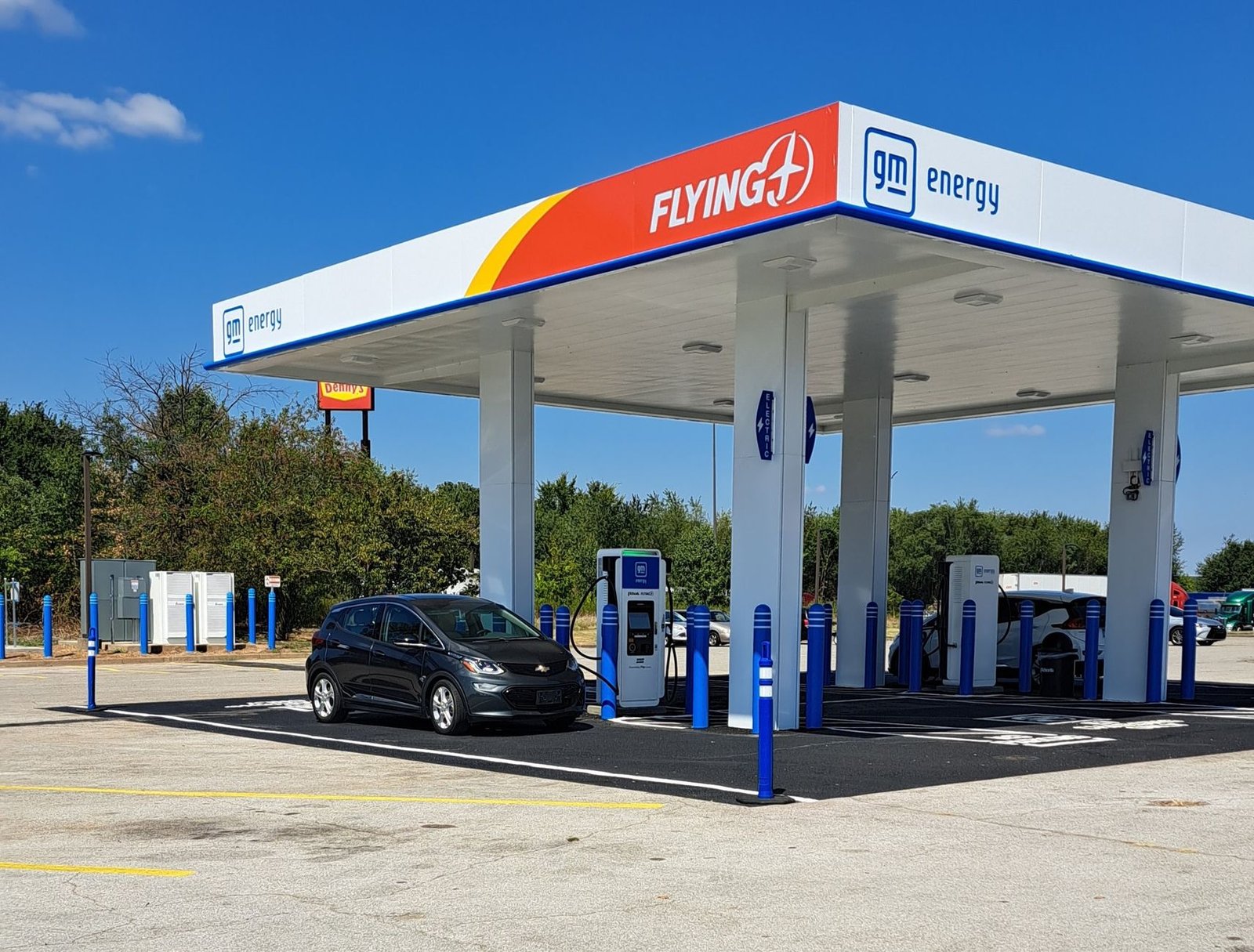
Excerpt: The Chevy Equinox EV lease payment jumped from under $300 to over $500 in a single month. Understanding why requires looking at how EV leasing actually works, and it’s stranger than you’d think.
When the Math Stops Making Sense
A few weeks ago, you could lease a Chevy Equinox EV for around $280 a month. Not a stripped-down base model, either. A well-equipped crossover with 319 miles of range and access to GM’s Ultium charging network. Then June arrived, and the same vehicle at the same dealer suddenly wanted $520 a month. Same car, same term, same down payment structure. The monthly cost nearly doubled.
This isn’t a story about one vehicle getting more expensive. It’s about how EV leasing operates on fundamentally different economics than the gas-car leasing you’re used to. And when you understand what actually determines that monthly payment, you realize the Chevy Equinox EV lease situation isn’t an anomaly. It’s a preview of what happens when the federal government, automaker profit strategies, and used-car market uncertainty collide in your monthly budget.
The Hidden Calculator Behind Every Lease Payment
A lease payment looks simple: you’re paying for the depreciation during your lease term, plus interest. You drive a $40,000 car for three years, it’s worth $25,000 at the end, you pay for that $15,000 in value loss. Add some financing charges, done.
Except the leasing company has to guess what the car will be worth three years from now, today. That guess is called the residual value, and it’s set in stone when you sign. If they guess wrong and the car is actually worth $20,000 in three years, not $25,000, they eat the $5,000 loss. You’re protected. That’s why leasing exists: it shifts residual risk from you to them.
For gas cars, this system works because residual values are predictable. A Honda Accord loses about 40% of its value in three years. A BMW 3 Series loses about 50%. The numbers move a few percentage points based on gas prices or recession fears, but the ranges are known. Leasing companies have decades of data.
For EVs, they have chaos. A 2021 EV’s actual resale value in 2024 depends on whether Tesla cut prices (they did, multiple times), whether charging infrastructure improved in your region (maybe?), whether battery degradation fears were justified (jury’s still out), and whether the federal government changed tax credit rules (absolutely, several times). Nobody knows what a 2024 EV will be worth in 2027. So leasing companies build in massive safety margins, which means conservative residual values, which means higher monthly payments.
Why June Changed Everything for One Vehicle
The Equinox EV’s affordability in spring 2024 wasn’t about GM’s manufacturing costs or battery pricing. It was about the $7,500 federal tax credit. When you lease an EV, the leasing company (usually the automaker’s finance arm) gets the credit, not you. They can pass that savings into the lease calculation however they want.
GM was applying the full $7,500 directly to the capitalized cost. That meant the leasing company was calculating depreciation on a $33,500 vehicle instead of a $41,000 one. Your monthly payment reflected that phantom $7,500 discount up front. The monthly amount dropped from the $400s into the high $200s. It made headlines. It briefly made the Equinox EV one of the cheapest ways to drive a new vehicle of any powertrain in America.
Then GM’s bean counters apparently looked at conquest rates, margin per unit, and lease-to-purchase conversion numbers and decided the subsidy strategy wasn’t worth it. The June lease programs restructured how that $7,500 gets applied. Instead of reducing the cap cost directly, it’s now blended into the money factor (the interest rate equivalent in leasing) and residual assumptions. You still technically get some benefit from the credit, but it’s diluted across the payment structure. The upfront sticker shock returns.
This isn’t unusual. Automakers routinely adjust how much of the federal credit they pass through to lease customers. It’s not regulated. The credit goes to whoever owns the car at purchase, and in a lease, that’s the leasing company. If GM’s finance arm wants to keep $4,000 of that credit as profit margin and only pass through $3,500, that’s legal. You just pay more per month.
The Residual Value Problem Nobody Wants to Discuss
Even with aggressive lease subsidies, the Chevy Equinox EV lease math is built on someone’s guess about 2027 used EV prices. That guess is conservative because the recent past has been brutal.
In late 2023, used EV prices fell about 30% year-over-year while used gas car prices stayed relatively flat. The main culprit was Tesla’s repeated new-car price cuts. When you can buy a new Model 3 for $38,000, why would anyone pay $35,000 for a used one with 30,000 miles and unknown battery health? The entire used EV market repriced downward. Leasing companies that set residuals in 2020 or 2021 took massive losses when those vehicles came off lease.
Now they’re terrified. The current Equinox EV residual values are probably set in the 45-50% range for a 36-month lease. That’s worse than a gas Equinox, even though EVs have fewer wear items and should theoretically hold value better. The leasing companies are assuming another round of price cuts, more battery technology improvements that make current EVs seem obsolete, and continued buyer skepticism about used EV battery life.
They might be wrong. If EV prices stabilize and charging infrastructure keeps improving, 2027 used EV prices could be stronger than expected. But if you’re the leasing company, you can’t take that bet. You set conservative residuals, which pushes lease payments up, which makes EVs harder to move, which means you need incentives to compensate, and the whole cycle continues.
What the “$299 Lease!” Marketing Hides
When you see an EV lease advertised at an unusually low monthly payment, you’re not looking at the vehicle’s true economics. You’re looking at a temporary subsidy stack: federal tax credit pass-through, manufacturer incentive cash, possibly dealer contribution, sometimes a loyalty or conquest bonus if you’re trading in a specific brand.
The industry knows most shoppers anchor on the monthly payment, not the total cost or the underlying calculation. So they engineer the lowest possible payment for the first month of a sales quarter, put that number in big font, and accept lower margins to hit volume targets. Then they pull back the subsidies and the payment jumps. The Chevy Equinox EV lease went through this exact cycle.
This creates a perverse shopping incentive. If you’re willing to time your purchase and negotiate hard at month-end or quarter-end, you can sometimes catch these subsidy windows. But most people can’t or won’t optimize their transportation around GM’s fiscal calendar. They show up when their old lease ends or when their car breaks down, and they get whatever the current program offers. That’s often 40-60% higher than the promotional rate they saw advertised weeks earlier.
What Actually Matters When You’re Comparing Monthly Costs
The $520 monthly Chevy Equinox EV lease isn’t expensive because the vehicle is bad or because EVs are inherently expensive. It’s expensive because of residual value uncertainty, subsidy timing, and GM’s internal margin targets for that specific month. Next month it could be $420. Three months from now it might be $299 again if GM needs to hit a quarterly sales target.
This makes price shopping for EV leases fundamentally different than shopping for gas car leases. With a gas car, the monthly payment moves 10-15% based on timing and negotiation. With an EV, it can move 50% based on how much of the federal credit the manufacturer decides to pass through that month.
If you’re serious about leasing an EV, you need to track the specific lease program codes, not just the sticker price. The vehicle doesn’t change. The monthly cost changes based on invisible backend calculations. Sign when the money factor is low and the residual is optimistic. Walk away when they’re conservative. The car sitting on the lot is identical either way.
The Signal in the Price Swing
When the Chevy Equinox EV lease payment doubles in a month, watch for three specific responses. First, does GM extend or reinstate the better lease terms within 60 days? If yes, the higher payment was a temporary margin grab and they realized it hurt volume too much. If no, they’ve decided they’d rather sell fewer units at higher margins, which tells you something about their battery supply constraints or production costs.
Second, do other automakers with similarly-positioned EVs (Volkswagen ID.4, Nissan Ariya, Hyundai Ioniq 5) keep their lease rates stable or follow GM upward? If they hold steady, GM miscalculated. If they all raise rates together, the industry has collectively decided used EV residual risk is worse than previously modeled.
Third, watch for cash purchase incentives versus lease incentives. If GM starts offering $5,000 cash back to buyers while lease payments stay high, it means they want to avoid the residual risk entirely. They’d rather discount the vehicle and let you own the depreciation risk than keep it on their books through a lease.
The monthly payment is the output. The residual value assumption and the tax credit pass-through strategy are the inputs. When the output jumps, you’re seeing someone’s revised forecast of the EV market in 2027. Right now, that forecast is getting more conservative, which means monthly payments are going up even as EV sticker prices come down. That’s not a contradiction. That’s leasing math working exactly as designed, just with worse assumptions about the future.