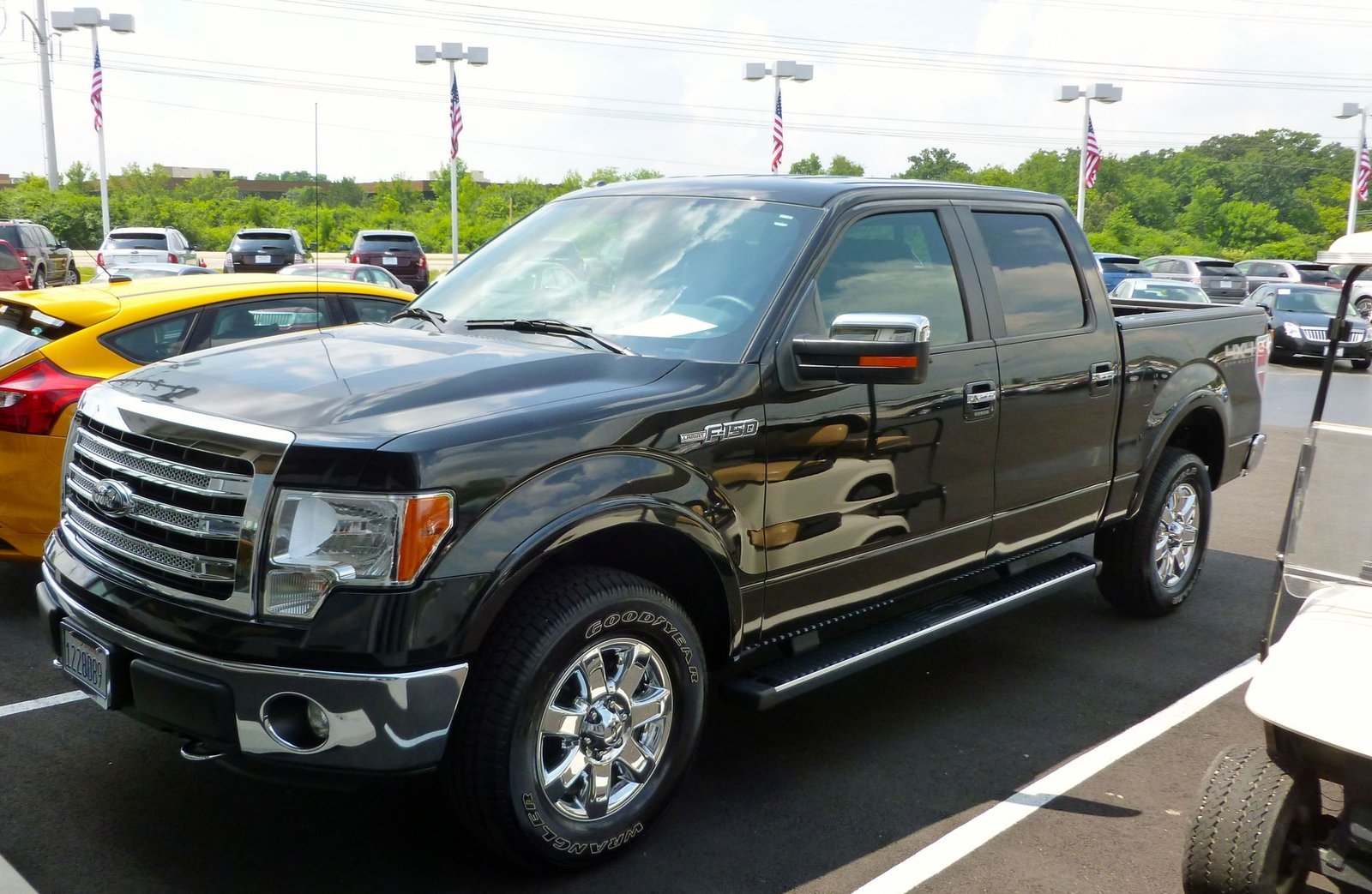
Excerpt: Ford’s upcoming affordable electric pickup reveals the core engineering challenge that determines whether cheap EVs can actually exist: battery pack size versus actual utility.
The Awkward Math of Affordable Electric Trucks
Ford recently launched a placeholder website for an electric pickup that supposedly will cost around $30,000. The page shows a compact truck with a bed, four doors, and the promise of real work capability. It looks convincing until you start running the numbers on what a $30,000 electric pickup can actually contain under the sheetmetal.
Batteries cost roughly $100 per kilowatt-hour at the pack level. A useful electric truck needs at least 60 kWh to avoid being a golf cart with a bed. That’s $6,000 of your $30,000 budget gone before you add motors, inverters, structure, or the actual truck parts. The constraint isn’t technological ambition. It’s arithmetic.
Ford can obviously build a cheap electric pickup. The question is what gets deleted from the specification to hit that price point, and whether American truck buyers will accept those deletions. Every other automaker attempting affordable EVs has discovered the same tension: the battery size that makes an EV competitive with gasoline vehicles costs more than the target customer will pay.
What Actually Fits in a $30,000 Electric Pickup
Start with the battery. Current lithium-ion packs cost automakers between $100 and $130 per kWh depending on chemistry and purchase volume. Ford has decent scale, so assume they’re on the lower end. A 60 kWh pack costs them $6,000. That gives you maybe 200 miles of range in a truck with the aerodynamics of a brick.
Now add the electric motors. A single-motor front-wheel-drive setup costs roughly $800 to $1,200 in manufacturing. The power electronics that convert DC battery power to AC motor power add another $500 to $800. You need a charging system: another $400 for the onboard charger and $200 for DC fast charging capability if you want anything beyond Level 2 speeds.
You’re at $8,000 before you build the actual truck. The body structure, suspension, brakes, interior, bed, lighting, and everything else that makes it recognizable as a pickup needs to fit in the remaining $22,000. For context, the average profit margin on a Ford F-150 is somewhere between $10,000 and $15,000 per unit. Ford isn’t trying to lose money on this vehicle, so they need to build the whole thing for maybe $24,000 to maintain a viable margin.
A cascade of compromises follows. Smaller battery means less range. Cheaper motors mean less towing capacity. Simplified interiors mean hard plastics instead of soft-touch materials. Single-motor front-drive means no four-wheel-drive capability. Each deletion saves money but removes something the traditional truck buyer expects as standard.
The affordable Ford pickup will almost certainly use lithium iron phosphate (LFP) chemistry instead of the nickel-manganese-cobalt (NMC) packs in more expensive EVs. LFP is cheaper per kWh but stores less energy per kilogram, so the pack weighs more for the same usable range. More weight means worse efficiency, which circles back to needing a bigger battery, which costs more money. You can see the engineering team’s spreadsheet reaching a local minimum where every optimization in one direction creates a penalty somewhere else.
Why Truck Buyers Make This Especially Hard
Electric sedans can get away with compromises that electric trucks cannot. A compact EV with 200 miles of range works fine for commuting because sedan buyers rarely tow things or drive through mud. Truck buyers purchased a truck specifically because they need capabilities a sedan doesn’t offer.
Consider towing capacity. When you attach a 5,000-pound trailer to an electric truck, range drops by 50% or more. The aerodynamic penalty is severe, and regenerative braking becomes less effective because you can’t safely recapture energy while hauling mass downhill. A 200-mile range becomes 100 miles with a moderate trailer. That’s unusable for anyone doing actual truck things.
Four-wheel drive presents similar physics problems. Adding a second motor and the associated power electronics costs roughly $2,000 in manufacturing. That’s 7% of your total budget. But truck buyers in snow states consider 4WD non-negotiable. Ford could save that $2,000 and make front-drive only, but they’d lose half the addressable market.
Payload capacity creates structural requirements that add weight. A truck bed rated for 1,500 pounds needs reinforced frame rails and stiffer suspension. Those components cost money and add mass, which reduces range, which requires a bigger battery to compensate.
“Affordable” and “capable” point in opposite engineering directions when you’re building an electric truck. Gasoline trucks hide this tension because fuel is energy-dense and refueling infrastructure is everywhere. Electric trucks expose it because the battery is both the most expensive component and the one that determines whether the vehicle can do truck things.
Where the Industry Actually Stands
Ford isn’t the first company to promise a cheap electric pickup. Rivian’s R1T started at $67,500 before incentives. The Tesla Cybertruck launched at $60,990 for the dual-motor version. The GMC Hummer EV began at $79,995. Even the Ford F-150 Lightning, which uses existing F-150 production infrastructure to reduce costs, starts at $62,995 for the base model.
None of these vehicles are remotely close to $30,000. The cheapest electric pickup currently available in the United States is the F-150 Lightning Pro for fleet buyers, and that’s still above $55,000 before any tax credits. The gap between $55,000 and $30,000 requires fundamental redesign, not incremental cost reduction.
Chinese automakers have demonstrated that cheap electric trucks are physically possible. BYD sells small electric pickups in international markets for the equivalent of $20,000 to $25,000. But those vehicles are smaller than American mid-size trucks, have minimal towing capacity, and lack the safety and emissions equipment required for U.S. sale. They prove the concept works at low cost but don’t prove it works for American use cases.
The closest domestic comparison is probably the Chevrolet Silverado EV Work Truck, which GM initially said would offer a base version around $40,000. That model hasn’t materialized yet. GM has focused on higher-trim versions that generate actual profit. This pattern repeats across the industry: announce an affordable version to generate headlines, then quietly push it back while selling expensive variants first.
Most Reporting Assumes Magic Happens in Manufacturing
Most coverage treats $30,000 as a difficult but achievable goal, as if the primary obstacle is corporate will rather than material costs. Ford can’t simply decide to sell trucks for less than they cost to build. They need either lower component costs or reduced capability to make the math work.
Much coverage assumes that battery prices will continue dropping fast enough to make $30,000 viable by the time Ford launches this vehicle. Battery pack prices have indeed fallen dramatically, from over $1,000 per kWh in 2010 to around $100 per kWh today. But the rate of decline is slowing. Getting from $100 to $80 per kWh is harder than getting from $200 to $100 was, because you’re approaching raw material costs and the fundamental energy requirements of lithium-ion chemistry.
Even if battery costs drop to $80 per kWh, a 60 kWh pack still costs $4,800. You’ve saved $1,200 compared to today’s costs. That’s meaningful but doesn’t fundamentally change what fits in a $30,000 vehicle. You’re still building a truck with compromised range, limited capability, and cost-driven specification decisions throughout.
The other assumption is that Ford will accept razor-thin margins on this vehicle to establish market share. That’s possible. Tesla did exactly that with the Model 3, losing money on early production to scale the platform. But Ford answers to shareholders who expect profitable quarters. Selling trucks at break-even or small losses works only if there’s a clear path to profitability at volume, and it’s unclear what volumes a compromised electric truck would achieve.
Watch the Specification Sheet, Not the Price
When Ford eventually reveals complete specifications for this affordable electric pickup, three numbers will tell you whether they solved the constraint problem or simply accepted the compromises: battery capacity, towing rating, and motor configuration.
Battery capacity below 60 kWh means they prioritized price over range. That confines the vehicle to local use. Anything above 70 kWh suggests they couldn’t hit $30,000 without external subsidies or planned losses. The battery size is the clearest indicator of what tradeoffs they made.
Towing capacity reveals whether this is a truck that can do truck things or a truck-shaped commuter vehicle. If it’s rated below 5,000 pounds, Ford accepted that traditional truck buyers won’t cross-shop this against gasoline alternatives. If it’s above 7,000 pounds, they probably added a bigger battery and second motor, which pushes the actual manufacturing cost well above what $30,000 can cover.
Motor configuration tells you about all-weather capability. Single front-motor means cost won over capability. Dual-motor means Ford decided 4WD was non-negotiable even if it breaks the budget. There’s no wrong answer, but there’s no configuration that satisfies both constraints simultaneously.
Production timeline is worth tracking. If this vehicle launches in 2027 or 2028, Ford is banking on continued battery cost declines to make the economics work. If it launches sooner, they’ve either found manufacturing breakthroughs that nobody else has achieved, or they’re redefining what “around $30,000” actually means. Every month of delay suggests the constraint problem remains unsolved.