Introduction
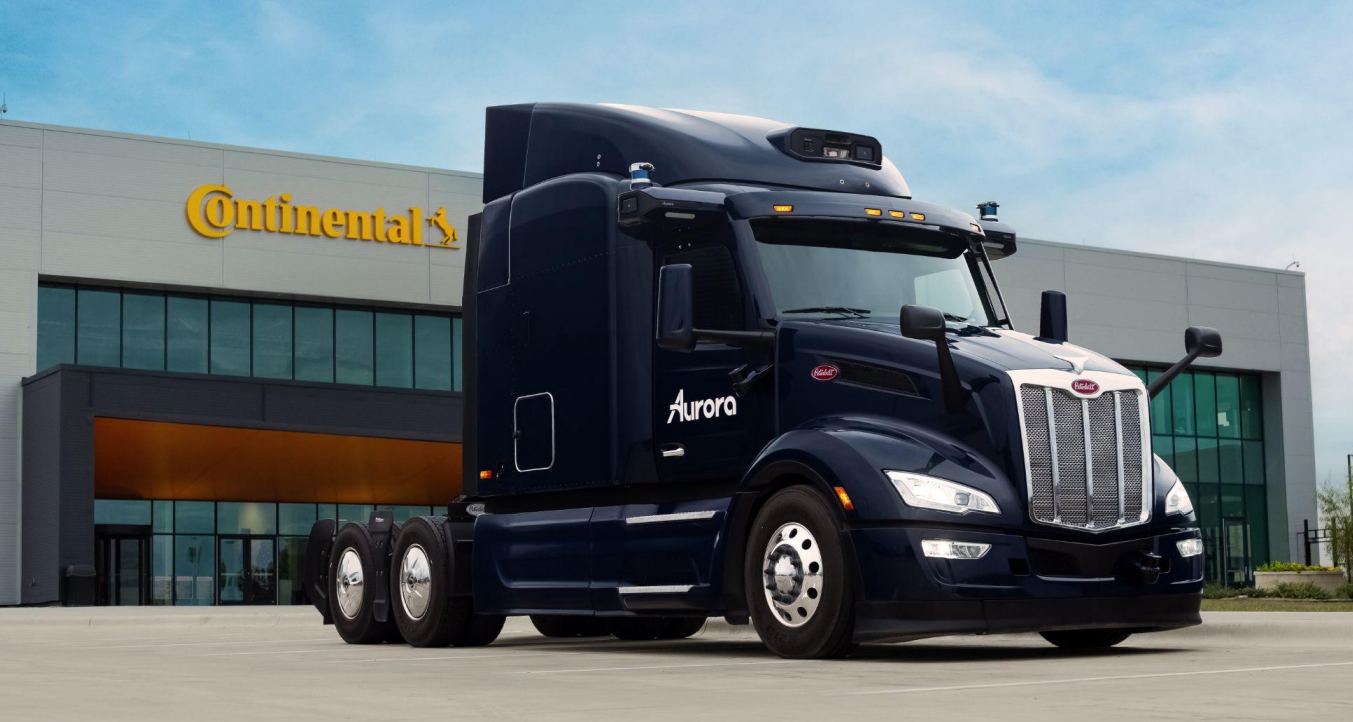
AI and autonomy are the biggest trends in the automotive market today. Both Waymo and Tesla appear to have cracked the autonomous car market, and investors have assumed, rightly or wrongly, that the same trend will extend to the trucking sector. No one company captures this trend better than Aurora Innovation (NASDAQ: AUR) which despite generating very little revenue has a $12 billion market capitalization.
Founded in 2017 by Chris Urmson, former CTO of Google’s self-driving car project, which later became Waymo, Sterling Anderson, former head of Tesla’s Autopilot program, and Drew Bagnell, former head of Uber’s autonomy and perception team, Aurora certainly has the right pedigree, at least on paper.
And nearly eight years after its launch and with over $4.6 billion in cumulative losses, Aurora is finally beginning to roll out a commercial driverless product on a single freight lane in Texas. But it’s hard not to wonder if Aurora is simply riding the AI hype wave versus actually creating a viable autonomous trucking platform that can redefine trucking.
We ask a few questions of Aurora in this article. Are Aurora’s projections based on reality? Can Aurora really scale as they can? And won’t they be threatened in the future by Tesla?
Aurora’s Projections Are Extremely Aggressive
Aurora continues to burn through cash at the rate of over $700 million per year and with $1.1 billion of cash left on its balance sheet it has just enough cash to last through to the end of 2026. This means that Aurora is going to need to raise money in the near future. This shouldn’t be a problem when the market for AI is this hot and you have a $11 billion market cap.
But a huge part of its pitch to investors has been that it’s going to scale from a couple of million dollars in pilot revenue to $1.3 billion in annual recurring revenue by 2028. We find this to be extremely unlikely.
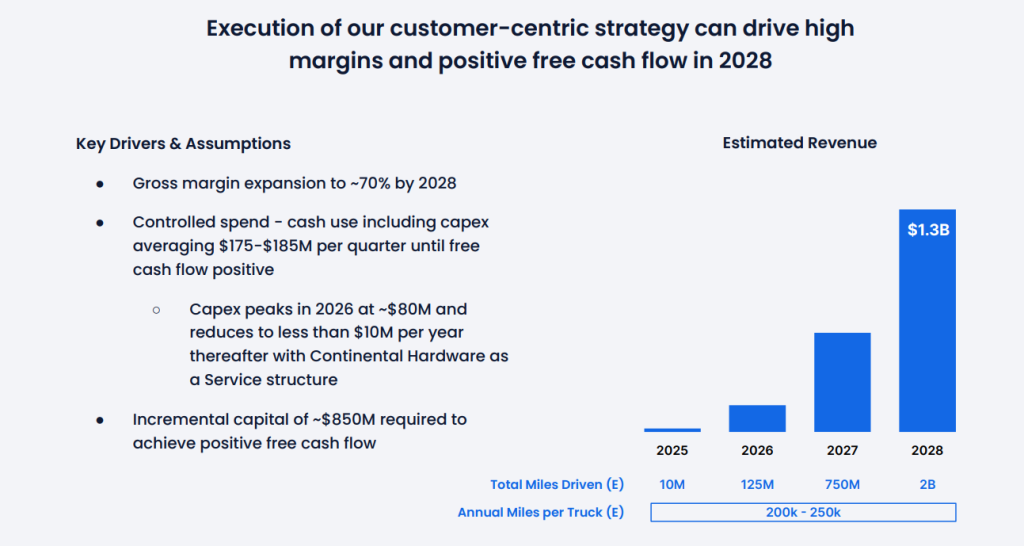
We know this is unlikely because as of Q1 2025, Aurora still operates only a handful of trucks. To get to $1.3 billion in revenue by 2028 it will have to operate nearly 9,000 autonomous trucks by the end of 2028. That would require increasing its operational fleet by a factor of 200x in just three years!
| Year | Projected Miles Driven (Annual) | Assumed Miles/Truck | Estimated Trucks on Road |
|---|---|---|---|
| 2025 | 10 million | 225,000 | ~45 |
| 2026 | 125 million | 225,000 | ~555 |
| 2027 | 750 million | 225,000 | ~3,333 |
| 2028 | 2 billion | 225,000 | ~8,889 |
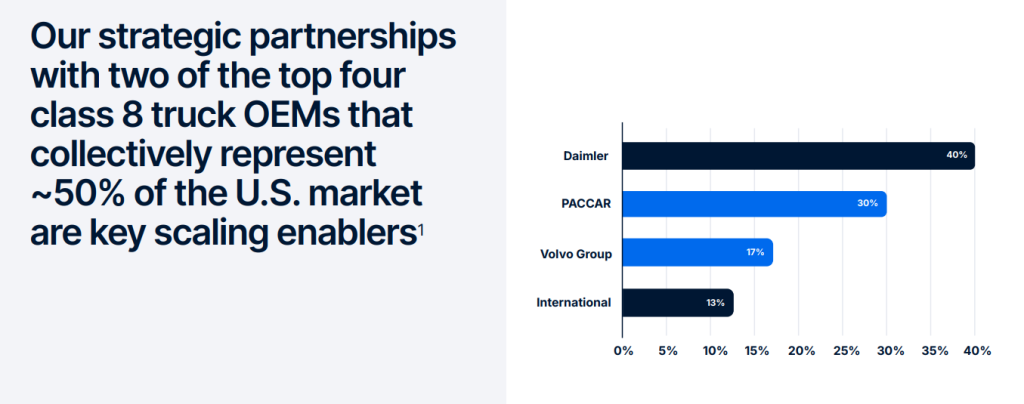
To get there, Aurora says it will rely on it’s strategic OEM partnerships with Volvo and PACCAR which represent slightly more than 50% of the overall trucking market. Aurora is basically projecting that PACCAR and Volvo will together churn out 9,000 trucks in the next 2-3 years. Not only that, since Aurora has an asset-light business model and won’t use its own cash to buy trucks, it is betting that a bunch of third party fleets are going to buy 9,000 trucks at $200,000 a truck. Highly unlikely!
Waymo Provides Great Context
To understand just how ambitious or unrealistic Aurora’s goals are, we need only look at Waymo
Waymo has:
- Operated in public since 2009
- Over a decade of on-road testing data
- A commercial robotaxi fleet operating in Phoenix, and limited operations in LA and SF
Not only that, Waymo is solving a much simpler problem i.e. it is much easier to automate a 4,000 lbs passenger car running at 40 miles per hour than it is to automate a 80,000 lbs truck operating at 65 miles per hour. If Waymo, with more time, capital, and full control of its hardware/software stack, is only cautiously rolling out commercial operations why should we believe Aurora can go from 50 trucks in 2025 to 9,000 by 2028?
The Tesla Semi Overhang
We have written previously about the Tesla Semi and about how it is going to provide a viable electric alternative to diesel heavy duty trucks. We now know that Tesla is expected to start factory production of the Semi by the end of 2025 at its Nevada factory.
Tesla has already developed its own vision based autonomous software and it’s getting ready to roll it out at scale in the passenger car market. It shouldn’t be that difficult for Tesla to get its Semi trucks to operate autonomously.
In fact, the economics on an autonomous electric Tesla would be far superior to that of an Aurora based autonomous PACCAR and Volvo diesel truck.
Assuming a $300,000 purchase price and an average cost of $0.25/kWh electricity, the Tesla Semi’s estimated cost-per-mile comes out to roughly $1.37 without a driver.
| Category | Cost per Mile |
|---|---|
| Electricity (2.0 kWh @ $0.25) | $0.50 |
| Maintenance | $0.12 |
| Insurance & Misc. | $0.15 |
| Depreciation | $0.60 |
| Total | $1.37 |
This is significantly lower than Aurora’s own stated pricing of $2.30 per mile
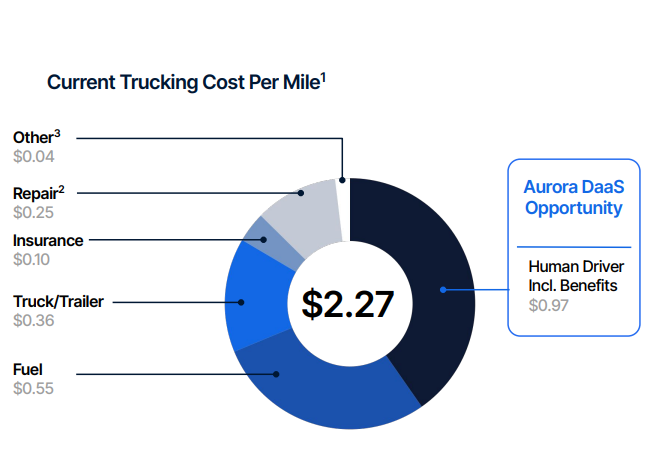
Granted, Tesla’s Semi is not as ubiquitous on the road as a Peterbilt or a Volvo truck, but if Tesla adds autonomy as it scales out its Semi offering, Aurora’s entire business model risks being undercut by a vertically integrated manufacturer that builds its own trucks, energy infrastructure, and autonomy stack.
Conclusion
There is no doubt that autonomous trucks will at some point become a reality. But it is dangerous to assume that we will transition from autonomous cars to autonomous trucks in a short amount of time. Aurora’s $11 billion of market capitalization assumes that we will, and investors who have bought in to their projections are going to be in for a rude shock.