Solid State Battery Range: Why 621 Miles Won’t Fix Range Anxiety
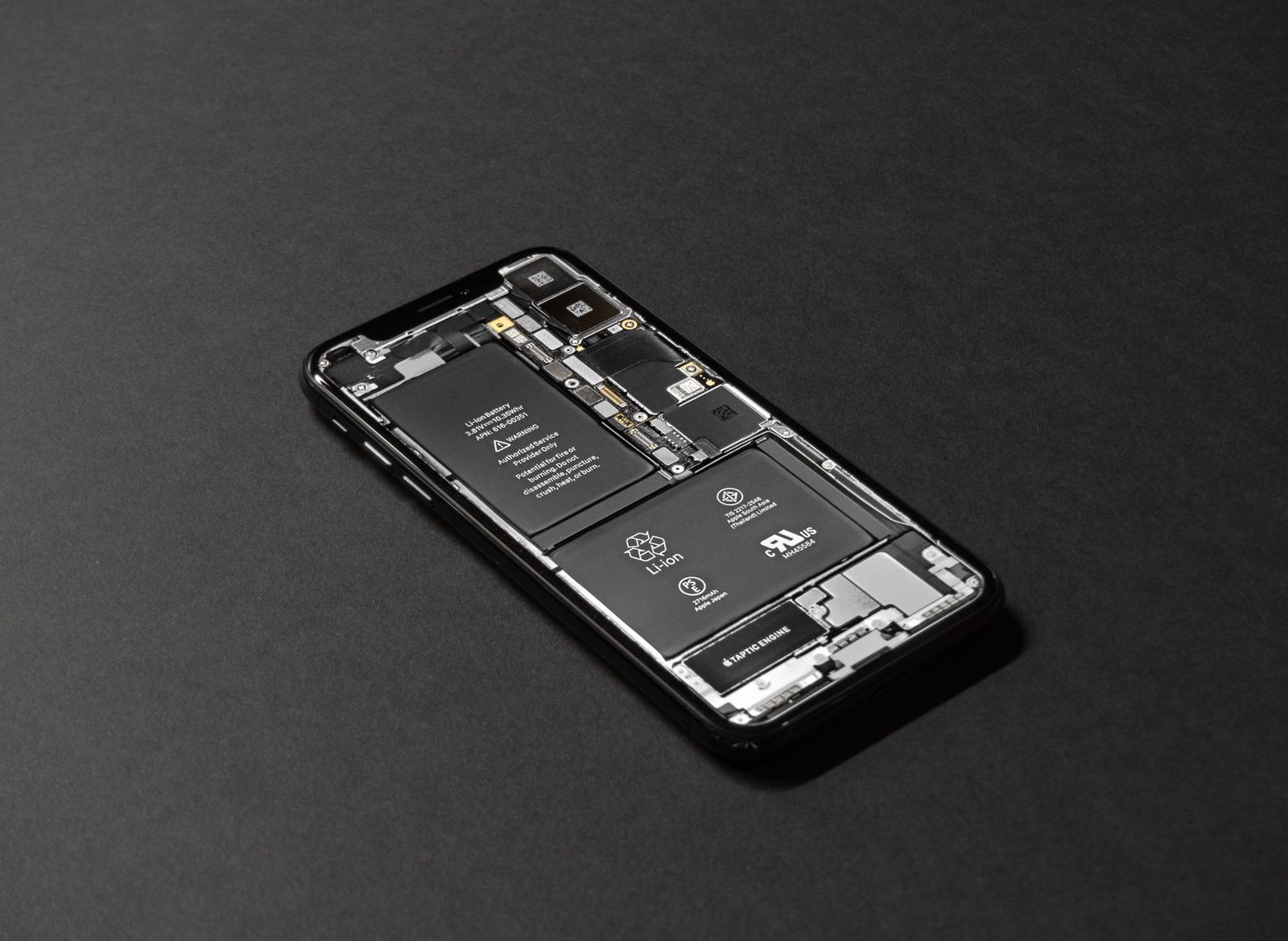
Geely reportedly targets 500 Wh/kg energy density in a solid-state battery slated for pilot deployment in 2027, according to industry reporting. That’s roughly twice the density of current high-nickel NMC cells in production EVs, which typically hit 250-300 Wh/kg at the cell level. The projection promises over 621 miles of range and a lifespan exceeding 600,000 miles. The numbers sound transformative. The timeline feels plausible given that CATL, BYD, and Toyota are all targeting 2027-2028 for solid-state pilots or demonstrations. But here’s the problem: range anxiety isn’t actually about range.
Walk into any dealership today and ask which EV model sells best. It’s rarely the one with the longest EPA rating. More often it’s the one where the buyer already has home charging or works near a reliable DC fast charger. The 259-mile Chevy Bolt outsold the 350-mile Mercedes EQS for years, not because customers didn’t notice the range gap, but because the Bolt cost around $27,000 and the EQS cost over $100,000. Buyers optimize around total cost of ownership and charging access, not theoretical maximum range.
The Announcement That Wasn’t
Geely’s solid-state battery program exists. The company has partnered with suppliers on adhesives and materials rated for wide temperature ranges, per technical disclosures. Testing apparently began in 2026 for real-world validation ahead of the planned 2027 pilot. Geely Holding owns or holds major stakes in Volvo, Polestar, Zeekr, Lynk & Co, Lotus, and Smart, which means any breakthrough could deploy across multiple brands.
But the 500 Wh/kg figure carries uncertainty. Source materials don’t specify whether that’s cell-level or pack-level energy density. The difference matters enormously. Tesla’s 4680 cells achieve approximately 245 Wh/kg at the cell level, but pack-level density drops to around 160-180 Wh/kg once you account for cooling systems, structural elements, and battery management hardware. Zeekr’s “Golden Brick” LFP pack hits roughly 128 Wh/kg at the pack level despite respectable cell-level performance.
If Geely’s 500 Wh/kg is a cell-level target, the actual deployed pack might deliver 350-400 Wh/kg after integration losses. Still impressive. Still a meaningful jump from today’s best lithium-ion packs. But not the 2x improvement the raw number suggests.
What Buyers Actually Optimize For
Survey data consistently shows that range anxiety drops sharply once an EV crosses 250 miles of EPA range. The jump from 250 to 300 miles matters for some buyers. The jump from 300 to 400 miles barely registers in purchase decisions. Beyond 400 miles, additional range becomes a rounding error in buyer calculus.
The constraint isn’t technical capability. It’s infrastructure predictability and charging friction. A driver with a 250-mile EV and reliable home charging experiences less anxiety than a driver with a 400-mile EV who parks on-street and depends on public chargers. The anxiety stems from uncertainty about charger availability, reliability, and payment friction, not from the battery’s theoretical maximum.
Consider the actual use case for that 621-mile solid state battery range. A buyer planning a 600-mile road trip faces broadly similar charging stops whether the car has 300 miles of range or 621 miles. Why? Because bladder capacity, meal timing, and passenger tolerance for continuous driving all tend to max out around 250-300 miles between breaks. The extra range mostly changes how deeply the driver dips into the pack at each stop. And charging time depends heavily on C-rate and thermal management, not just total capacity.
The Physics of Charging Speed
Solid-state batteries promise higher energy density and potentially better thermal stability than liquid electrolyte cells. But energy density and charging speed are separate constraints governed by different physics. Moving lithium ions through a solid electrolyte still faces resistance. Solid electrolytes remain vulnerable to lithium dendrite formation at the interface during fast charging. Achieving 10-minute charging to 80% requires advances in ion conductivity and electrode interface design that aren’t automatically solved by switching to solid electrolytes.
Current high-performance lithium-ion cells charge from 10% to 80% in roughly 18-25 minutes under optimal conditions. VW’s ID.3, in higher-capacity configurations with a battery around 77-79 kWh usable, charges from 10% to 80% in under 30 minutes on a suitably powerful charger. That’s competitive with Tesla’s Supercharger performance on similar pack sizes. The bottleneck isn’t cell chemistry alone anymore. It’s thermal management, charging infrastructure max power output, and battery conditioning algorithms.
Even if Geely’s solid-state cells match current fast-charging speeds, they don’t eliminate the fundamental friction: drivers still wait 20-30 minutes at a charger, still navigate fragmented payment systems, still gamble on whether the charger will work. Doubling the range just means taking that gamble half as often, not eliminating it.
The Real Adoption Constraint
Range anxiety is a proxy complaint for infrastructure anxiety. Buyers use “I need more range” as shorthand for “I don’t trust the charging network.” The evidence shows up in sales data. EVs sell best in markets with dense fast-charging networks and high home ownership rates. Norway pushed new-car EV share above 80% with largely the same 250-300 mile EVs available everywhere else. The difference wasn’t the cars. It was charging ubiquity and buyer confidence that a charger would exist and function when needed.
Solid-state batteries entering pilot production in 2027 won’t address this. Even aggressive scaling assumes several years from pilot to meaningful production volume. CATL targets 2027 for a sulfide solid-state pilot but hasn’t committed to firm mass production timing. BYD similarly aims for demonstrations before scaling later in the decade. Toyota has been promising solid-state breakthroughs for years and now targets roughly 2027-2028 for an actual debut.
The pattern repeats: promising chemistry, plausible timeline for pilot production, vague roadmap for scaling. Meanwhile, conventional lithium-ion manufacturing continues to improve. Pack-level costs for LFP cells fell to roughly $100/kWh or below in China in 2024. Cycle life for mainstream cells now commonly exceeds 2,000 cycles with modest degradation. Fast-charging infrastructure is expanding faster than solid-state production capacity will scale.
What This Means for Volvo Buyers
If Geely’s solid-state program hits its targets and Volvo receives allocation for a 2027 or 2028 model, the buyer experience won’t transform overnight. A hypothetical Volvo EX90 with 621 miles of range still needs a place to charge. It still competes with plug-in hybrids offering some electric-only range plus a gasoline backup that eliminates infrastructure dependency entirely.
Volvo buyers skew toward higher income brackets and homeownership rates, which correlates with access to home charging. For that demographic, the jump from 300 miles to 621 miles matters less than the jump from 200 miles to 300 miles mattered five years ago. The constraint has already been largely solved by crossing the “one charge per week for typical driving” threshold.
The customers still experiencing genuine range anxiety are apartment dwellers, on-street parkers, and rural drivers far from reliable fast charging. Solid-state batteries don’t solve their problem. Infrastructure does. A 250-mile EV with a guaranteed working charger every 50 miles beats a 621-mile EV with spotty charger coverage and unreliable uptime.
The Actual Lesson
Battery technology will continue improving. Solid-state cells will eventually reach production. Energy density will increase, costs will drop, and charging speeds may improve. But the adoption S-curve doesn’t wait for perfect technology. It bends around infrastructure deployment, buyer trust, and total cost parity with incumbent options. Geely’s reported solid-state program represents genuine technical progress. It just won’t fix the problem buyers think they have. Range was never the real constraint. It was always about knowing the charger would be there and work when you need it. Adding a few hundred miles to the odometer doesn’t change that equation.
Excerpt: Geely targets 621 miles of range with solid-state batteries by 2027, but range was never the real constraint. The actual barrier to EV adoption is infrastructure trust, not theoretical maximum range.