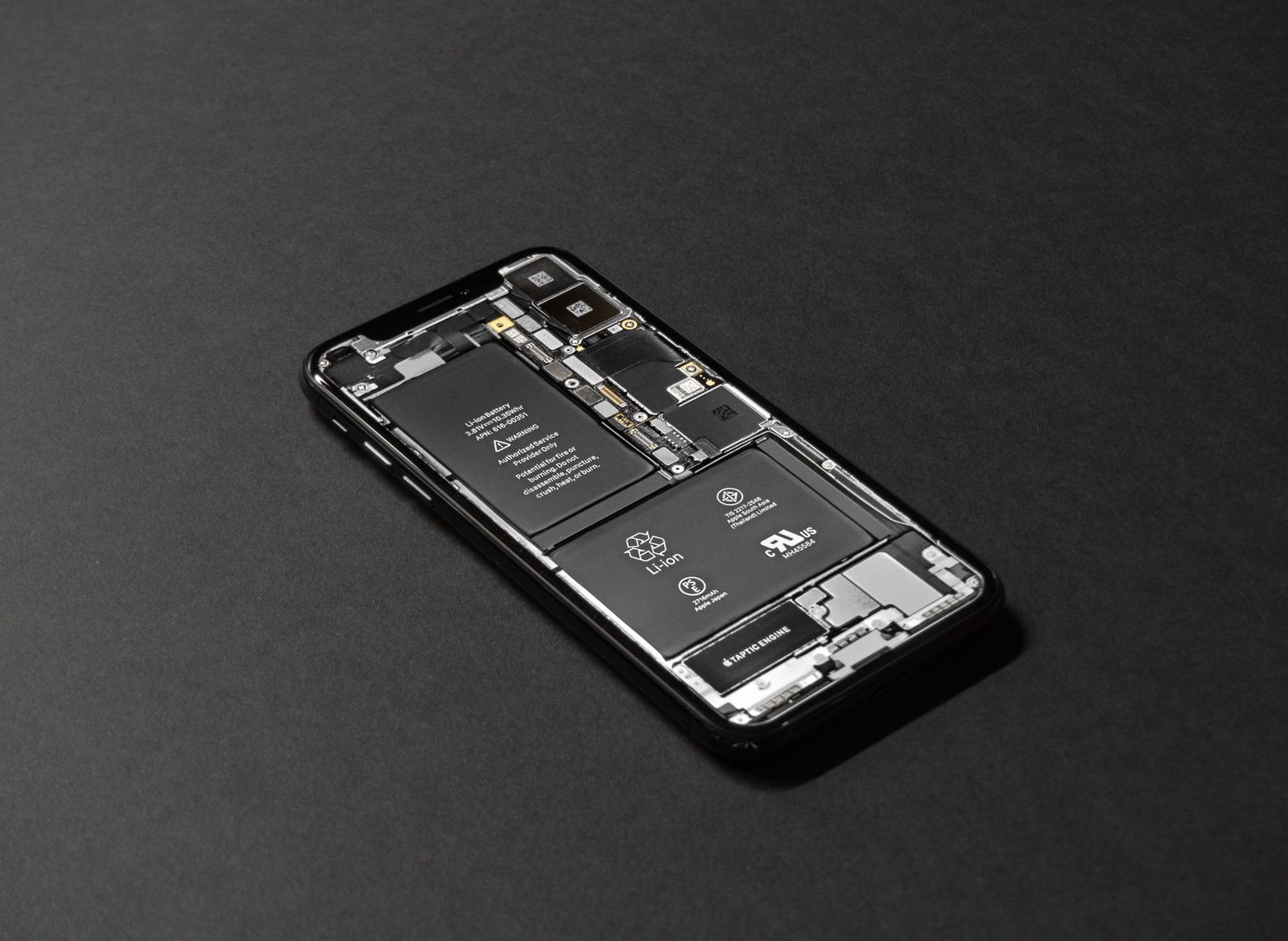
Manfred Harrer, Hyundai Motor Group’s R&D chief, recently told reporters that small-volume cars using Hyundai solid state batteries will reach the market within five years. Not test vehicles. Not demonstration units. Actual cars you could theoretically buy, though probably not at a price most people would pay. The timeline is specific enough to be interesting and vague enough to be safe, which tells you something about where solid-state technology actually stands.
The announcement matters less for the five-year promise than for what Harrer acknowledged in the same breath: raw material costs will remain “extraordinarily high for many years” as the technology scales. That single qualifier contains the entire story of solid-state batteries. The technology works in the lab. Multiple automakers have demonstration prototypes running. Ducati built a prototype motorcycle with QuantumScape cells. Mercedes has test vehicles using Factorial’s technology. The engineering challenge isn’t whether you can make a solid-state battery work. The challenge is whether you can make enough of them at a price that makes economic sense.
The Core Technology Trade
Current EV batteries move lithium ions through a liquid electrolyte between an anode and cathode. Charge the battery, ions flow one direction. Discharge it, they flow back. The liquid electrolyte does its job well enough that lithium-ion batteries have dominated portable electronics for three decades and now power millions of EVs.
Solid-state batteries replace that liquid with a solid material, typically a ceramic, sulfide, or polymer. Same basic job transporting ions, different medium. The theoretical advantages are real: solid electrolytes don’t leak, and many are less flammable than the organic liquids they replace. They allow you to use lithium metal anodes instead of graphite, which stores more energy per unit weight. In principle, this means smaller batteries with better fast-charging capability and longer range, according to Harrer’s statement to InsideEVs.
Making a solid electrolyte that conducts ions as efficiently as liquid, at room temperature, without degrading over hundreds of charge cycles, turns out to be difficult. The solid-solid interface between electrolyte and electrodes creates resistance. Lithium metal anodes form dendrites that can short the battery. Temperature sensitivity affects performance. These are fundamental materials science problems that require either new chemistries or manufacturing processes that don’t exist at commercial scale.
The Manufacturing Reality Nobody Discusses
Hyundai is developing solid-state batteries both internally and through partnerships. So is everyone else with serious EV ambitions: Toyota, Volkswagen backing QuantumScape, BMW with Solid Power, Nissan, Honda. The list reads like a who’s who of global automakers, which tells you two things. First, nobody thinks this is impossible. Second, nobody has figured out how to do it cheaply enough to matter.
Consider what “small-volume” means in automotive terms. A few hundred units? A few thousand? Compare that to the millions of lithium-ion cells produced daily in factories across Asia. Scaling battery production isn’t just about building bigger facilities. You need supply chains for raw materials, quality control processes that catch defects before cells reach vehicles, and manufacturing tolerances measured in microns. Lithium-ion production took decades to reach current efficiency and cost levels. Solid-state batteries are starting that journey from scratch with more complex materials and tighter tolerances.
The cost problem compounds at every step. Solid electrolytes often use exotic materials or require processing in controlled atmospheres. Lithium metal anodes are more expensive than graphite. Manufacturing defects cost more when you’re making small batches. Even if you solve the technical challenges, you face a classic chicken-and-egg problem: you can’t drive costs down without volume production, but you can’t justify volume production at current costs.
Harrer’s acknowledgment that raw material costs will stay “extraordinarily high for many years” suggests Hyundai doesn’t expect to solve this quickly. That’s actually the most useful signal in the announcement. When executives give specific timelines for things that probably won’t happen, they’re managing investor expectations. When they acknowledge long-term cost challenges, they’re telling you what keeps them up at night.
Where Hyundai Solid State Batteries Actually Stand
Hyundai plans to use in-house NMC cells in an extended-range Santa Fe EV launching in the near term. That’s conventional lithium-ion technology, not solid-state. The company is investing in its own battery manufacturing to control core technology, which makes sense for any major automaker. But the near-term product roadmap tells you what’s actually production-ready versus what’s still in development.
The five-year timeline for small-volume solid-state vehicles aligns roughly with what other manufacturers are saying. QuantumScape expects batteries in vehicles toward the end of the decade. Toyota has worked on solid-state technology for well over a decade and now aims for production “in the next few years,” though Toyota’s timelines have slipped before. Nobody has solid-state batteries in production vehicles you can actually buy today.
Meanwhile, conventional lithium-ion technology keeps improving. Several Chinese automakers, including Geely and BYD, have demonstrated ultra-fast charging that adds most of a battery’s range in under 15 minutes. Battery costs have dropped substantially over the past decade. Energy density keeps climbing through incremental improvements in chemistry and cell design. The comparison point for solid-state batteries is lithium-ion technology as it will exist in five to ten years when solid-state might finally reach production.
The Gap Between Lab Results and Market Reality
Press releases announcing battery breakthroughs rarely mention manufacturing complexity or cost. A recent lab test of a battery sample claiming solid-state technology measured roughly 409 Wh/kg energy density, according to testing by VTT reported by Electrek. The sample cycled between 2.3 V and 4.25 V, a voltage range typical of conventional lithium-ion cells. An independent analysis by Intertek’s UK lab measured lithium content at 3.4 parts per million and sodium at 632 ppm in approximately 0.5 grams of material.
The specific numbers matter less than what they reveal about the gap between claims and verification. Advanced silicon-anode lithium-ion cells already approach energy densities near 400 Wh/kg. What matters is whether you can build thousands of cells per day that meet those specifications consistently while lasting through years of real-world use.
This is where most coverage of battery technology gets it wrong. Articles focus on energy density or charging speed as if those were the only metrics that mattered. In production batteries, consistency matters more than peak performance. Cost per kWh matters more than theoretical energy density. Cycle life under real-world conditions matters more than controlled laboratory tests. Manufacturing yield matters more than proof-of-concept demonstrations.
The Capital Allocation Question
Hyundai’s decision to pursue Hyundai solid state batteries while simultaneously investing in conventional lithium-ion production reveals the actual strategic calculation. You can’t wait for solid-state to mature before building battery capacity because EVs need batteries now. But you also can’t ignore solid-state development because if a competitor achieves a breakthrough, you’ll be years behind.
The result is a portfolio approach: invest enough in solid-state to stay in the race, but assume conventional lithium-ion will power most of your vehicles for at least another decade. The five-year timeline for “small-volume” cars gives Hyundai the option to claim progress while managing investor expectations about when this technology might actually contribute to revenue.
Watch Hyundai’s capital allocation in battery manufacturing over the next few years. If solid-state production facilities get significant funding, that signals genuine confidence. If most investment flows to conventional lithium-ion capacity expansion, that tells you what Hyundai’s CFO actually thinks about the timeline. Follow the money, not the press releases.
Indicators That Would Signal Real Progress
You’ll know solid-state batteries are moving from laboratory curiosity to viable product when you see three specific signals. First, announcements of production facilities with specific capacity targets measured in GWh, not demonstration lines measured in MWh. Second, named supply agreements with cathode and electrolyte material suppliers at commercial scale. Third, automakers giving specific vehicle models and production volumes, not vague “small-volume” language.
Until then, assume five-year timelines mean “not soon” and “small-volume” means “too expensive for most buyers.” The technology will eventually work at scale. The physics isn’t impossible. But the gap between working prototypes and affordable mass production remains wide enough that Hyundai’s R&D chief felt compelled to warn about costs staying high “for many years.” That’s the signal worth hearing.