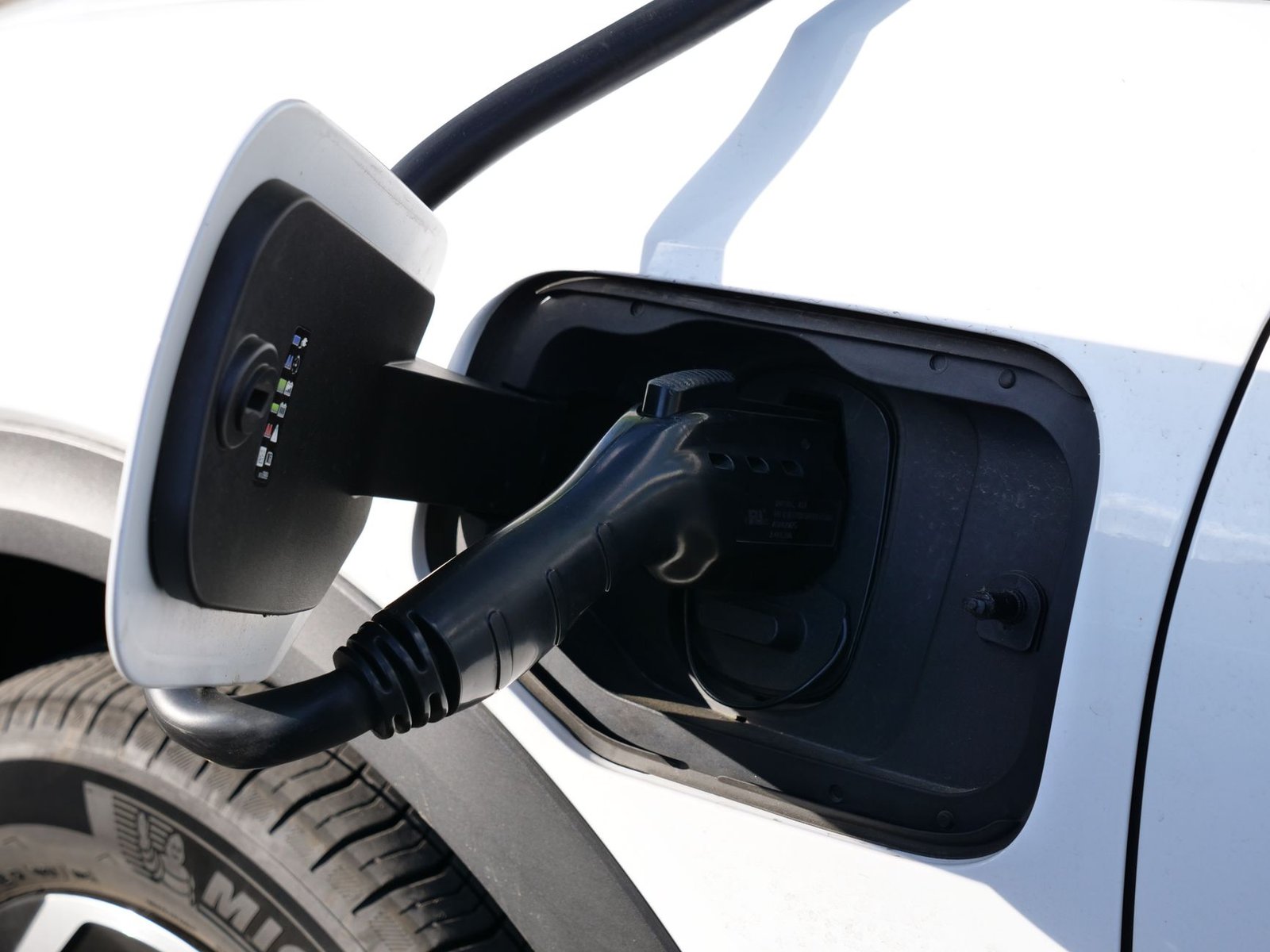
Excerpt: EVgo announced 750 kW chargers coming in 2027, but no vehicle sold in America can accept even half that power. The charging stations are getting faster than the batteries can handle.
A forum commenter saw the news about 750 kW charging coming soon and posted: “Finally! No more waiting around for 45 minutes. This will be like filling up at a gas station.” Three replies followed with variations of the same theme. Fast charging has been the bottleneck, and now the infrastructure is catching up. Just plug in, wait five minutes, and drive away with a full battery.
That belief rests on a fundamental misunderstanding of how battery charging works. The 750 kW number is a charger specification, not a vehicle capability. It’s like building a water main that can deliver 1,000 gallons per minute to a house whose pipes can only handle 100. The limiting factor isn’t the charger anymore. It’s the battery.
When Marketing Got Ahead of Physics
EVgo announced a next-generation charging system designed to deliver up to 750 kW, with deployment targeted for 2027. According to the Department of Energy’s Alternative Fuels Data Center, EVgo operates roughly 1,000 DC fast charging locations with several thousand individual ports across the United States. Their current maximum output is 350 kW. The new system represents more than double that capacity.
The framing was aspirational: 10-minute charging sessions for the fastest-charging vehicles. Dynamic power sharing that adjusts output based on what each battery can accept. Touchless payment and easier-to-handle cables. The hardware sounds impressive because it is impressive. Delta Electronics is developing the physical chargers. EVgo is testing prototypes at their Innovation Lab in El Segundo, California.
But the announcement glossed over the vehicle side of the equation. No production EV sold in America today can accept 750 kW. The Tesla Model 3 peaks around 250 kW under ideal conditions. The Lucid Air, among the fastest-charging vehicles available, tops out near 300 kW. That means a 750 kW charger connected to current vehicles will deliver the same power as a 300 kW charger, or a 250 kW charger, depending on what shows up.
The myth took root because the number sounds transformative. Higher wattage equals faster charging in popular understanding. The charger specifications became the story, while the battery limitations got buried three paragraphs down or omitted entirely. Media coverage amplified the 750 kW figure without consistently noting that no vehicle on sale can use it.
What Actually Limits Charging Speed
Battery charging is a thermal and electrochemical problem. Push too much current into lithium-ion cells too quickly and you generate heat that degrades the cathode structure and risks lithium plating. The battery management system throttles input to keep cell temperature within safe bounds. That throttling is most aggressive at high states of charge. A battery might accept 250 kW from 10 percent to 40 percent, then taper to 150 kW by 60 percent, and drop below 50 kW above 80 percent.
The charging curve is determined by cell chemistry, thermal management design, and battery pack configuration. Current nickel-manganese-cobalt chemistries can handle roughly 2C to 3C charging rates, meaning a 100 kWh pack can accept 200 to 300 kW safely. Exceeding that rate requires either different chemistry, more sophisticated cooling, or accepting faster degradation.
GM announced plans for lithium-manganese-rich batteries at their Spring Hill, Tennessee facility, with production expected in 2028. These cells are aimed at higher energy density than lithium-iron-phosphate batteries at comparable cost. But the announcement focused on energy density and cost, not charging speed. Manganese-rich chemistry may improve cost and cycle life, but it doesn’t inherently solve the thermal constraints that limit charging rates.
The 750 kW chargers will work as advertised, in the sense that they can deliver that power if the battery accepts it. The dynamic power sharing means several vehicles plugged into the same system could theoretically pull 750 kW combined, split according to each battery’s acceptance rate. But no single vehicle will see 750 kW flow into its pack, because no vehicle battery is designed to handle it.
The Real Constraint: Battery Acceptance Rate
The concern about slow charging is legitimate. Forty-five minutes at a DC fast charger is inconvenient compared to five minutes at a gas pump. Range anxiety persists partly because drivers know a detour to recharge costs time. Infrastructure that can deliver more power does reduce wait time, if the vehicle can accept it.
Current 350 kW chargers already exceed what most EVs can use. A 350 kW charger connected to a vehicle with a 250 kW acceptance rate delivers 250 kW. The extra capacity sits idle unless a higher-spec vehicle pulls up. Building 750 kW infrastructure creates headroom for future vehicles, but it doesn’t accelerate charging for anything on the road today or likely anything arriving in the next few years.
The gap between charger capability and battery acceptance rate matters because it shapes consumer expectations. Buyers see “750 kW charging available” and assume their next EV will charge twice as fast as current models. When they plug in and still wait 25 minutes, the disappointment registers as an EV problem rather than a misaligned expectation problem.
Why the Mismatch Persists
Charging network operators benefit from announcing higher power outputs even when vehicles can’t use them. The number signals progress and future-proofing. Electrek and similar outlets cover the announcements because “750 kW charger” is a concrete, quantifiable milestone. The alternative headline, “EVgo builds chargers that exceed current vehicle specs in preparation for battery technology that might arrive later,” doesn’t generate the same interest.
Vehicle manufacturers face different constraints. Building a battery that can accept 750 kW requires solving thermal management at a scale that adds weight, cost, and complexity. A 100 kWh pack accepting 750 kW is charging at 7.5C, which generates substantial heat. Keeping cells within safe temperature ranges at that rate demands advanced cooling systems, which cut into the mass and volume budget. The engineering trade-off often favors range and cost over charging speed beyond 250-350 kW.
The incentive structure rewards announcements of higher charger power because infrastructure is a visible, fundable investment. Battery improvements are incremental and happen inside cells that consumers never see. The 750 kW charger becomes the progress story, while the battery work that would make it useful remains in development labs.
What Fast Charging Actually Means Today
Fast charging today means 150 to 350 kW, depending on the vehicle. A well-designed system gets a battery from 10 percent to 80 percent in 20 to 30 minutes. That’s the realistic benchmark. The 750 kW chargers arriving in 2027 will improve the experience only if vehicles with higher acceptance rates arrive alongside them.
Building the infrastructure ahead of the vehicles makes sense as long-term planning. Power delivery equipment has a long deployment cycle, and installing higher-capacity chargers now avoids needing to retrofit later. But the user experience won’t change until battery technology catches up. Dynamic power sharing helps by distributing available capacity across multiple vehicles efficiently, but it doesn’t create faster charging for individual cars.
The accurate statement is this: 750 kW chargers are targeted for 2027, giving future EVs the ability to charge faster if their batteries can handle it. Current vehicles will charge at the same speed as they do on 350 kW chargers. The bottleneck has moved from infrastructure to battery acceptance rate, where it will remain until cell chemistry and thermal management advance beyond current limits.