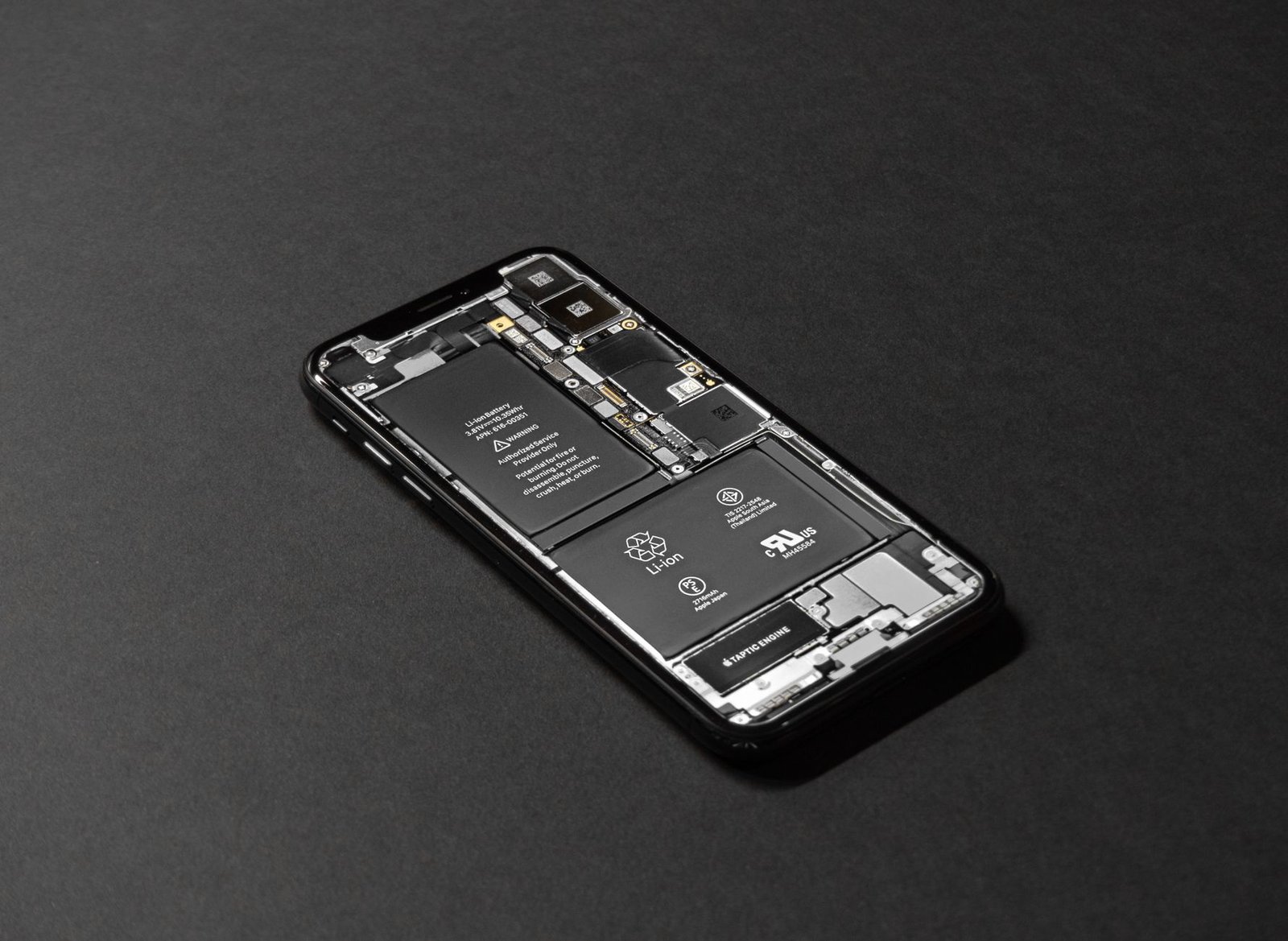
BYD just announced its Yangwang ultra-luxury sedan will use solid-state batteries. The car features coach doors, a price tag reportedly north of $150,000, and what the company calls “unprecedented disruptive technology.” Strip away the marketing language and you’re left with a revealing pattern: when automakers finally deploy next-generation battery tech, they don’t put it in affordable family sedans. They put it in cars that cost as much as a house down payment.
This deployment pattern reveals where BYD solid-state battery technology actually stands today, and what kind of economics make deployment possible right now versus five years from now.
Why Solid-State Batteries Cost More to Build
A conventional lithium-ion battery uses a liquid electrolyte to shuttle ions between the anode and cathode. The liquid seeps into porous electrode materials, creating lots of contact area for ion flow. Manufacturing is relatively straightforward: you coat electrode materials onto metal foil, stack or wind them with separators between layers, fill the case with liquid electrolyte, seal it up.
Solid-state batteries replace that liquid with a solid ceramic or polymer electrolyte. The promise: higher energy density (more range per kilogram), faster charging, better safety (no flammable liquid), and longer cycle life. The challenge: making a solid touch another solid uniformly across large surface areas is much harder than letting a liquid do the work.
Think about spreading butter on toast. Liquid butter (melted) coats every surface perfectly. Solid butter tears the bread unless you apply it very carefully, at the right temperature, with the right pressure. Battery manufacturing faces a similar challenge at the microscopic level, except the “bread” is a precisely engineered electrode and any gaps mean lost performance or short circuits.
Current solid-state manufacturing approaches require either extreme pressure to create contact between layers, or high-temperature processing to partially soften materials, or both. These processes are slower and require more expensive equipment than conventional battery lines. Material costs are higher too. The solid electrolytes themselves, particularly sulfide-based ceramics, require careful handling in dry environments and more expensive raw materials than liquid electrolytes.
A conventional lithium-ion pack for automotive use costs roughly $100 to $130 per kilowatt-hour at the pack level as of late 2024. Solid-state cells in limited production are estimated to run several times that, often cited in the $300 to $500 per kilowatt-hour range or more. That three to five times cost premium is why you see them showing up in luxury vehicles first.
The Math Only Works at $150,000
Consider a midsize EV with a 75 kilowatt-hour battery pack. At $120 per kWh for conventional cells, the battery costs about $9,000. At $400 per kWh for solid-state, it’s $30,000. That’s a $21,000 premium just for the battery, before you account for any additional engineering or manufacturing complexity in the rest of the vehicle.
Selling a $35,000 compact EV with a $21,000 battery premium pushes the car toward $56,000. Customers won’t pay that much for slightly better range and faster charging when they can get most of the utility for $35,000. The value proposition doesn’t close.
A $150,000 luxury sedan changes the calculation entirely. Customers are paying for exclusivity, technology showcase, and bragging rights as much as transportation. A $20,000 battery premium is roughly 13% of the vehicle price instead of 60% of a compact’s price. Marketing it as cutting-edge technology supports a $165,000 or $170,000 price point, and target buyers won’t blink. They’re already paying luxury car prices where a $15,000 to $20,000 premium for advanced technology fits within normal option package territory.
BYD’s deployment of solid-state batteries in the Yangwang makes economic sense right now because the luxury segment provides cover for the cost premium while manufacturing scales up and costs come down. It’s the same playbook Tesla used with the original Roadster, and that every new battery chemistry has followed.
Production Scale Versus Performance Claims
BYD claims its solid-state technology is ready for production deployment. That statement needs context. “Production ready” in automotive terms can mean anything from “we can build ten cells per day in a pilot line” to “we have gigawatt-hour scale manufacturing operational.” The details matter enormously.
Most solid-state battery developers are currently at pilot production scales measured in megawatt-hours per year, not gigawatt-hours. For reference, a single EV battery pack ranges from 50 to 100 kilowatt-hours. One gigawatt-hour of production capacity supplies roughly 10,000 to 20,000 vehicles per year. BYD builds several million vehicles annually. Even modest penetration of solid-state technology across their lineup would require production capacity that doesn’t yet exist anywhere in the industry.
The Yangwang flagship sedan is likely targeting production volumes under 10,000 units per year, possibly under 5,000. At those volumes, even a relatively small solid-state production line can supply the necessary cells. This is a technology demonstration program dressed up as a product launch, rather than a signal that solid-state batteries are ready for mass-market deployment.
Performance specifications matter too. Early solid-state cells often trade off different parameters than conventional cells. Some designs optimize for energy density but charge slower than liquid electrolyte cells. Others charge quickly but operate in a narrower temperature range. Still others show excellent lab performance but degrade faster under real-world thermal cycling and vibration.
Without detailed specifications on cycle life (how many charge-discharge cycles before capacity drops by 20%), charging speed at various temperatures, and long-term degradation rates, it’s impossible to assess whether these cells actually outperform current lithium-ion technology in ways that matter to customers. A 20% energy density advantage means little if the battery loses capacity twice as fast or can’t charge quickly in cold weather.
What Most Coverage Misses About Automotive Batteries
Technology journalism tends to focus on headline specifications: energy density, charging time, theoretical range. These matter, but three other factors drive the actual business decision:
Manufacturing yield matters more than raw material cost. If your solid-state production line produces 100 cells but only 70 meet quality standards for automotive use, your effective cost per usable cell is roughly 43% higher than the raw material and processing cost alone suggests. Conventional lithium-ion lines achieve yields above 90%. New battery technologies typically start with yields in the 60% to 80% range and improve over years. That yield gap drives real costs more than material prices.
Supply chain availability creates deployment risk. A conventional lithium-ion cell uses materials and components from mature supply chains with multiple suppliers and established quality standards. Solid-state cells often require specialized materials with only one or two suppliers globally, custom separator materials, and modified cell packaging. Building a second source for any critical component takes two to three years. This supply chain fragility makes automotive manufacturers nervous about committing to large-scale deployment.
Repair and warranty costs introduce unknown financial exposure. When a conventional battery pack fails, manufacturers have extensive field data on failure modes and can often repair modules rather than replacing entire packs. Solid-state batteries are new enough that failure modes are still being discovered. Unknown warranty exposure makes finance departments reluctant to approve mass deployment. Limiting initial deployment to low-volume luxury vehicles caps the potential warranty liability while the company learns how these batteries behave in the field.
The BYD announcement glosses over all of this. That’s standard practice for automotive announcements, but understanding these background factors helps explain why “production ready” solid-state batteries today mean “suitable for limited deployment in expensive vehicles” rather than “about to replace lithium-ion across the industry.”
Signals That Would Indicate Real Progress
Watch for three specific indicators that solid-state technology is moving beyond demonstration programs into genuine commercial scale:
Announced production capacity in gigawatt-hours per year rather than megawatt-hours signals real commercial intent. When a manufacturer commits to building a facility capable of producing 5 or 10 GWh of solid-state cells annually, that represents the capital investment and supply chain confidence necessary for meaningful volume. Pilot lines measured in tens or hundreds of megawatt-hours indicate continued development work.
Deployment in vehicles priced under $60,000 indicates manufacturing costs have dropped enough to make business sense at volume. The luxury segment serves as a testing ground where high costs can be absorbed. Mainstream vehicles with five-figure price tags signal the technology has crossed from development to commercialization.
Independent testing data on cycle life and degradation provides validation beyond manufacturer claims. When organizations like Idaho National Laboratory or Argonne National Laboratory publish long-term testing results showing solid-state cells maintaining 80% capacity after 1,500 to 2,000 deep cycles under various temperature conditions, real-world durability becomes quantifiable. This matters more than lab specifications for automotive deployment.
BYD’s solid-state deployment in the Yangwang represents genuine technical progress. The company has moved from laboratory cells to production-intent designs suitable for installation in actual vehicles. That’s an achievement worth noting, though it’s the first step in a long commercialization process. The gap between “we can build these at low volume for luxury vehicles” and “we can build these at high volume for affordable vehicles” typically spans five to seven years in automotive development timelines.
The luxury EV segment will likely see more solid-state announcements over the next two years as other manufacturers follow BYD’s approach. These deployments serve multiple purposes: technology validation, manufacturing learning, market positioning, and most importantly, justifying the continued investment required to bring costs down. Each luxury vehicle sold with solid-state batteries helps fund the process improvement and scale-up necessary to eventually reach mass-market economics.
Whether solid-state batteries actually become the dominant technology for EVs depends less on technical performance than on how quickly manufacturers can solve the manufacturing and supply chain challenges that currently keep costs high. The Yangwang deployment is BYD’s bet that they can solve those problems faster than competitors. Time will reveal whether that confidence is justified.