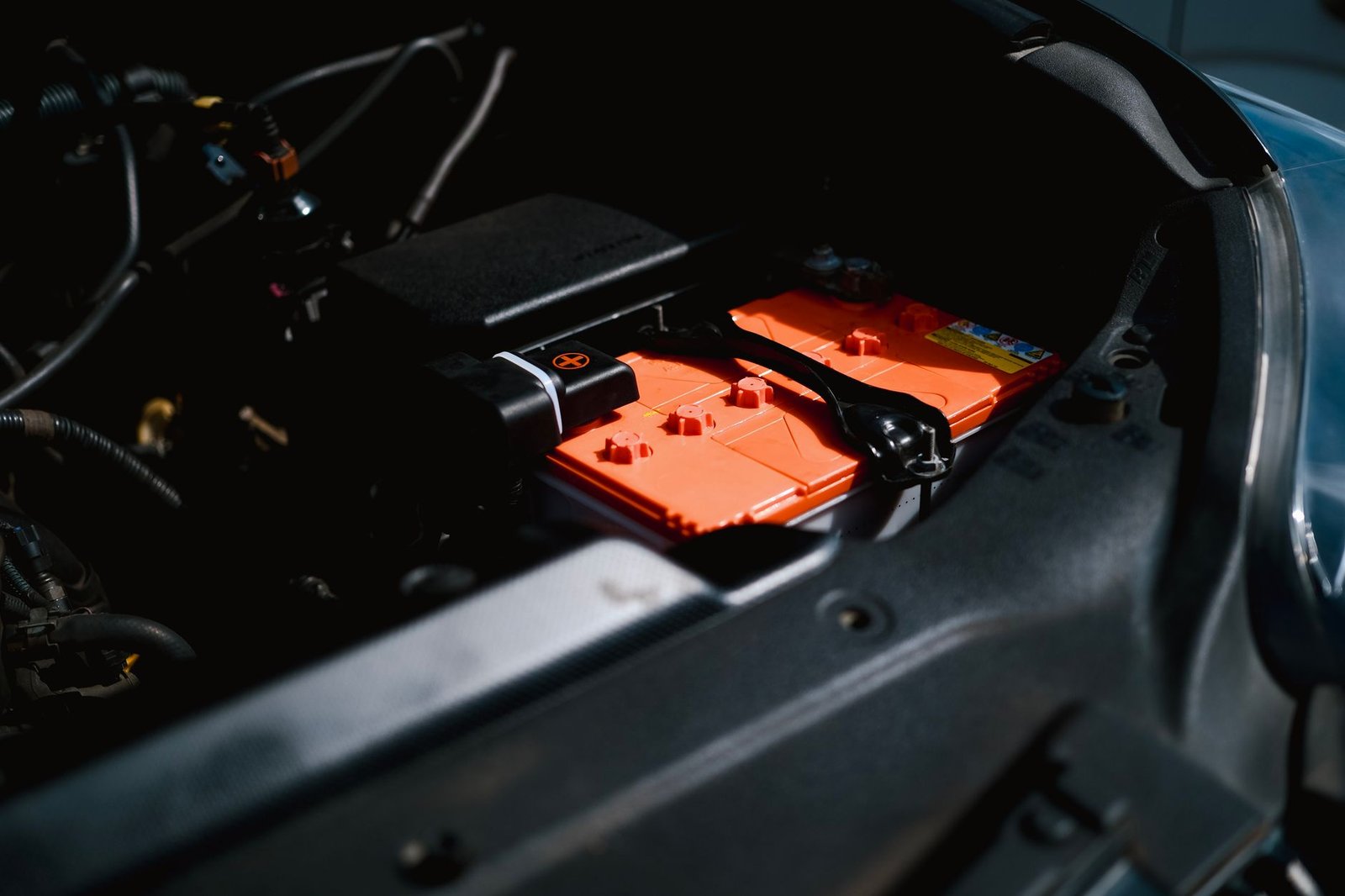
Extended-range EVs promise electric driving without range anxiety by adding a gas engine as backup. But the engineering constraints that make them work reveal why most automakers still struggle with the concept.
When the Battery Runs Out at Mile 51
You’re driving what looks like an electric vehicle. For the first 50 miles, it feels like one too: instant torque, silent operation, the satisfaction of watching electrons flow instead of gasoline burn. Then the battery hits its floor, and something under the hood starts humming. Not the aggressive growl of an engine being asked to move a car, but the steady mechanical whisper of a generator maintaining a charge. You’re still driving on electricity. The gas engine never touches the wheels. This is an extended-range EV, and it represents one of the more elegant solutions to a problem that shouldn’t exist: the fact that most people think they need 300 miles of range when they drive 40 miles a day.
The concept sounds simple until you try to engineer it. Put a small battery in an electric car, add a gas engine that only runs a generator, and you get the efficiency of electric driving for daily use with the flexibility of gas for long trips. The Chevrolet Volt proved this works a decade ago, though strictly speaking the Volt could clutch its engine to the wheels at some speeds, making it a hybrid of approaches. The BMW i3 REx offered a purer, stripped-down version. Mazda tried it with the MX-30 R-EV. Yet most automakers still build either pure battery EVs with increasingly large packs, or plug-in hybrids where the gas engine directly drives the wheels. The extended-range EV remains the road less traveled, and the reason comes down to constraints most coverage ignores.
Two Energy Systems, One Complicated Marriage
An extended-range EV carries two complete powertrains. The electric side needs a motor strong enough to handle all driving situations, from merging onto highways to climbing mountain passes. That motor needs power electronics to convert battery DC to motor AC, thermal management to keep everything cool, and a battery pack large enough to cover typical daily driving. Call it 50 to 70 miles of range, which translates to roughly 15 to 20 kilowatt-hours of usable capacity.
The range extender side needs a gasoline engine, but not one designed to move a car. This engine runs at optimal RPM to generate electricity, driving a generator that feeds the battery and motor. The engine needs its own fuel system, exhaust treatment, cooling, and control systems. It needs to meet emissions standards even though it runs in a fundamentally different way than a normal car engine. And it needs to be small enough and light enough that adding it doesn’t negate the efficiency gains of electric driving.
The BMW i3 REx used a 647cc motorcycle-derived engine producing about 34 horsepower. That sounds tiny until you consider its electrical output: roughly 25 kilowatts continuous. A typical home draws 1 to 2 kilowatts on average. This small engine, running at constant load, generates enough power to supply a dozen homes while also propelling a roughly 3,000-pound vehicle down the highway at 70 mph. The physics works because highway cruising doesn’t require much power. Accelerating from zero to 60 demands 100 kilowatts or more for a few seconds. Maintaining 70 mph on flat ground takes 20 to 30 kilowatts, accounting for aerodynamic drag and rolling resistance. The range extender only needs to match sustained cruise power, not peak acceleration. The battery handles the peaks. In practice, the i3 REx’s small generator could struggle to sustain highway speeds on long grades once the battery buffer was depleted, which illustrates how tight this margin is.
The Thermal and Regulatory Maze
The challenge is making it work reliably across temperature extremes, regulatory jurisdictions, and real-world driving patterns while keeping cost and weight reasonable. Start with thermal management. You have battery cells that prefer to operate roughly between 15 and 35 degrees Celsius, power electronics that generate significant heat under load, an electric motor with its own thermal constraints, and now a combustion engine that operates at 80 to 100 degrees Celsius with exhaust temperatures reaching several hundred degrees.
These systems need separate cooling loops that don’t interfere with each other. The battery needs active cooling in hot weather and active heating in cold weather to maintain performance. The engine needs its own radiator and coolant system. The exhaust needs space and routing that doesn’t heat-soak the battery pack. In the i3 REx, BMW placed the range extender in the rear, near the electric motor, but that created packaging compromises. The fuel tank held only about 2.4 gallons because there wasn’t room for more without redesigning the entire vehicle architecture.
Then come the emissions regulations. A range extender engine must meet the same standards as any other combustion engine, but it operates in a completely different duty cycle. Normal engines see widely varying loads: idling at stoplights, hard acceleration, highway cruising, engine braking. Range extenders run at relatively constant load, which should make emissions control easier. But certification requires testing across multiple operating modes, and the control software needs to manage warm-up, cold starts, and transitional states. In the US, the i3 REx was configured so the range extender couldn’t be engaged manually to hold charge, only activating automatically at a low state of charge, because of how regulations defined the operating modes.
Weight becomes a binding constraint for efficiency. The range extender components add roughly 200 to 250 pounds to the vehicle. That’s additional mass the battery must accelerate, which increases energy consumption per mile. If the added weight increases energy consumption, you need proportionally more battery capacity to maintain the same electric range. More battery adds more weight, creating a spiral. The only solution is aggressive weight reduction elsewhere, which increases cost.
What the Numbers Actually Show
The data on how these systems perform in real-world use remains surprisingly limited, but recent research on plug-in hybrid batteries provides insight into the underlying constraint. An ADAC study analyzing roughly 28,500 battery health measurements across multiple brands found that plug-in hybrid batteries can degrade faster than pure EV batteries because of their usage pattern. Over 100,000 kilometers (62,000 miles), heavily-used PHEV batteries averaged around 85 percent state of health, compared to roughly 94 percent for batteries cycled less aggressively.
The physics explains this gap. A 300-mile EV driven 100,000 miles goes through roughly 333 full equivalent charge cycles. A plug-in hybrid with 40 miles of electric range covers those same 100,000 miles with up to 2,500 full equivalent cycles if driven mostly on electricity. Extended-range EVs fall between these extremes depending on battery size, but they still cycle far more frequently than long-range EVs because the battery is smaller and gets used daily.
More frequent cycling accelerates degradation, especially with nickel-based lithium-ion chemistries commonly used in smaller packs. Nickel manganese cobalt batteries offer higher energy density in compact packages, making them attractive for space-constrained applications. But NMC can experience accelerated capacity loss when held for long periods at very low or very high states of charge. According to the ADAC study, Mercedes-Benz PHEVs aged best, while Mitsubishi ranked near the bottom of the group. The difference came down to battery management: how aggressively the system buffers the usable range, how it handles fast charging, how it manages thermal extremes.
Extended-range EVs face the same degradation dynamics. The range extender can help preserve battery longevity by keeping charge levels in the optimal middle zone, but only if the control software prioritizes battery health over immediate efficiency. Running the gas engine more often protects the battery but erodes the point of having a large electric range. The optimization becomes a compromise between competing goals.
The Market Learns the Wrong Lesson
Most analysis of extended-range EVs focuses on consumer acceptance or charging infrastructure. The assumption runs like this: as public charging improves, the need for range extenders disappears. Pure battery EVs become the obvious choice. This misses what actually constrains adoption.
Production economics at modest scale create the real barrier. A pure EV shares its platform with other EVs, amortizing development costs across higher volumes. A plug-in hybrid shares components with conventional hybrids and combustion vehicles. An extended-range EV sits in the middle, requiring unique integration of both powertrains without the volume advantages of either approach. The Volt sold roughly 150,000 units in the US across two generations before GM discontinued it in 2019. The i3 REx represented a fraction of i3 sales, which themselves were modest.
Low volume means high per-unit costs for unique components. The range extender engine, generator, control systems, and integration engineering can’t be amortized across millions of units. The vehicle costs more to develop and produces lower margins. For automakers managing capital allocation across dozens of models, extended-range EVs only make sense if they command premium pricing or serve as halo products that pull buyers into showrooms.
The constraint is business case math at realistic production volumes, not technical capability. It’s worth noting that the calculus differs in China, where several automakers have found real volume for extended-range EVs, suggesting the economics can close under the right market conditions.
What Changes the Equation
Three indicators signal whether extended-range EVs gain traction or remain niche products. First, modular platform architectures that accommodate range extenders without unique tooling. If an automaker can build a pure EV, an extended-range EV, and a plug-in hybrid on the same production line by swapping bolt-on components, the economics improve substantially. Second, combustion engines specifically designed for generator duty rather than repurposed motorcycle or small car engines. Purpose-built units running on optimal thermodynamic cycles at constant load can be smaller, lighter, and cleaner. Third, battery chemistries that handle high cycle counts without significant degradation. Lithium iron phosphate packs sacrifice energy density but tolerate frequent cycling better than NMC. If LFP energy density improves enough to work in compact packs, the degradation constraint loosens.
The technology for extended-range EVs works. The question is whether they’re profitable at the volumes customers actually want them, and whether the engineering constraints can be managed without compromising either the electric driving experience or the range extender functionality. Most Western automakers are betting the answer is no, not because the physics fails, but because the business case doesn’t close.