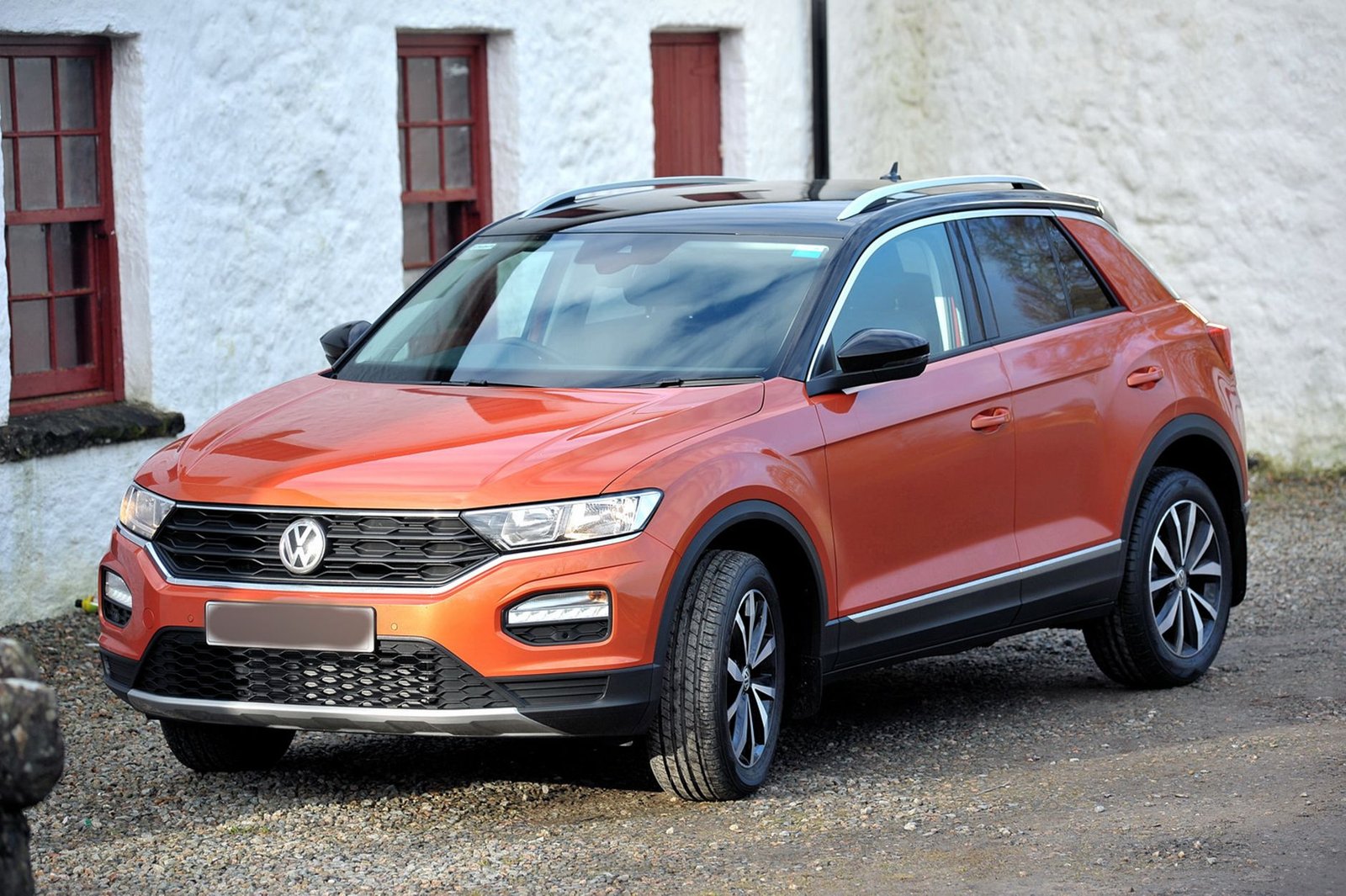
Volkswagen just announced it will discontinue two electric SUVs and replace them with a single model based on its best-selling combustion vehicle. The VW ID Tiguan arrives in early 2027, merging the ID.4 and ID.5 into one nameplate. If you’re an engineer looking at capital efficiency, this looks like an admission: the company spent hundreds of millions developing distinct EV models that the market didn’t need as separate products.
The consolidation raises a fundamental question about how legacy automakers are allocating capital in the EV transition. Building multiple models on the same platform costs less than building entirely new platforms, but it still requires unique tooling, marketing budgets, inventory management, and service training. When you fold two models into one after just a few years, you’re writing off part of that investment. The question is whether VW learned something valuable enough to justify the cost, or whether this was avoidable waste.
The Platform Versus the Product
The ID.4 and ID.5 both sit on Volkswagen’s MEB platform, an electric-specific architecture designed to underpin multiple vehicle types. The platform itself is a capital-intensive investment: VW invested billions of euros developing MEB and retooling factories to build it. Once you have the platform, though, the marginal cost of adding another model drops significantly. You’re reusing batteries, motors, electronics, and most of the underlying structure.
Costs accumulate in the differentiation. The ID.5 is essentially a coupe-styled version of the ID.4, with a sloping roofline and slightly different interior trim. That requires separate stamping dies for body panels, different assembly procedures, distinct marketing campaigns, and separate inventory pools at dealerships. You also need separate crash testing, separate homologation for different markets, and separate parts catalogs for service departments.
The actual production cost difference between an ID.4 and an ID.5 coming off the line is probably modest, maybe a few hundred euros in different panels and trim pieces. But the total system cost of supporting two SKUs instead of one is substantial. Dealerships need to stock both, which ties up working capital. Marketing teams need to explain why both exist. Supply chain teams need to forecast demand for parts that only fit one variant.
When you consolidate back to one model, you’re admitting that the revenue from the differentiation didn’t cover those system costs. That’s useful information, but expensive information.
Why This Keeps Happening
Legacy automakers have organizational structures built around model proliferation. Product planning teams propose variants to capture niche segments. Marketing teams want distinct products to message against competitors. Regional divisions lobby for models that fit local preferences. Each incremental model looks defensible in isolation, especially when the marginal manufacturing cost is low.
Capital allocation decisions get made in a world where EV profit margins are thin or negative, and where most buyers don’t yet have strong preferences about electric vehicle styling. When VW planned the ID.5, the implicit assumption was that some meaningful fraction of buyers would pay extra for a sportier roofline, enough to justify the overhead. That assumption appears to have been wrong.
Tesla, by contrast, spent years selling a deliberately narrow lineup: the Model S and Model X, then later the Model 3 and Model Y. Each added model came only after the previous one reached high production volume and, eventually, sustained profitability. The capital structure forced this discipline. When you’re burning cash and investors are skeptical, you can’t afford to proliferate SKUs.
Traditional automakers have more financial cushion, which paradoxically makes it easier to allocate capital poorly. A few hundred million on another model variant won’t bankrupt VW, so the organizational momentum toward more products continues. The cost shows up years later when you realize you’re supporting a product portfolio that doesn’t generate sufficient returns.
The VW ID Tiguan consolidation suggests the company is learning this lesson. Bringing the Tiguan name into the electric lineup also signals a shift: instead of treating EVs as a separate brand family, VW is tying electric models to proven combustion nameplates. That’s cheaper from a marketing perspective and potentially smarter from a customer perspective, since buyers already understand what a Tiguan is.
The Numbers That Matter
Volkswagen Group delivered roughly 771,000 battery-electric vehicles globally in 2023, making it one of the largest EV manufacturers outside China. But the company lost money on most of those vehicles. Herbert Diess, the former CEO, acknowledged publicly that VW’s early EV economics were deeply unprofitable, with the company losing money on each electric car in the early production years. The business case for EVs at legacy automakers depends on eventually reaching cost parity with combustion vehicles, which requires high volume and efficient capital deployment.
Model proliferation works against both goals. Spreading the same production volume across more variants means each individual model has lower volume, which makes it harder to amortize fixed costs. And the overhead of supporting multiple models directly increases the capital intensity per unit sold.
The claimed range figures for the VW ID Tiguan point to a battery pack in the low-to-mid 80s kWh, assuming typical efficiency for a vehicle in this class. That’s not dramatically different from the current ID.4, which offers up to roughly 275 miles (EPA) with a 77 kWh usable pack in rear-wheel-drive configuration. Any improvement likely comes from better aerodynamics and incremental efficiency gains in the drivetrain, not a step-change in battery technology.
From a capital perspective, those incremental improvements are valuable only if they’re deployed across high volume. Selling 100,000 units of a vehicle with 5% better efficiency is worth more than selling 50,000 units of two different vehicles with the same improvement, because the development cost gets amortized across more units.
What the Trade Press Misses
Most coverage of model consolidations treats them as product strategy decisions: VW is simplifying the lineup, or focusing on the most popular variants. The more important story is about capital efficiency. When you discontinue models after a short production run, you’re signaling that the capital deployed on those models generated insufficient returns.
The trade press also tends to focus on specs: range, charging speed, interior features. Those matter to buyers, but they don’t explain whether the company is making money or burning it. A vehicle with excellent specs can still be a capital allocation failure if it doesn’t generate enough volume to cover its development and support costs.
The VW ID Tiguan consolidation matters primarily for what it reveals about Volkswagen’s capital discipline. If the company continues to proliferate models within the EV lineup, this consolidation is just a minor course correction. If it signals a broader shift toward fewer, higher-volume models, it’s strategically meaningful.
Signals to Track
The real test is what VW does next. If the company announces another wave of niche EV variants in 2027 or 2028, the lesson wasn’t learned. If instead you see longer gaps between new model introductions and higher production volumes per model, that suggests improving capital discipline.
Watch for platform sharing with other VW Group brands. If the Audi Q4 e-tron or Skoda Enyaq get consolidated or rebadged in similar ways, it indicates a group-wide shift toward efficiency. If those brands continue adding variants independently, the capital allocation problem persists at the corporate level.
Also watch production volume per model. VW should be publishing quarterly delivery numbers broken down by model. If the ID Tiguan consistently delivers higher volumes than the ID.4 and ID.5 did combined, the consolidation worked. If volumes stay flat or decline, the company just reduced complexity without capturing the revenue benefits.
Finally, track VW’s reported losses or margins on EVs. The company has been opaque about this, but occasional executive comments and financial filings provide clues. If EV margins improve in 2027 and 2028 while model count stays stable or declines, it’s evidence that capital discipline is working. If margins stay negative despite simplification, the problem is deeper than product proliferation.