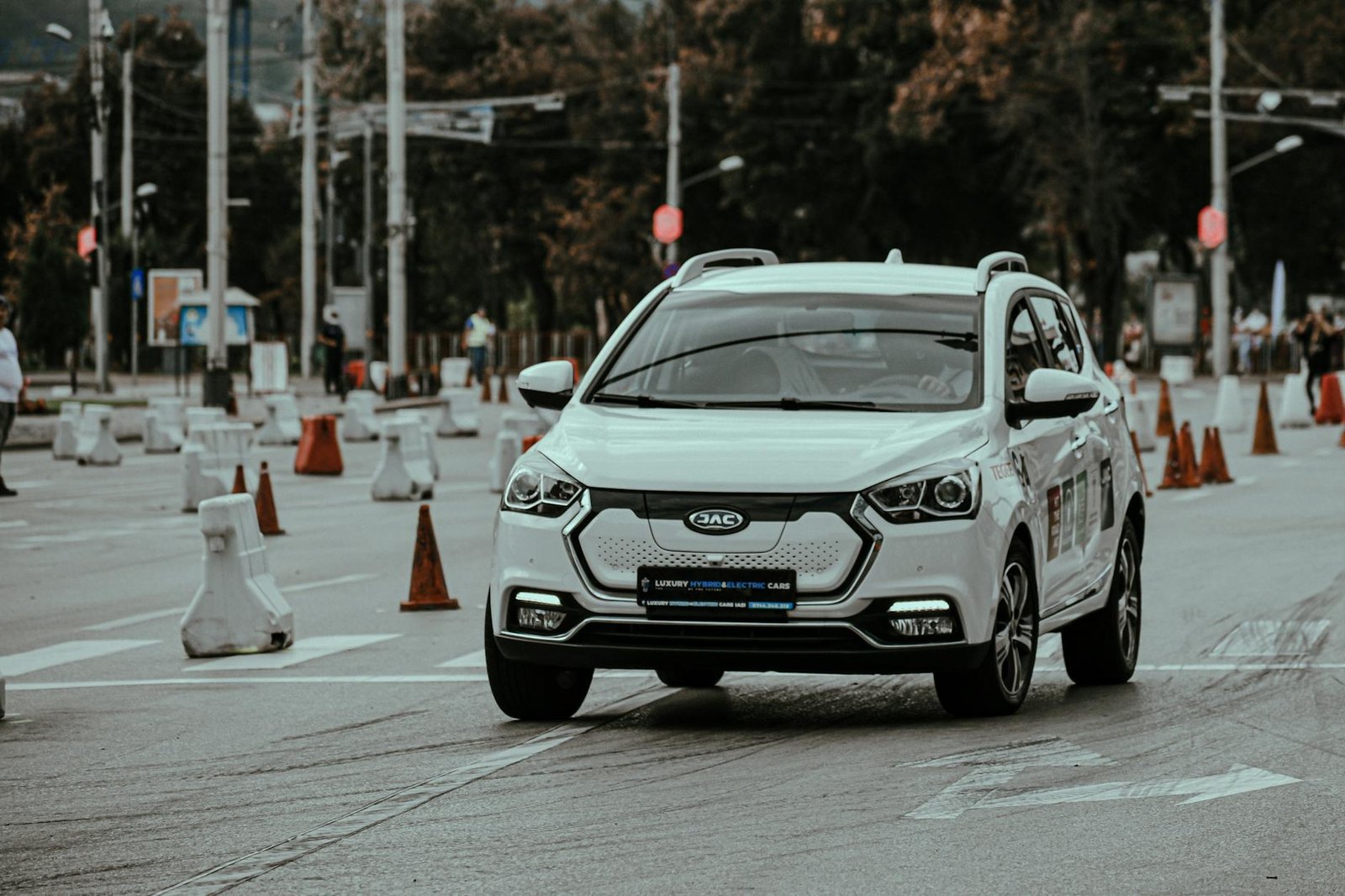
A $18,000 electric SUV with nearly 400 miles of range and fast charging sounds like the kind of round number that shows up in press releases, not showrooms. When BYD announced the third-generation Yuan Plus (sold as the Atto 3 in some markets) with these specifications, it raised a question that most coverage skipped: how did the economics of EV manufacturing shift enough to make this price point viable, and what engineering compromises or strategic decisions actually enabled it?
American buyers accustomed to $45,000 entry-level EVs see that $18,000 figure and assume it’s either a typo, a stripped-down compliance car, or some kind of government-subsidized loss leader. None of those assumptions hold up. The BYD Yuan Plus isn’t a sacrificial pricing experiment. It’s what happens when a vertically integrated manufacturer with scale reaches a cost structure that most Western automakers are still targeting for 2027 or 2028.
The Manufacturing Stack That Changed The Math
BYD’s pricing advantage starts with a decision most automakers avoided: owning the entire battery supply chain. The company manufactures its own battery cells rather than buying them from LG, CATL, or Panasonic. It owns lithium processing facilities. It produces the battery management systems, the power electronics, the electric motors. When you control those components, you’re not paying another company’s margin at every step. You’re paying cost plus your own internal overhead.
The Yuan Plus uses lithium iron phosphate (LFP) chemistry, which matters more than most coverage acknowledges. LFP cells cost roughly 30 to 40 percent less per kilowatt-hour than nickel-based chemistries, and that gap has widened as nickel prices stayed elevated while lithium carbonate prices dropped from their 2022 peaks. LFP doesn’t match nickel’s energy density. For a vehicle targeting 400 miles of range, you compensate with a physically larger battery pack. At BYD’s cost structure, adding pack capacity costs less than switching to more expensive cell chemistry.
The “Flash Charging” capability relies on an 800-volt architecture similar to Hyundai’s E-GMP platform and Porsche’s Taycan. Getting an LFP battery to accept high charge rates typically requires better thermal management and more sophisticated battery management software, because LFP chemistry is more sensitive to temperature variation during charging than nickel-based cells. BYD solved this with a cooling system integrated into the cell-to-pack design, where battery cells mount directly into the vehicle structure without intermediate modules. This cuts both weight and cost, but it requires tighter manufacturing tolerances because you can’t swap out a failed module.
Why Western Automakers Can’t Match This Price Yet
The gap between BYD’s $18,000 SUV and comparable Western offerings isn’t primarily about labor costs or regulatory arbitrage. Capital efficiency and manufacturing scale drive the difference. BYD produced roughly 3 million vehicles in 2023, with a significant portion sharing common battery platforms and powertrains. When you’re stamping out hundreds of thousands of similar battery packs, the per-unit tooling cost drops dramatically. Your suppliers give you better pricing because you’re ordering in volumes that justify dedicated production lines.
Most Western automakers are still running multi-platform strategies where different model lines use different battery formats, different cell suppliers, different cooling architectures. Stellantis recently announced plans to consolidate to four EV platforms, targeting increased parts commonality and 800-volt architecture across segments. Production starts in 2026 or 2027. BYD has been running this playbook since 2020.
BYD’s vertical integration extends to manufacturing equipment. Western automakers typically buy this equipment from specialized suppliers like ABB, KUKA, or Fanuc. BYD manufactures a portion of its own automation equipment through subsidiary companies. This saves money on initial capital expenditure. When you need to modify a production line for a new model variant, you’re not waiting for an outside vendor to design, build, and install new tooling. You iterate in-house with faster cycles.
The Range Number Deserves Scrutiny
BYD claims nearly 400 miles of range for the upgraded Yuan Plus, but that figure comes from China’s CLTC test cycle, which consistently produces higher numbers than EPA testing. CLTC uses lower average speeds, less aggressive acceleration, and a shorter test distance than EPA’s combined cycle. A vehicle rated at 400 miles CLTC typically achieves somewhere between 280 and 320 miles under EPA testing, depending on vehicle weight and aerodynamics.
That doesn’t make the range claim dishonest. For urban driving in moderate climates, the CLTC number might actually understate real-world performance because city driving involves more regenerative braking and lower speeds than the test cycle assumes. For highway driving at 75 mph in cold weather, you’ll see significantly less range than the CLTC rating suggests. The Yuan Plus likely carries a battery pack in the 75 to 85 kilowatt-hour range to hit that 400-mile CLTC figure, which would put real-world highway range somewhere around 250 to 280 miles.
The flash charging capability also requires some unpacking. BYD hasn’t published detailed charging curves for the third-generation Yuan Plus yet, but previous BYD models with 800-volt architecture have achieved peak charging speeds around 150 to 180 kilowatts, with the charging rate tapering significantly above 60 percent state of charge. That’s meaningfully faster than older 400-volt systems that peak around 100 kilowatts. It doesn’t match the 250-plus kilowatt peaks that Hyundai’s Ioniq 5 or Kia’s EV6 can sustain. The practical difference: a 10-to-80 percent charge probably takes 25 to 30 minutes on a capable DC fast charger, compared to 18 minutes for the fastest-charging EVs on the market.
What The Press Coverage Keeps Missing
Most Western coverage of Chinese EV pricing treats it as a temporary phenomenon, either propped up by government subsidies or enabled by manufacturers willing to sell at a loss to gain market share. Both assumptions collapse when you look at BYD’s actual financials. The company reported operating margins above 5 percent in recent quarters, which isn’t spectacular by tech industry standards but exceeds what most traditional automakers achieve. BYD isn’t bleeding money to hit these price points. It restructured its cost base to make these prices sustainable.
China does provide EV purchase incentives, but they’re typically in the $1,000 to $3,000 range for vehicles in the Yuan Plus price bracket. That’s meaningful, not transformative. The bulk of BYD’s cost advantage comes from manufacturing efficiency, vertical integration, and scale.
The regulatory environment for safety and emissions matters more than subsidies. Chinese crash test standards have become more stringent in recent years but still differ from Euro NCAP or IIHS protocols in specific test scenarios, particularly small overlap frontal crashes and updated side impact tests. Meeting stricter Western safety requirements typically adds $1,500 to $3,000 in structural reinforcement and additional airbags. BYD’s vehicles exported to Europe incorporate these changes and carry correspondingly higher prices. The Yuan Plus sold as the Atto 3 in Australia and European markets starts around $28,000 to $35,000, depending on market and trim level.
What Changes If This Price Point Spreads
If $18,000 EVs with 300-plus miles of real-world range become widely available in Western markets, the entire small SUV and compact car segment reshapes. A Chevrolet Trax starts around $21,000. A Honda HR-V runs about $25,000. A Toyota Corolla Cross starts at $25,000. None of those vehicles offer significantly better performance, cargo space, or features than a comparably priced EV, once you account for fuel savings over a typical ownership period.
The obstacle isn’t technology. Manufacturing footprint and tariff structures block the path. A Chinese-built BYD imported to the United States currently faces a 27.5 percent tariff (the standard 2.5 percent plus an additional 25 percent imposed in 2018). That immediately adds about $5,000 to the import price before any dealer markup. BYD would need to build vehicles in North America or Mexico (where USMCA rules provide tariff-free access) to compete on price in the U.S. market. The company has announced plans for a Mexican factory, but construction timelines remain unconfirmed.
European markets present a different calculation. The EU imposed additional tariffs on Chinese EVs in 2024, with rates varying by manufacturer (BYD faces a 17.4 percent rate). European buyers already accept higher vehicle prices than Americans do, and fuel costs are higher, which improves EV payback periods. A €25,000 BYD Yuan Plus sold in Spain or Italy would undercut most European-brand EVs by €5,000 to €10,000 while offering comparable or better range. Volkswagen, Renault, and Stellantis face a market share problem, regardless of tariff adjustments.
The Signals Worth Watching
Three specific developments will indicate whether BYD’s pricing represents a sustainable new baseline or a temporary market distortion. First, watch for other Chinese manufacturers matching or undercutting BYD’s pricing on similarly specified vehicles. If BYD maintains a significant price advantage over domestic competitors like Geely or Chery, it suggests the company has structural cost advantages that aren’t easily replicated even within China. If competitors converge on similar pricing, the cost structure reflects broader manufacturing improvements across the Chinese EV industry.
Second, track BYD’s European pricing and whether it narrows the gap between Chinese domestic prices and export prices. If BYD can deliver a €22,000 to €24,000 Yuan Plus variant to European markets that meets EU safety standards, the core manufacturing cost advantage holds even after accommodating stricter regulations. If European pricing stays above €28,000, safety compliance and different market positioning add costs that prevent direct price translation.
Third, monitor whether Western automakers respond by accelerating platform consolidation and vertical integration or by lobbying for additional import restrictions. Volkswagen’s recent moves to bring more battery cell production in-house and Ford’s decisions around LFP chemistry indicate some manufacturers recognize they need to restructure their supply chains to compete on cost. If the primary response is regulatory rather than operational, the industry believes it cannot match Chinese manufacturers’ cost structures through manufacturing improvements alone.
—
**Excerpt:** BYD’s $18,000 Yuan Plus with 400-mile range and fast charging isn’t a loss leader or subsidy play. It’s what vertically integrated manufacturing at scale actually costs when you control the entire battery supply chain.