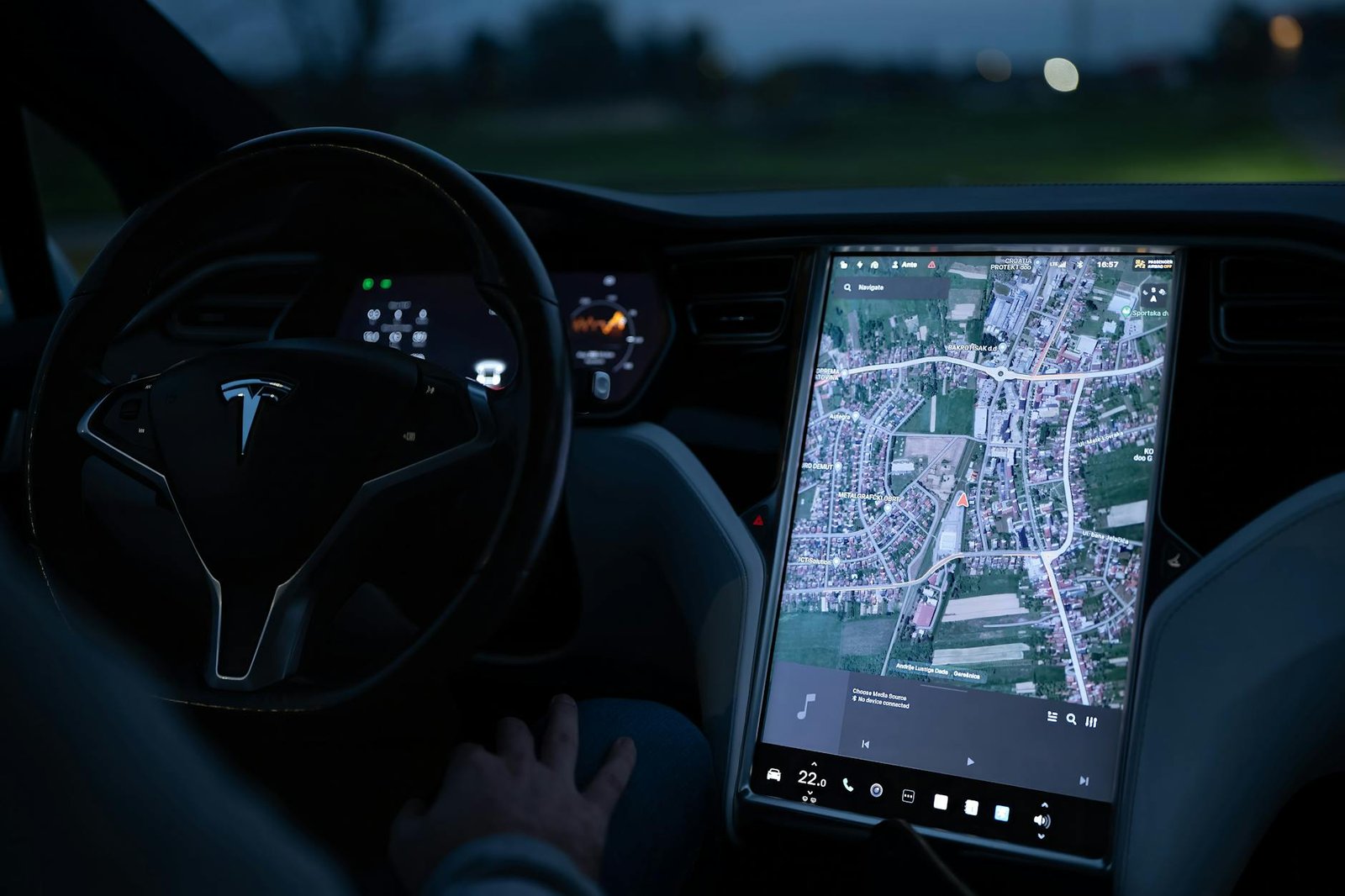
Tesla’s decision to rebrand its “Full Self-Driving” system as “Tesla Assisted Driving” in China isn’t just diplomatic wordsmithing. It’s the visible outcome of a sequence that locked in years ago: who got to deploy advanced driver assistance first, what they called it, how regulators responded, and what vocabulary became standard in each market. The Chinese regulatory framework for autonomous systems developed along a different timeline than the American one, establishing different baselines for what counts as “assisted” versus “autonomous.” When Tesla FSD finally arrived in China, it entered a market where the naming conventions were already set by domestic competitors who got there first. You can’t simply import the marketing language that worked in California.
This isn’t about one company getting better at truth in advertising. It’s about why early market entrants shape the terms that everyone else has to use later, and why the regulatory vocabulary that gets established first becomes surprisingly difficult to change. The sequence matters because each step constrains what’s possible in the next one.
Why Whoever Names It First Wins the Debate
When a technology category doesn’t exist yet, the first company to deploy something that looks like it gets to propose what to call it. If regulators accept that framing, it becomes the baseline. Every subsequent system gets evaluated against that initial reference point. In China, local manufacturers deployed advanced driver assistance systems before Tesla achieved significant market penetration. Those systems came with specific naming conventions that emphasized the “assistance” framing rather than autonomy claims. The regulatory approval process built up around evaluating systems that explicitly presented themselves as requiring driver supervision.
Tesla’s “Full Self-Driving” branding worked in the United States partly because it arrived early enough in the technology adoption curve that the regulatory vocabulary was still fluid. The National Highway Traffic Safety Administration’s taxonomy for automation levels existed on paper, but the practical language that regulators, media, and consumers used remained unsettled. By the time serious regulatory scrutiny intensified, “Full Self-Driving” was already in tens of thousands of Tesla vehicles with the beta program. The name had become established through deployment scale and media coverage.
China’s regulatory environment developed differently. The Ministry of Industry and Information Technology established clear guidelines for intelligent driving systems that distinguished between assistance functions and autonomous capabilities before Tesla’s system received approval for Chinese roads. Companies like NIO, XPeng, and Li Auto deployed their systems within that framework, using terminology that aligned with regulatory expectations. When Tesla entered the same approval process, the vocabulary had already been established by competitors. Calling the system “Tesla Assisted Driving” wasn’t a choice. It was the only path through the regulatory approval process given what had been locked in earlier.
The Regulatory Lock-in Nobody Talks About
Regulations don’t just govern technology. They create the language that defines what the technology is allowed to be. Once a regulatory framework establishes categories like “Level 2 driver assistance system requiring continuous supervision,” those categories become self-reinforcing. Changing them requires admitting that the initial framework was inadequate, which creates institutional resistance. It’s easier for regulators to evaluate new systems within existing categories than to create new ones.
This creates an asymmetry between early and late market entrants. The early entrant’s product defines the category. The late entrant’s product gets evaluated for whether it fits the category. If your system does more than the category allows for, you have two options: lobby to change the category (slow, uncertain) or rebrand your system to fit the existing category (fast, certain). Tesla chose the path that gets its system approved and shipping.
The practical constraint is time. Regulatory approval processes in China for intelligent driving systems take six months to over a year. That approval hinges on demonstrating that your system operates within the parameters established for its claimed category. If you claim your system is something new that doesn’t fit existing categories, you’re not just seeking approval. You’re seeking approval to create a new category, which involves different government agencies and much longer timelines. For a company trying to maintain market share in the world’s largest EV market, that timeline cost becomes prohibitive.
The naming change for Tesla FSD in China reflects this calculation. The system’s technical capabilities haven’t fundamentally changed from its US version. What changed is the category it needs to fit into for regulatory approval. In a market where the categories were established by companies that deployed first, you adapt to the existing vocabulary rather than trying to rewrite it.
What “Assisted” Actually Means in Technical Terms
The distinction between “assisted” and “autonomous” isn’t purely semantic. It maps onto specific technical requirements and liability frameworks. A system classified as driver assistance must include specific monitoring mechanisms that verify the driver remains engaged. It must disengage or alert if it detects driver inattention beyond defined thresholds. The failure modes must default to returning control to the driver rather than executing a minimal risk condition on its own.
These requirements exist in SAE International’s taxonomy of automation levels, but the practical implementation varies by regulatory jurisdiction. China’s GB/T standards for intelligent vehicle classification establish different thresholds for driver monitoring than NHTSA’s guidelines. A system approved as “Full Self-Driving” under US regulations might not meet the technical requirements for that classification in China, even if the underlying software is identical. The key point is that China’s standards were written based on the systems that were deployed there first, which were explicitly driver-assistance systems.
Tesla’s system in China still uses the same computer vision approach, the same neural networks, and the same planning algorithms as the US version. The difference is in how the system must behave when it detects edge cases or loses confidence in its planned path. Under Chinese classification as an assisted driving system, it must hand control back to the driver with more margin than would be required if it were classified differently. The naming determines the behavioral requirements, which then determine whether the system can be approved at all.
Why This Pattern Repeats in Every Market
The same dynamic plays out across different regulatory jurisdictions. European Union regulations for advanced driver assistance systems established a framework based on the systems available in European markets in the late 2010s. Those systems came primarily from European manufacturers using different technical approaches than Tesla’s. When Tesla sought approval in EU markets, its system had to fit into categories defined by competitor systems that arrived first. The result: different naming and different behavioral constraints than in the US market.
This isn’t unique to automotive. Medical device approvals follow similar paths where early devices define the regulatory categories that later devices must fit into. Telecommunications standards get established by whoever deploys infrastructure first. The first mover advantage isn’t just about market share. It’s about defining the vocabulary and categories that regulators use to evaluate everyone who comes after.
The practical implication for technology deployment is that regulatory timing matters as much as technical capability. If your system reaches technical maturity after a competitor’s less capable system has already established the regulatory baseline, you face a choice: deploy a limited version that fits existing categories, or wait while lobbying for new categories that better match your capabilities. Neither option is obviously superior. The first gets you revenue and deployment data but constrains what you can claim. The second preserves technical flexibility but cedes market share.
Tesla’s choice for its China market represents a calculation that market access outweighs naming consistency. The company maintains different branding in different markets because the regulatory paths in those markets diverged years ago based on who deployed what first. Trying to force consistent naming globally would mean either limiting the US system to match Chinese categories or delaying Chinese deployment indefinitely. The path-dependent nature of regulatory frameworks makes global naming consistency effectively impossible once different markets have established different baselines.
The Cost of Arriving Second
Late market entry carries specific costs that don’t show up in standard competitive analysis. You pay not just in lost revenue during the period before you enter, but in constrained positioning after you do enter. The companies that deployed advanced driver assistance in China before Tesla didn’t necessarily have better technology. They had the advantage of defining what “advanced driver assistance” meant in that regulatory context. Tesla’s technical capabilities may exceed what those earlier systems could do, but the regulatory framework evaluates systems based on the categories established by earlier deployments.
This creates a measurement problem. How do you compare systems that are classified in different categories? A system classified as “assisted driving” in one market might have similar technical capabilities to a system classified as “self-driving” in another market, but regulatory restrictions prevent direct comparison. Consumers see the names and assume they reflect meaningful technical differences. Sometimes they do. Sometimes they reflect nothing more than which regulatory vocabulary was established first in each market.
The companies that benefit from this dynamic are rarely the ones with the most advanced technology. They’re the ones that deployed adequate technology at the right time in the regulatory cycle. Tesla’s system may be more capable than competitors’ offerings in China, but it enters a market where the naming and classification were already determined by less capable systems that arrived earlier. The established vocabulary becomes the constraint.
What Changes and What Doesn’t
Regulatory frameworks do eventually update to accommodate new technical realities. China’s intelligent vehicle standards are not frozen permanently. But the update cycle operates on a different timeline than technology development. A regulatory framework might update every three to five years. Technology capabilities can advance significantly faster. The gap between what technology can do and what regulatory categories allow for grows until the next update cycle.
For companies caught in that gap, the choice is whether to wait for regulatory categories to catch up or to deploy within existing categories. Tesla’s naming change represents choosing deployment over consistency. The technical capabilities of Tesla FSD in China haven’t been reduced to match the “assisted driving” classification. The classification constrains how those capabilities can be marketed and what behavioral requirements the system must meet, but the underlying system remains largely similar to versions deployed elsewhere.
This is the practical reality of path dependence in regulated markets. The sequence in which technology deploys determines the vocabulary available to describe it. That vocabulary then constrains how subsequent technology can be classified and marketed. You can have the most capable system in the market and still be forced to use naming that understates its capabilities because the regulatory categories were defined by earlier, less capable systems. The alternative is not deploying at all.