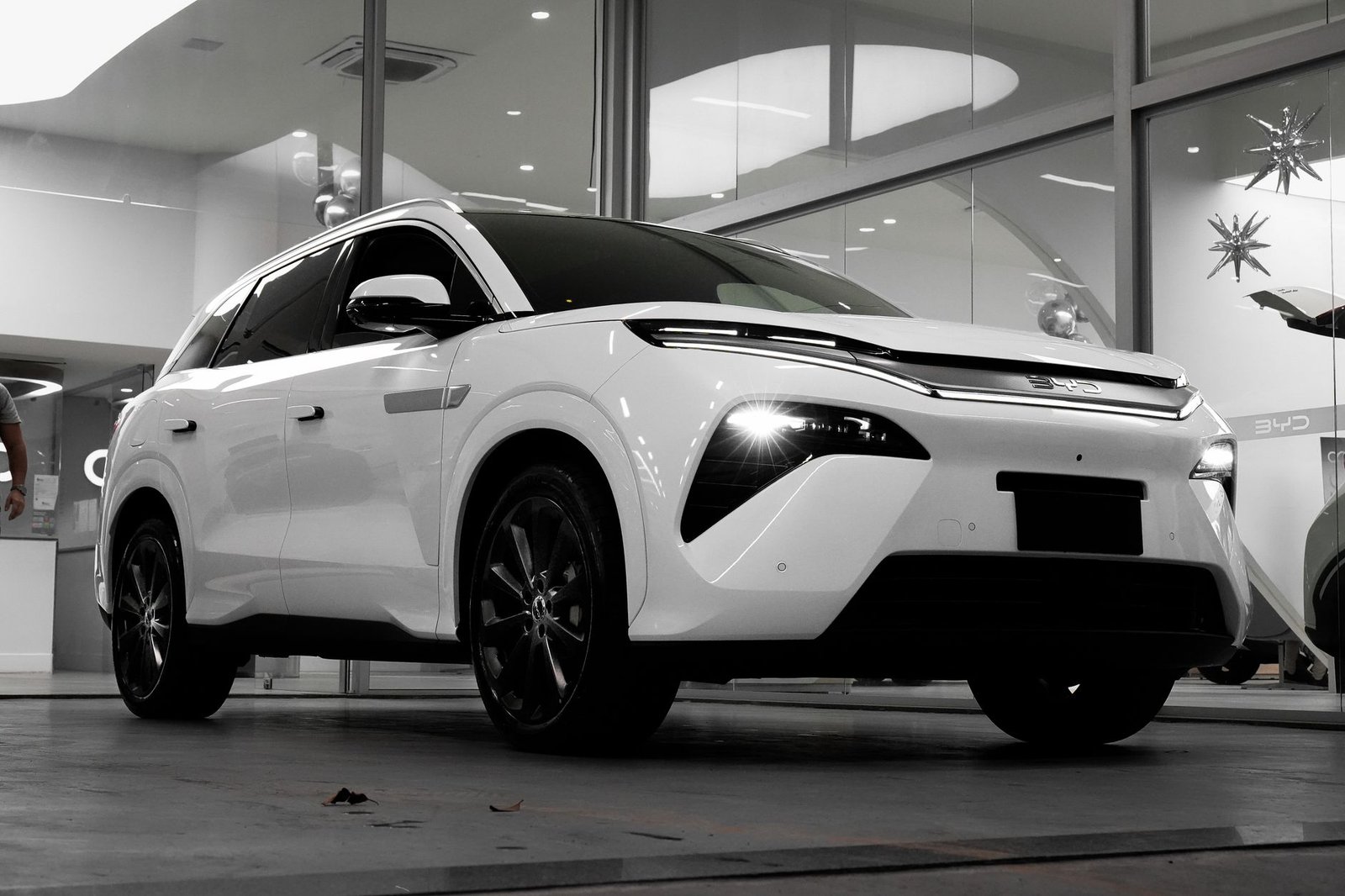
A video circulating on Chinese social media shows what appears to be a BYD Denza B8 driving on three wheels with a parking boot attached to the fourth. The car lifts the booted wheel entirely off the ground and proceeds down the street. Whether the footage is genuine or staged, it raises a practical question: what can these hydraulic suspension systems actually do, and what are they fundamentally for?
The BYD Denza B8 (also sold as the Denza Bao 8 Flash Charge Edition) comes equipped with DiSus-P Ultra hydraulic suspension, which adjusts damping and ride height while independently controlling hydraulic pressure at each of the vehicle’s four corners. According to BYD’s specifications, the system can raise or lower each wheel up to 150 millimeters (about 6 inches) and generate substantial lifting force at each corner. BYD has demonstrated the vehicle driving on three wheels at low speed in controlled settings.
How Independent Hydraulic Suspension Actually Works
Traditional air suspension systems adjust ride height by adding or removing air from bladders at each wheel. They can raise or lower all four corners, but they operate within relatively modest ranges and typically respond to commands sent to all wheels or pairs of wheels. Hydraulic suspension systems like the one in the Denza B8 work differently. They use hydraulic fluid under pressure, controlled by valves and pumps, to actuate dampers and springs at each corner independently.
Independent control is the defining characteristic. The system can raise the front left wheel while lowering the rear right, or lift just one corner while keeping the other three firmly planted. This requires sensors tracking the position of each wheel relative to the body, accelerometers measuring body movement, and a control computer making decisions many times per second about where to send hydraulic pressure.
The travel range matters because it covers the distance between a vehicle’s lowest and highest practical ride heights. Most air suspension systems adjust within 50 to 100 millimeters. A larger range means the difference between scraping over a speed bump and clearing a substantial obstacle. It also means you can lift one corner high enough to completely unload a wheel while the other three support the vehicle’s weight.
The system’s per-corner lifting capacity comfortably exceeds the share of the Denza B8’s weight any single corner needs to bear (the three-row plug-in hybrid SUV, with its battery and turbocharged engine, carries most of its mass low in the chassis). This excess capacity ensures the system can handle dynamic loads: hitting a pothole at speed, towing a trailer, or supporting the vehicle’s entire weight on three corners when one wheel lifts completely off the ground.
The Engineering Cost of Corner Independence
Building a suspension system that can independently control each corner adds complexity at every level. You need four separate hydraulic circuits instead of two (front and rear) or one (whole vehicle). Each circuit requires its own valves, accumulators to smooth pressure spikes, and sensors to measure position and pressure. The control software must coordinate all four corners while accounting for the vehicle’s center of gravity, current speed, steering angle, and driver inputs.
The hydraulic pump must generate enough flow and pressure to actuate all four corners quickly. Raise one corner slowly and the vehicle tilts gradually. Raise it in a fraction of a second and you need high flow rates, which require bigger pumps, more electrical power, and more robust plumbing. The BYD system draws power from the vehicle’s hybrid powertrain, but that power has to come from somewhere, either the battery or the engine-driven generator.
Hydraulic systems also generate heat. Forcing fluid through valves and orifices converts pressure into thermal energy. High-performance hydraulic systems need cooling, either through heat exchangers or by cycling fluid through a reservoir that dissipates heat to the surrounding air. Add cooling requirements and you add weight, complexity, and another potential failure point.
The control logic presents its own challenge. When the system detects that one wheel has lost traction or encountered an obstacle, it must decide whether to raise that corner, lower the others, or adjust damping. Make the wrong choice and the vehicle could become unstable. The software must differentiate between a pothole (transient event, maintain stability) and a curb (sustained obstacle, might want to raise that corner). These decisions happen in milliseconds.
What This Technology Was Designed to Solve
BYD developed the DiSus-P Ultra system primarily for off-road capability and ride comfort. The ability to independently adjust each corner helps a vehicle maintain traction on uneven terrain. If the right front wheel drops into a rut, the system can extend that corner’s suspension to keep the tire in contact with the ground while adjusting the other three corners to keep the body level. This matters for vehicles marketed as capable of handling rough roads or light off-roading.
The system also enables what BYD demonstrated publicly: changing a tire without a jack. Raise three corners slightly while lowering the fourth completely, and you can remove the wheel without conventional lifting equipment. This works because the hydraulic system can precisely control the height of each corner and hold that position while the vehicle’s weight rests on the other three wheels. The system’s lifting capacity ensures it can maintain this configuration safely.
For everyday driving, independent corner control improves ride quality by responding to individual bumps and road irregularities rather than treating the entire vehicle as a single unit. Hit a pothole with your left front tire, and that corner’s suspension can absorb the impact without transmitting as much force to the rest of the chassis. The system can also lean the vehicle into turns, counteracting body roll by adjusting the suspension on the outside wheels.
The Denza B8 itself is a plug-in hybrid offering a substantial all-electric range (manufacturer figures are measured on the Chinese CLTC cycle, which typically yields higher numbers than EPA testing) plus a long combined range with its turbocharged engine. The hydraulic suspension adds weight and complexity to a vehicle already carrying a battery pack and internal combustion powertrain. That weight matters for efficiency, but the suspension’s capabilities serve the vehicle’s positioning as a premium, tech-forward SUV.
Where the Press Demonstrations Mislead
Videos of vehicles driving on three wheels make for compelling demonstrations, but they obscure the practical limitations. BYD showed the Denza B8 driving on three wheels only at walking pace. This speed limitation reflects basic physics rather than a constraint of the hydraulic system itself. Drive faster with one wheel in the air and the weight distribution becomes increasingly unstable. Hit a bump or make a sharp turn and the vehicle could tip or lose control.
The demonstrations also take place on flat, smooth surfaces. Lift one wheel on uneven terrain and the remaining three wheels might not maintain even contact with the ground. The system has to work harder to keep the vehicle stable, and you increase the risk of getting stuck or damaging the suspension components that are now bearing loads they weren’t optimized to handle continuously.
Most coverage of these systems focuses on party tricks (driving on three wheels, parking boot evasion, tire changes without a jack) rather than the mundane engineering challenge: making a heavy vehicle ride comfortably on roads that range from smooth pavement to rutted dirt. The party tricks demonstrate capability, but the real value proposition is whether this level of suspension complexity improves the driving experience enough to justify its cost, weight, and potential maintenance burden.
What Separates Demonstration from Durability
The meaningful questions about systems like DiSus-P Ultra center on how they hold up over years of use rather than what they can do in a controlled demonstration. Hydraulic systems depend on seals that keep fluid contained under high pressure. Seals wear, especially when exposed to temperature extremes, road salt, and debris. One leaking seal can compromise an entire corner’s performance.
The control software requires sensors that accurately measure wheel position, body acceleration, and hydraulic pressure. Sensor failure or drift can cause the system to make incorrect adjustments, potentially creating safety issues. The system also needs regular maintenance: hydraulic fluid changes, seal inspections, and software updates. Complexity adds maintenance cost.
Watch for data on warranty claims and long-term reliability as these systems accumulate miles in customer hands. Independent suspension control only adds value if it remains functional beyond the first year of ownership. Also watch for whether other manufacturers adopt similar systems or stick with simpler air suspension setups that offer less capability but lower complexity.
Advanced suspension technology proves itself after 100,000 miles of varied driving conditions, not on a demo course. That data takes time to accumulate, and it determines whether systems like the one in the BYD Denza B8 become standard features or expensive options that buyers learn to avoid.