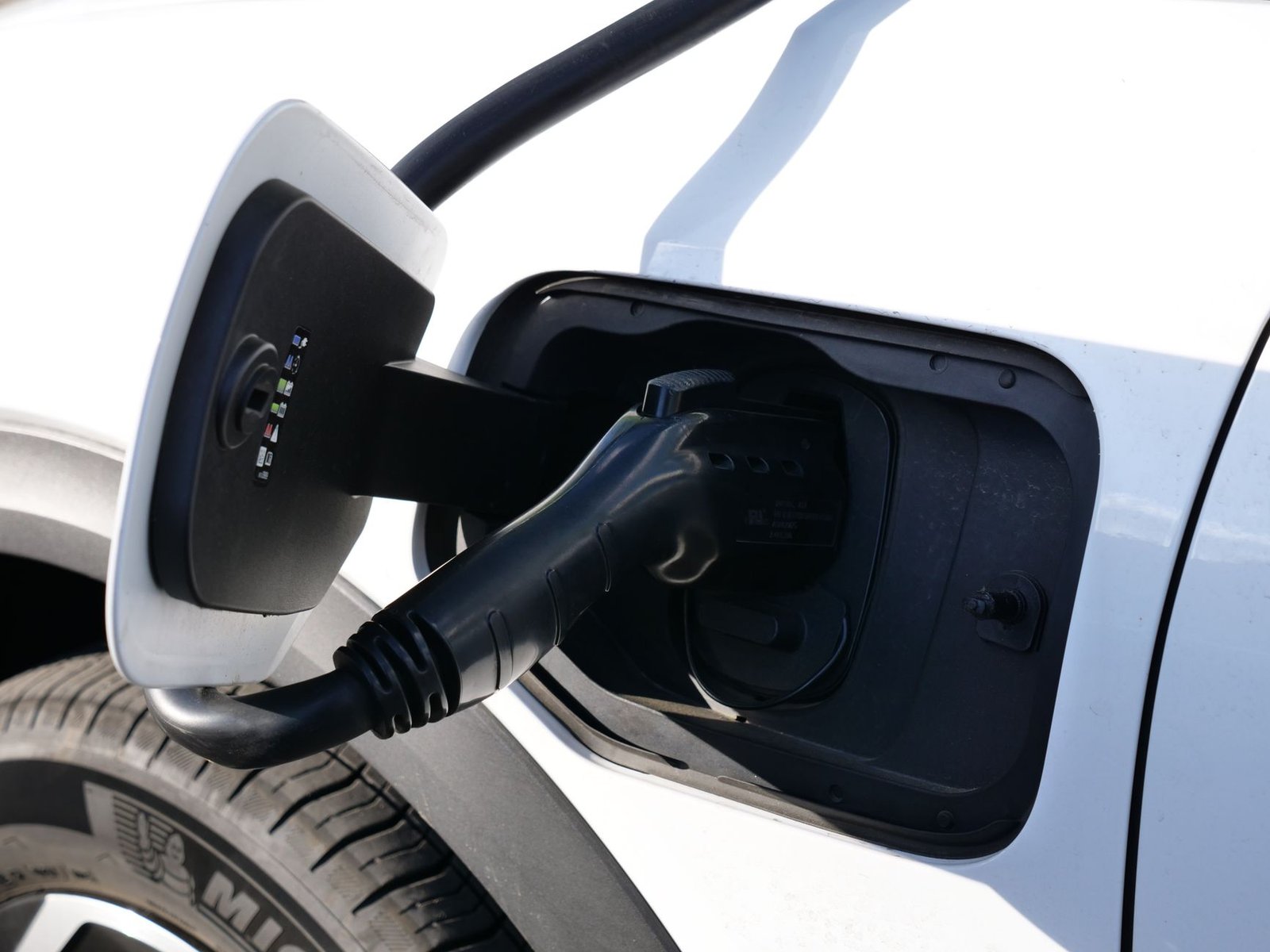
In August, European EV registrations climbed while North American sales dropped by a third. The headline data suggests diverging consumer preferences or policy environments. The real split is cost structure. When you charge at home in Germany, an EV costs 33% less to operate than a gasoline equivalent. In the United States, the gap exists but narrows considerably once you account for regional electricity pricing, public charging access, and the true cost of building out a functional charging network in a country where daily commutes average 40 miles instead of 15.
The constraint here isn’t technology or subsidies. It’s the basic economics of energy distribution in markets with fundamentally different spatial densities and legacy fuel pricing. Europe has structured its energy costs to make EVs the rational economic choice for the middle class. North America hasn’t, and the sales figures follow the money.
Why Operating Costs Drive Adoption More Than Purchase Price
According to 2025 data from the International Council on Clean Transportation, EVs in Europe cost roughly 33% less to run than comparable gasoline cars when using a mix of home and public charging. Even drivers who rely exclusively on public charging stations see meaningfully lower operating costs. That’s not a rounding error. Over five years of ownership, that gap translates to thousands of euros in real savings, enough to offset a significant portion of any purchase price premium.
The math works because European fuel costs roughly $7 to $8 per gallon in most markets, driven largely by fuel taxes. Electricity, even at public fast chargers, remains cheaper per mile in most cases. In the United States, gasoline hovers around $3.50 per gallon in most markets. A Tesla Model 3 charged at home still costs substantially less to operate than a Honda Civic, but the absolute dollar savings shrink because the fuel price gap is smaller. When North American public charging costs approach or exceed gasoline on a per-mile basis at certain fast-charging networks, the value proposition weakens further.
This creates a self-reinforcing feedback loop. In Europe, the operating cost advantage is large enough that buyers can justify financing a higher purchase price. The stronger demand supports more competitive vehicle offerings. In 2025, Germany had roughly 160 EV models available, several times the count from 2020. A meaningful share of those models fell below €30,000 (approximately $33,000), creating genuine options for middle-income buyers. North American buyers face fewer affordable models and weaker operating cost incentives, which slows adoption and delays the arrival of cheaper vehicles.
The Infrastructure Density Problem No One Talks About
Europe has well over 800,000 public EV chargers for passenger cars, several times the count from 2020. That sounds impressive until you consider what density actually means for utilization economics. European cities concentrate populations in walkable cores. The median daily commute in France runs about 15 kilometers (9 miles). Chargers installed in dense urban areas serve multiple users per day. A charger in central Paris might cycle through several vehicles in 24 hours. High utilization spreads capital costs across more charging sessions, which keeps per-kilowatt-hour pricing competitive.
North American geography works against this model. Suburban sprawl and longer commutes mean drivers need more range and faster charging. A charger in a Phoenix suburb might serve only a couple of vehicles per day. Lower utilization requires higher per-session pricing to cover installation and maintenance costs. Operators respond by raising prices, which erodes the EV operating cost advantage, which reduces adoption, which lowers charger utilization further. The US federal EV tax credit disappeared in September 2025, removing one mechanism that helped offset weak charging economics in low-density markets.
The density constraint also affects home charging. European apartment dwellers in cities like Berlin or Amsterdam can often access shared garage charging at reasonable rates negotiated by building managers. North American renters in sprawling Sun Belt metros face a different reality. Apartment complexes built in the 1990s lack the electrical infrastructure for widespread Level 2 charging, and retrofitting costs thousands per parking space. Property owners won’t invest without guaranteed occupancy, and potential EV buyers won’t lease apartments without charging. Another loop that stalls in low-density markets.
Price Parity Exists, But Only in Segments That Don’t Matter Yet
EVs reached price parity with combustion vehicles in the medium, upper-medium, and luxury segments by 2025. A buyer cross-shopping a BMW 3 Series and a Tesla Model 3 faces comparable sticker prices after accounting for configuration. That sounds like a solved problem until you examine which segments actually drive mass adoption.
Small and lower-medium vehicles have not reached price parity. These segments represent the bulk of first-time car buyers and middle-income households, the groups that determine whether EVs penetrate beyond early adopters. Battery costs dropped substantially over the past five years, but that reduction hasn’t translated to cheap small EVs. Manufacturers respond rationally to market signals. When operating costs favor EVs in Europe, automakers prioritize affordable models there. When North American buyers show price sensitivity without strong operating cost savings to offset it, automakers focus on higher-margin vehicles where buyers can absorb the battery cost premium.
The median new EV price has risen since 2020, but that statistic misleads. Individual model prices for comparable vehicles have actually fallen after adjusting for inflation. The median rose because manufacturers launched more expensive, higher-spec models. A Porsche Taycan pulls the median up even as a Nissan Leaf gets cheaper. North American buyers see fewer launches in the affordable segments that would pull the median down, which creates the perception that EVs remain luxury goods. Perception becomes reality in sales figures.
What European Subsidy Structures Actually Accomplish
Spain’s Auto+ program allocated €400 million ($465 million) with base subsidies up to €4,500 ($5,190) for new electric passenger cars, retroactive to January 1. France achieved record EV market share through similar mechanisms. These programs get framed as subsidies, which triggers arguments about taxpayer costs and market distortions. That framing misses the actual economic function.
Purchase subsidies solve a coordination problem. Buyers won’t pay a premium for a vehicle with limited charging infrastructure. Charging networks won’t get built without a critical mass of vehicles. Subsidies bridge the gap long enough for operating cost savings to become visible and for charging utilization to reach viable levels. Once a market hits around 20% EV penetration, network effects strengthen. Used EVs enter the market at lower prices. Charging infrastructure reaches sufficient density that range anxiety fades. The subsidy can eventually taper without killing momentum.
North America tried a different path. The federal tax credit worked well for upper-income buyers who could navigate the qualification requirements and wait until they filed their taxes to realize the benefit. It did less for middle-income buyers who needed the savings closer to point of sale, though a point-of-sale transfer option was later added. When the credit expired in September 2025, it removed support before the market reached self-sustaining density in most regions. European programs, by contrast, typically apply at purchase and target lower-cost vehicles. The structural difference matters more than the dollar amounts.
The Chinese Export Wildcard That Changes Nothing
Chinese NEV exports have grown substantially, and multiple brands are expanding into Europe with vehicles priced well below established manufacturers. Li Auto, which previously stated no plans to go global before 2028, is now testing a cautious Middle East launch and eyeing European entry. The company’s i6 crossover carries an 87.3 kWh battery, offers up to 536 HP in dual-motor form, and starts around $36,000 in China.
These launches matter for competitive dynamics and pricing pressure on legacy automakers. They don’t change the underlying constraint. A cheap Chinese EV in Hamburg still costs roughly 33% less to operate than a gasoline car, which makes it attractive. The same vehicle in Houston saves less money per mile and faces longer distances between chargers. The operating cost structure drives adoption regardless of where the vehicle was manufactured. Chinese exports can accelerate the European market by pushing prices down faster, but they can’t manufacture the energy cost differential that makes European EV sales viable.
The export surge also tests the limits of subsidy programs. If Chinese manufacturers can deliver vehicles at prices below subsidy thresholds, European governments may face pressure to restructure programs to protect domestic production. That’s a political question, not an economic one. The economic reality remains: wherever operating costs favor EVs, sales follow. Wherever they don’t, subsidies provide temporary support that fades when budgets tighten.
What the Sales Split Actually Measures
August’s surge in European EV sales versus the roughly one-third drop in North America doesn’t measure enthusiasm or environmental consciousness. It measures the point at which operating cost savings overcome purchase price resistance in markets with different energy costs and spatial structures. Europe has engineered that crossover point through fuel taxes and charging infrastructure density. North America hasn’t, at least not uniformly.
The trajectory matters more than the snapshot. Battery prices continue falling, which reduces the purchase price premium over time. If gasoline prices rise or electricity prices fall in North America, the operating cost gap widens and adoption accelerates. If charging networks achieve European-style utilization rates in dense US metros, per-session costs drop and the value proposition improves. These are solvable problems, but they require acknowledging the actual constraint.
Markets that make EVs cheaper to operate see growing sales. Markets that don’t, don’t. The vehicles work fine in both places. The economics don’t.