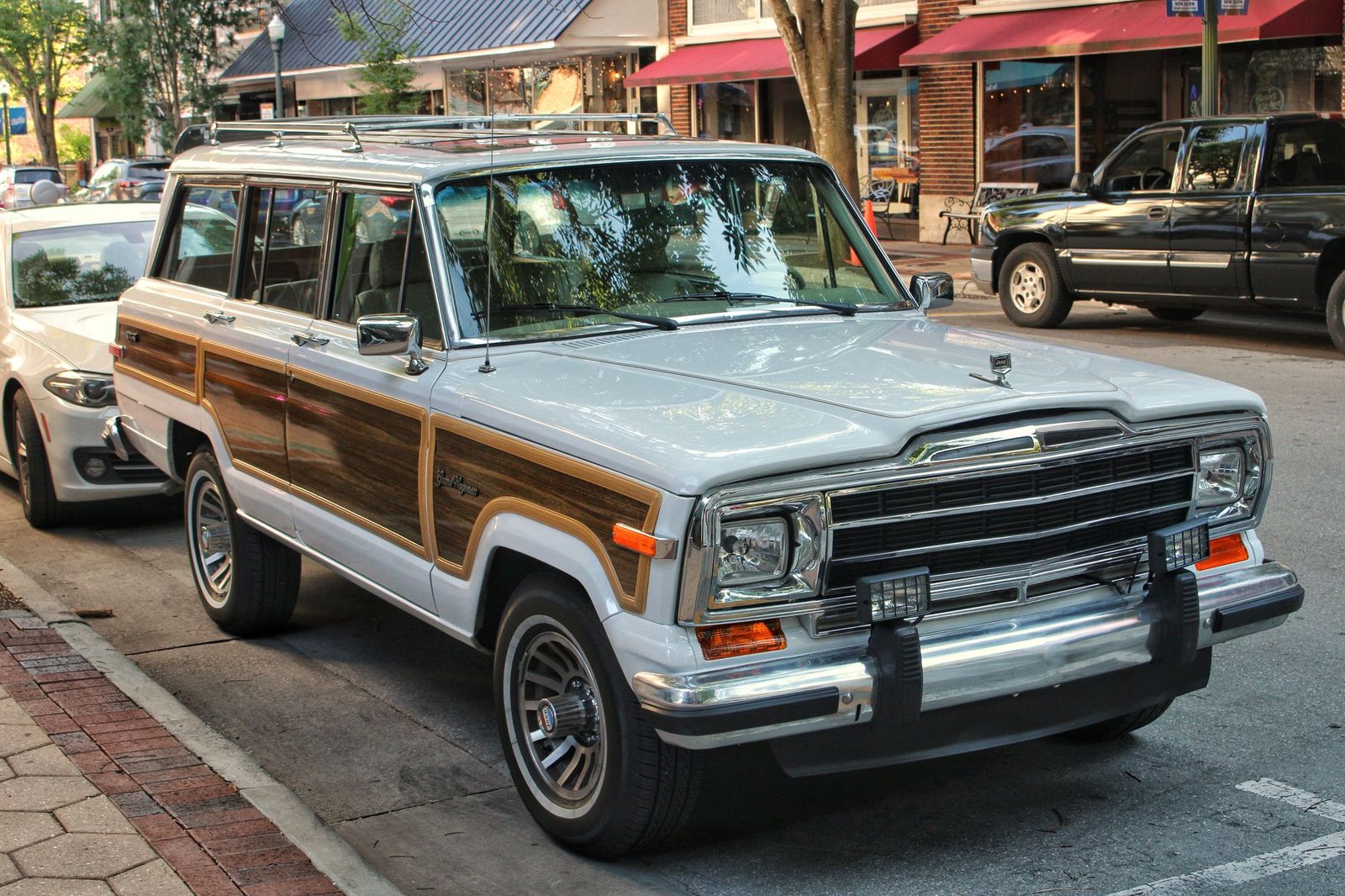
A Jeep salesperson leans across the desk and says the Wagoneer extended-range EV is coming soon, maybe next year, definitely the year after. Your uncle at Thanksgiving swears by it: “I’ll buy electric when they put a backup engine in there.” The Ram 1500 EREV gets announced, then delayed, then re-announced with a different timeline. Extended-range electric vehicles sound like the perfect compromise, the technology that finally makes EVs make sense for everyone. Except the companies building them keep pushing back the launch dates, and when you look at the money being spent, you start to wonder if this is a real product category or an expensive way to delay harder decisions.
The Jeep Wagoneer EV delay is the latest in a pattern. Stellantis announced extended-range versions of both the Wagoneer and Ram 1500, then moved the timelines. These are not fringe experiments. These are major nameplates for a company that sold roughly 1.5 million vehicles in North America in 2023. The EREV architecture, a battery-electric drivetrain with a small gasoline engine as a range extender, was supposed to thread the needle between range anxiety and charging infrastructure gaps. But the repeated delays suggest something more fundamental: the business case might not close.
The Dream Sounds Perfect on Paper
Extended-range EVs promise the best of both worlds. Drive electric most of the time, burn gasoline when you need to go farther than the battery allows. For truck buyers who tow or drive long distances in rural areas, this sounds ideal. No need to plan routes around fast chargers. No anxiety about finding a working station in Wyoming. You get the torque and efficiency of an electric drivetrain without the infrastructure dependency.
The idea is not new. The Chevrolet Volt used this architecture from 2011 to 2019. BMW sold the i3 with a range extender. Fisker tried it with the Karma. The pitch was always the same: EREVs eliminate the compromise. What those earlier attempts showed, though, is that building two powertrains into one vehicle is expensive, and the market for expensive compromises is smaller than automakers expect. (Strictly, the Volt and i3 REx are series-hybrid designs; the modern EREV pitch is the same idea scaled up to a larger battery.)
Stellantis is betting that truck and SUV buyers will pay a premium for extended range, but the capital required to develop, certify, and manufacture these vehicles is substantial. A dedicated EV platform is expensive enough. Adding a gasoline engine, fuel tank, exhaust system, and all the integration work multiplies the engineering cost. The Wagoneer and Ram 1500 EREV programs represent hundreds of millions in development spending, possibly over a billion when you account for tooling and production ramp.
Where the Math Breaks Down
The problem with EREVs is not technical. It is financial. You are building two powertrains, which means two sets of components, two supply chains, two regulatory certification processes. The battery still has to be large enough to provide meaningful electric range, though not as large as a full battery-electric vehicle. Then you add the cost of a gasoline engine, generator, fuel system, and emissions controls.
A battery-electric Ram 1500 needs a roughly 100-150 kWh battery to achieve competitive range. That battery, at 2024 costs of around $100-120 per kWh at the pack level, represents $10,000 to $18,000 in material cost alone. The EREV version still needs perhaps 50-70 kWh for 40-60 miles of electric range, so you save maybe $5,000 to $8,000 on the battery. Then you add back $3,000 to $5,000 for the range extender engine and fuel system. You have saved little on bill of materials, but you have roughly doubled your powertrain engineering complexity.
Worse, you are splitting your production volume. If Stellantis builds 100,000 Ram 1500 EVs, it can amortize fixed costs across one platform. If it builds 50,000 battery-electric and 50,000 EREV, it has two variants with half the volume each. Economies of scale shrink. This is one reason Tesla, which obsesses over manufacturing cost, has never seriously pursued an EREV. The unit economics are hard to make work unless you can charge a significant premium, and truck buyers are price-sensitive despite the high transaction prices.
What Delays Actually Tell You
The Jeep Wagoneer EV delay is not about one model. It is about Stellantis re-evaluating whether the EREV strategy justifies the capital. Delays in the auto industry usually mean one of three things: a technical problem, a supplier issue, or a business case that no longer closes. Technical problems get solved with engineering time. Supplier issues get solved with money or alternate sourcing. Business case problems get solved by canceling the program or radically reducing scope.
When a company delays a vehicle once, it is working through a problem. When it delays repeatedly, it is reconsidering the decision. Stellantis has already walked back EV timelines across its portfolio. In 2021, the company said it would invest more than 30 billion euros in electrification through 2025. By 2024, it was slowing EV launches in North America and emphasizing hybrids instead. The EREV delays fit this pattern. The company is not abandoning electrification, but it is looking for a lower-cost path.
The capital discipline question is this: would Stellantis be better off spending that EREV development money on improving its battery-electric trucks or expanding its plug-in hybrid lineup? A really good 300-mile battery-electric Ram 1500 might cost a comparable amount to develop as an EREV version, but it would have simpler manufacturing and one supply chain instead of two. A plug-in hybrid with 30-40 miles of electric range would be cheaper to build and easier to sell. The EREV sits in the middle, more expensive than a hybrid, more complicated than a pure EV, without being clearly better than either.
The Grain of Truth: Range Anxiety Is Real
The reason EREVs keep getting funded, despite the questionable economics, is that range anxiety is a genuine barrier for a segment of buyers. Not everyone, not even most people, but enough that automakers feel they need an answer. If you tow a trailer 300 miles regularly, or you live somewhere with sparse charging infrastructure, a battery-electric truck is hard to justify today. The charging network is improving, but it is not there yet for every use case.
EREVs address this gap, which is why the concept keeps resurfacing. Stellantis is not wrong to think that some truck buyers would pay extra for extended range capability. Where the strategy falters is assuming that segment is large enough to justify the development cost. The Volt sold reasonably well, but not well enough to survive when GM needed to cut costs. The i3 range extender was a niche within a niche. Fisker went bankrupt. The pattern suggests the market for expensive range-extended vehicles is smaller than the engineering budget required to serve it.
Why Companies Keep Trying Anyway
Automakers announce EREVs because it delays the harder choice: either build the charging infrastructure or accept that some customers will not buy EVs yet. An EREV announcement lets a company claim it has an answer to the range problem without actually building out fast charging networks or waiting for third parties to do it. It is a hedge, a way to keep selling to range-anxious buyers while the infrastructure catches up.
The problem is that hedges cost money, and in a capital-constrained environment, every dollar spent on an EREV is a dollar not spent on something else. Stellantis is not swimming in cash. It is navigating a transition that requires massive investment in batteries, platforms, and software, all while maintaining profitability on internal combustion vehicles that are declining in volume. The EREV strategy adds another cost center without clearly adding revenue or margin.
The incentive structure inside large automakers also drives EREV announcements. Product planners need to show they are addressing range anxiety. Brand managers need a story to tell dealers and customers. Executives need to demonstrate they are investing in the transition. An EREV program checks all those boxes, even if the financial return is uncertain. The delay comes later, when finance and manufacturing run the numbers and realize the program is not going to hit its targets.
The Real Tradeoff
Extended-range EVs are not a myth. They work, they solve a real problem, and some buyers would prefer them. The myth is that they are a cost-effective solution for automakers. The Jeep Wagoneer EV delay and the broader pattern of EREV postponements suggest that the business case is weak. These vehicles cost nearly as much to develop as pure EVs, they are more expensive to manufacture than hybrids, and the market willing to pay the premium is smaller than needed to justify the investment.
The accurate version is this: EREVs are a niche product that makes sense for specific buyers, but they are not a scalable solution to the EV transition. Automakers would likely get better returns by spending EREV development budgets on improving battery-electric range, reducing charging times, or expanding plug-in hybrid options. The Jeep Wagoneer EV delay is not just about one model being late. It is about a company realizing that the capital may be better spent elsewhere.
**Excerpt:** The Jeep Wagoneer EV delay is the latest sign that extended-range electric vehicles, despite sounding like the perfect compromise, may not justify their enormous development costs.