A component supplier announced a new sensor that supposedly boosts EV range, improves acceleration, and reduces motor noise. The press release hit automotive blogs, got shared around, and a few engineers in my LinkedIn feed rolled their eyes. Not because the technology is fake, but because this story repeats every eighteen months with a different part number. A new chip promises to unlock hidden range. A better inverter will revolutionize efficiency. A smarter thermal management system will change everything. The claim is always the same: this one component will meaningfully extend how far your EV goes on a charge.
An EV range sensor or any other individual component rarely delivers the step-change improvements that press releases suggest. Range is a system-level outcome, and improving it requires capital allocation decisions that most suppliers and automakers are not making wisely.
The Announcement That Launched This Article
The sensor in question measures magnetic fields in two directions simultaneously, with claimed accuracy improvements over existing parts. It sits inside the traction inverter, the box that converts DC battery power into AC power for the electric motor. Better measurement theoretically means better control of the motor, which could translate to efficiency gains. The manufacturer says the sensor keeps measurement errors below 1 percent even when vibration shifts its position slightly.
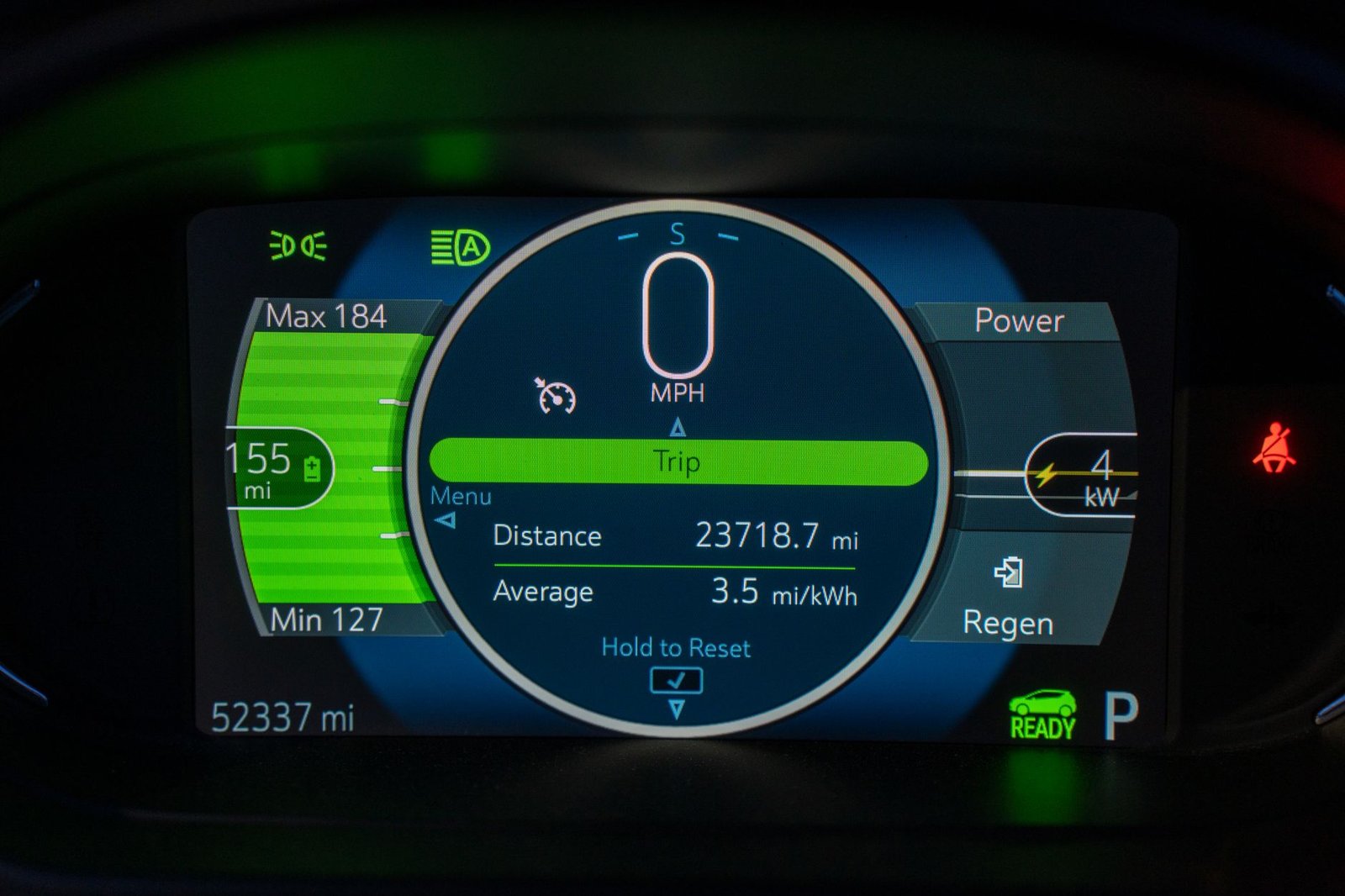
That technical claim is likely accurate. The announcement frames this as a range extender, when the realistic contribution is measured in tenths of a percentage point of overall vehicle efficiency. If an EV gets 3.5 miles per kilowatt-hour today, a perfect inverter sensor might push that to roughly 3.52 miles per kilowatt-hour. On an 80 kilowatt-hour battery, that is under two miles. Useful for an engineer optimizing every subsystem. Not material for a buyer choosing between vehicles.
If the sensor costs $15 more than the part it replaces, and the automaker sells 200,000 vehicles per year, that is $3 million in additional bill-of-materials cost annually. The efficiency gain does not unlock a higher price point. It does not open a new customer segment. It inches one specification slightly forward.
Where Efficiency Actually Comes From
Real efficiency improvements in EVs come from architecture-level decisions, not component swaps. The 2026 Mercedes CLA achieved impressive real-world highway range in a recent 70 mph test, beating its EPA rating by a wide margin. That efficiency, in the range of 4.4 miles per kilowatt-hour, reflects decisions made years earlier: a low drag coefficient, a large battery with good thermal management, silicon carbide inverters, and a two-speed gearbox. None of those are bolt-on improvements. They are capital commitments made during vehicle architecture design.
Silicon carbide inverters, for context, reduce switching losses compared to older silicon-based designs. That is worth roughly 2 to 5 percent in system efficiency, depending on drive cycle. A two-speed gearbox keeps the motor in a more efficient operating range at highway speeds, worth another few percent under specific conditions. These are not cheap components. Silicon carbide costs more per unit than silicon. A two-speed gearbox adds mechanical complexity and weight. Mercedes spent the capital because the efficiency gain justified the cost at their price point, where the margin exists to absorb it.
Even if the sensor improves inverter efficiency by half a percent, that gain is applied to a subsystem that represents only a fraction of total energy losses in an EV. Improving a small slice of losses by half a percent yields a total vehicle efficiency gain that rounds to noise. That is the core problem with framing it as a range breakthrough.
What the Component Supplier Actually Sells
The business model of automotive component suppliers depends on selling incremental improvements to engineers who are graded on incremental improvements. An inverter engineer has an efficiency target. If the new sensor helps hit that target without redesigning the power electronics stack, it is a win for that engineer. The vehicle-level impact is secondary to the subsystem-level win.
The automaker spends money on a component that moves one internal metric, but does not move the customer metric. The supplier books revenue. The press release goes out. The actual range improvement is lost in testing variation. Nobody got fired, but nobody built a competitive advantage either.
Compare that to the decision to use silicon carbide inverters. That is a platform-level commitment with supply chain implications, long-term supplier relationships, and engineering resources dedicated to integrating a different semiconductor technology. It costs more. It also delivers an efficiency improvement large enough to advertise. The CLA’s efficiency puts it in the conversation with the most efficient EVs on the market, including the Tesla Model 3 and the Lucid Air. That matters in reviews and comparison tests.
The Grain of Truth in the Sensor Story
Current sensors do have limitations. Position shifts from vibration and temperature changes introduce measurement error. If the inverter does not know exactly how much current is flowing, it cannot control the motor optimally. In edge cases like rapid acceleration or high-speed cruising, that error can cause the inverter to overshoot or undershoot the target, wasting energy or producing torque ripple that the driver feels as roughness.
A more accurate sensor does reduce that error. In specific drive cycles, particularly on the test bench where conditions are controlled, the improvement is measurable. Real-world driving introduces so many other variables like wind, temperature, road grade, and tire pressure that the sensor’s contribution disappears into the noise. The $3 million annual cost remains.
Why These Announcements Keep Happening
Component suppliers operate in a market where differentiation is hard. Inverters, sensors, and power modules are increasingly commoditized. Performance specifications converge. The way to stand out is to claim a vehicle-level benefit from a component-level improvement. The press release frames a large accuracy improvement in magnetic field measurement as a range boost because range is what buyers care about. Measurement accuracy is not.
Automakers play along because they are also looking for differentiation. If a supplier offers a part that lets the marketing team say “advanced sensor technology for maximum efficiency,” that has value even if the actual efficiency gain is unmeasurable. The capital goes toward the announcement, not the outcome.
This is not fraud. It is misaligned incentives. The supplier is rewarded for selling parts. The automaker’s purchasing team is rewarded for hitting cost and performance targets at the subsystem level. The vehicle-level efficiency target is someone else’s problem, and it gets hit through the accumulation of many small improvements, most of which do not justify their cost individually.
What Actually Moves the Range Needle
Meaningful range improvements come from fewer, larger capital commitments: a battery with 10 percent more energy density, an aerodynamic redesign that cuts drag by 5 percent, a lighter vehicle structure that reduces rolling resistance. These are expensive, time-consuming, and risky. They require executive sign-off and multi-year development cycles.
The sensor is cheap, fast, and safe. It will ship. It will go into production. And in a few years, another supplier will announce another sensor with another headline accuracy improvement, and we will have this conversation again. The range will not have changed.