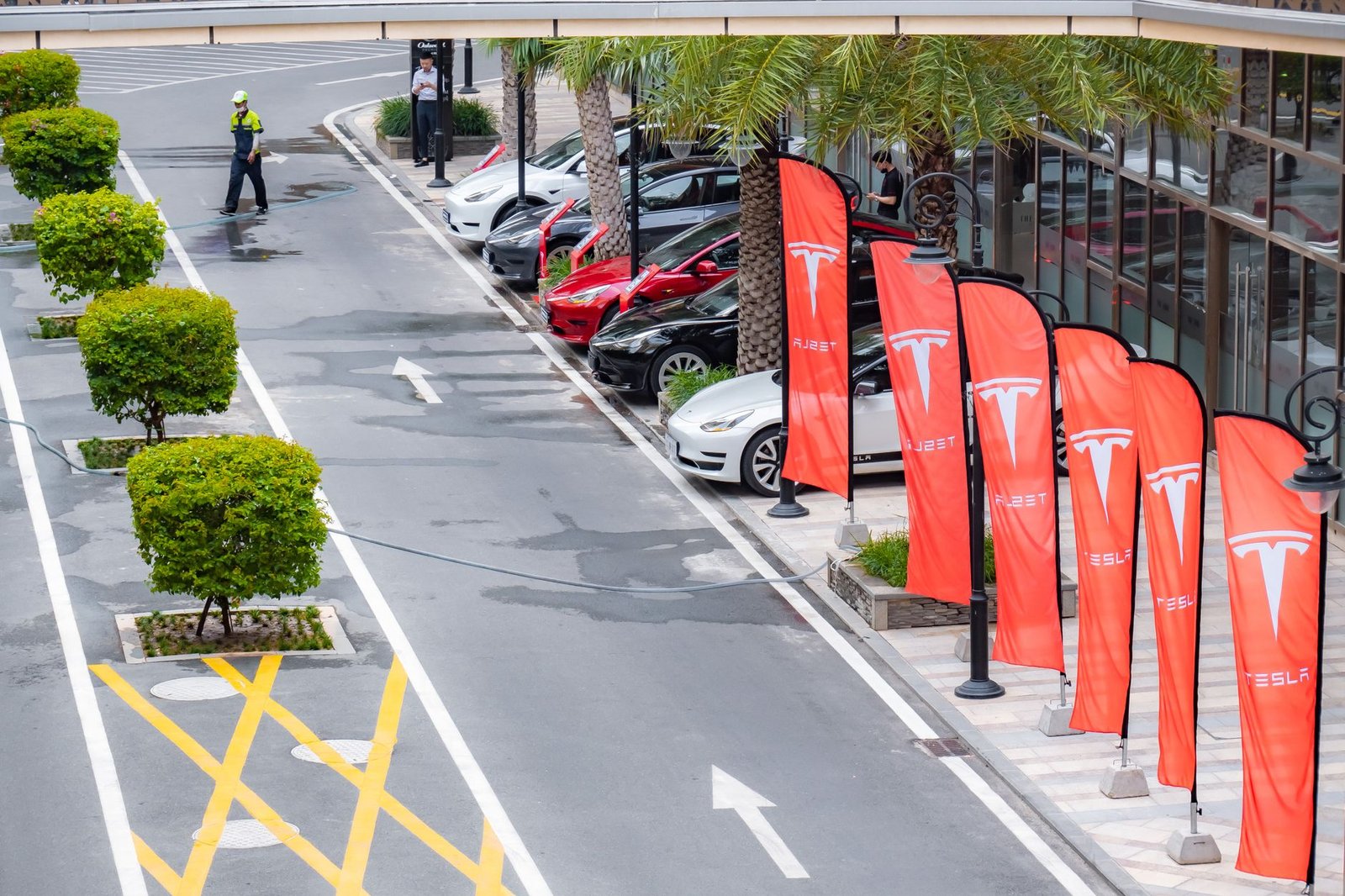
Excerpt: American car buyers look at China’s EV dominance and assume cultural differences explain it. The data suggests they’re preparing for the wrong future.
The Dinner Table Certainty
A colleague mentioned last month that all sixteen of the top-selling cars in China were EVs in May 2024. His brother-in-law, visiting from Michigan, had an immediate response: “Yeah, but that’s China. Government mandates. Completely different market. Won’t happen here.” He said it with the confidence of someone who’d thought about this for exactly as long as it took to form the sentence.
The belief is simple: China EV sales figures represent artificial market conditions. Central planning. Subsidies so large they distort consumer choice. A car-buying culture nothing like America’s truck-and-SUV appetite. Therefore, watching China’s gasoline car collapse tells us nothing about what will happen in markets where people actually choose what they want to drive.
I understood why he believed it. The framing makes intuitive sense if you’ve read three headlines about Chinese industrial policy and stopped there.
Where the Story Comes From
The myth has legitimate roots. China’s government did implement aggressive EV promotion policies starting around 2009. Purchase subsidies. License plate restrictions for gasoline cars in major cities. Preferential parking. The policy package was real and substantial.
American media coverage focused heavily on these mandates, partly because it fit a larger narrative about Chinese state capitalism, partly because covering policy is easier than covering buyer behavior. A 2019 Bloomberg article on Chinese EV incentives got shared widely. Most readers absorbed one takeaway: Chinese consumers buy EVs because the government makes them.
Tesla’s early success in China complicated this story slightly, but got folded into the same framework. Premium buyers could afford to indulge in an EV as a second or third car. Still not representative of mass-market choice.
By 2023, as Chinese EV penetration passed 30 percent, the explanation evolved but the core assumption held. Now it was about domestic brands like BYD building cheap EVs for a price-sensitive market. Different from American preferences. Still fundamentally about conditions that don’t exist in the U.S.
What Buyers Actually Did
China’s national EV purchase subsidies ended in December 2022. Not reduced. Ended. The subsidy that had reached up to 12,600 yuan for qualifying vehicles went to zero.
Analysts predicted a sales cliff. Several Western investment banks published notes in early 2023 forecasting a pullback in EV adoption as buyers adjusted to unsubsidized prices. I read four of them. They all expected the growth curve to flatten.
Instead, EV sales grew from 26.6 percent of passenger car sales in 2022 to 35.7 percent in 2023 to over 45 percent in the first five months of 2024. The rate of increase accelerated after subsidies ended. In May 2024, the top sixteen best-selling individual car models in China were all electric or plug-in hybrid vehicles, according to China Passenger Car Association data. Not a single gasoline-only model made the top sixteen.
Monthly gasoline car sales in China fell from approximately 1.8 million units in 2017 to under 1.1 million in May 2024. That’s a 40 percent contraction in the actual number of gasoline vehicles sold per month, even as total car sales held relatively steady. Buyers didn’t stop buying cars. They stopped buying gasoline cars.
The behavioral pattern is consistent with technology adoption curves, not subsidy dependency. When a mature product gets replaced by a superior alternative, the transition follows an S-curve. Slow initial adoption, rapid middle phase, trailing holdouts. China is in the rapid middle phase. The subsidy era was the slow initial phase.
The Real Government Influence
Policy mattered, but not the way the myth suggests. The critical government action wasn’t forcing consumers to buy EVs. It was creating the conditions where EVs became the rational choice.
China built 2.6 million public charging points by the end of 2023. For comparison, the United States had about 161,000. If you live in Shenzhen or Hangzhou, charging anxiety is not a thing you experience. You experience charging abundance.
Local governments streamlined permitting for charging infrastructure. A building owner in Shanghai can install chargers in a parking garage in weeks. In San Francisco, the same process can take six months and cost three times as much per unit.
License plate restrictions in cities like Beijing and Shanghai created a premium for gasoline cars, not EVs. An ICE vehicle license plate in Shanghai costs around 90,000 yuan at auction (roughly $12,400). An EV plate is free and immediate. This is policy influence, certainly, but it worked by making the gasoline option more expensive, not making EVs artificially cheap.
Buyers respond to the total cost of ownership calculation, and Chinese policy shifted that calculation by removing friction from EV ownership while adding it to gasoline ownership.
Why Americans Think They’re Different
The persistence of this myth serves a psychological function. If China’s EV adoption is explained by unique local conditions, American buyers don’t have to update their assumptions about what car they’ll be driving in five years.
There’s also a class signaling component. Dismissing Chinese consumer preferences as policy-driven rather than genuine choice reinforces a narrative about Western consumer sovereignty. We choose. They comply. It’s a comfortable frame.
The automotive industry in the U.S. benefits from the myth as well. If China’s experience doesn’t translate, there’s less urgency to transform product lines. Ford can point to Chinese EV sales and say “different market” while continuing to invest primarily in F-150 variants.
Confirmation bias does the rest. Every news story about a Chinese EV company receiving government support gets remembered. The fact that BYD became the best-selling brand in China by building plug-in hybrids that cost-competed with gasoline cars gets less mental weight, even though it’s more relevant to understanding buyer behavior.
What the Pattern Actually Indicates
Chinese car buyers in 2024 are making the same calculation American truck buyers make: what delivers the most capability for the least hassle at a price I can justify? The answer increasingly is a plug-in vehicle, either battery-electric or plug-in hybrid.
The cultural difference argument collapses when you look at vehicle type preferences. Chinese buyers love SUVs as much as Americans do. The BYD Song, an electric SUV, was the third best-selling vehicle in China in May 2024. The Tesla Model Y, another SUV, was in the top five. Buyers didn’t abandon their preference for larger vehicles. They just stopped assuming those vehicles needed gasoline engines.
The transition happened faster in China because charging infrastructure came faster, because automakers offered compelling products faster, and because policy removed barriers faster. Not because Chinese buyers are more willing to accept an inferior product for ideological reasons.
American buyers will follow the same pattern when the same conditions exist: abundant charging, multiple compelling options at competitive prices, and a total ownership cost that favors electric. The timing is different. The direction is the same.