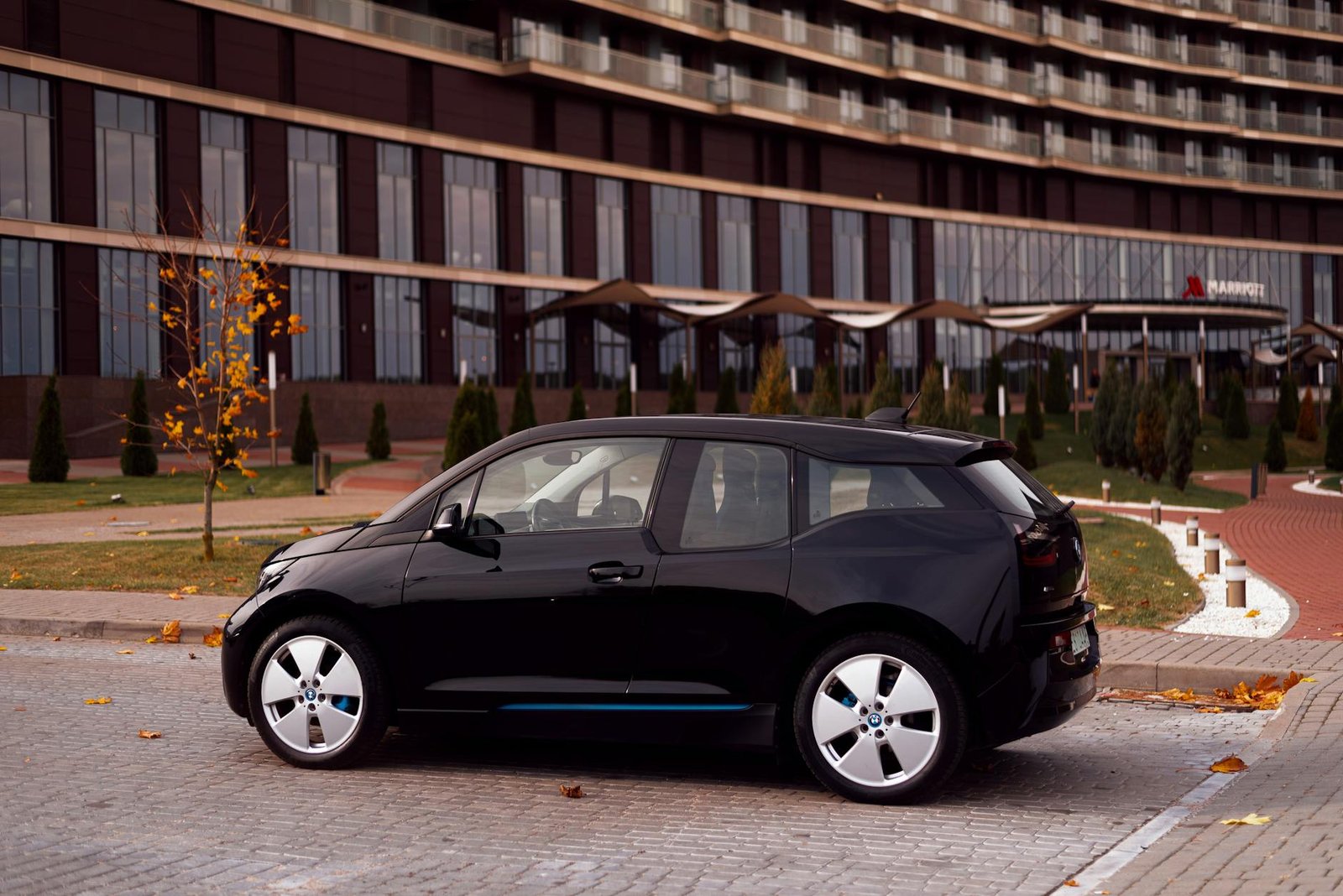
Bjorn Nyland finished a 621-mile road trip in his BMW iX3 with two charging stops and 8 hours 55 minutes on the clock. The ambient temperature sat at 32°F. The cruise control held 75 mph for most of the route. When he published the numbers, the iX3 had matched the Tesla Model S Long Range and the Zeekr 7X Performance for total time, but used less energy to get there. The test happened in conditions that typically punish EVs: highway speeds in freezing air.
The iX3 managed 42.9 kWh/100 miles in weather cold enough to kill 20-30% of advertised range in most EVs. Better efficiency than either competitor despite a 105-kWh battery smaller than the Model S pack and roughly equivalent to the Zeekr’s. The advantage came from keeping electrons where they belong: in propulsion, not climate control.
What the Numbers Actually Show
Two charging stops across 621 miles suggests the iX3 pulled close to its advertised 380-mile range even in suboptimal conditions. Most EVs struggle to clear 300 miles between stops at 75 mph with freezing temperatures. The 2.3 miles per kWh efficiency figure tells you the thermal losses stayed contained. Battery chemistry doesn’t change between brands at this temperature. Heat management determines how much energy you waste on cabin comfort and pack warming before discharge.
BMW tested the iX3 on 21-inch wheels, not the more efficient 20-inch option. That’s a 3-5% range penalty right there. The optimized configuration would push efficiency higher. The 200-kW maximum charging speed meant stops stayed short even with a relatively modest 105-kWh pack. Fast in, fast out. Total trip time matched vehicles with larger batteries because charging curves matter more than raw capacity once you’re above 100 kWh.
The head-to-head with the Model S Long Range is instructive. Tesla’s pack is approximately 100 kWh usable. The companies design around different constraints: Tesla optimizes for weight and range, BMW for charging speed and thermal stability. Same trip time, different engineering priorities. Cold weather exposed which tradeoff holds up better at highway speeds in winter.
The Thermal Management Gap
Keeping battery cells in their optimal temperature window (roughly 60-80°F) requires either resistive heating or a heat pump system sophisticated enough to scavenge warmth from the drivetrain and ambient air. At 32°F ambient, you’re fighting a 30-50 degree differential depending on cell temperature. Resistive heating works but it’s pure loss: every kilowatt-hour spent warming the pack is one you can’t use for miles. Heat pumps are more efficient but they add weight, cost, and complexity.
The iX3’s thermal architecture uses a heat pump with multiple refrigerant loops. One circuit manages cabin temperature, another controls battery conditioning, a third can pull waste heat from the motor and power electronics. When you’re cruising at 75 mph in freezing air, the motor generates heat. The system redirects that thermal energy to pre-warm the battery or supplement cabin heating, reducing the parasitic load that normally kills range in winter.
Simpler systems treat cabin and battery thermal management as separate problems. Those architectures work fine in moderate weather. In cold conditions, they spiral: cold battery delivers less power, driver demands more heat, battery gets colder from discharge, efficiency drops further. The iX3’s integrated approach breaks this cycle by treating all heat sources as potential assets rather than waste streams.
A lithium-ion cell below 32°F has higher internal resistance and lower voltage output. You can force current through it, but you’ll lose efficiency and risk lithium plating on charge cycles. Warming the pack before hard discharge is non-negotiable for performance and longevity. The question is whether you burn battery energy to do it or scavenge heat from systems that generate it anyway.
Why Most Buyers Won’t See This
Nyland’s test used constant highway speed in sustained cold, which is the worst case for EV efficiency but also the most predictable. Real-world driving includes stops, speed variation, and temperature fluctuations. Most buyers charge overnight in a garage that’s warmer than 32°F. They precondition the cabin while plugged in. They don’t average 75 mph for 600 miles. The advantage Nyland documented gets smaller when you soften the test conditions.
The customer who benefits most from this thermal management sophistication lives in a cold climate, drives long highway routes regularly, and charges at public infrastructure rather than home. That’s a minority use case. For most EV buyers, winter range loss comes from short trips where the battery never fully warms up and cabin heating dominates the energy budget. The iX3’s system helps there too, but the delta shrinks because you’re not sustaining high-speed discharge long enough to generate meaningful waste heat for recovery.
The iX3 xDrive50 positions as a premium offering. Buyers shopping this segment care about range consistency but they’re not optimizing for charging stop frequency the way Nyland’s test measures. They want the car to behave predictably in all conditions. The thermal management delivers that: you’re less likely to see wildly different efficiency between summer and winter compared to EVs with simpler thermal architectures.
What BMW Got Right About Cold Weather
The company treated thermal management as a first-order design problem rather than an afterthought. That means accepting the weight and cost of a sophisticated heat pump system in every vehicle. It means integrating thermal controls with battery management and powertrain calibration from the start. Most manufacturers bolt climate control onto existing platforms and hope for the best.
This approach costs more upfront but it pays back in customer satisfaction and residual value. An EV that loses 30% range in winter generates service complaints and early trade-ins. One that holds performance consistent across seasons builds brand loyalty. The engineering investment protects the downside.
Battery capacity is expensive, charging speed is getting cheaper. BMW sized the pack at 105 kWh, which is large but not excessive, then compensated with 200-kW charging capability. That’s the correct ordering if you believe charging infrastructure will improve faster than battery costs will fall. Two short stops beat one long stop or a heavier, pricier battery that extends range but slows down everything else.
The Constraint Nobody Talks About
Cold weather range testing reveals a truth about EV adoption that press releases avoid: the technology performs best when used within its optimal envelope. That envelope is wider than it used to be. Highway driving in freezing temperatures sits at the edge. The iX3 handled it well because BMW over-engineered the thermal system relative to typical use cases.
This creates a market segmentation that dealers struggle to explain. The buyer who drives 50 miles daily in moderate climate doesn’t need what the iX3 offers. They could save money with simpler thermal management and less charging speed. The buyer who runs 300 miles weekly in Minnesota winter absolutely needs this level of engineering. The first buyer subsidizes the second through pooled development costs, which works as long as manufacturers can sell enough volume to amortize the engineering.
The risk is that sophisticated thermal management becomes table stakes as EVs push into colder markets and longer-range use cases. If every manufacturer needs heat pump systems to maintain winter range, the cost gets embedded in base price and nobody can differentiate on it. BMW’s current advantage disappears once thermal management excellence stops being a premium feature and becomes a minimum requirement.
What This Actually Proves
Nyland’s test confirmed that winter range loss is solvable with current technology. You don’t need solid-state batteries or radically new chemistry. Competent thermal engineering and the willingness to pay for it solve the problem. The iX3’s performance in 32-degree weather demonstrates what’s possible when thermal management gets treated as seriously as powertrain efficiency.
EV capability gaps are shrinking faster than adoption curves suggest. Cold weather used to be an insurmountable problem. Now it’s an engineering challenge with known solutions. The constraint isn’t technology. Whether manufacturers choose to deploy proven solutions across their lineups or reserve them for premium segments determines who benefits. BMW made that choice with the iX3. The test results show it was the correct one, at least for buyers who actually drive in winter.