Excerpt: Hyundai’s Santa Fe EREV promises 600+ miles of range with half the battery. But the vehicle type’s viability depends entirely on whether you believe today’s charging infrastructure is permanent or temporary.
The Confident Prediction
At CEO Investor Day in September, Hyundai pitched the Santa Fe EREV as delivering over 600 miles of combined range using less than half the battery capacity of a pure EV. A gas engine acts as an onboard generator, keeping the battery topped up when you exceed the electric-only range. The company spotted a gap in the market and built a product to fill it. Forums lit up with declarations that this was the future: “EREVs solve every EV problem. Give me the electric driving experience without the charging anxiety.”
The logic tracks if charging infrastructure stays inadequate. Carry a backup generator and sidestep the whole problem. But this assumes the present state of charging is permanent rather than a snapshot of infrastructure mid-deployment.
When Half Measures Become Full Commitments
The Hyundai EREV exists because of decisions made five years ago about factory tooling, supplier contracts, and platform architecture. The Santa Fe EREV launches in 2026. Development timelines for new vehicle platforms run 4-6 years, which means Hyundai committed to this architecture around 2020-2022, when DC fast charging was sparse outside California and Tesla’s Supercharger network.
The calculus made sense then. Build a bridge product that lets buyers dip a toe into electrification without requiring a mature charging network. But vehicle platforms lock in for 7-10 year production runs. The Santa Fe EREV entering production in 2026 will compete against infrastructure that looks nothing like 2022. Tesla opened its Supercharger network to other manufacturers starting in 2023. Electrify America, EVgo, and ChargePoint have doubled their DC fast charging stalls since 2021. The Bipartisan Infrastructure Law allocated $7.5 billion to build out a national charging network.
Hyundai designed the Santa Fe EREV when infrastructure was the limiting factor. By the time customers take delivery, infrastructure may have stopped being the limiting factor.
The Engineering Compromise Baked In
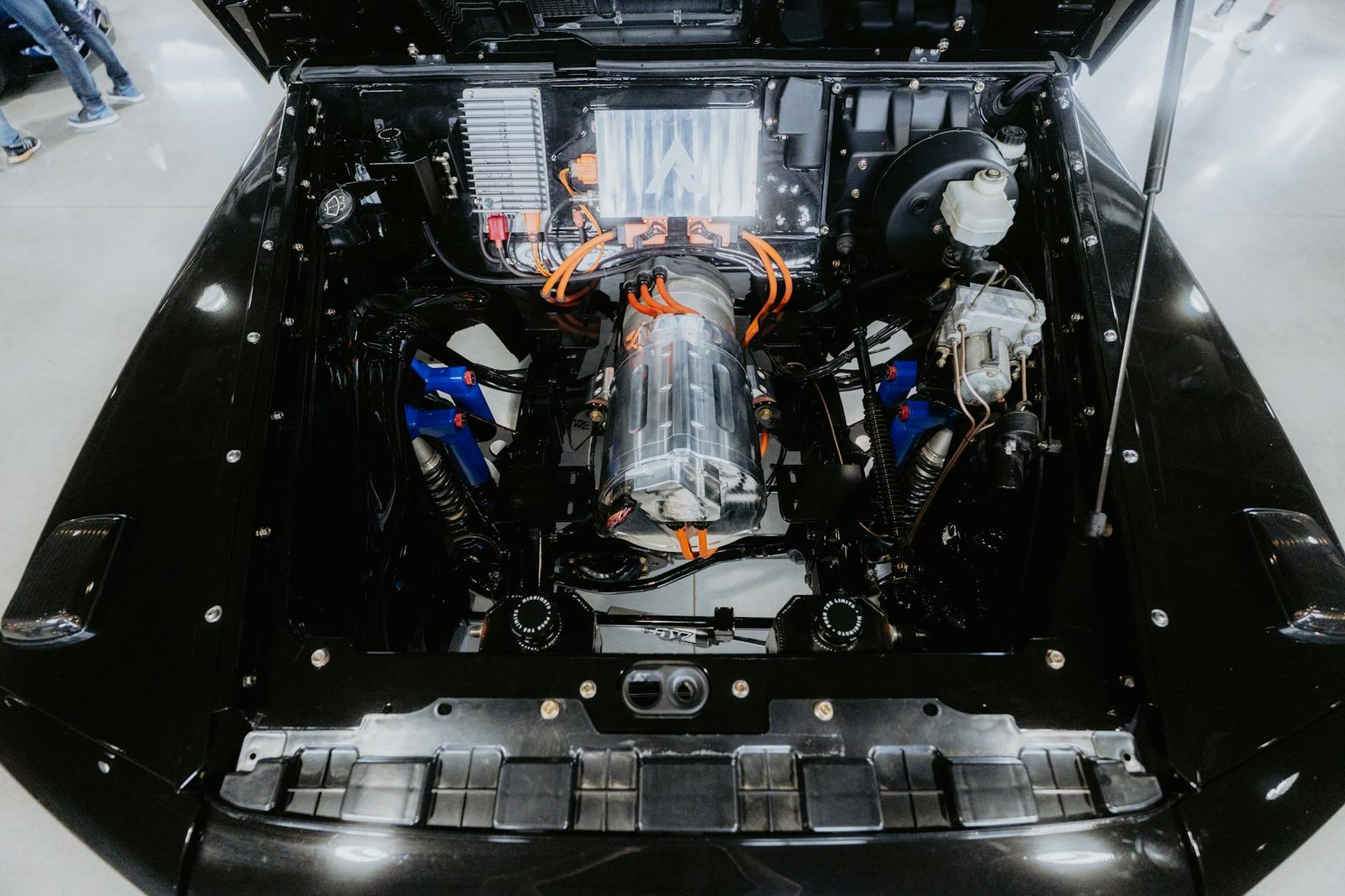
Every Hyundai EREV carries a gas engine, a fuel tank, an exhaust system, a cooling system for the engine, and a more complex control system to manage power switching. That adds 300-400 pounds of hardware a pure EV does not need. The fuel door spotted on the prototype’s left side and the charge port on the right tell the story: this vehicle serves two masters.
The tradeoff shows up in the numbers. Hyundai claims “full EV power performance” with less than half the battery capacity of a comparable pure EV. A Hyundai Ioniq 5 with a 77.4 kWh battery delivers 303 miles of EPA range. If the Santa Fe EREV uses a 35-40 kWh battery and achieves 50-60 miles of electric-only range before the gas engine kicks in, then roughly 540-550 miles of the claimed 600-mile range comes from burning gasoline. That is a very efficient hybrid with a plug, not an EV.
The physics cannot be escaped. Carrying a generator means carrying weight that does no work 90% of the time for drivers who charge at home. The battery is smaller, so highway efficiency suffers once you exhaust the electric range. The gas engine runs at variable loads to maintain battery charge, which is less efficient than running at a steady optimal RPM. Every component adds failure points.
Where the Math Actually Works
The Hyundai EREV solves a real problem for a specific use case that may be shrinking faster than Hyundai anticipated. Live in a rural area with no home charging and the nearest DC fast charger is 80 miles away? The Santa Fe EREV is a rational choice. Regularly drive 400 miles in a day with no opportunity to charge? Carrying your own generator makes sense.
How large will that population be in 2026 and beyond? The EREV design assumes charging infrastructure improvement will be slow. If that assumption is wrong, buyers get a more expensive, heavier, more complex vehicle than they need. The gas engine becomes dead weight. You pay for a backup generator you rarely use, and you pay again at every oil change, smog check, and ICE-specific maintenance interval.
Genesis plans a GV70 EREV for 2026. Kia has revealed plans for EREV versions of its vehicles using the same platform. These are platform-level commitments that will define these companies’ product lineups for a decade.
The Infrastructure Bet You Cannot Reverse
Path dependence works both ways. If Hyundai is correct that charging infrastructure will remain inadequate through the late 2020s, then the EREV strategy captures buyers who would otherwise stick with gas. If infrastructure improves faster than the product development cycle anticipated, Hyundai has locked itself into manufacturing complexity it does not need.
Tesla made the opposite bet: build pure EVs, assume infrastructure will catch up, and use the Supercharger network as a competitive advantage until it does. That bet paid off because Tesla controlled both the vehicle and the charging network. Hyundai does not. It depends on third-party networks improving on a timeline that justifies the EREV’s added cost and weight.
Every successful Hyundai EREV makes the case for its own obsolescence. If enough buyers prove they can live with electric-only range for daily driving and only need the gas engine for occasional road trips, then the next rational step is to eliminate the engine and rely on a denser charging network. The Santa Fe EREV trains customers to think of range anxiety as solvable, then gives them a mechanical solution in a market moving toward an infrastructure solution.
What This Actually Tells You
The Hyundai EREV is smart engineering aimed at a 2022 problem being delivered into a 2026 market. The vehicle works as designed. Whether the design brief remains valid by the time production ramps is the open question.
Buying a Hyundai EREV in 2026 means betting on the pace of charging infrastructure deployment. You are betting it will not improve fast enough to make the gas engine unnecessary. That might be the right bet. But understand you are betting against infrastructure improvement, not making a neutral choice. Hyundai locked in the sequence when it committed to the platform in 2020-2021. You inherit that sequence when you buy the vehicle in 2026.