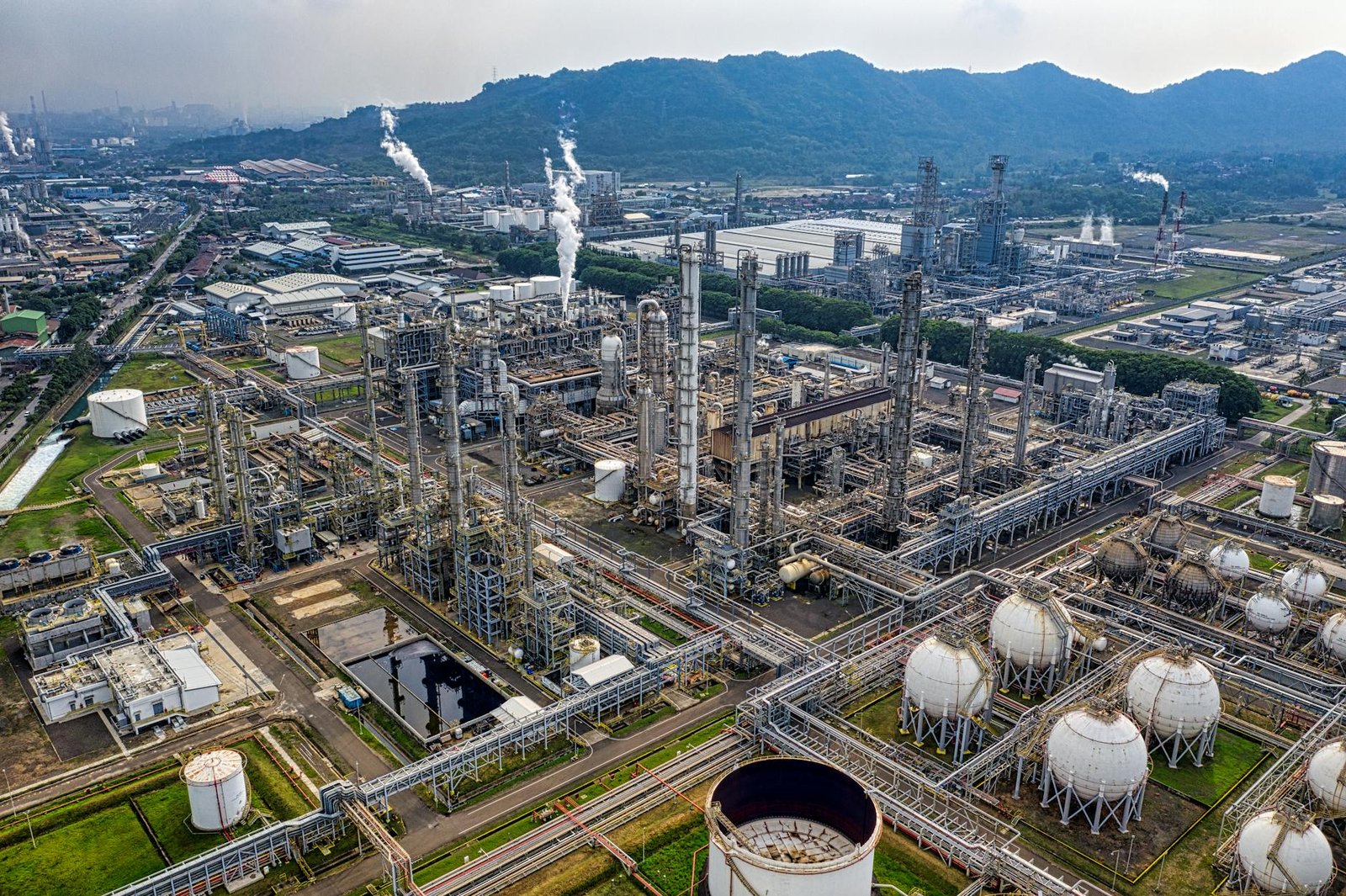
Mangrove Lithium just opened a 1,000-tonne-per-year electrochemical lithium refinery in Delta, British Columbia. The press release called it “North America’s first commercial electrochemical lithium refinery.” The CEO talked about domestic supply chains and energy security. The plant can supply lithium for about 25,000 EVs per year. North America sold 1.4 million EVs in 2023. The math doesn’t work yet, and understanding why reveals what’s actually constraining the EV supply chain.
What Happens Inside a Lithium Refinery
A lithium refinery takes partially processed lithium and converts it into battery-grade lithium hydroxide or lithium carbonate. The input is greyish rock powder (spodumene concentrate, typically 6% lithium). The output is 99.5% pure white powder that battery cathode manufacturers can actually use. That purity matters. Battery cathodes need lithium with fewer than 100 parts per million of certain contaminants. Get the chemistry wrong and your battery catches fire or dies after 500 cycles instead of 2,000.
Most lithium refineries use chemical processing. You roast the spodumene at 1,050 degrees Celsius to convert it to a more reactive form, then attack it with sulfuric acid to create lithium sulfate in solution. Next you remove the impurities (iron, aluminum, calcium, magnesium) through precipitation steps, then add either sodium hydroxide or sodium carbonate to get lithium hydroxide or carbonate. Each step requires heating, cooling, filtering, and a lot of water. A typical chemical refinery processing 20,000 tonnes per year of lithium (enough for about 500,000 EVs) needs roughly 100,000 square meters of land and consumes energy equivalent to a small town.
Mangrove’s electrochemical process works differently. They’re using electrical current to drive the purification reactions instead of heat and chemicals. The details are proprietary, but the basic physics involves selective ion transport across membranes. You apply voltage, lithium ions move through the membrane while contaminants stay behind, and you end up with pure lithium solution that you can crystallize into battery-grade material. In theory, this uses less energy and produces fewer waste products than roasting ore at blast-furnace temperatures.
The Capital Cost Problem Nobody Talks About
A 20,000-tonne-per-year chemical lithium refinery costs about $400 million to build. That works out to $20,000 per tonne of annual capacity. Mangrove’s 1,000-tonne plant in Delta is a demonstration facility, but they’re planning a larger plant in eastern Canada. If that facility scales to 20,000 tonnes like a typical refinery, and if electrochemical refining costs the same per tonne as chemical refining, you’re looking at $400 million in capital. If it’s cheaper, maybe $250 million. Either way, you need to find buyers who’ll commit to buying your lithium for 10-15 years at prices that generate acceptable returns on that capital.
Battery makers sign lithium supply contracts based on spot prices plus a fixed margin. When lithium carbonate cost $80,000 per tonne in late 2022, refiners could afford to build new capacity because margins were enormous. Today lithium costs about $12,000 per tonne. The gross margin on refining runs around $3,000 per tonne if you’re efficient. A 20,000-tonne refinery generates $60 million in gross profit per year. After operating costs (labor, energy, maintenance, overhead), net profit might be $25 million annually. Your $400 million investment pays back in 16 years at current prices.
Most mining and refining companies target 7-10 year paybacks. The math only closes if lithium prices rise significantly or if your process costs 30-40% less than conventional refining.
Mangrove received up to $21.88 million CAD in conditional funding from Natural Resources Canada for engineering work on their larger facility. That’s 5-8% of a $300-400 million project budget, which helps but doesn’t eliminate the capital risk. The company needs either firm offtake agreements from battery makers or a view that lithium prices will climb back above $20,000 per tonne. Both are uncertain. Lithium prices collapsed because new mine supply from Australia and Africa exceeded demand growth. Adding refining capacity doesn’t solve that problem.
Why Location Doubles Your Costs
Most lithium gets refined in China because China built the infrastructure when nobody else cared. A refinery needs reliable electricity, process water, chemical feedstocks, waste disposal permits, and access to either shipping ports or battery manufacturing clusters. Building in British Columbia means higher labor costs (a chemical plant operator in China earns $20,000 per year, in Canada around $75,000), stricter environmental compliance (which is good but expensive), and longer logistics chains to reach customers. If your lithium comes from a mine in Quebec and your customer is a battery plant in Michigan, you’re shipping spodumene concentrate west to BC, refining it, then shipping lithium hydroxide back east. That’s two cross-country freight moves.
Compare that to the Chinese model: Australian spodumene ships directly to Jiangxi province refineries, which sit 200 kilometers from cathode plants in the same industrial zone. Total logistics cost runs around $800 per tonne. The North American route could easily hit $2,000 per tonne in freight alone. You can only absorb that cost if the vertically integrated supply chain creates value somewhere else (faster response to demand changes, secure supply during geopolitical disruptions, access to government subsidies for domestic content).
Mangrove signed an MOU with a mining company to source spodumene from Quebec lithium projects. If they build their second refinery in eastern Canada near those mines, the logistics improve dramatically. Spodumene travels maybe 500 kilometers instead of 4,000. Refined lithium ships to battery plants in Michigan, Tennessee, or Georgia in a day. That’s competitive with the China route on delivery time and possibly on cost if lithium prices rise enough to justify the higher labor and compliance costs.
The Throughput Versus the Customer
A 1,000-tonne-per-year lithium refinery supports 25,000 EVs annually. GM sold approximately 75,000 EVs in North America in 2023. Ford sold about 72,000. Tesla sold roughly 650,000. Each of those automakers needs lithium refinery capacity dedicated to their supply chain measured in tens of thousands of tonnes per year, not one thousand. Mangrove’s Delta plant is a pathfinder, not a solution. It proves the electrochemical process works at commercial scale. It gives potential customers refined lithium they can test in their batteries. It creates a reference point for permitting and financing larger facilities.
The unit economics only improve when you build the 20,000-tonne version. Fixed costs (plant management, lab staff, regulatory compliance, insurance) spread over 20 times more output. Maintenance costs scale sublinearly. Electricity and chemical purchase contracts get better rates at higher volumes. A 1,000-tonne plant might have production costs of $8,000 per tonne. A 20,000-tonne plant might get that down to $5,000. The difference between an $8,000 cost structure and a $5,000 one determines whether you survive when lithium prices drop to $10,000 per tonne during the next supply glut.
Battery makers care about impurity profiles and particle size distribution batch to batch. A small pilot plant optimizes for learning and flexibility. A large plant optimizes for repeatability. You accept higher costs per tonne during the pilot phase because you’re buying data about how the process behaves under different input ore compositions and operating conditions. That data has value only if it translates to a larger facility that can actually supply meaningful volume.
What the Supply Chain Actually Needs
North America needs about 150,000 tonnes per year of battery-grade lithium production by 2030 to support projected EV sales of 3.5-4 million vehicles. Current domestic refining capacity sits near zero (this Mangrove plant is basically it for electrochemical methods). Chemical refineries take 4-5 years from permitting to first production. Electrochemical might be faster, maybe 3 years if the technology scales cleanly. Even aggressive expansion gets you to roughly 40,000-50,000 tonnes of domestic capacity by 2030. The rest still comes from imports, primarily from China.
The constraint is the chicken-and-egg problem of commitments. Battery makers won’t sign 10-year lithium supply contracts at fixed prices because they’re still fighting on EV margins and need flexibility if demand softens. Refiners won’t build $400 million plants without those long-term contracts because commodity price volatility kills returns. Government subsidies help but don’t eliminate the risk. Mangrove’s $21.88 million in conditional funding covers engineering studies, not full construction. For context, the Inflation Reduction Act provides production tax credits of 10% of costs for critical mineral processing. On a $400 million refinery, that’s a $40 million capital cost reduction plus ongoing production credits. Helpful but not transformative when lithium prices are low.
Much higher lithium prices would force battery makers to lock in supply. Or vertical integration where an automaker or battery company directly funds refining capacity. Tesla funded lithium hydroxide production at facilities in Nevada. GM invested in lithium extraction technology. These deals work because the buyer absorbs price risk in exchange for secure supply. A merchant refiner selling on the spot market has a much harder time justifying capital investment.
What Comes After the Demonstration Plant
Watch whether Mangrove’s second facility actually gets built and at what scale. If they proceed with a 20,000-tonne plant, it means they either secured offtake agreements or believe lithium prices will recover above $18,000 per tonne (the threshold where returns justify the capital in a North American cost environment). If they scale back to 5,000 tonnes or delay indefinitely, it signals the economics don’t close yet. Also watch the cost per tonne. If electrochemical refining can truly operate at 30% lower cost than chemical methods, it becomes viable even at $12,000 lithium prices. If costs are only 10% lower, you need either higher prices or larger government subsidies.
Watch whether other electrochemical refining approaches emerge. Mangrove isn’t the only company working on alternative lithium refining. Lilac Solutions uses ion exchange technology. EnergyX has a different electrochemical method. If three or four companies build demonstration plants in the next two years, competition drives costs down and proves the technology scales. If Mangrove stays alone, it might mean the technology has hidden problems that show up when you try to process inconsistent ore feeds or run continuously for 350 days per year instead of 180.
The 1,000-tonne plant in Delta creates a testbed for a potentially cheaper process. Whether that process actually costs less at scale is the $400 million question.