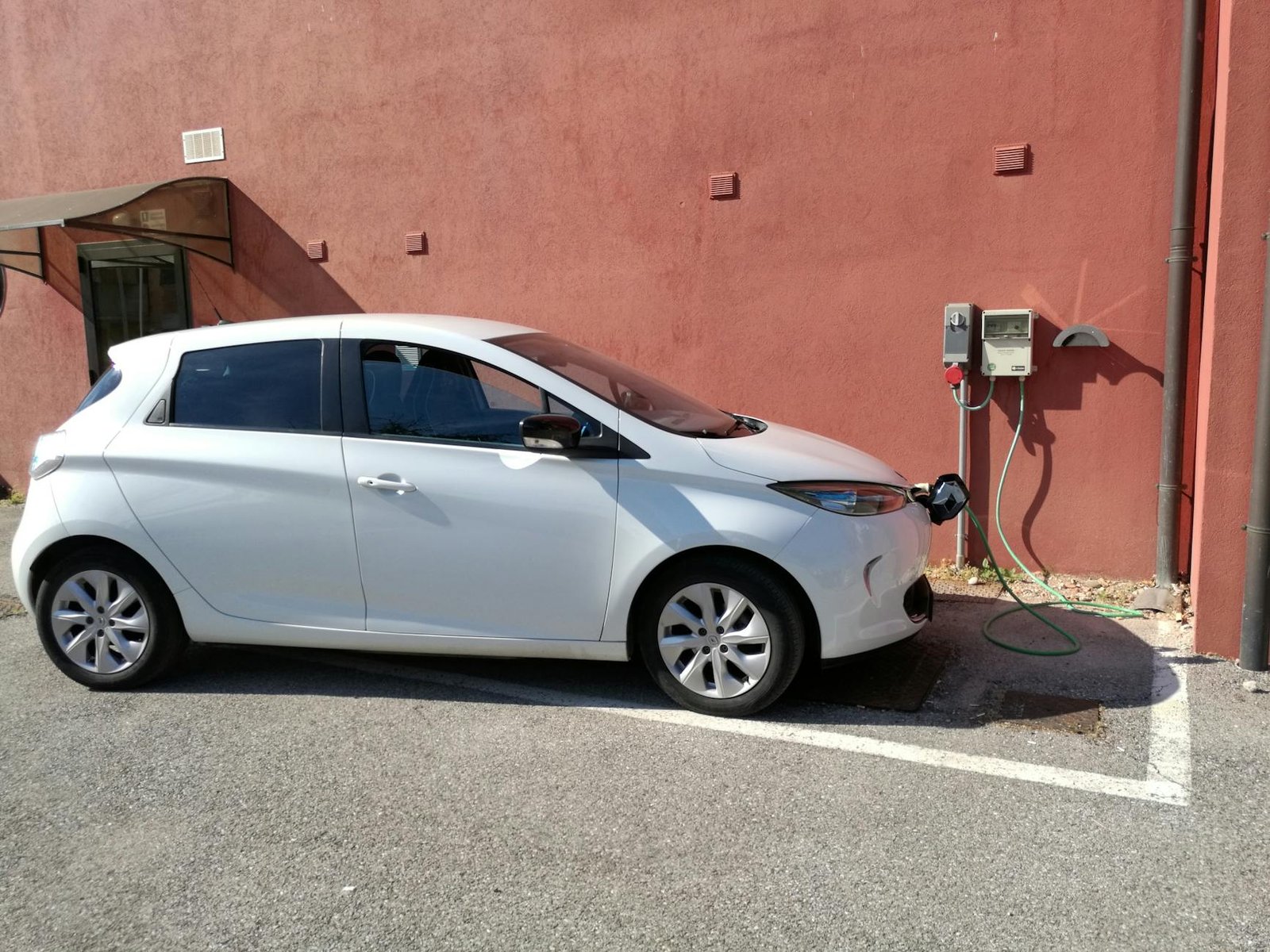
A Renault 5 costs €25,000 in France and drives 410 kilometers on a charge. That’s roughly $26,000 for 255 miles of range. In America, that same price gets you a used Chevrolet Bolt with 259 miles of EPA-rated range, or you can stretch to $40,000 and buy a new Tesla Model 3 with 272 miles. The Renault looks charming in Paris. In Phoenix, it looks like a compromise.
Most discussion about bringing European EVs to America assumes these vehicles fail here because Americans don’t appreciate small, efficient design or because U.S. buyers irrationally demand bigger batteries. The real problem: these markets developed their EV infrastructure and buyer expectations in opposite order, and that sequence determines what’s viable today.
How Infrastructure Timing Shapes Vehicle Design
European cities built out public charging before most people owned EVs. Paris installed its first Autolib stations in 2011. Amsterdam had 300 charging points by 2012. When the Renault Zoe launched in 2013, drivers in major European cities could reasonably expect to find a charger within walking distance of wherever they parked. Manufacturers designed around smaller batteries because the infrastructure supported it.
The Fiat Grande Panda EV carries a 44 kWh battery pack. It delivers 320 kilometers WLTP range, which translates to maybe 240 kilometers in real-world winter driving. In Rome or Madrid, that works. You park on the street, plug in at a neighborhood charger, and top up while you sleep or shop. The battery size matches the charging infrastructure that already exists.
America developed the opposite way. Tesla built Superchargers for people who already owned Teslas, not in anticipation of mass adoption. Public charging networks followed EV sales rather than preceding them. Early American EV buyers needed range self-sufficiency. You bought an EV because it could handle your daily 60-mile commute plus weekend errands on a single home charge, not because you trusted finding a working ChargePoint station at the grocery store.
That created a minimum viable battery size around 60 kWh for American buyers, even in city cars. The Chevrolet Bolt launched with 60 kWh in 2017. The Nissan Leaf stretched from 24 kWh in 2011 to 40 kWh by 2018, and sales only stabilized when it hit 62 kWh in 2022. American EVs carried 30 percent more battery capacity than comparable European models because American buyers couldn’t assume reliable public charging.
Why Battery Size Determines Everything Else
A 44 kWh battery pack weighs about 280 kilograms. A 60 kWh pack weighs 380 kilograms. That 100-kilogram difference ripples through the entire vehicle design in ways that make European EV imports structurally difficult.
Heavier batteries require stronger chassis members to maintain crash safety ratings. Stronger chassis adds another 40 kilograms. More weight needs bigger brakes, which adds 15 kilograms. Bigger brakes need larger wheels to fit the calipers. Larger wheels need wider tires for the same contact patch pressure. Wider tires increase rolling resistance, which requires either accepting reduced range or adding more battery capacity to compensate.
The Renault 5’s 195-millimeter-wide tires work fine for its weight class. Scale it up for American battery requirements and you need 215-millimeter tires, which changes the suspension geometry, which affects the steering rack ratio, which influences the power steering pump sizing.
European manufacturers optimized their supply chains for these smaller component specifications. The Cupra Born uses the same underpinnings as the Volkswagen ID.3, sharing motors, inverters, and battery modules across both vehicles. Volkswagen amortizes development costs across 200,000 units per year of combined production. Scaling the Born up to meet American range expectations would require different motors (the current 204-horsepower unit becomes marginal with 100 extra kilograms), different battery modules (current 58 kWh pack uses different cell configuration than hypothetical 75 kWh version), and different suspension components. You’ve created a unique vehicle that shares nothing with the European version except exterior styling.
The Certification Trap
Federal Motor Vehicle Safety Standards represent a secondary path dependency that most coverage misses. FMVSS regulations aren’t technically stricter than European ECE standards, but they’re different in specific ways that matter for small EVs.
FMVSS 208 requires frontal crash protection calibrated to 50th-percentile male crash test dummies, while European regulations allow optimization for smaller dummy sizes. A vehicle engineered to protect a 170-pound occupant in a 35-mph frontal impact needs roughly 15 percent more crush space than one engineered for a 150-pound occupant at the same speed. The Fiat Grande Panda’s 3,990-millimeter overall length leaves minimal room for additional crush space without either reducing passenger space (which kills the value proposition of a small car) or lengthening the entire vehicle (which requires new stamping dies for every body panel).
The Renault 5 would face similar recalibration for bumper height regulations. FMVSS Part 581 specifies different bumper test procedures than ECE regulations, and American light trucks average 15 centimeters higher ride height than European vehicles. A bumper optimized for European sedan-to-sedan impacts performs poorly in American sedan-to-SUV scenarios. Renault would need to redesign the front crash structure, which changes the mounting points for the electric drive unit, which affects the battery pack packaging, which influences the floor pan stamping.
Certification costs alone run $2 to $4 million per vehicle line for comprehensive FMVSS testing. Volkswagen spent an estimated $18 million certifying the ID.4 for American sale, achieving volumes of 35,000 units annually. The €54,975 ID.7 would need to retail around $65,000 in America just to maintain equivalent margins after certification and import costs.
Where Current Economics Actually Point
Stellantis’s Brampton plant situation demonstrates the bind facing European manufacturers considering American production of small EVs. The company idled the facility in January 2023 after ending production of the Chrysler 300 and Dodge Charger, laying off approximately 2,450 workers. The original investment commitment included federal and provincial subsidies contingent on maintaining employment levels.
Stellantis proposed assembling Leapmotor EVs using knock-down kits shipped from China. This model works in Mexico and Brazil where labor costs justify final assembly even without domestic supply chain integration. Unifor president Lana Payne identified the core problem: “It’s knock-down kits and doesn’t use the Canadian supply chain.” The math only works if you’re assembling vehicles that already match local market requirements. The Leapmotor C10 crossover sells for roughly $15,000 in China, but scaling it for North American safety and range expectations would require extensive re-engineering that eliminates the cost advantage of knock-down assembly.
The Hyundai IONIQ 5 offers a counterexample. Sales have averaged over 3,000 units monthly, with strong year-over-year growth. Hyundai achieved this by designing the IONIQ 5 from the start as a global platform vehicle with 77.4 kWh battery capacity matching American range expectations. The company simultaneously dropped the IONIQ 6 for the 2025 model year after sales disappointed. The IONIQ 6’s 77.4 kWh battery delivers 361 miles EPA range, but its sedan form factor couldn’t overcome American buyer preference for crossover packaging at that price point. Even Hyundai, with an established US manufacturing presence and dealer network, can’t sell every configuration successfully.
What The Spec Sheets Hide
Most analysis of potential European EV imports focuses on sticker prices and range numbers without examining the embedded assumptions. The Cupra Born’s 548-kilometer WLTP range seems competitive until you realize WLTP ratings typically overstate real-world performance by 20 to 25 percent. That 548 kilometers becomes 410 kilometers in mixed driving, or 330 kilometers in winter. The equivalent EPA rating would likely land around 260 miles, putting it just below the Nissan Leaf Plus’s 212-mile EPA range.
The Volkswagen ID.7’s 615-kilometer WLTP rating sounds impressive until you convert it to EPA methodology. A realistic EPA rating would be 380 miles, which still beats most American EVs but comes at €54,975 before any US import costs or certification expenses. For comparison, a Tesla Model 3 Long Range delivers 341 miles EPA range at $47,740. The ID.7’s marginal 39-mile advantage costs an extra $17,000 plus whatever import duties and dealer margins add.
Watching For The Unlock Point
Path dependence isn’t permanent, but breaking it requires specific enabling conditions. Three signals would make European EVs viable in America:
First, DC fast charging density reaching European levels in major US metro areas. When public charging becomes reliable enough that American buyers accept 200-mile EPA range, manufacturers can design smaller battery packs that meet both markets’ needs.
Second, shared global platform development costs dropping below $800 million per vehicle line. Current platforms like Volkswagen’s MEB cost $1.2 to $1.5 billion to develop. At that level, you need 200,000 units annually to amortize costs at $6,000 per vehicle. Get development costs to $800 million and you can justify 100,000-unit production runs.
Third, Chinese manufacturers entering through Mexico. BYD and others will test whether North American buyers accept smaller batteries at significantly lower prices. If a $22,000 BYD Dolphin with 250 miles range finds 50,000 annual buyers in the US, that proves the path dependence is breakable.
Until those conditions exist, European EV imports remain economically marginal regardless of how well they sell in Paris or Amsterdam. The infrastructure came first in Europe, the vehicles came first in America, and that sequence determines what’s viable today.