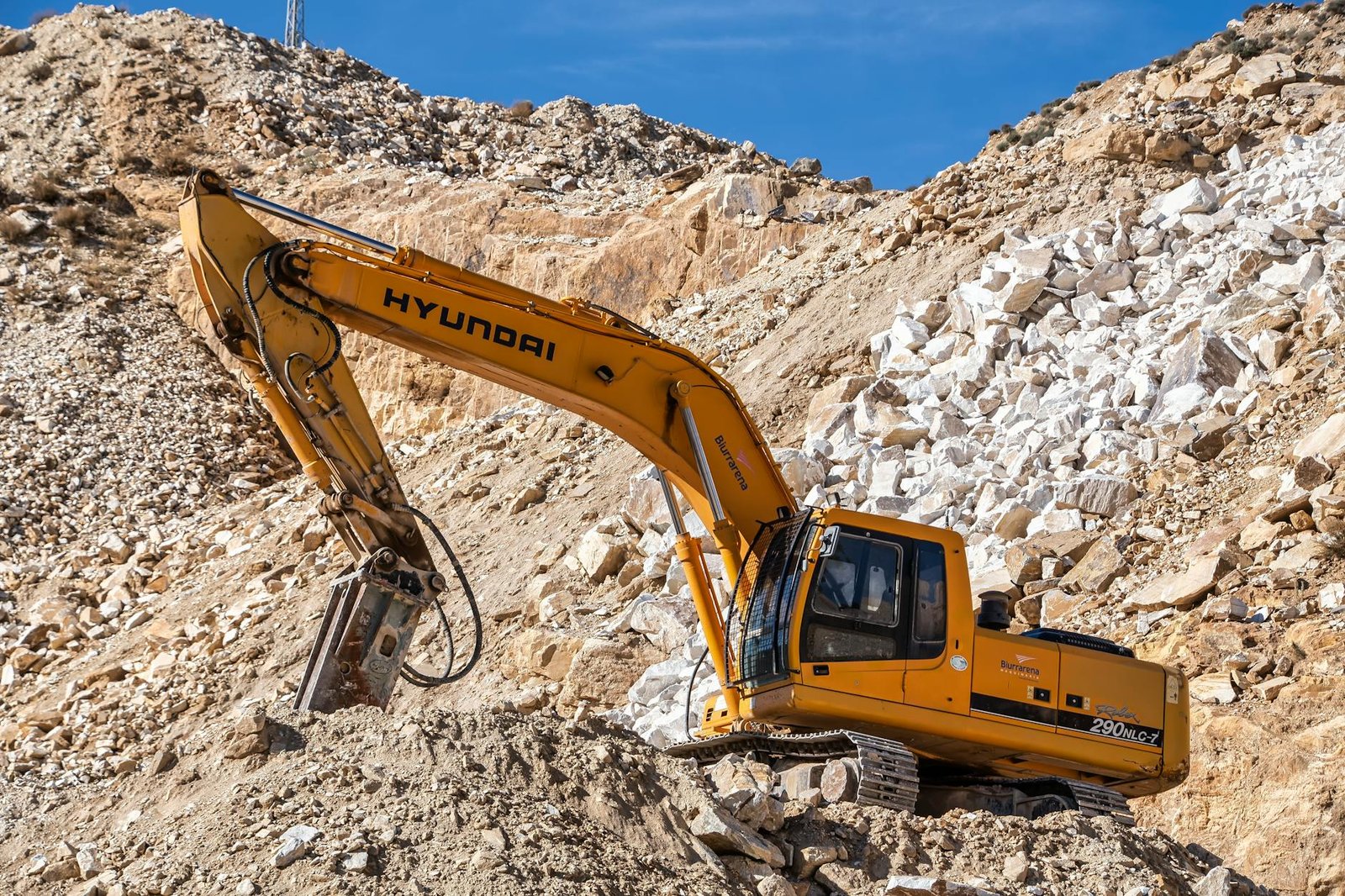
A single 150-ton haul truck in a Canadian oil sands mine burns through $850,000 worth of diesel every year. The excavator loading that truck uses even more. When Komatsu deployed its PC9000-12 electric excavator at Suncor’s Fort Hills mine in Alberta last May, the machine wasn’t there to save the planet. It was there because the fuel budget had become unbearable, and the grid connection, for all its complexity, offered a way out.
The PC9000-12 is the largest hydraulic excavator Komatsu has ever built. It weighs 980,000 kilograms (approximately 2.16 million pounds) and moves 80 tons of material per pass at a rate exceeding 8,000 tons per hour. Its two electric motors deliver 4 megawatts of power, equivalent to roughly 5,400 horsepower. That’s roughly the same electrical draw as 16 Tesla V3 Superchargers running simultaneously at 250 kW each. The machine became available globally through Komatsu’s dealer network as of April 2024, offered in both diesel and grid-connected electric drive configurations.
The Fuel Trap Nobody Talks About
Mining operations don’t decide to electrify because of emissions targets or corporate sustainability reports. They electrify because diesel fuel represents a structural cost that scales linearly with production volume and offers no mitigation strategy when prices spike. The $850,000 annual fuel cost for a single haul truck, cited by IDTechEx, is not a headline number from an exceptional year. It’s the operating reality at current industrial diesel prices in remote mining regions where fuel must be trucked in.
An electric excavator drawing power from the grid converts this variable operating expense into a capital decision. The machine itself costs more upfront. The trailing high-voltage cable adds complexity. Grid infrastructure must be extended to the pit floor, and as the mine deepens, that infrastructure must move. But once operational, the fuel line item disappears. The mining company trades one kind of risk (volatile diesel prices, supply chain fragility) for another (capital intensity, grid reliability, cable management during pit advancement).
Most mining CFOs understand this trade immediately. The challenge isn’t the economics. It’s the operational question: can you actually run a 2-million-pound machine on a cable without creating more downtime than you eliminate?
Why Grid Connection Is Harder Than It Looks
The PC9000-12’s 4-megawatt power draw is not a detail. It’s the design constraint that determines whether grid electrification works. Four megawatts is enough to power roughly 3,000 homes simultaneously. Delivering that much power continuously to a machine that moves around a pit floor, sometimes loading haul trucks from multiple positions, requires electrical infrastructure typically found in industrial smelting operations, not mobile equipment.
The trailing cable solves the power delivery problem but creates a new operational constraint: the machine’s range of motion becomes physically tethered. In a traditional diesel setup, the excavator can reposition anywhere within the pit as the face advances. With a cable, every repositioning decision must account for cable length, routing, and the risk of damage from other mobile equipment. This isn’t a minor inconvenience. In a mine running 24/7 operations with multiple haul trucks cycling through loading zones, cable management becomes a bottleneck that can throttle the entire production sequence.
Komatsu’s integration with its FrontRunner Autonomous Haulage System addresses part of this. If the haul trucks know exactly where the excavator will be and can route themselves accordingly, cable routing becomes more predictable. But autonomous haulage systems themselves represent another capital decision, another layer of operational complexity, another training requirement. The mining company isn’t buying an electric excavator. It’s buying into a different operating model.
What Buyers Actually Decide On
The operators I’ve spoken with at mining conferences don’t obsess over emissions reduction. They obsess over uptime and cost per ton moved. The decision to go electric hinges on a simple calculation: does the fuel cost savings over the machine’s operational life exceed the incremental capital cost plus the risk-adjusted downtime from cable-related issues?
In Canada’s oil sands, where Suncor deployed the first PC9000-12, that calculation apparently worked. The Fort Hills mine operates in a jurisdiction with relatively stable grid power, diesel fuel that must be trucked long distances, and an existing pit infrastructure that could accommodate grid extension. The machine is loading haul trucks in a double-side configuration, maximizing throughput per cable repositioning event.
But those conditions don’t generalize. A copper mine in Chile might have cheap grid power but unstable supply. A coal operation in Australia might have reliable diesel logistics and see the cable as pure downside. The buyer behavior pattern that emerges isn’t “mining goes electric.” It’s “mines with specific fuel cost pain and grid access characteristics adopt electric drives for high-utilization equipment when capital is available.”
Komatsu’s decision to offer both diesel and electric drive options for the same platform reveals what they’ve learned: the market isn’t ready to commit universally. The optionality itself is the product. A mining company can spec diesel for the initial purchase and retrofit to electric later if conditions change, or vice versa. This isn’t hedging. It’s acknowledging that mine-site economics vary enough that a single powertrain strategy doesn’t work globally.
The Capital Discipline Test
The better way to think about electric mining equipment is as a capital reallocation decision, not an operating expense reduction. Yes, fuel costs drop. But the upfront capital requirement increases, and so does the operational dependency on infrastructure (grid reliability, cable logistics, maintenance expertise for high-voltage systems). Mining companies with strong balance sheets and long mine life projections can absorb that capital intensity. Junior miners or operations with shorter remaining reserves cannot.
This explains why Komatsu led with deployment at Suncor, a large integrated energy company with deep pockets and a multi-decade mine plan, rather than at a smaller operator. The early adopters of electric excavators will be large mining companies with investment-grade credit and long time horizons. The technology will trickle down to smaller operators only if the capital cost drops or if diesel prices spike high enough to make the payback period acceptable even with higher borrowing costs.
The Fortescue Infinity Train example, where regenerative braking in iron ore rail transport can recover energy from loaded trains descending to port, shows what’s possible when physics aligns with economics. But excavators don’t regenerate energy. They consume it continuously. The parallel doesn’t hold.
What This Means for the Broader Mining Fleet
If electric excavators make economic sense in specific conditions, the next question is whether those conditions will expand or contract. Grid extension costs are falling as mining companies install renewable generation on-site, sometimes creating local microgrids that are more stable than the regional utility supply. Cable technology is improving, with newer designs that are lighter and more damage-resistant. Autonomous haulage reduces the cable routing chaos.
But diesel engines are also improving. Fuel efficiency gains in the latest Tier 4 Final engines reduce operating costs. Renewable diesel and biodiesel blends offer emissions reductions without capital investment. The competitive set isn’t static.
The realistic adoption curve for electric excavators looks like this: large mines with high fuel costs and grid access will adopt electric drives for high-utilization machines where the payback is clear. Smaller operations and mines in regions with cheap diesel or unreliable grids will stay diesel. The middle tier, mines with moderate fuel costs and decent grid access, will adopt slowly and only when capital is cheap and mine life projections are long enough to justify the investment.
That’s not a revolution. It’s a segmented market where the right answer depends on local cost structures, not global trends. Komatsu’s global availability announcement signals confidence that enough mines fit the profile to justify dealer inventory, but market segmentation doesn’t determine adoption rates. Payback periods do.