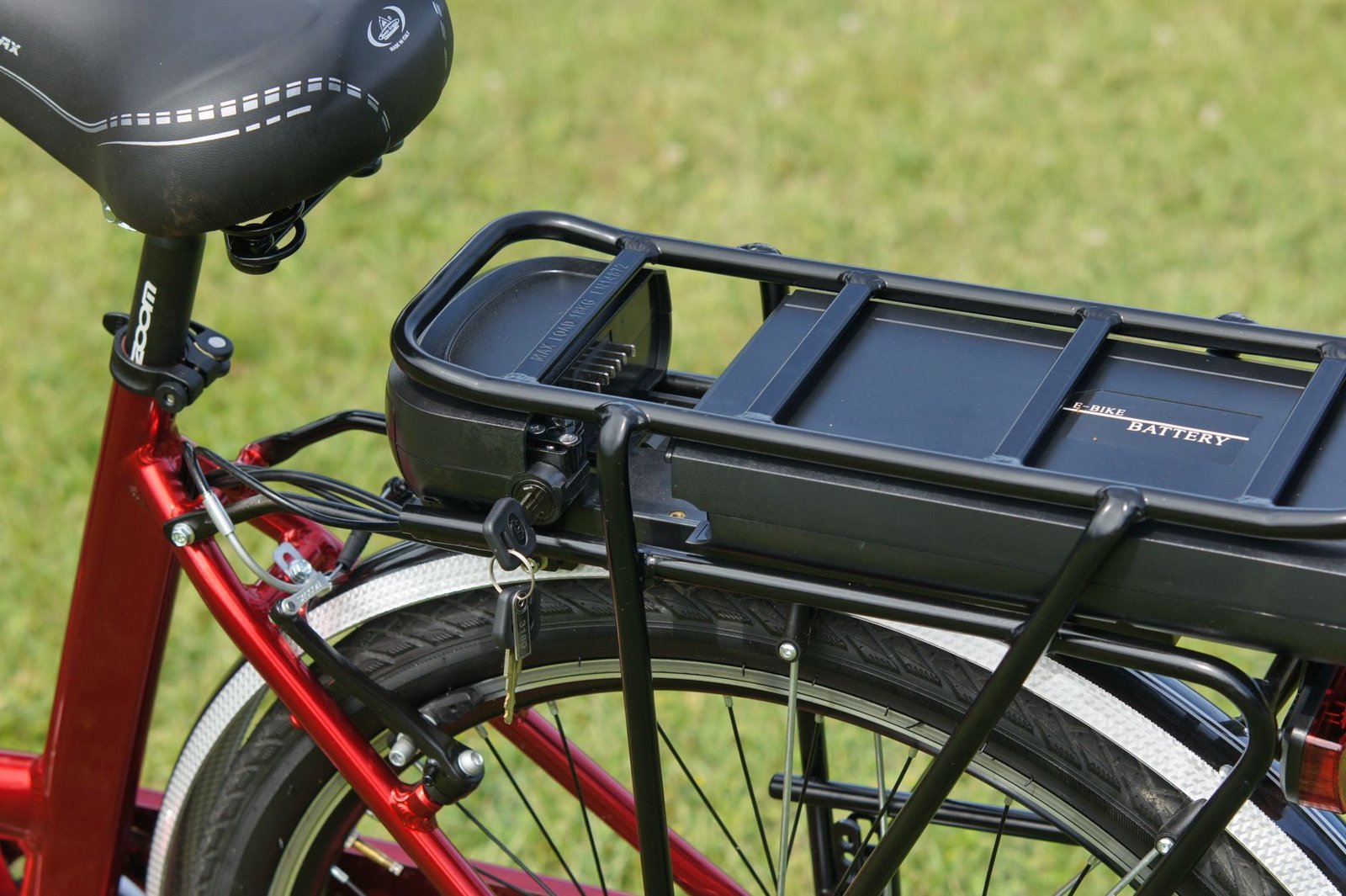
The Lectric XPress2 extra battery bundle advertises 100-plus miles of range for $1,399. That’s not the attention-grabbing detail. What matters is the unstated assumption: that e-bike buyers care more about nominal range than they do about weight, cost per useful mile, or whether they’ll actually use that second battery more than twice a year. The bundle exists because the industry has convinced itself that range anxiety translates directly from EVs to e-bikes. It doesn’t. The constraint isn’t battery capacity. It’s that most riders never drain the first battery in a single trip.
E-bike manufacturers keep solving yesterday’s problem. Tesla spent a decade teaching the market that more range equals better product, which was true when EVs struggled to hit 200 miles and fast charging was unreliable. But e-bikes aren’t cars. The average e-bike commute runs 8 to 12 miles. Even aggressive recreational riders rarely exceed 40 miles in a day. The Lectric XPress2 battery configuration already delivers roughly 50 miles on a single charge under normal conditions. Adding a second battery roughly doubles the battery weight you’re hauling for that hypothetical century ride you’ll attempt once, maybe twice, if you’re serious about fitness.
What Actually Changed
Lectric is bundling an extra battery with its XPress2 model, targeting riders who want extended range without mid-ride charging stops. The bundle includes the step-thru version of the XPress2 plus a spare battery, marketed as a solution for 100-mile days. Separately, Aventon launched two new models: the Pace 5 and Level 4, both aimed at recreational riders willing to pay for refined drivetrains and better component specs. Segway introduced a kids’ scooter, the S2, with safety features and lower top speeds.
These are normal product cycles. Nothing here represents a technical breakthrough. Lectric added a battery to an existing platform. Aventon upgraded motors and gearing on proven frames. Segway scaled down adult scooter tech for smaller riders. The announcements frame these as innovations, but they’re really margin expansions. Bundling batteries increases average order value. Launching mid-tier models fills price gaps. Adding kids’ products diversifies revenue without requiring new factories.
The Core Constraint
The constraint isn’t battery capacity. It’s that batteries are heavy, expensive, and optimized for use cases most riders don’t have. A standard e-bike battery weighs 6 to 8 pounds. That’s the additional weight when you’re carrying a spare, mounted somewhere on the frame or in a pannier. For a 50-pound bike, that’s a 12 to 16 percent weight increase. Physics doesn’t care about marketing. That extra weight reduces efficiency, meaning you’re burning more battery capacity to haul the reserve capacity you statistically won’t use.
The math gets worse when you account for cost per useful mile. The Lectric XPress2 battery bundle costs $1,399 total. A single XPress2 without the extra battery runs around $999 (based on typical Lectric pricing for this class). You’re paying roughly $400 for a second battery that, in most real-world scenarios, sits unused. If you ride 2,000 miles a year, all within the range of a single charge, that $400 translates to $0.20 per mile in sunk capital. Compare that to charging costs, which run around $0.02 per mile for electricity. You’d need to ride 200 miles per week, consistently draining both batteries, to justify the expense on a pure utilization basis.
The industry frames this as choice. More range is always better, right? But buyers aren’t getting the counterfactual. What if that $400 went toward better brakes, a Gates belt drive, or a more efficient mid-drive motor that reduces energy consumption? Those upgrades improve every ride. The second battery improves only the rides that exceed your primary range, which for most buyers is zero rides per month.
Physics and Engineering Reality
Battery weight is a real drag in cycling because you’re fighting rolling resistance, air resistance, and gravity on climbs. A 50-pound bike with a 180-pound rider has a combined mass of 230 pounds. Add 7 pounds of spare battery, and you’re now moving 237 pounds. That’s roughly a 3 percent increase in total system mass. On flat ground at 15 mph, that translates to a couple percent higher energy consumption just to maintain speed. On a 6 percent grade, the penalty is larger, because you’re lifting that extra mass against gravity, and gravitational load scales directly with weight.
You’re using your primary battery to haul the backup battery you’re not using. If your typical ride drains 60 percent of your main battery, you’re wasting a small but real fraction of that capacity hauling dead weight. Over a year, that’s tens of miles of lost range, which you paid $400 to create. The engineering logic breaks down unless your actual use case involves back-to-back long rides with no access to charging. For most riders, that scenario exists only in imagination.
Contrast this with cars, where battery weight is a larger fraction of total vehicle mass but far better packaged. A 1,000-pound battery in a 4,500-pound EV is 22 percent of curb weight, but it’s distributed low in the chassis for handling benefits. An e-bike battery is 12 to 16 percent of bike weight before you add the rider, and it’s mounted high (on the frame) or rear-biased (in a rack), both of which hurt handling more than a low-slung car pack. The packaging penalty is steeper because the mounting options are worse.
Buyer Behavior and Market Reality
Real e-bike buyers optimize for different variables than manufacturers assume. Commuters care about reliability, weather resistance, and whether the bike fits in their apartment. Recreational riders care about weight, component quality, and whether their friends can keep up on group rides. Almost nobody is planning multi-day unsupported tours where battery swaps are critical. Those riders exist, but they’re outliers, not the core market.
The second battery makes psychological sense, though. Range anxiety is learned behavior from car ownership. Buyers remember running low on gas or watching an EV’s range estimate drop faster than expected. They project that fear onto e-bikes, even though the risk profile is completely different. Run out of battery on an e-bike, and you’re riding a heavy regular bike. Run out of charge in a car, and you’re calling a tow truck. The consequences are asymmetric, but the fear response is the same.
Manufacturers exploit this by framing extended range as insurance. The extra battery is peace of mind, not a tool you’ll use weekly. But peace of mind has a cost, and that cost compounds when the product you bought to reduce car trips now requires you to manage battery inventory, charging schedules, and storage for a spare pack you’re rotating to prevent degradation.
Strategic Reframing
The better play is not more capacity. It’s faster, more convenient charging. If Lectric offered a faster charger that topped off the main battery in a fraction of the standard 4-to-6-hour window, the value proposition shifts entirely. Ride 40 miles in the morning, plug in during lunch, ride another 40 miles in the afternoon. No extra weight. No extra battery to store, maintain, or haul. The constraint was never total energy storage. It was energy replenishment time relative to use patterns.
Alternatively, focus on efficiency. A meaningful improvement in drivetrain efficiency delivers extra miles of range per charge without adding weight or cost. Over five years, that compounds into hundreds of miles of free range from better engineering. But efficiency improvements require actual R&D. Bundling a second battery requires only supply chain coordination and marketing copy.
The Aventon launches make more sense in this light. The Pace 5 and Level 4 are iterative upgrades to proven platforms. They’re not chasing headline range numbers. They’re improving the middle 80 percent of the experience: smoother shifting, quieter motors, better-integrated displays. That’s harder to market in a single screenshot, but it’s what keeps buyers happy after the first month.
The Actual Lesson
The Lectric XPress2 battery bundle will sell because range is an easy story to tell. It’s a number you can put in a headline. But the buyers who benefit most are the smallest cohort: long-distance riders with irregular access to charging. For everyone else, it’s expensive insurance against a problem they don’t have. The smarter money goes toward better components, faster charging, or simply riding the bike you already own more often. The industry keeps adding capacity because it’s easier than solving the actual friction points: charging speed, weight distribution, and whether the bike fits the rider’s real use case instead of the one they imagine when they’re browsing online at midnight.