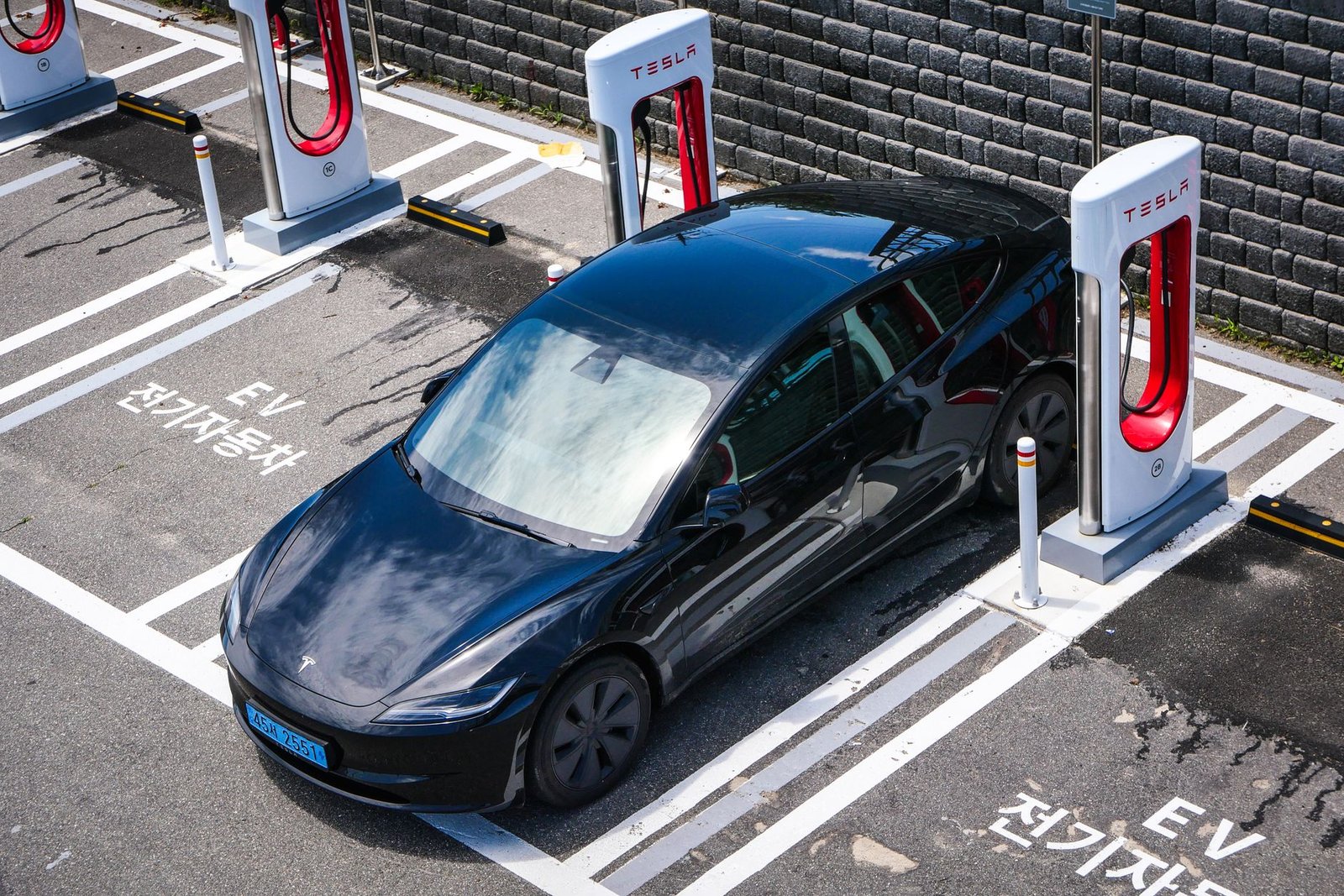
A comment thread on a Tesla forum last week captured the tension perfectly. Someone asked whether they could charge the announced Cybercab at home overnight, like any other EV. The answer came back quickly: no onboard charger, DC fast charging only. Another user chimed in: “So I need to install a $15,000 DC fast charger in my garage?” The thread devolved from there, but the core confusion was real. The assumption baked into a decade of EV ownership, that you plug in at home using a $500 Level 2 charger, does not apply here. Tesla wireless charging gets mentioned as the eventual solution, but the gap between “eventual” and “now” is where this myth lives.
Why Buyers Assume Wireless Charging Will Arrive Soon
The claim goes like this: Tesla showed a 25 kW wireless charging pad. Efficiency is above 90 percent, according to footage from a Tesla event. The technology works. So if you buy a Cybercab, the home charging problem will solve itself soon enough. Just wait a few months, maybe a year. The pad will ship, you install it in your driveway, and you have the same overnight charging routine every other EV owner has. The gap is temporary, a minor inconvenience before the future arrives.
This assumption shows up in pre-order discussions, in analyst notes treating the Cybercab as a consumer vehicle, and in the mental model people use when they hear “$29,990” and think “affordable EV.” If home charging is coming soon, the lack of an AC onboard charger is a footnote, not a structural constraint.
The Demonstrated Hardware Is Real
Tesla did demonstrate a 25 kW wireless charging pad. The efficiency claim of “well above 90 percent” came from the same event. That is real hardware, not a render. The company has also outlined plans for a charging hub on St. Elmo Road in Austin that includes wireless charging capacity in a later phase. The infrastructure exists in concept and in limited deployment. The technology is not vaporware.
The optimism also draws from Tesla’s historical pattern: announce the capability, ship it later, customers adapt. Supercharger network, over-the-air updates, Full Self-Driving beta rollouts. The company has conditioned its customer base to treat “not yet available” as “available soon.” Wireless charging slots into that frame. The pad works in controlled settings. Scaling it to customer driveways feels like an execution problem, not a physics problem. Execution problems get solved.
The Customer Pad Has No Availability Date or Price
The 25 kW wireless pad has no announced customer availability date. No pre-order page, no price, no installation partner network. For comparison, Lunar Energy’s 25 kW home DC charger, a wired product serving a similar use case, is not expected until mid-2027. That is a product from a company whose entire business model is residential DC charging. Tesla’s wireless pad serves a vehicle that also needs to operate autonomously in a commercial ride-hail network. The engineering priorities are not aligned with getting a home accessory into customer garages in the near term.
The capital allocation picture clarifies the timeline. Tesla is reportedly planning a major factory expansion near Berlin aimed at large-scale Cybercab production later this decade. That is factory-scale investment in fleet vehicles. The St. Elmo Road hub is designed primarily for V4 Supercharger stalls in its first phase, with wireless capacity planned for a later phase. The infrastructure spending is aimed at fleet operations, not driveway installations. A personally-owned Cybercab, the $29,990 unit a consumer might buy, is an edge case in the capital deployment model.
The vehicle itself lacks an onboard AC charger. It has a NACS port, but it only accepts DC fast charging. Installing a home DC fast charger that plugs into that port would cost $10,000 to $15,000, plus electrical work that most residential panels cannot support without an upgrade. That is not a viable home charging path. The wireless pad is not just an accessory. It is the only realistic home charging method that would work, and it does not yet exist as a purchasable product.
Fleet Deployment vs. Consumer Availability
Wireless charging is coming. The demonstration hardware is real. Efficiency above 90 percent at 25 kW is competitive with wired Level 2 charging in terms of energy loss. The technology does not violate physics or economics. At scale, inductive charging pads for fleet vehicles in controlled environments make sense. A depot with dozens of wireless stalls where Cybercabs park between rides is a logical use case. The vehicles align themselves, the pad energizes, the fleet charges without human labor plugging and unplugging cables. That math works.
Fleet infrastructure and consumer products follow different development timelines. A fleet operator in Austin can tolerate a pad that requires precise positioning, carries a high per-unit cost, and needs a site electrician to install, but a consumer in Denver cannot. The home version of Tesla wireless charging requires weatherproofing, consumer-grade pricing, and an installation process that does not require a commercial electrician. None of that is in the demonstrated hardware.
Why Tesla Maintains the Perception Without Shipping the Product
Tesla benefits from the perception that the wireless pad is “almost here.” It softens the objection that a personally-owned Cybercab cannot charge at home. Buyers who might balk at a vehicle with no home charging option can rationalize the gap as temporary. The company does not need to ship the pad to get the pre-order. It just needs to show the video of the pad working. That is a capital-efficient way to manage expectations.
The business model also does not prioritize home charging. The Cybercab is designed around autonomous ride-hail operation rather than personal daily driving. That is not a vehicle optimized for personal ownership. It is a fleet vehicle that happens to have a consumer purchase option. The engineering and capital spending reflect that. The St. Elmo Road hub is designed for fleet throughput. The German factory is scaled for mass fleet volume, not garage queens.
The incentive to ship a consumer wireless charging pad is weak. It serves a small population of personally-owned Cybercabs whose owners cannot access Superchargers conveniently. That is a niche within a niche. The capital goes where the volume is, and the volume is in the fleet.
Fleet Vehicle with a Consumer Purchase Option
The Cybercab is a fleet vehicle with a consumer purchase option bolted on. It will charge at dedicated hubs using either DC Superchargers or wireless pads installed at scale. Home charging for personally-owned units is not solved and will not be solved until Tesla sees enough consumer volume to justify productizing the wireless pad for residential installation. That could be 2027. It could be later. The gap is not temporary. It is structural, and it reflects where the capital is going. If you cannot access a Supercharger or a planned wireless hub easily, the $29,990 Cybercab is not a replacement for a Model 3. It is a different product with different constraints.