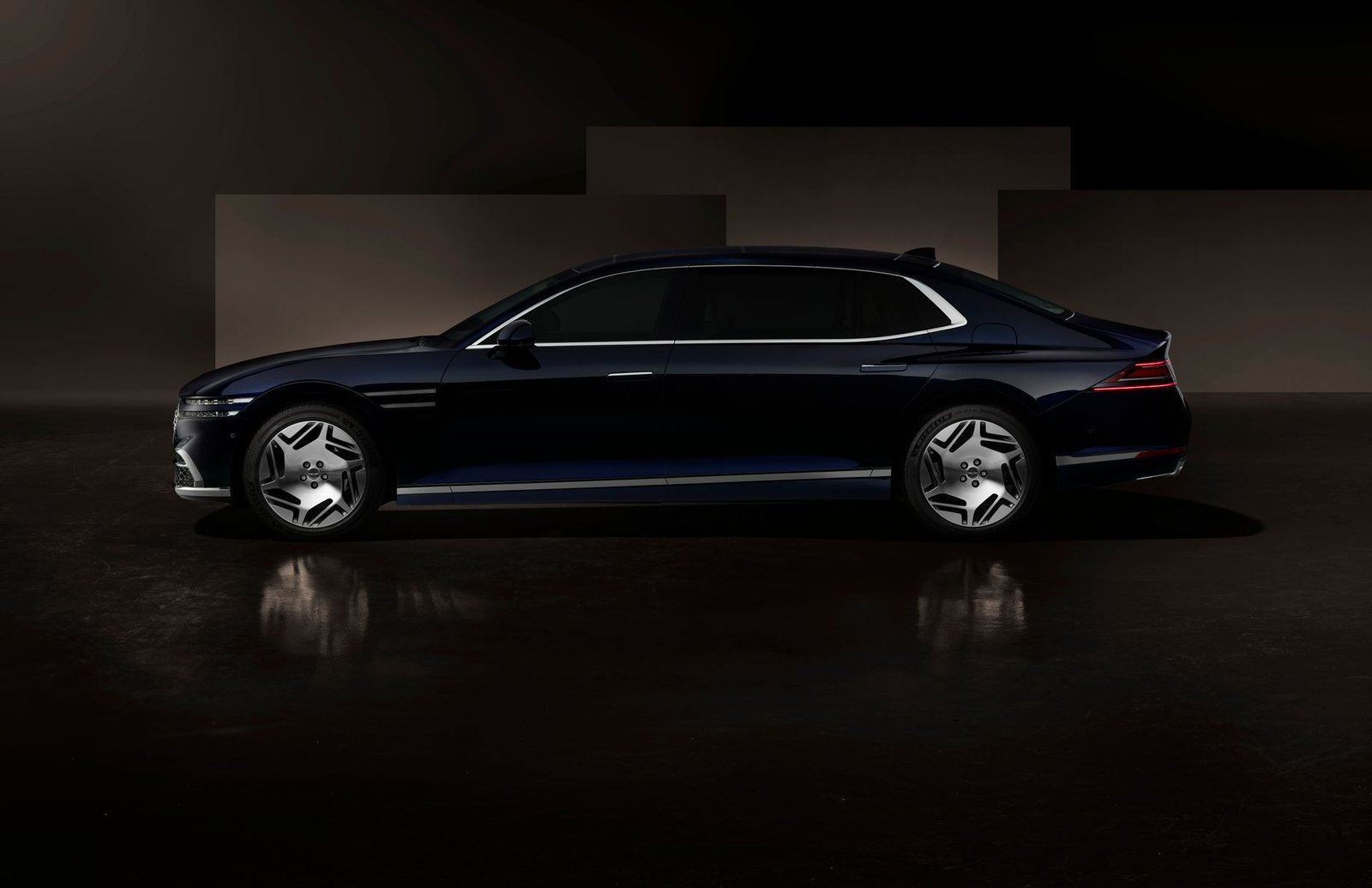
The G80 sedan sat in the presentation hall with its hood open, revealing a 2.5-liter turbocharged four-cylinder flanked by an electric motor and a battery pack cooled by its own liquid thermal management system. Genesis announced Wednesday that both the G80 and GV80 would arrive as hybrids, bringing a technical feature no other Hyundai Motor Group hybrid carries: active battery cooling. While Hyundai has pushed hybrids to roughly a quarter of brand sales, Genesis waited, and the delay bought them something worth having.
The Actual Hardware Improvement
Genesis confirmed the G80 and GV80 hybrids produce 347 combined horsepower from the turbo-four and electric motor working in parallel. That figure sits below the twin-turbo V6 option but arrives with material efficiency gains. The GV80 hybrid runs meaningfully more efficiently than the gas-only four-cylinder model, according to Genesis, and the G80 hybrid posts a similar improvement over its four-cylinder counterpart. The architecture creates measurable separation from the outgoing powertrains, with gains that exceed marginal EPA test-cycle improvements.
The liquid-cooled battery represents the clearest technical advance. Hyundai and Kia hybrids use air-cooled packs, a cost-saving measure that works adequately in temperate climates but leaves thermal headroom on the table. Active liquid cooling keeps cells closer to their optimal temperature band during both charge and discharge cycles, which matters more in a vehicle expected to operate in Phoenix summers and Minneapolis winters without range degradation complaints. Genesis is positioning these hybrids against the BMW 5 Series and Mercedes E-Class, segments where buyers expect systems to work as specified regardless of ambient conditions.
Why Parallel Hybrid With a Seven-Speed Automatic
Genesis routed power through a seven-speed dual-clutch automatic rather than the electronic continuously variable transmission used by Toyota and Honda hybrids. The parallel hybrid setup allows the gas engine to drive the wheels directly, with the electric motor adding torque or operating alone at low speeds. The system includes an EV mode for limited engine-off cruising and a “Stay” mode that runs HVAC and infotainment without firing the gas engine, useful for waiting in parking lots or drive-throughs.
This configuration prioritizes driving character over maximum efficiency. A series hybrid or eCVT extracts more energy per gallon in city driving by keeping the engine in its most efficient operating range, but it also creates a rubber-band acceleration feel that some buyers in the luxury segment reject. Genesis chose to preserve a conventional automatic’s shift points and throttle response, accepting a modest efficiency penalty in exchange for behavior that aligns with what 5 Series and E-Class buyers expect. The tradeoff appears deliberate, not a technical limitation.
The all-wheel-drive system comes standard on both Genesis hybrid models. The front axle receives power from both the gas engine and electric motor, while a mechanical coupling sends torque to the rear wheels as needed. This differs from the electric rear axle approach used in some competing hybrids, where a second motor powers the rear wheels independently. Genesis prioritized all-weather capability and cost management over the ability to operate in pure electric rear-wheel drive at higher speeds.
The Market Hole Genesis Waited to Fill
Hyundai’s hybrid volume created the business case for Genesis to invest in its own variant. With hybrids approaching a quarter of Hyundai brand sales, the production scale exists to amortize development costs for a premium derivative. Genesis discontinued the fully electric G80 after slow sales, a decision that reflected both the model’s limited range and the brand’s narrow dealer network. The hybrid versions address range anxiety without requiring the charging infrastructure buildout that hampered EV adoption.
Genesis enters the hybrid market after battery costs have declined and after liquid cooling systems have been validated in mass production, allowing the brand to avoid first-generation compromises. The G80 and GV80 hybrids avoid the undersized electric motors, air-cooled batteries that degraded quickly in hot climates, and integration issues between gas and electric powertrains that plagued earlier luxury hybrids. The hardware arrives refined, not experimental.
Genesis has also announced extended-range electric vehicles (EREVs) for 2027, using gasoline engines purely as generators with no mechanical connection to the wheels. The company projects over 600 miles of combined range for these models. The EREV architecture represents a different technical solution than the parallel hybrid, one that maximizes electric driving while keeping a gas backup for long trips. The 2027 timeline suggests Genesis views the current hybrids as a bridge product, not the final answer.
Battery Thermal Management and Capacity Retention
Battery temperature control affects both immediate performance and long-term capacity retention. Lithium-ion cells operate most efficiently roughly between 15 and 35 degrees Celsius. Outside that range, internal resistance increases, reducing available power and usable capacity. Passive air cooling struggles to maintain temperature in sustained high-load conditions, particularly during repeated acceleration cycles or extended highway driving in summer heat.
Active liquid cooling circulates coolant through channels in the battery pack, transferring heat to a dedicated radiator. The system can also warm the pack in cold weather, reducing the viscosity of the electrolyte and improving power delivery during winter starts. This thermal management extends battery life by reducing the number of cycles spent at temperature extremes, which accelerate degradation of the anode and cathode materials.
The cost and complexity of liquid cooling have kept it out of most hybrid applications, where smaller battery packs generate less heat than plug-in or pure EV batteries. Genesis evidently concluded that the premium positioning of the G80 and GV80 justifies the added expense. Buyers in this segment expect systems to maintain performance regardless of conditions, and a thermally-managed battery delivers on that expectation more reliably than passive cooling.
The Monthly Payment Reality
Genesis has not released pricing, trim details, or EPA fuel economy ratings for the G80 and GV80 hybrids. The 347-horsepower output slots between the base four-cylinder and optional V6, suggesting a price point that splits the difference. The efficiency gains over the gas-only four-cylinder translate to lower fuel costs, but the premium over the base powertrain will determine whether fleet math favors the hybrid.
Luxury buyers typically finance or lease, so monthly payment matters more than sticker price. If the hybrid version adds $4,000 to the transaction price but reduces fuel spending by $80 per month, it reaches break-even in 50 months, longer than most lease terms. The value proposition depends on fuel prices, annual mileage, and how much Genesis charges for the hybrid system. The brand’s decision to make all-wheel drive standard on hybrids simplifies the comparison by bundling features that would otherwise carry separate charges.
The hybrid’s efficiency improvement over the G80’s four-cylinder engine makes the financial case more compelling in markets with high fuel costs or long commutes. A buyer driving 15,000 miles annually at $4 per gallon would save roughly $550 per year compared to the base engine, assuming a conservative 25 mpg for the gas model and 32.5 mpg for the hybrid. That savings narrows the payback period but still requires several years to offset a substantial upfront premium.
What Genesis Got Right by Waiting
Genesis avoided the hybrid market until it could deliver liquid-cooled batteries and competitive output figures. The brand’s small sales volume would not have supported hybrid development three years ago, and entering with a compromised product would have damaged the credibility Genesis has built in the luxury segment. The G80 and GV80 hybrids arrive as genuinely improved powertrains, not compliance exercises.
The parallel hybrid architecture with a conventional automatic preserves the driving dynamics luxury buyers expect while delivering measurable efficiency gains. The all-wheel-drive standard equipment removes a potential objection and simplifies the buying decision. The EV and Stay modes address real use cases without requiring behavior changes from drivers accustomed to gas vehicles.
The 2027 EREV timeline signals that Genesis views hybrids as a transitional technology, not the endpoint. The brand is hedging its bets, offering hybrids now while developing range-extended electric vehicles that maximize electric operation. That sequencing makes sense for a luxury brand with limited production volume and a customer base still evaluating powertrain options. Genesis is methodically working through the technology curve rather than rushing to market with incomplete solutions.