GM Electrify America Integration: What Plug & Charge Actually Delivers
GM Energy Pass members can now plug into Electrify America stations without opening an app or swiping a credit card. The integration went live, the press releases circulated, and the narrative settled into a familiar groove about seamless charging experiences. Standing in a parking lot at 11 PM with 8% battery remaining reveals a more complicated reality about what “plug and charge” actually delivers.
The core technology here isn’t new. Plug and charge, standardized under ISO 15118, creates an encrypted handshake between vehicle and charger that authenticates the driver and initiates billing without manual input. Tesla has offered equivalent automatic authentication at its Superchargers since 2012, albeit through its own proprietary protocol rather than ISO 15118. The challenge has never been the protocol itself. Getting every link in the authentication chain to work reliably when vehicles, chargers, and billing systems come from different manufacturers with different update cycles and different incentives to prioritize interoperability remains the persistent obstacle.
How the Authentication Stack Actually Works
When a GM EV connects to an Electrify America station under the new integration, the vehicle transmits a certificate to the charger, the charger validates that certificate against a registry maintained by Hubject (the clearinghouse managing plug and charge networks), Hubject confirms the vehicle is enrolled in GM Energy Pass, Electrify America’s backend receives authorization, and only then does power flow. This process typically takes between 3 and 15 seconds when everything works correctly.
The 15-second upper bound matters more than the 3-second best case. Plug and charge fails when any single component in that chain experiences a software bug, a certificate expiration, a network timeout, or a registry sync error. The failure mode is typically silent from the driver’s perspective. The screen shows “initializing” or “authenticating,” and nothing happens. After 30 seconds or so, most drivers fall back to the app or credit card they were told they wouldn’t need.
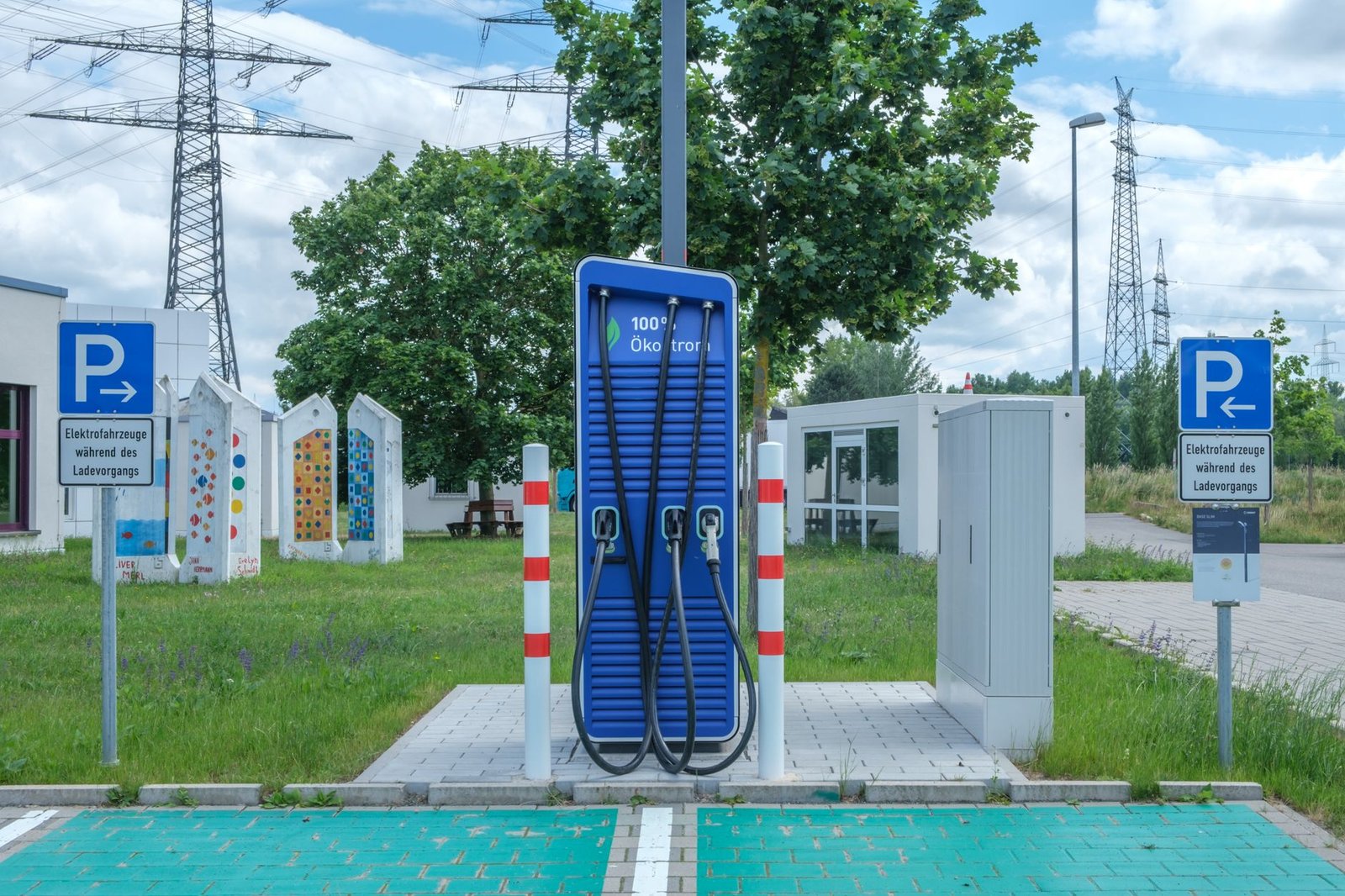
Electrify America operates roughly 980 charging stations across the United States, with approximately 4,500 individual charging ports. The GM integration adds plug and charge capability to this existing infrastructure without requiring hardware upgrades at the charger level, because the stations already supported ISO 15118. What changed is backend integration: GM’s billing system now talks to Electrify America’s billing system through Hubject’s registry, allowing vehicles enrolled in GM Energy Pass to authenticate automatically.
The qualifier “enrolled in GM Energy Pass” deserves scrutiny. GM Energy Pass is a charging access plan associated with GM EV ownership, offering access to multiple charging networks under a unified billing structure. The plug and charge functionality only works for vehicles actively enrolled in this plan. If a driver’s enrollment lapses, or if they’re driving a used GM EV where the original owner didn’t transfer the Energy Pass enrollment, the plug and charge integration doesn’t function. The vehicle still charges, but the driver reverts to app-based or credit card payment.
Why Interoperability Remains Fragmented
Electrify America’s network uses CCS (Combined Charging System) connectors, which all current GM EVs support. Connector compatibility and payment integration are separate issues. A Chevy Blazer EV can physically plug into any CCS charger in North America. Whether that charger recognizes the vehicle’s payment credentials depends on whether the charger operator has integrated with Hubject and whether the vehicle’s automaker has enrolled its fleet in the same registry.
As of late 2024, the plug and charge ecosystem remains fragmented. Ford and Rivian have similar integrations with Electrify America. Tesla opened some Supercharger locations to non-Tesla vehicles but generally requires app-based payment from those drivers. EVgo, ChargePoint, and smaller networks each have different roaming agreements and authentication requirements. A driver who can plug and charge at Electrify America might still need three different apps for a road trip that touches EVgo, Tesla, and regional networks.
Plug and charge requires charging networks to share revenue with automakers (who bill customers directly under plans like GM Energy Pass) and pay transaction fees to the clearinghouse managing the registry. Some charging networks prefer to retain direct billing relationships with drivers, avoiding the revenue split. The result is a patchwork where plug and charge works at some stations but not others, even when the underlying hardware supports the protocol.
Coverage Gaps Define the User Experience
The practical value of GM’s Electrify America integration depends entirely on how often a given driver uses Electrify America stations versus other networks. For a buyer in a region where Electrify America has dense coverage, the integration eliminates friction on a large share of fast-charging stops. For a buyer in a region where Electrify America coverage is sparse, the integration adds marginal convenience while still requiring app-based payment at the majority of charging stops.
The distribution of Electrify America stations is uneven. High-traffic corridors like Interstate 95 along the East Coast and Interstate 5 in California have chargers roughly every 50 to 70 miles. Rural routes and secondary highways often have gaps exceeding 150 miles. The GM Electrify America plug and charge integration improves the experience on well-served routes but doesn’t change the underlying infrastructure gaps that make long-distance EV travel challenging in certain regions.
Compare this to Tesla’s Supercharger network, which offers automatic authentication as a default feature for all Tesla vehicles at roughly 2,000 stations across North America. Tesla controls both the vehicle software and the charging infrastructure, eliminating the interoperability challenges that plague multi-vendor integrations. When GM announced plans to adopt Tesla’s NACS (North American Charging Standard) connector for future vehicles, the unstated subtext was recognition that connector standardization matters less than network reliability and payment integration.
Subscription Economics and Adverse Selection
GM Energy Pass bundles access to multiple charging networks under a single billing relationship. The economics work because GM negotiates volume terms with charging networks, then passes part of that benefit to customers while retaining a margin on the plan. This model only pencils out if enough drivers enroll and use the service frequently enough to justify the backend integration costs.
Drivers who road trip frequently and use public fast charging multiple times per month see clear value in a plan that offers predictable pricing and plug and charge convenience. Drivers who mostly charge at home and rarely use public infrastructure have little incentive to pay for a service they use sparingly. The subscription model concentrates among high-usage drivers, which means GM must price the plan to cover costs from a smaller pool of frequent users rather than spreading costs across the entire EV customer base.
Electrify America’s standard pricing varies by location but typically ranges from roughly $0.43 to $0.56 per kWh for non-members. GM Energy Pass members receive discounted rates, though the exact discount structure isn’t publicly disclosed. If a driver uses 200 kWh per month in public fast charging (roughly equivalent to two long road trips), the monthly savings versus pay-per-use rates might justify a modest subscription fee. Below that usage threshold, the math tilts against subscribing.
Automakers Positioning as Charging Intermediaries
The timing of the GM Electrify America integration reflects a broader industry shift toward automaker-managed charging experiences. As EV adoption moves beyond early adopters who tolerate friction, automakers recognize that charging reliability and payment simplicity directly affect customer satisfaction and repeat purchase rates. GM Energy Pass positions the automaker as an intermediary between drivers and charging networks, capturing data about charging behavior while insulating customers from the operational complexities of a fragmented infrastructure.
This strategy creates long-term platform risk for independent charging networks. If automakers successfully insert themselves as the primary billing relationship, charging networks become commoditized infrastructure providers competing primarily on price in wholesale negotiations with automakers. The revenue and customer relationship shift to the automaker, leaving charging networks with thinner margins and less direct customer feedback to guide network expansion decisions.
The countermove from charging networks is to improve their own apps and loyalty programs, making direct payment relationships attractive enough that drivers opt out of automaker-managed plans. Electrify America’s Pass+ subscription, ChargePoint’s membership tiers, and EVgo’s pricing plans all attempt to retain direct customer relationships even as automakers push plug and charge integration.
Infrastructure Density Still Matters More Than Payment Friction
The GM Electrify America plug and charge integration is a meaningful step toward reducing friction in public charging, but it doesn’t solve the fundamental problems limiting EV adoption among mainstream buyers. Those problems are infrastructure density, charging speed relative to refueling time for gasoline vehicles, and pricing transparency. Plug and charge addresses the third issue (you see the total cost in your GM account rather than parsing per-kWh rates at the charger), but it’s the least important of the three constraints.
Whether a driver can find a working charger within 10 miles of their route, whether that charger delivers the advertised power output, and whether the total charging stop takes 20 minutes or 50 minutes determine adoption far more than payment convenience. Payment friction is annoying; infrastructure gaps are disqualifying. The fact that GM is investing engineering resources in payment integration while Electrify America’s network still has significant geographic gaps suggests that the auto industry is optimizing for customer experience improvements that survey well but don’t address the underlying physics and capital constraints that slow EV adoption.
Progress on plug and charge interoperability is real. But the technology that makes charging seamless is less valuable than the infrastructure that makes charging available in the first place.
GM’s Electrify America plug and charge integration eliminates payment friction at nearly 1,000 stations, but the technology only works for enrolled members and doesn’t solve the infrastructure gaps that actually constrain EV adoption.