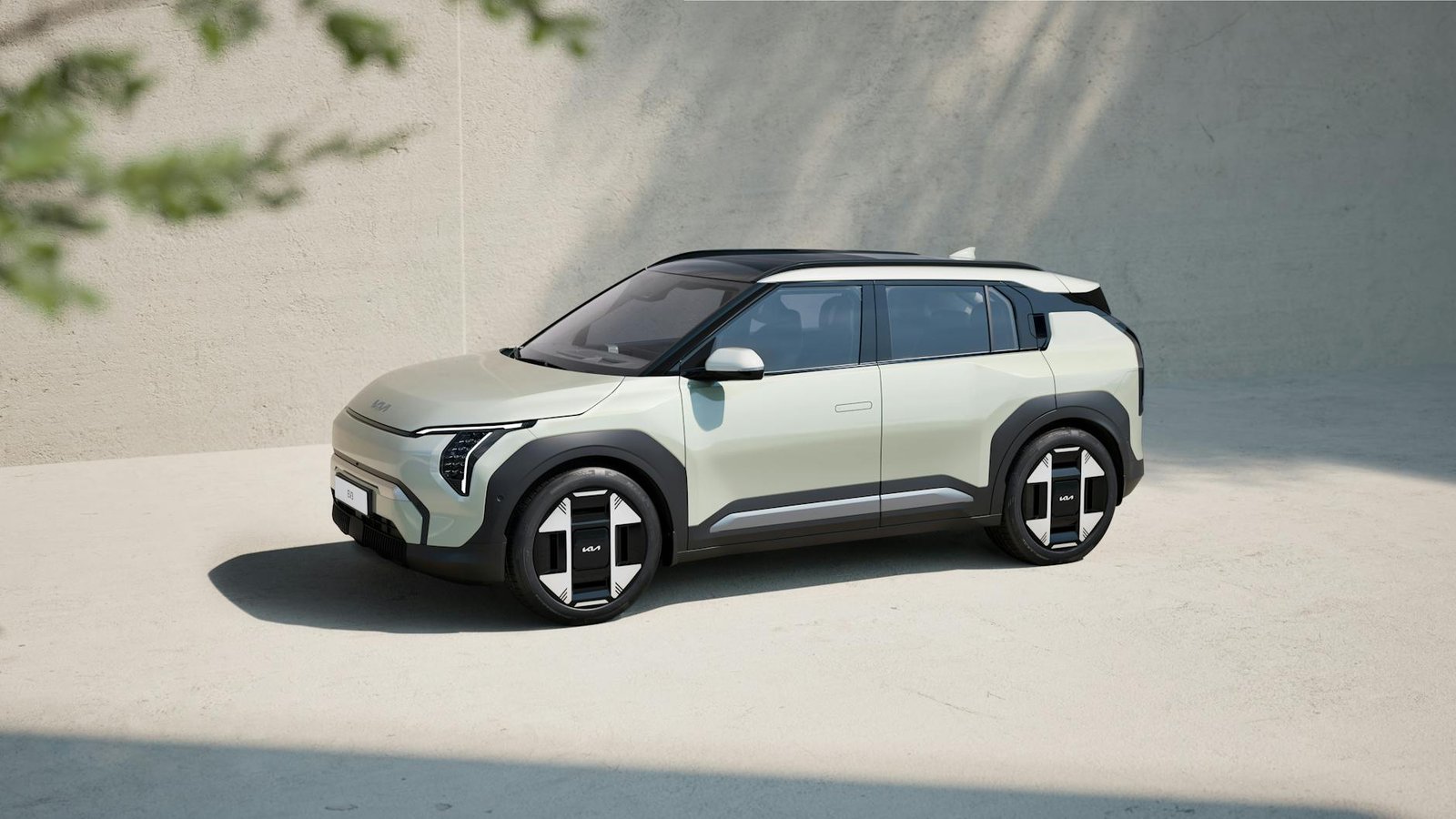
Excerpt: The BYD Sealion 05 sells for half the price of a Tesla Model Y in China, but buyers outside Asia won’t see anything close to those numbers. The myth that Chinese EV prices can simply export ignores the path-dependent infrastructure that makes them possible.
The Claim: We’re Just One Import Away From $16,000 EVs
Scroll through any EV forum discussing the BYD Sealion 05, and you’ll see the same refrain. “This thing starts at $16,200 in China. When are we getting it here?” The math seems simple. BYD builds a compact electric SUV with a 60.9 kWh battery, 520 km of CLTC-rated range (roughly 323 miles EPA equivalent), and a 15.8-inch touchscreen. The base model costs 117,800 yuan. That’s roughly what Americans spend on dealer markup alone.
The logic follows a straight line. If BYD can build and sell this vehicle profitably at $16,000 in Shanghai, they should be able to ship it to Los Angeles and maybe tack on $3,000 for freight. Call it $20,000 out the door. Problem solved. The people keeping this from happening are either protectionist bureaucrats or incompetent Western automakers.
But the BYD Sealion 05 price isn’t a number that travels. It’s the output of a system that doesn’t exist anywhere else.
Where the Math Comes From
The belief rests on a real foundation. BYD did unveil the Sealion 05 with those specifications at that price point. The vehicle exists. Customers in China are buying it. The PHEV variant starts even lower, at 96,000 yuan, or roughly $13,200. These aren’t theoretical prices or loss-leader promotions. They reflect BYD’s actual cost structure in its home market.
The misconception enters when observers assume that cost structure is portable. A vehicle’s price isn’t just its bill of materials plus a profit margin. It’s the result of everything that had to be true before the first unit rolled off the line. BYD operates inside an industrial ecosystem that took 20 years and hundreds of billions in coordinated investment to build. The Sealion 05 is cheap because of what already existed when BYD designed it.
Start with batteries. BYD manufactures its own LFP cells using the Blade Battery architecture. The 60.9 kWh pack in the mid-trim Sealion 05 costs BYD somewhere around $4,500 to produce, based on industry estimates of $75 per kWh for in-house LFP production at scale. A Western automaker buying cells from a supplier pays closer to $110 per kWh, or $6,700 for the same capacity. That’s a $2,200 cost disadvantage before the first motor spins.
Then consider the supply base. Every component in the Sealion 05 comes from a supplier within a few hundred kilometers of BYD’s factory. Electric motors, power electronics, displays, seats, climate systems. The entire bill of materials sources locally, which means no ocean freight, no customs delays, no need to carry 90 days of safety stock. BYD’s working capital requirements are a fraction of what a U.S. automaker faces.
What the Data Actually Shows
When Chinese EVs do reach foreign markets, their prices tell a different story. BYD’s Seal sedan starts at 179,800 yuan ($24,800) in China. The same vehicle entered Germany at €44,900, or roughly $48,800. That’s a 97% price increase. The BYD Atto 3, priced at 139,800 yuan ($19,250) domestically, launched in Australia at AUD $44,990, equivalent to $30,200. A 57% markup.
These gaps aren’t pure profit. They reflect real costs that don’t exist in the home market. Compliance testing for European and Australian safety standards runs into millions per model. Dealership networks require capital. Warranty reserves increase when you can’t fly a technician to the repair site in three hours. Shipping a container of vehicles from Shenzhen to Rotterdam costs $4,000 to $8,000 and takes 30 to 40 days. Working capital demands multiply.
The bigger constraint is production localization. Every major automotive market requires some degree of local assembly for full market access. The U.S. Inflation Reduction Act conditions the $7,500 tax credit on North American final assembly and battery component sourcing. Europe’s regulatory framework increasingly ties incentives to local content. Even before tariffs enter the picture, a Chinese-built vehicle faces structural barriers.
Building the Sealion 05 in the United States means building it without the supply base. BYD would need to either air freight components at ruinous cost or convince dozens of Chinese suppliers to establish U.S. operations. Those suppliers face the same problem. The electric motor manufacturer needs its magnet supplier nearby. The magnet supplier needs its rare-earth processor. You can’t cherry-pick one piece of the ecosystem.
Tesla tried the reverse path. The Model 3 built in Shanghai benefits from the same supply density that makes the Sealion 05 possible. A Shanghai-built Model 3 costs Tesla roughly $5,000 to $7,000 less to produce than the same vehicle in Fremont. That’s with Tesla’s scale and vertical integration. A startup attempting the same localization would burn through hundreds of millions before building a prototype.
The Grain of Truth
The frustration behind the myth is legitimate. American buyers do pay more for less competitive products in the EV segment. A base Tesla Model Y in China costs 263,500 yuan, or about $36,200. The U.S. version starts at $44,990. Chinese consumers have access to dozens of EV models under $25,000. Americans have two, both compliance cars with limited range.
The price gap is real. What’s missing is the mechanism to close it quickly. Industrial ecosystems don’t transplant. They grow from accumulated decisions about where to build factories, train workers, locate suppliers. China made those decisions 15 years ago when battery costs were $600 per kWh and EVs looked like a terrible bet. The West mostly didn’t.
Why It Persists
The myth survives because the alternative explanation is uncomfortable. If cheap EVs require an industrial base that takes decades to build, then cheap EVs aren’t coming next year. That conflicts with the narrative that electrification is just around the corner, waiting for one regulatory change or one brave CEO.
There’s also a cognitive bias toward visible barriers. Tariffs are visible. A CEO saying “we can’t build that here” is visible. A missing magnet supply chain three tiers deep is invisible until you try to build without it. People default to explanations involving intentional obstruction because those feel solvable. Path dependence feels like fate.
Media coverage reinforces the gap. Every article about a $16,000 Chinese EV mentions the price in the headline. Few explain why that price exists only in that context. The BYD Sealion 05 becomes a symbol of what’s possible rather than what’s possible given specific preconditions.
The Accurate Version
The BYD Sealion 05 costs $16,200 because it’s manufactured inside an industrial ecosystem that took 20 years and coordinated government-industrial policy to build. That ecosystem includes battery production at $75 per kWh, a supplier base within 200 kilometers of final assembly, and a regulatory environment designed to support domestic EV production. Those conditions don’t export.
Building an equivalent vehicle in the United States or Europe requires either replicating that ecosystem, which takes 10 to 15 years and hundreds of billions in investment, or accepting a significantly higher cost structure. The $16,000 Sealion 05 isn’t being kept out by incompetence or protectionism. It’s a product of conditions that don’t yet exist outside China. Recognizing that doesn’t make the problem unsolvable, but it does clarify what solving it actually requires.