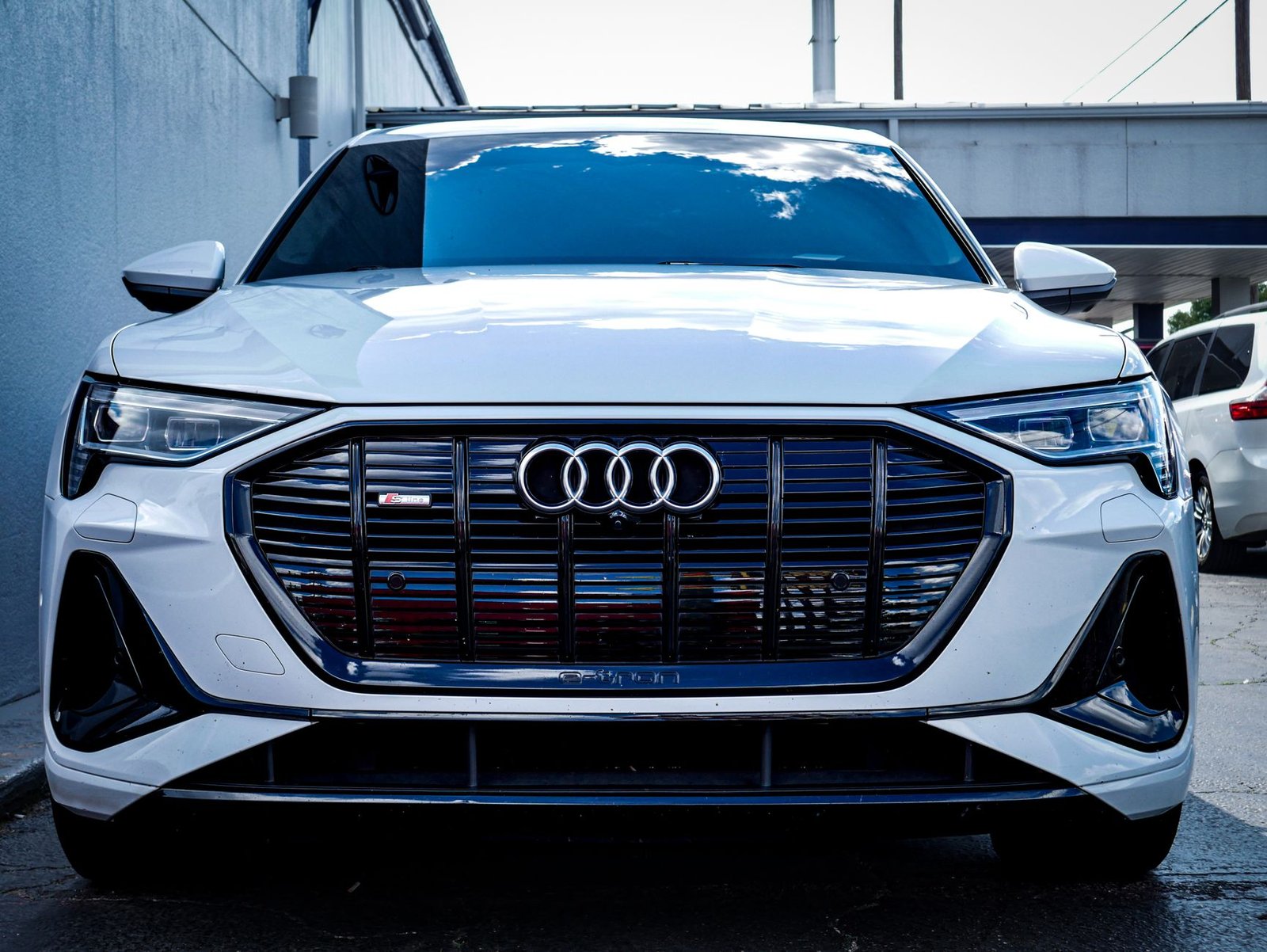
You’re scrolling through a European car import site at 1 a.m., and you find an Audi E5 Sportback with 776 horsepower, a 100 kWh battery, and pillar-to-pillar screens for €28,000 less than the S6 Sportback e-tron sitting at your local dealer. Same brand badge. More power. Significantly cheaper. The mouse hovers over “configure.” This is the moment where Audi’s regional pricing strategy collides with global internet commerce, and a third-party company called Auto China is betting that European buyers will take the leap. The first Audi China EV imports are already on German streets, shipped from a market Audi explicitly designed them never to leave.
The arbitrage is stark. The E7X starts at €86,800 delivered and registered in Europe, undercutting the smaller, less powerful, Lidar-less SQ6 e-tron by €7,000. The E5 Sportback offers 233 more horsepower than the S6 e-tron for €28,000 less. Auto China handles homologation, registration, VAT, even throws in a charging adapter. On paper, it’s a screaming deal. On paper.
The Price Gap Nobody Was Supposed to Notice
Audi built the E5 and E7X on SAIC’s Advanced Digitized Platform specifically for China. The platform runs at 800 to 900 volts, incorporates multiple cameras and Lidar, and integrates with China’s digital payment and navigation ecosystems. These vehicles were never meant to compete with Ingolstadt’s PPE-based models in Europe. The pricing reflects Chinese market expectations, Chinese cost structures, and Chinese competitive intensity. BYD, Nio, and Xpeng don’t let anyone coast on brand heritage alone.
Information moves faster than regional product strategies. European buyers can look up Chinese MSRP, convert currency, and see that Audi charges 30 to 40 percent more for comparable or better hardware in their home market. Auto China’s business model exists because that gap is wide enough to absorb import duties, homologation costs, third-party markup, and still undercut local dealers.
The numbers are public. The vehicles are certified for European roads. The demand exists. What’s missing is the safety net.
What You’re Actually Buying When You Import
The warranty is two years through an independent repair network, not Audi’s factory-backed coverage. Software updates come from SAIC’s Chinese servers, assuming they come at all once the vehicle registers a European location. The ADAS was calibrated for China’s lane markings, signage, and traffic patterns. It might work fine on a German Autobahn. It might throw constant false positives. Nobody knows because Audi isn’t testing these scenarios.
Resale value is unknowable. Will a future buyer accept a Chinese-spec Audi with uncertain parts availability? Will insurance companies rate it as a grey-market import with higher premiums? The E5 you buy today might be worth 50 percent of book value in three years, or 70 percent, or 30 percent. No market data exists because this channel is barely months old.
When Volkswagen learned of dealers importing Chinese-market models outside official channels, it moved to shut the practice down, and grey-market imports have historically faced the risk of forced deregistration in Europe. Auto China is betting Audi won’t pursue aggressive legal action against end customers, but that’s a bet, not a contract term.
The Buyers Who Actually Pull the Trigger
Early adopters drawn to Audi China EV imports fall into three profiles. First: the spec-sheet optimizer who sees 776 horsepower for a discount and discounts future uncertainty because the math works today. Second: the ideological buyer making a statement about regional pricing and artificial market segmentation. Third: the grey-market veteran who’s imported JDM cars or US-spec trucks before and understands the tradeoffs.
The first group is largest and most at risk. They’re conflating a good deal with a safe deal. A vehicle is a 5 to 10 year financial commitment. Saving €28,000 upfront means nothing if you can’t sell it in year four without taking a heavy loss, or if a critical component fails and the independent repair network quotes you a months-long wait for parts shipped from China.
The second group knows what they’re buying. The third group has infrastructure: a mechanic familiar with the platform, someone who can handle the software side, a realistic exit plan. Most buyers are in the first group.
Why This Gambit Might Work Anyway
Audi’s dilemma is that aggressively shutting down Audi China EV imports signals to European customers that their regional pricing lacks justification. If a Chinese-spec E5 is dangerous or unsupportable in Europe, why did Audi engineer it to meet European safety standards for homologation? If it’s safe and supportable, why does it cost €28,000 more when built in Ingolstadt?
Auto China is exploiting a legitimacy gap. These aren’t sketchy grey-market conversions. They’re factory-fresh Audis that clear European type approval. The company is betting Audi’s brand damage from a high-profile lawsuit against customers exceeds the revenue threat from a few hundred imports annually.
They might be right. Legal action against customers who bought certified vehicles generates terrible optics for a company already struggling to explain why Chinese competitors deliver more technology for less money. Moving against customer-owned vehicles that passed safety certification would look punitive, not protective.
If Auto China’s import volume stays below 1,000 units annually, Audi may tolerate it as a rounding error rather than risk a viral story about suing customers for finding a better deal.
The Real Choice You’re Making
The E5 versus S6 decision isn’t about specifications. It’s about how much future uncertainty you’ll accept for present savings. The Chinese-spec vehicle is, on the spec sheet, more capable hardware. It’s also more exposed to software lockout, parts scarcity, and value depreciation.
Your exit timeline determines the calculation. Planning to keep the vehicle for 10 years and drive it into the ground? The warranty gap and resale risk matter less. You’re buying transportation, not an asset. Planning to trade in after three years for the next model? You’re gambling that a robust secondary market for Audi China EV imports materializes, which requires hundreds more buyers making the same bet.
Most buyers miss this: you’re not just buying a vehicle. You’re buying into a support ecosystem that might not exist when you need it. The €28,000 savings buys you out of Audi’s dealer network, software update pipeline, and institutional commitment to parts availability.
The Verdict
If you’re a grey-market veteran with technical resources and a 10-year ownership horizon, the E5 is a rational play. You understand you’re buying hardware, not a service relationship. If you’re optimizing for specs and expecting traditional brand support, you’re signing up for a conflict that won’t surface until year three when you need something Audi doesn’t want to provide for a vehicle they never intended to support in your market.
The smarter move for most buyers: wait. If Auto China’s model works and volume grows, either Audi will crack down, validating the risk, or they’ll tolerate it, validating the legitimacy. Right now you’re paying €86,800 to beta-test someone else’s business model. That’s a different purchase than buying a car.