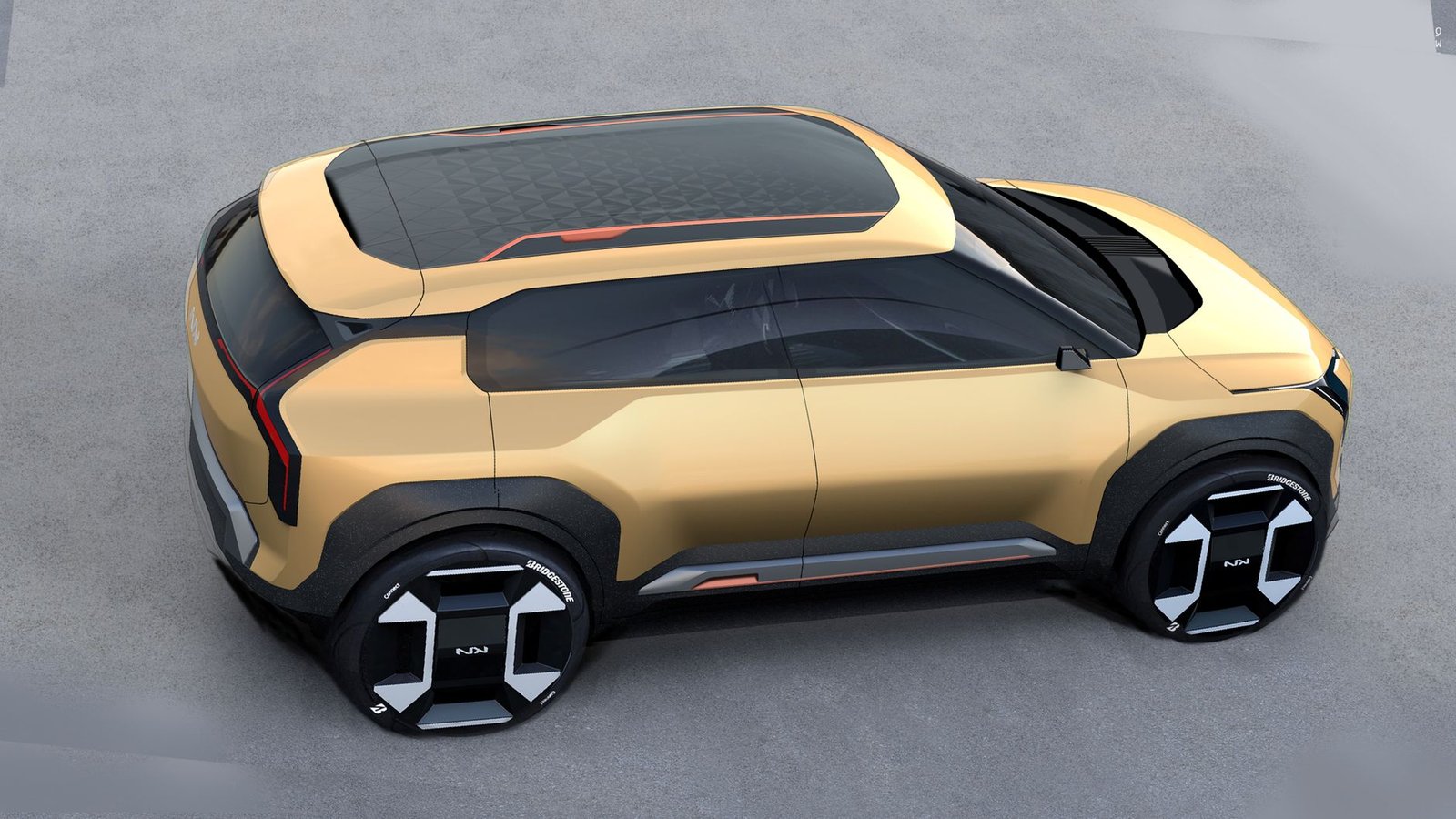
Rivian CEO RJ Scaringe recently said the upcoming R3 crossover will cost “materially lower” than the R2, with a follow-up R4 model pushing prices down further still. He didn’t offer numbers, but the promise is clear: Rivian plans to keep walking its price downward until it hits a mass-market sweet spot. The announcement generated the predictable wave of optimism about EV affordability, but almost no one is asking whether the Rivian R3 price is actually the obstacle keeping buyers away.
The entire EV industry has convinced itself that price is the primary barrier to adoption. Lower the sticker, the thinking goes, and buyers will come. It’s a seductive idea because it’s actionable. Engineers can design cheaper batteries. Accountants can find cost savings. Executives can announce targets. But spend time with people who’ve actually considered buying an EV and decided against it, and price rarely tops the list of concerns. The friction sits elsewhere, in places a cheaper R3 can’t reach.
The Purchase Price Versus the Mental Price
When Rivian talks about the R3 coming in materially cheaper than the R2, they’re addressing the wrong calculation. The R2 itself is expected to start around $45,000, which would make the R3 something closer to the high-$30,000 range. That puts it in direct competition with the Hyundai Ioniq 5, Kia EV6, and Ford Mustang Mach-E. These are not budget vehicles, but they’re within reach of the median household income buyer stretching for a nice car.
The purchase price represents only one component of what behavioral economists would call the total perceived cost. A buyer contemplating an EV mentally adds: the cost of potentially needing to install home charging ($500 to $2,000 depending on electrical panel capacity), the uncertainty premium of resale value (EVs historically depreciate faster than comparable gas cars, though this is changing), the risk cost of range anxiety on the handful of long trips they take per year, and the opportunity cost of choosing an immature technology over a known quantity.
None of these costs appear on the window sticker. All of them influence the decision. Rivian can cut the base price of the R3 to $38,000, and the mental math still includes “but what if I need to drive to my in-laws’ place four hours away in winter?” That question doesn’t have a dollar value, but it has a decision value. And it often tips the scale back toward a Honda CR-V.
What Rivian Sees Versus What Buyers See
Automakers look at the EV market through the lens of product positioning. They see price tiers, performance brackets, and competitive sets. The R1T and R1S occupy premium adventure territory. The R2 targets the high-volume midsize segment. The R3, presumably, goes after the compact crossover crowd. It’s logical product planning. Each tier captures a different buyer persona at a different price point.
Buyers don’t experience car shopping as a tiered product matrix. They experience it as a risk-versus-reward assessment heavily influenced by what their neighbors drive, what their mechanic knows how to fix, and whether their apartment building has outlets in the parking garage. The compact crossover buyer isn’t thinking “I want the Rivian R3 price point.” They’re thinking “I need something reliable that fits in my parking spot and won’t leave me stranded when I visit my parents.”
This creates a mismatch in problem-solving. Rivian is optimizing for sticker price competitiveness. The buyer is optimizing for total life friction. A cheaper R3 expands Rivian’s addressable market without necessarily reducing the buyer’s perceived risk.
The Hidden Cost of Being Early
Every EV buyer right now is an early adopter, whether they think of themselves that way or not. EVs currently make up roughly 8% of new U.S. vehicle sales, which means more than 90% of car buyers still choose something else. Even in an optimistic scenario where EVs reach 15% market share, the great majority of the market opts out. Being in that minority carries an adoption penalty that compounds in unexpected ways.
Take charging infrastructure. Yes, networks are expanding. Yes, apps show you where chargers are. But using public charging still requires a different mental model than pulling into any gas station. You need to know which networks your car is compatible with, whether you’ll need an adapter, how payment works, and whether the charger will actually be functional when you arrive. J.D. Power’s charging studies have consistently found that around 1 in 5 public charging attempts fail for various reasons, from broken equipment to payment system errors. That failure rate sounds abstract until you’re the person standing in a parking lot at 11 PM watching the error message flash on the screen.
The Rivian R3 price doesn’t change this friction. Neither does adding more models at lower price points. The friction is systemic, not financial. A buyer paying $38,000 for an R3 faces the same charging uncertainty as someone paying $70,000 for an R1S. The difference is that at $38,000, the buyer has less financial cushion to absorb unexpected problems. They’re more likely to be apartment renters without home charging access. They’re more likely to rely on the vehicle as their only car rather than one of two in the household. The lower price point paradoxically increases the adoption barrier because it shifts the product toward buyers with less flexibility to work around EV limitations.
What the Incentive Structure Reveals
Pay attention to how buyers actually acquire EVs today, and a pattern emerges: the easiest conversions happen when someone removes the friction entirely. Fleet buyers with dedicated charging infrastructure have rapidly electrified their vehicles because the charging friction disappears. Homeowners with garages and electricians on speed-dial adopt EVs at much higher rates than apartment dwellers. Two-car households where the EV can be the “around town” car while a gas vehicle handles edge cases convert more readily than single-car households betting everything on electric.
The most successful EV adoption stories involve removing decision friction, not reducing price. Tesla Superchargers succeeded not because they were cheap (they’re not particularly), but because they removed the “will this work?” question. You pull up, plug in, and it charges. No app confusion, no network compatibility questions, no wondering if your credit card will process. The reliability matters more than the rate.
This is why Rivian’s strategy of walking down price tiers with the R3 and eventual R4 may not produce the adoption surge the company expects. Each cheaper model expands the addressable market on paper, but also pulls in buyers with less infrastructure support and less financial flexibility to absorb friction. The R3 buyer is more likely to live in an apartment, more likely to need public charging, more likely to stretch their budget to afford the vehicle. All of which means they’re more exposed to the non-price barriers that actually drive purchase decisions.
The Industry’s Collective Blind Spot
The automotive industry has spent the past five years obsessing over battery costs, manufacturing scale, and the magic price point that will unlock mass adoption. Tesla’s stated goal of a $25,000 EV. GM’s promise of “EVs for everyone.” Rivian’s ladder down from R1 to R2 to R3 to R4. Everyone chasing the number that makes the business case work on a spreadsheet.
Talk to someone who bought a Toyota RAV4 instead of an EV, and price rarely emerges as the primary objection. They’ll mention charging uncertainty. They’ll bring up the friend whose EV couldn’t make it through a cold snap. They’ll worry about battery replacement costs, or electrical system repairs, or whether their usual mechanic can service it. These are friction problems, not price problems. They’re about trust, infrastructure, and behavioral comfort zones.
The closest historical parallel might be diesel passenger cars in the U.S. market. Every few years, an automaker would announce a new push for diesel adoption, pointing to better fuel economy and lower running costs. The math worked on paper. Buyers didn’t care. The friction of finding diesel fuel, the stigma of diesel engines, and the lack of familiarity overwhelmed the economic argument. Diesel never came close to significant share in U.S. passenger vehicles despite decades of attempts.
EVs will almost certainly do better than diesel because the policy environment supports them and the technology improves faster. But the fundamental lesson holds: friction beats price in consumer behavior. People don’t buy the cheapest option that meets their needs. They buy the option with the least total friction, which includes but isn’t limited to price.
Where This Actually Matters
If you’re waiting for the Rivian R3 price announcement to decide whether EVs have reached mass-market viability, you’re watching the wrong indicator. The better signals are infrastructure and behavior changes that reduce friction. Watch for apartment buildings advertising charging as a standard amenity. Watch for employers installing workplace charging not as a perk but as table stakes. Watch for insurance companies offering better rates on EVs because repair networks have matured. Watch for used EV prices stabilizing as buyers trust the longevity story.
Those changes matter more than whether the R3 starts at $38,000 or $42,000. They indicate that the non-price barriers are falling, which is what actually shifts buying behavior. Rivian can build a compelling high-$30,000 electric crossover, and it might still struggle if buyers mentally add $10,000 of perceived friction cost.
The company seems to understand this at some level. Their focus on the adventure buyer with the R1T and R1S targets people who already have high friction tolerance and the resources to absorb problems. Those buyers convert easily once the product meets their performance requirements. The move downmarket with R2 and R3 means competing for buyers with lower friction tolerance and fewer resources to work around infrastructure gaps. That’s a harder sell, regardless of the sticker price.
The Rivian R3 price will matter for market positioning and competitive dynamics. It won’t matter much for the fundamental adoption question, which sits upstream of price in the decision tree. Can I charge it reliably? Will it actually work for my life? Do I trust this enough to bet my transportation on it? Answer those questions affirmatively, and buyers will stretch their budgets. Leave those questions uncertain, and even a cheap EV sits on the lot.