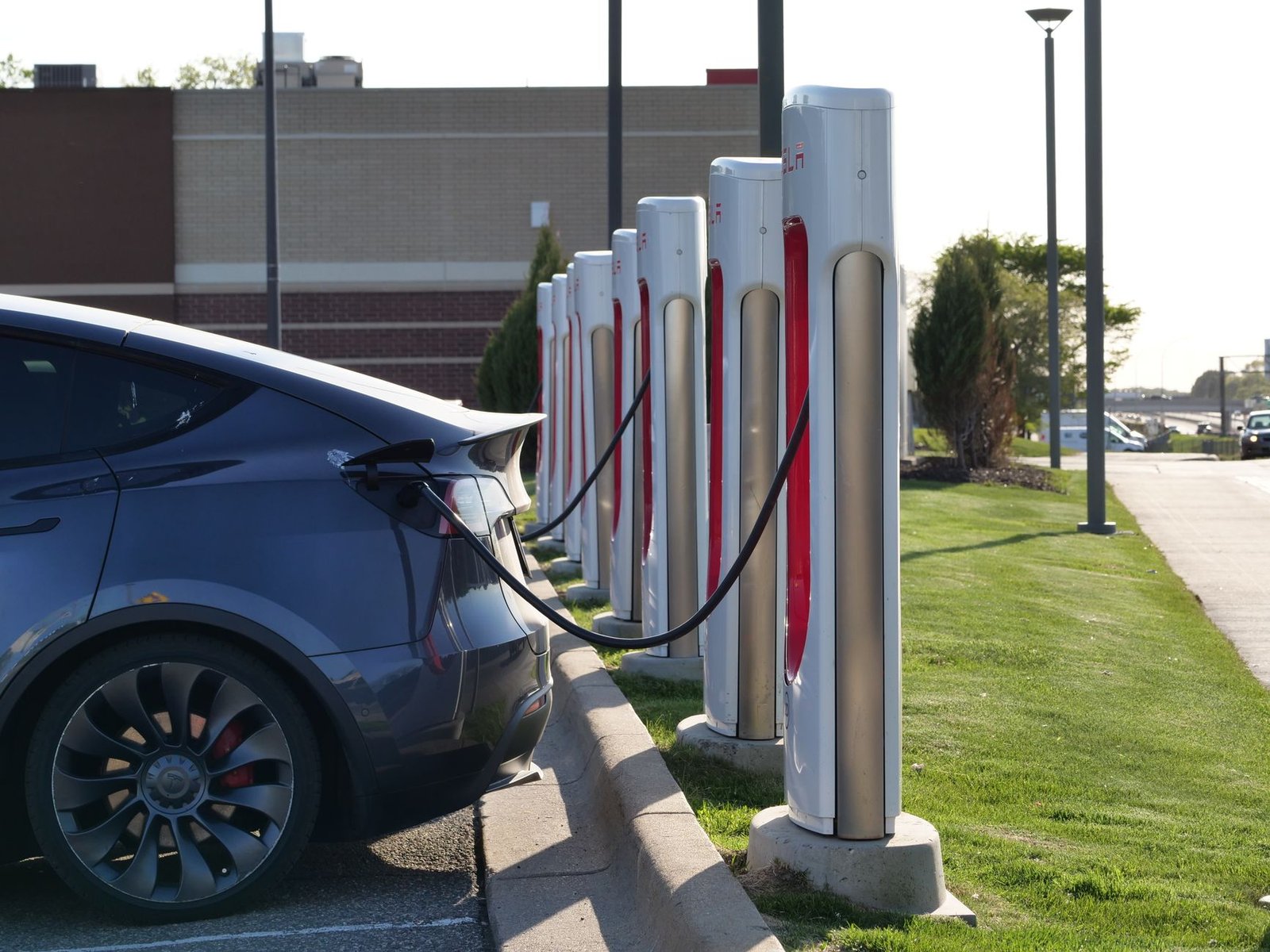
A Model Y owner recently shared battery health data after one year of ownership: 91% capacity remaining, 25,000 miles driven. The number looks reassuring until you understand how battery capacity estimates work. Most drivers will never conduct the 16-hour calibration test Tesla requires to measure true capacity, relying instead on third-party estimators that compare state of charge patterns across similar vehicles. That methodology works, but it measures a moving target.
The owner used Recurrent, a service that analyzes charging behavior, temperature exposure, and mileage against a database of comparable vehicles. The resulting 91% figure became a data point in the broader conversation about Tesla battery degradation, one that EVangelist forums treat as gospel while skeptics cite it as proof of hidden decay. Both camps miss the constraint: lithium-ion batteries don’t degrade linearly, and early capacity loss tells you almost nothing about what happens next.
The Asymmetric Decay Curve
Battery degradation follows a power law, not a straight line. Nickel-based long-range packs typically drop to roughly 90% state of health within the first 50,000 miles, then stabilize. A high-mileage Model 3 taxi retained 88.5% capacity after three years of commercial use, per earlier industry observations. The initial loss happens fast because the solid electrolyte interphase layer forms on the anode during early charge cycles, consuming lithium ions that never return to active duty. Once that layer stabilizes, degradation slows.
Extrapolating from year-one data produces misleading forecasts. If you assume 9% loss per year, the battery reaches 70% capacity in roughly three to four years, triggering warranty coverage and making the economic case for EVs collapse. But chemistry doesn’t cooperate with linear projections. The same battery losing 9% in year one might lose 3% in year two and 2% in year three. A 2015 Model S P85D with nearly 160,000 miles showed approximately 86% capacity, demonstrating that the degradation rate decreases as the pack ages.
The owner’s highway range test covered nearly 300 miles on a 100% to 0% discharge, but real-world range at typical 80% daily charging yields closer to 240 miles. That gap between EPA range and daily reality shapes buyer behavior more than battery health percentages ever will. Range anxiety isn’t about chemistry, it’s about trip planning with a 20% buffer you can’t use.
What Capacity Estimates Actually Measure
Third-party estimators like Recurrent don’t measure battery capacity directly. They infer it by comparing how much energy your pack accepts against what similar vehicles accept under similar conditions, then adjusting for temperature and charging speed. The algorithm works because battery management systems report state of charge with reasonable accuracy, but it introduces statistical noise that owners mistake for precision.
Tesla’s own full battery-health test requires the vehicle to discharge near empty while plugged into an AC charger for over 16 hours, then charge completely. Few owners bother because the process ties up the car overnight and the BMS already provides a good-enough estimate for daily use. The 91% figure represents an estimate of an estimate, useful for spotting outliers but not for predicting future decay rates.
Battery management systems also deliberately hide capacity from users to protect cell longevity. When you charge to 100%, you’re actually reaching perhaps 96% of true pack capacity. When you hit 0%, the BMS still reserves a few percent to prevent deep discharge damage. This buffer can mask some degradation from the user interface as the pack ages. The battery degrades, but the displayed range holds steadier than actual capacity would suggest.
The Cold-Weather Variable
Temperature explains more variation in effective range than Tesla battery degradation does. Lithium-ion chemistry slows in the cold, increasing internal resistance and reducing both available power and usable capacity. A pack that delivers 300 miles in July might yield 210 miles in January, not because capacity vanished but because cold cells can’t discharge efficiently and cabin heating draws additional energy.
Recurrent’s methodology accounts for this by comparing vehicles in similar climates, but individual drivers experience temperature effects as range loss. Park outside in Minnesota, and your displayed range can drop 30% or more on a cold winter morning. Garage-park in Texas, and cold-weather range loss largely disappears because you’re never fighting thermal drag. Battery chemistry doesn’t know the difference between temporary cold and permanent degradation, but owners certainly do.
Preconditioning helps but requires planning. Heating the pack before departure recovers some cold-weather range, but it works best if you schedule it while still plugged in. Otherwise, you’re using battery capacity to heat the battery, a thermodynamic loop that feels wasteful because it is.
The Warranty Gap
Tesla warrants battery capacity at 70% for eight years or 120,000 miles on long-range packs. That threshold exists because below 70%, reduced range starts noticeably affecting resale value and daily utility. But measuring whether you’ve reached 70% requires either the 16-hour calibration test or a Recurrent-style estimate with statistical uncertainty.
The warranty also covers capacity, not range. If your 2021 Model Y originally delivered 330 EPA miles and now delivers 240 miles at 80% charge, much of that gap comes from charging to 80% rather than 100%, plus EPA testing optimism and any cold-weather effects, so measured capacity may still sit well above 70%. The warranty claim fails because measured capacity hasn’t crossed the threshold, even though your everyday driving range feels much shorter.
Dealers care about range because buyers care about range, but the warranty only protects capacity. A pack at 72% capacity with good thermal management might deliver acceptable range in temperate climates, but the same pack in Chicago becomes a liability the dealer discounts heavily.
What This Means for Buyers
Early degradation data like the 91% figure matters less than the degradation curve’s shape. If you’re buying used, focus on total miles over battery health percentages. A three-year-old pack with 90,000 miles probably lost most of its early-phase capacity within the first 30,000 miles and will degrade slowly going forward. A one-year-old pack with 15,000 miles showing 93% capacity still has the fastest part of the decay phase ahead.
Temperature history matters more than age. A Florida car with 60,000 miles and garage parking may retain range as well as a Minnesota car with 40,000 miles and outdoor parking, despite the mileage difference. Sustained heat accelerates chemical aging while cold temporarily suppresses usable range, creating regional variation that simple mileage metrics miss.
For new buyers, the 91% data point should be reassuring but not definitive. Tesla battery degradation runs fastest through roughly the first 50,000 miles, then stabilizes into slow decay. The battery will likely outlast your ownership period, but early capacity loss happens faster than buyers expect. Budget for around 10% degradation in the first two years, then a few percent per year afterward, and you’ll avoid the surprise.
The Real Test Happens at 100,000 Miles
One year of data reveals chemistry establishing equilibrium, not long-term durability. The useful question isn’t whether this Model Y lost 9% in year one but whether it will retain 80% capacity at 100,000 miles. Industry data suggests yes, but the sample size of high-mileage Tesla packs remains thin relative to the installed base.
Battery degradation becomes a real economic constraint around 75% capacity, where range limits start forcing charging stops on trips you used to complete easily. That threshold arrives somewhere beyond 120,000 miles for most Tesla packs, depending on temperature exposure and charging habits. Until then, degradation is a spec sheet concern that matters more in forums than in parking lots.