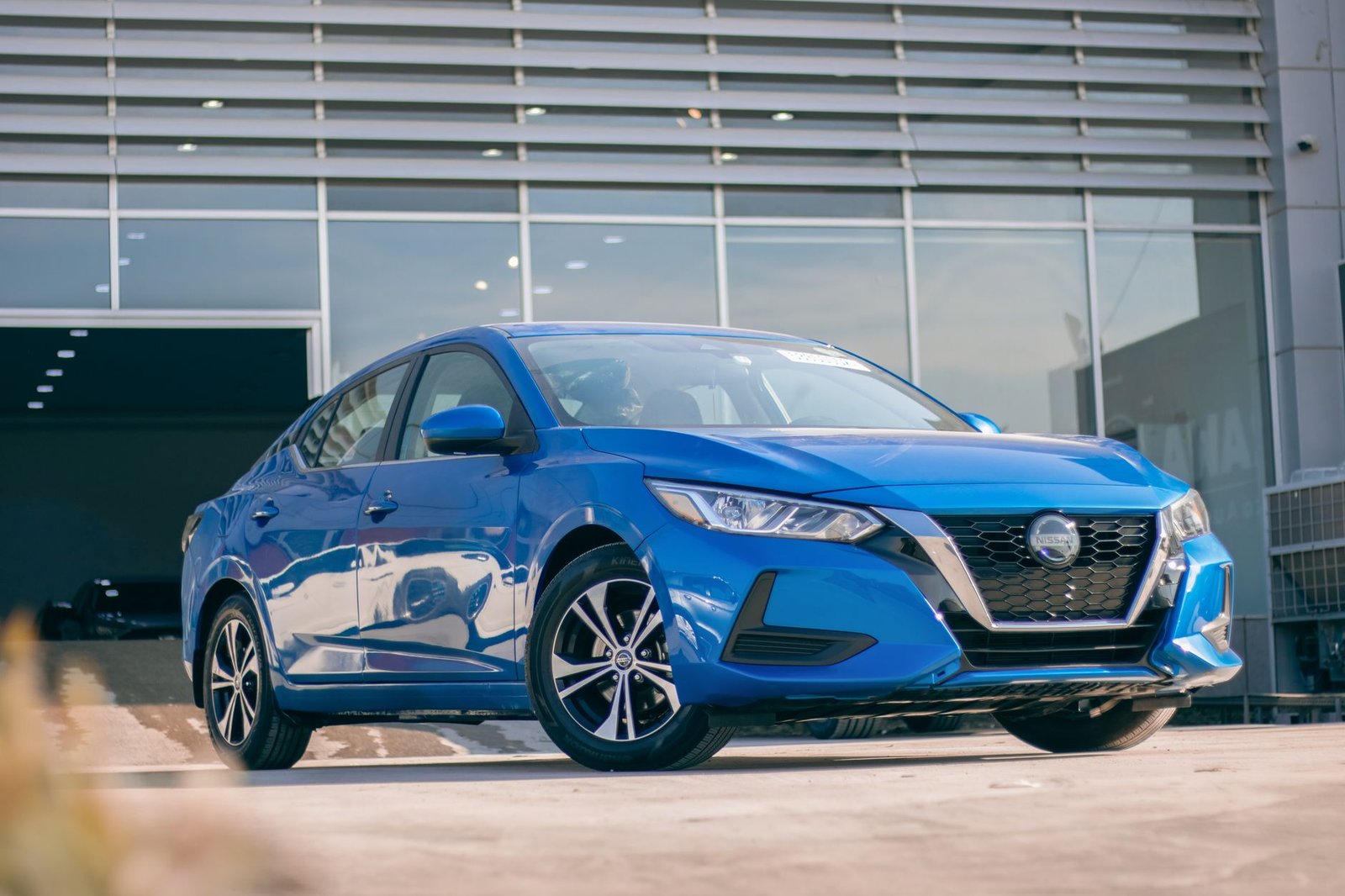
Nissan plans to make hybrids its primary powertrain by 2030, but understanding why requires looking at how real buyers actually choose between gas, hybrid, and electric vehicles when monthly payments are on the line.
When the Dealer Lot Tells You Everything
Walk into a Nissan dealership today and you’ll find exactly one electric vehicle: the Leaf, a model that first launched when the iPhone 4 was cutting-edge technology. Ask about hybrids and you’ll get a shrug. The Altima hybrid died in 2011. The brief hybrid versions of the Murano, Pathfinder, and Infiniti QX60 came and went without leaving much impression. For more than a decade, Nissan’s answer to the fuel economy question has been “buy a smaller engine or go full electric.” Now the company wants hybrids to be its primary powertrain option in North America by 2030, starting with the Rogue E-Power. Nissan Americas Chairman Christian Meunier told Automotive News the company expects hybrids to represent 30 to 40 percent of total Rogue sales “very quickly.” That’s a dramatic shift for a manufacturer that essentially abandoned the middle ground between combustion and batteries.
How Nissan’s E-Power System Actually Works
The Nissan hybrid strategy centers on E-Power, which works differently from the Toyota or Honda approach most buyers know. In a conventional hybrid like a Camry or Accord, the gas engine can directly drive the wheels, with the electric motor assisting during acceleration or handling low-speed driving on its own. The system switches between gas, electric, and combined power depending on conditions. E-Power flips this arrangement. The gas engine never drives the wheels directly. It exists only to generate electricity that charges the battery and powers an electric motor that actually moves the car. Think of it as an electric vehicle that carries its own generator instead of relying on charging stations. The engine runs in its most efficient RPM band rather than tracking vehicle speed. When you accelerate hard, the battery delivers instant torque like any EV. When you’re cruising at highway speed, the generator maintains battery charge. The mechanical simplicity appeals to engineers because you eliminate the complex transmission and clutch systems that conventional hybrids require.
This setup creates a driving experience closer to a pure electric vehicle. You get the immediate throttle response and regenerative braking feel of an EV, without range anxiety or charging infrastructure concerns. For Nissan, the system also shares more components with their existing EV development than a conventional hybrid would. The electric motor, inverter, and battery management systems all derive from the same technology family as the Leaf and the Ariya.
The Economics That Make Buyers Choose Hybrids
When someone walks into a dealership comparing a Rogue, a Rogue hybrid, and a theoretical electric Rogue, they’re not running lifecycle cost analyses in spreadsheets. They’re looking at three numbers: monthly payment, fuel cost, and how often they’ll need to think about charging or refueling. The payment calculation typically dominates. A hybrid traditionally costs $2,000 to $4,000 more than the equivalent gas model. A full EV costs $8,000 to $15,000 more, even after federal tax credits. At current interest rates around 7 percent for a 60-month loan, that hybrid premium adds roughly $40 to $80 per month. The EV premium adds roughly $160 to $300 monthly.
Now factor in fuel savings. Someone driving 12,000 miles annually in a regular Rogue getting 30 mpg combined spends about $1,400 per year on gas at $3.50 per gallon. A hybrid Rogue targeting 40-45 mpg combined drops that to roughly $1,000 annually. The monthly fuel savings: about $33. That offsets much of the payment premium for many buyers. An electric Rogue would cost maybe $500 annually in electricity for the same mileage, saving roughly $900 per year compared to gas. But that $75 monthly fuel savings doesn’t come close to covering the higher payment.
The hybrid occupies the sweet spot where the math feels neutral and the friction is minimal. You still pump gas at familiar stations on familiar routes. You don’t research charging networks or plan stops differently. You don’t worry about apartment building policies or home electrical upgrades. For the buyer who thinks an EV sounds appealing but isn’t sure about the logistics, the hybrid becomes the default compromise.
Why Nissan Abandoned This Territory Before
The company built hybrid Altimas from 2007 to 2011, right when gas briefly hit $4 per gallon and Toyota was printing money with the Prius. Those Altima hybrids used a system built around technology licensed from Toyota, adding complexity and cost without much differentiation. Sales stayed modest and Nissan killed the program when gas prices retreated. The later hybrid attempts with Murano, Pathfinder, and QX60 suffered similar fates. Building hybrids meant paying licensing fees to competitors or investing heavily in proprietary systems for vehicle lines where buyers prioritized space and capability over fuel economy.
Meanwhile, Nissan went all-in on the Leaf as the bet that pure electric would leapfrog hybrids entirely. For a few years in the early 2010s, that looked prescient. The Leaf became the best-selling EV globally for a time. Then Tesla demonstrated that American buyers would pay luxury prices for electric vehicles with serious range, while Nissan kept the Leaf positioned as an affordable commuter with limited battery capacity. By the time competitors launched long-range EVs at mainstream prices, Nissan’s electric momentum had stalled. The Ariya was supposed to reset that narrative, but Nissan pulled it from the U.S. market last year (it continues in Canada, adopting the NACS charging standard).
This history matters because Nissan’s hybrid strategy comes from market validation, not technological breakthrough. E-Power has existed in Japan for years. The company is returning to hybrids because the market proved that the jump from combustion to pure electric is too large for most buyers right now, regardless of the product. They need the bridge option they abandoned more than a decade ago.
What the Production Timeline Reveals
The Rogue hybrid launches with production in Japan, then shifts to the Smyrna, Tennessee plant in 2028. That gap before domestic production tells you Nissan is testing U.S. buyer response before committing capital to retooling an American factory line. If the “30 to 40 percent of Rogue sales” target materializes quickly with imported units, the business case for Tennessee production gets stronger. If hybrid take rates disappoint, Nissan can adjust without stranded factory investment.
The Kicks is slated to get the E-Power treatment by 2028 as well, coinciding with Smyrna production capability. That’s the high-volume small crossover slot where fuel economy matters most to buyers and where a modest hybrid premium has the best chance of paying for itself in reduced fuel costs within a typical ownership period. If Nissan is serious about hybrids becoming the primary powertrain by 2030, they need the Kicks hybrid to succeed as much as the Rogue. The small crossover segment is where Toyota and Honda hybrid dominance is most entrenched.
Notice what’s missing: hybrid versions of the Frontier truck or Armada SUV. Those buyers prioritize towing capacity and truck capability. The fuel economy concern exists, but not enough to accept compromises in payload or torque delivery. Nissan is staying focused on the crossover segments where hybrid technology creates clear buyer value without trade-offs that matter to the customer.
The Risk Nissan Is Actually Taking
Most analysis frames this as Nissan hedging between gas and electric. The real risk is that by 2030, the price gap between EVs and gas vehicles narrows enough that hybrids become the expensive middle option nobody wants. Battery costs keep falling. Charging infrastructure keeps expanding. Home electricity increasingly comes from solar panels that make fuel effectively free. If a 2029 electric Rogue costs only $3,000 more than a gas version and qualifies for incentives, why would someone pay hybrid prices for a system that still burns gasoline?
Nissan is betting that infrastructure friction and charging anxiety will persist for mainstream buyers through the end of the decade. They’re probably right for 2025 and 2026. The question is whether that remains true in 2028, 2029, and 2030. Building a hybrid strategy around a multi-year timeframe assumes electric vehicle adoption follows a gradual curve rather than an S-curve where hesitant buyers suddenly flip once a threshold of familiarity is reached.
The other risk is product cadence. Toyota has been refining hybrid systems for more than 25 years. Their supply chain, manufacturing processes, and dealer service networks are optimized for hybrid complexity. Nissan is re-entering this market after more than a decade away. The E-Power system is proven in Japan, but American driving patterns, climate conditions, and customer service expectations differ. Any reliability issues or customer satisfaction problems in the crucial first two years could crater the strategy before it scales.
What Actually Matters for Buyers
If you’re considering a Rogue hybrid when it arrives, the relevant questions are immediate and practical. How does the real-world fuel economy compare to EPA estimates? Does the hybrid system add noticeable weight that affects handling or cargo space? What’s the battery warranty and replacement cost after eight or ten years? Can independent mechanics service the hybrid components, or are you locked into dealer pricing for the vehicle’s life?
For buyers in the market today, the Nissan hybrid strategy means waiting if hybrid efficiency matters to you. The current Rogue is a solid vehicle, but you’re buying at the end of a product cycle. The hybrid version will likely command a premium initially as supply ramps up. If you’re not in immediate need, the smart play is letting early adopters work through any first-year issues while you evaluate how the take rate affects pricing and dealer inventory.
The broader signal is that hybrids are becoming the mainstream choice. When a manufacturer like Nissan that went all-in on EVs redirects to make hybrids primary, they’re responding to what customers actually buy when given a choice. The technology argument about which powertrain is optimal matters less than the practical reality of what people will finance and drive for five to seven years. Nissan is simply acknowledging that reality later than Toyota and Honda, but with enough runway to capture buyers who aren’t ready to plug in.