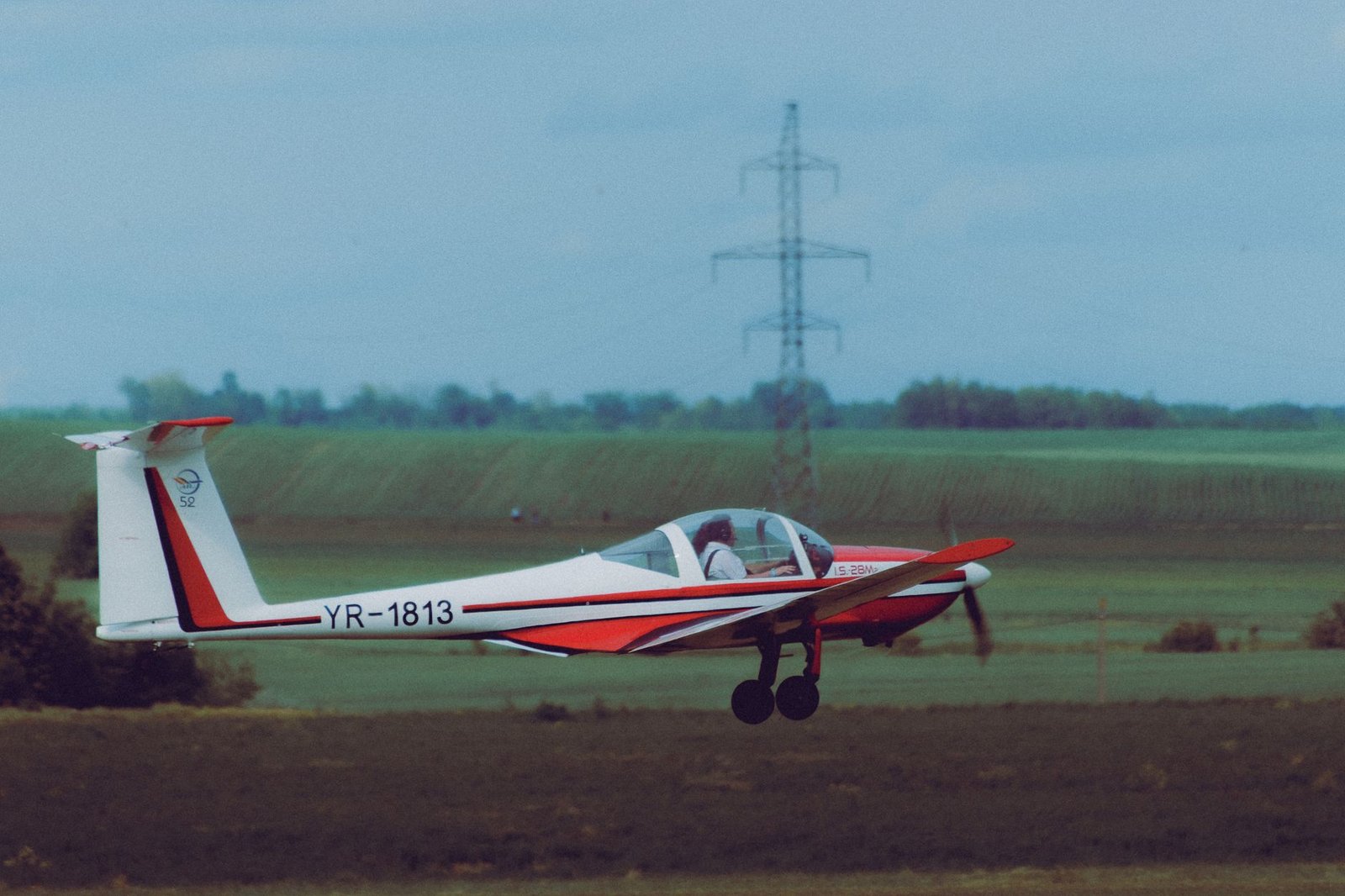
Heart Aerospace’s X1 demonstrator flew for a few minutes on August 12 at Plattsburgh International Airport in upstate New York. The electricity cost for that flight, powering over 1 megawatt through takeoff and climb: roughly $5. That number, buried in the test flight announcement, reveals more about the structural barriers to electric aviation than any amount of venture capital or airline interest letters.
The $5 electric aircraft flight cost represents a genuine fuel cost advantage over conventional aviation. A comparable turboprop burning Jet A would consume tens of dollars in fuel for the same duration, even accounting for the climb-heavy profile of a test flight. The physics work. The economics might not.
What the Test Flight Actually Demonstrated
Heart Aerospace flew the X1, a battery-electric demonstrator, under an FAA Special Airworthiness Certificate. The aircraft delivered over 1 megawatt of power during a brief flight, completing taxi, takeoff, maneuvering, and landing sequences at low altitude. The test validated the propulsion architecture at commercial aircraft scale.
But the X1 is not the aircraft Heart Aerospace intends to certify. The production design, designated ES-30, is a hybrid. It will carry batteries for a limited electric-only range and turbogenerators to extend total range on sustainable aviation fuel. The company has repeatedly pushed back its timeline, and type certification is not expected until the end of the decade at the earliest. United Airlines, Air Canada, and other partners have placed conditional orders and options.
The shift from pure-electric demonstrator to hybrid production aircraft is not a pivot. It is an admission of constraint.
The Battery Weight Trap
Energy density in aviation is not negotiable. Jet A contains roughly 12,000 watt-hours per kilogram of chemical energy. Current lithium-ion cells deliver around 250 to 300 watt-hours per kilogram, depending on chemistry and thermal management overhead. Even after accounting for the fact that electric propulsion is far more efficient than a combustion turbine, the usable-energy gap remains enormous. It is not a battery technology problem awaiting a single breakthrough. It is a physics constraint that will improve incrementally, not exponentially.
A 30-passenger regional aircraft needs on the order of 1,500 to 2,000 kilowatt-hours of usable energy for a several-hundred-mile flight with reserves. At 250 watt-hours per kilogram, that requires 6,000 to 8,000 kilograms of cells, before accounting for pack structure, thermal management, and safety margins. Total pack weight approaches 10,000 kilograms, or roughly 22,000 pounds. That mass alone rivals the entire empty weight of many conventional 30-seat turboprops.
That mass displaces payload. In aviation, payload is revenue. The ES-30’s hybrid architecture acknowledges this: batteries handle short hops where fuel burn penalties are highest, turbogenerators burn sustainable aviation fuel for longer legs where battery weight would erase margin. The design optimizes around the constraint rather than solving it.
Buyers will not pay a premium for aircraft that carry fewer passengers. They will not accept reduced range or longer turnaround times unless ticket prices drop proportionally. The electric aircraft flight cost advantage exists, but only if the aircraft can fly often enough to amortize capital costs across sufficient revenue cycles.
How Airline Buyers Actually Evaluate Aircraft
Airlines buy aircraft based on seat-mile economics, not fuel costs in isolation. A regional carrier operating short routes evaluates total cost per available seat mile (CASM), which includes depreciation, maintenance, crew, fuel, and airport fees. Fuel typically represents 20 to 30 percent of direct operating costs, and the share falls on shorter stages where fixed costs like crew and landing fees dominate.
Assume the ES-30 achieves a meaningful operating cost reduction through lower energy costs and reduced maintenance. That improvement matters only if the aircraft matches conventional turboprops on utilization. A turboprop can turn in roughly 30 minutes: deplane, refuel, board, depart. Fast battery recharging sounds comparable until you account for charging infrastructure.
A 30-seat aircraft burning Jet A refuels from existing infrastructure at any regional airport. An electric or hybrid aircraft charging its battery requires high-power, megawatt-scale charging at every turn station. Installing that infrastructure costs millions per airport, and not every 30-seat route justifies that capital expenditure. The aircraft’s economics depend on route density that may not exist.
Buyers also price residual value risk. A turboprop has a multi-decade service life with established maintenance intervals and predictable resale curves. The ES-30 battery pack degrades with cycles. Heart Aerospace has not published cycle life data or pack replacement costs. Without that data, lessors cannot model residuals, and without residuals, financing costs rise. Higher financing costs erase some fraction of the operating cost advantage.
The Infrastructure Coordination Problem
Electric aircraft face the same chicken-and-egg problem that delayed EV adoption by a decade: who builds charging infrastructure before aircraft arrive, and who orders aircraft before infrastructure exists? Airports will not install megawatt chargers for a single carrier’s handful of flights. Carriers will not commit to routes without guaranteed charging availability.
The ES-30’s hybrid architecture partially sidesteps this by allowing operation on sustainable aviation fuel when charging is unavailable. That flexibility reduces risk but also reduces the value proposition. If the aircraft must carry fuel capacity and a generator for its longer-range missions anyway, the incremental cost to burn fuel instead of batteries on short hops is small. Operators will optimize for schedule reliability over marginal energy cost savings.
This is not speculation. It echoes observed behavior from early EV fleet operators, some of whom reverted to diesel when charging reliability proved insufficient despite lower per-mile energy costs. Aviation operates on tighter schedules with higher delay penalties. Risk tolerance is lower.
Rethinking the Adoption Path
The logical entry point for electric aircraft is not dispersed regional airline service. It is high-frequency shuttle routes with dedicated infrastructure. Think island hopping in Hawaii or Scandinavia, where a single operator controls both ends of a route and flies it many times daily. Install charging at two airports, amortize the cost across thousands of annual cycles, and the economics close.
Charter and scheduled operators flying predictable routes between the same city pairs could justify the infrastructure investment. A Los Angeles to San Francisco shuttle, flying frequently in both directions, generates sufficient utilization to support dedicated charging and maintenance infrastructure. The $5 electric aircraft flight cost becomes meaningful when multiplied across many daily cycles.
The mistake is pitching electric aircraft as drop-in replacements for turboprops on dispersed regional networks. That assumes infrastructure can scale instantly and ignores the coordination costs of building charging at dozens of small airports simultaneously. Better to prove the model on a few dense routes, demonstrate reliability, and expand as battery energy density improves.
A late-decade or early-2030s certification target is plausible if the timeline does not slip further. By then, cell-level energy density may reach 350 to 400 watt-hours per kilogram, improving payload capacity meaningfully. Sustainable aviation fuel may close the emissions gap enough that the incremental benefit of full electrification matters less. Or lithium-ion supply chains may tighten to the point where aviation battery demand competes directly with automotive demand, raising pack costs.
What the $5 Flight Actually Proves
The $5 electric aircraft flight cost is real. The propulsion technology works at commercial scale. Heart Aerospace has demonstrated megawatt-level power delivery in a full-size airframe. Those are genuine engineering achievements.
But the jump from technology demonstration to commercial service is not primarily a battery problem. It is an infrastructure, financing, and route network problem. The aircraft economics work if you can fly many cycles per day with reliable charging at both ends. They do not work if you operate the same dispersed, low-frequency routes as a conventional turboprop.
The conditional orders reflect optimism about future battery improvements and sustainable aviation fuel costs, not confidence in near-term economics. Airlines sign these letters at little cost to secure delivery positions if the technology matures. Conversion to firm orders depends on data Heart Aerospace has not yet published: cycle life, pack replacement costs, and real-world charging reliability.
Electric aviation will happen. The physics and the fuel cost advantage are too compelling to ignore. The question is whether it happens through incremental hybrid adoption or a decade of low utilization while infrastructure catches up. The smart money is on hybrids for the next 10 to 15 years, with pure-electric aircraft limited to routes dense enough to justify dedicated charging. The $5 flight proves the technology. It does not prove the business case.