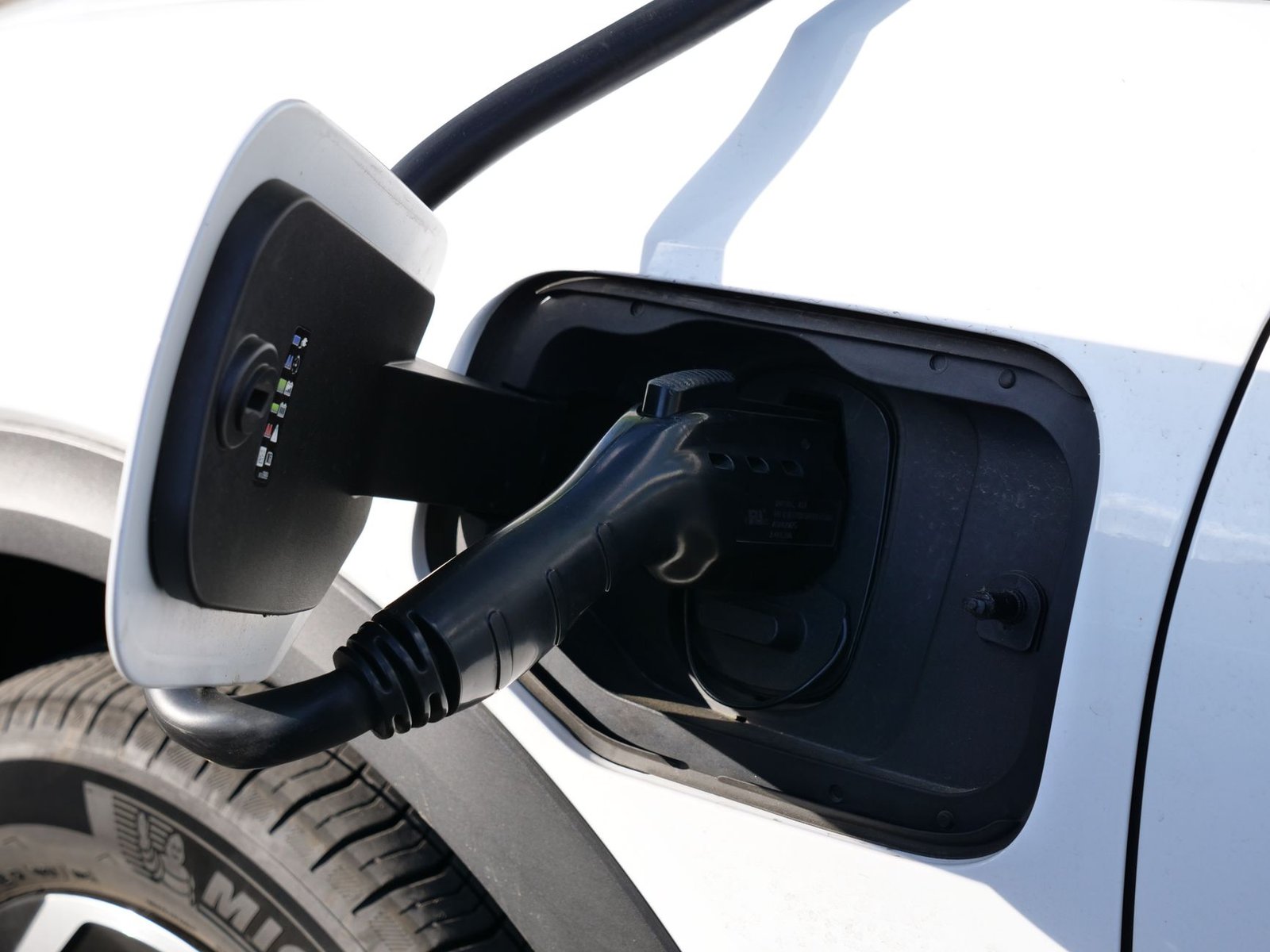
A Tesla adapter melted during a Rivian R2 charging session. Not because the adapter was defective, but because it was doing exactly what older hardware does when you ask it to handle far more current than it was designed for. Tom Moloughney, testing an early R2 unit, watched his older adapter fail under sustained high-amperage charging. The culprit: Rivian’s decision to stick with 400-volt architecture in the R2, which means the truck pulls high current to hit competitive charging speeds. At those levels, the current draw rivals arc welding equipment.
This isn’t a story about faulty hardware. It’s a case study in cost discipline creating downstream consequences. When Rivian chose 400 volts for the R2 instead of the 800-volt systems some competitors use, they avoided significant capital spending on new battery development and production tooling. The company already had 400-volt manufacturing lines running for the R1 vehicles. But that decision shifts complexity elsewhere: to the charging infrastructure, and specifically to the connectors and cables that have to handle roughly twice the amperage of an 800-volt system delivering the same power.
Moving 240 Kilowatts Through Different Architectures
Power equals voltage times amperage. To charge an EV battery at 240 kilowatts, you can either push roughly 300 amps at 800 volts, or roughly 600 amps at 400 volts. Same power delivery, different engineering challenges. Think of voltage as water pressure and amperage as the volume of water flowing through a pipe. High voltage is like having high pressure with a narrow pipe. High amperage is like using lower pressure but opening the pipe much wider.
At 600 amps, the electrical resistance in every connection point generates heat. A contact surface that’s slightly corroded or a spring that’s lost some tension creates a hot spot. Copper conductors have to be thicker. The contact pins in the connector need more surface area. The plastic housing needs to handle higher temperatures without deforming.
Older adapters, particularly those designed when lower current draws were typical, used materials and contact designs adequate for that era. Some included thermal sensors that throttle charging when temperatures rise. Others, like the adapter that melted during the R2 test, had less robust protection. The adapter did nothing wrong by its original specifications. It simply encountered a use case that was more demanding than what it was built for.
Modern high-amperage adapters solve this with beefier conductors, plated contact surfaces that resist corrosion, and thermal monitoring that communicates with the vehicle. These features add cost. A basic NACS adapter can cost around $40. One rated for sustained high-amperage operation runs $120 or more. Rivian provides its own adapter to CARB-state customers at no extra charge, recognizing that making buyers hunt for compatible hardware creates support costs that exceed the adapter’s manufacturing expense.
Why Rivian Stayed at 400 Volts
Rivian’s choice to maintain 400-volt architecture for the R2 was fundamentally financial. Developing and manufacturing an 800-volt battery pack requires redesigned power electronics, updated battery management systems, and retooled production lines. The engineering team at Rivian weighed that investment against the benefits an 800-volt system would offer: faster charging at lower amperage, reduced thermal stress, and lighter copper conductors.
For a company that burned through roughly $1.1 billion in cash during Q3 2023 while producing around 16,000 vehicles that quarter, reusing existing battery architecture makes sense. The R1 platform already uses 400 volts. Production workers know the assembly process. Supply contracts are in place. Quality control procedures are established. Starting from scratch on 800-volt technology would require substantial capital expenditure before the first R2 rolled off the line.
The trade-off shows up in the charging infrastructure. Porsche, Hyundai, and Kia went to 800 volts specifically to reduce amperage at high charging rates. The Hyundai Ioniq 5 pulls roughly 250 to 260 amps at peak charging. The Porsche Taycan draws well under 400 amps at its peak. Both charge quickly while pulling far less current than a 400-volt vehicle would need for the same power, because they’re operating at higher voltage. Those lower amperage draws put less stress on cables, adapters, and connector contacts.
Rivian bet that adapter compatibility issues would affect a small enough percentage of customers to make the capital savings worthwhile. Most R2 buyers will charge at home on Level 2, where amperage typically stays below 50 amps. Road trips using DC fast charging will work fine with modern adapters. The problem cases are owners using older hardware or third-party adapters not rated for sustained high current.
This calculation depends on several assumptions. First, that the cost of providing free adapters to affected customers stays below the capital saved by sticking with 400 volts. Second, that customer service calls about melted adapters don’t damage the brand enough to affect sales. Third, that the charging network continues maturing in ways that reduce amperage-related problems. Tesla’s decision to offer adapters rated for high sustained current suggests they see enough high-amperage vehicles coming to market to make those products viable.
Real Costs of High-Amperage Failures
When Tom Moloughney’s adapter failed, it created a data point about real-world charging behavior that Rivian’s engineers needed. Early testing under controlled conditions doesn’t replicate every possible combination of adapter age, contact wear, ambient temperature, and charging duration. Finding failure modes before mass production beats discovering them through thousands of customer incidents.
The direct cost of a melted adapter is minimal. Replacing the hardware runs $40 to $150 depending on the unit. The indirect costs matter more. If a customer’s adapter melts at a charging station, they’re stranded until they get a replacement. That generates negative social media posts, calls to customer service, and potential safety scrutiny if the failure creates visible damage. Rivian needs to calculate how many of these incidents they can absorb before the reputational cost exceeds the capital saved by using 400-volt architecture.
Some manufacturers would have engineered around this by limiting charging current in software. Cap the R2’s peak current lower and the adapter problem largely disappears. But that means slower charging than competitors, which affects the vehicle’s market positioning. The R2 targets buyers who want much of the R1’s capability at a lower price point. Charging speed is part of that capability.
The smarter play is to control the adapter supply chain. By providing NACS adapters directly, Rivian ensures those units handle the required amperage. For customers in non-CARB states who need to purchase their own adapters, clear communication about amperage requirements prevents most problems. The few who ignore warnings or use old equipment become edge cases rather than systematic issues.
Three Paths to Resolution
Older adapters will age out of use as they wear out or owners replace them with newer hardware. The adapter market will respond to demand for high-amperage units by producing more options at competitive prices. And charging networks will upgrade equipment to handle higher currents as fleet composition shifts toward vehicles like the R2.
Tesla’s decision to open its Supercharger network to other manufacturers accelerates this process. Its adapters are built for high sustained current because vehicles like the Cybertruck draw heavily. As more non-Tesla vehicles access Superchargers, the installed base of high-amperage adapters grows. Market forces push toward standardization on hardware that works with the highest-current vehicles, since those adapters also work fine with lower-current vehicles.
The longer-term question is whether 400-volt architecture remains viable as charging speeds increase. To hit 350 kilowatts with a 400-volt system requires close to 900 amps. That’s beyond what current connector technology reliably handles. Rivian will eventually face the same capital allocation decision other manufacturers already made: invest in 800-volt systems or accept a ceiling on charging performance.
For the R2, that decision point lies several years out. The vehicle targets a price point where 240-kilowatt charging is competitive. Most buyers won’t regularly charge faster than that. By the time market expectations shift to 350+ kilowatts as table stakes, the R2 will likely be due for a major refresh anyway. Rivian gets to delay the 800-volt investment until its production volume and cash flow can support it without threatening the company’s survival.
Rivian’s next-generation vehicles after the R2 will show whether they stick with 400 volts or make the jump to 800. If they continue with 400, it signals confidence that charging infrastructure will adapt to high-amperage vehicles. If they switch to 800, it means the costs of managing high-amperage charging exceeded the savings from reusing existing battery technology. Either way, the melted adapter that started this discussion will have provided useful data about where the limits actually are.