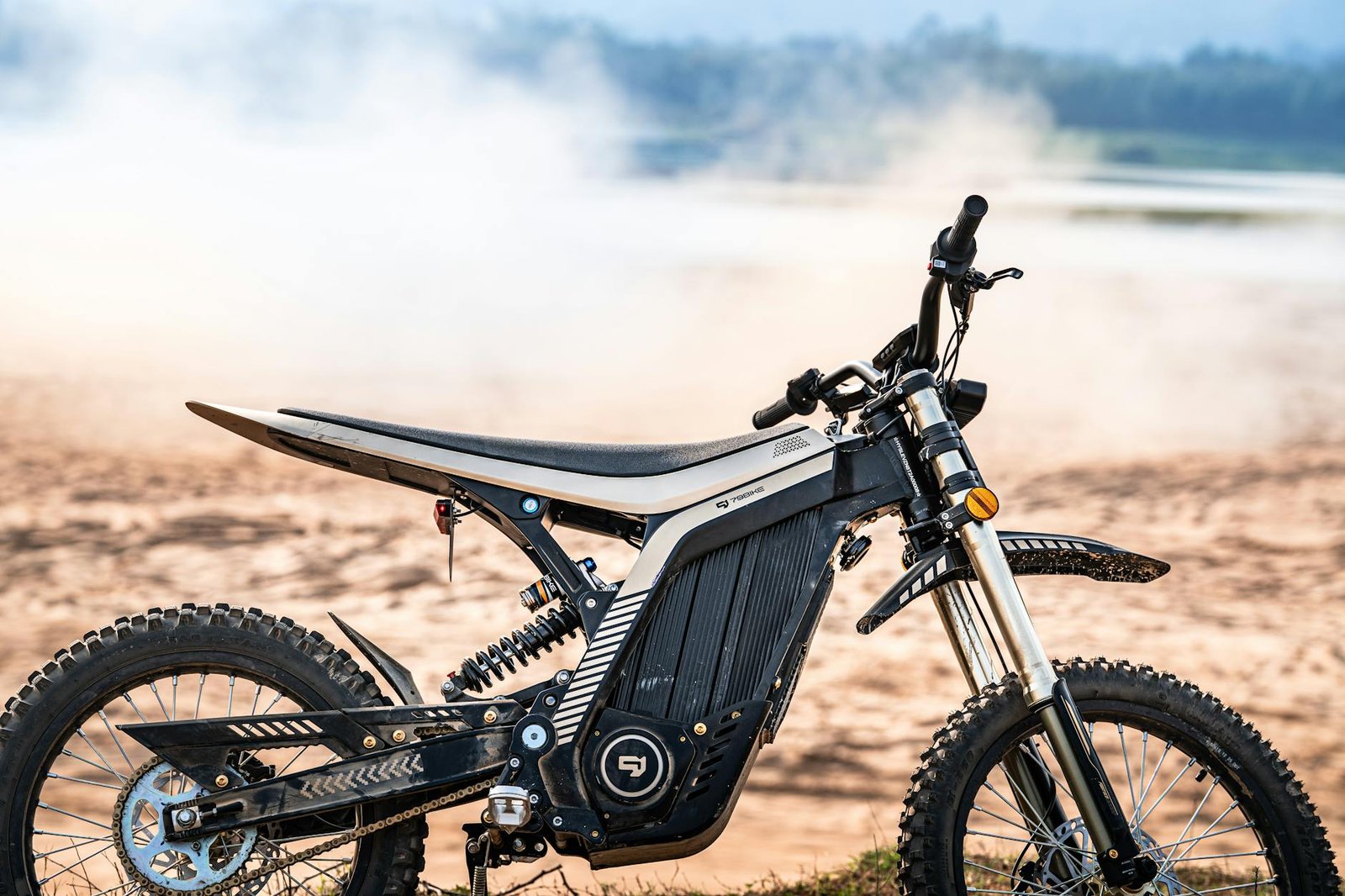
A rider leans into a berm on a motocross track, throttle wide open on a new electric dirt bike. The spec sheet says 60 mph top speed. The manufacturer’s press release uses words like “motorcycle-class performance” and “full-power output.” The rider feels the instant torque, hears no engine, sees the number on the display. Parity with gas bikes seems within reach. Yet the number that matters most isn’t on the spec sheet at all.
The Performance Theater
Electric dirt bike marketing has converged on a familiar playbook: quote the top speed, tout the torque, show a rider getting air on a tabletop jump. The 60 mph figure appears in nearly every product announcement because it sits just above the threshold of what most riders consider “real motorcycle” territory. Faster than a Honda CRF230F (which tops out around 65 mph), close to a CRF250R (around 70 mph). The number signals legitimacy.
This framing comes from the street motorcycle world, where top speed and acceleration define usability. A 600cc sportbike that can’t do 150 mph is gimped. A cruiser that can’t merge onto a highway is dangerous. Those constraints don’t apply to dirt bikes. A motocross racer spends most of a race between 15 and 35 mph. Enduro riders rarely exceed 40 mph in the woods. The 60 mph spec answers a question nobody on dirt is asking.
What Actually Limits a Dirt Bike
The binding constraint on a dirt bike is power-to-weight ratio across a sustained effort. A 450cc motocross bike produces around 55 horsepower and weighs about 240 pounds wet. That’s 0.23 hp per pound, available for the entire 30-minute-plus-two-lap moto. The engine doesn’t derate. The fuel tank doesn’t run dry after eight minutes. A rider can hold the bike wide open on a straight, back off for a corner, then pin it again without worrying whether there’s enough juice left to clear the next jump.
An electric dirt bike with comparable peak power (many now claim 50+ hp) weighs 260 to 290 pounds depending on battery size. Heavier, but close. The issue is duration. A typical electric motocross bike with a 5 to 6 kWh battery pack can deliver full power for about 15 to 20 minutes of aggressive riding before the battery management system begins cutting output to preserve cell life and prevent overheating. By lap four or five of a typical moto, the bike that felt like a 450 now feels like a 250. By lap seven, it’s a 125.
The power curve doesn’t just drop. It becomes unpredictable. A rider approaching a triple jump needs to know exactly how much thrust will be available at the face. On a gas bike, that’s a function of RPM and throttle position, both of which the rider controls. On a battery bike nearing depletion, it’s a function of state of charge, cell temperature, and how hard the previous three laps were. The bike that cleared the jump on lap two might come up short on lap six, same approach speed, same throttle input.
The Truth Buried in the Fine Print
Some electric dirt bike manufacturers do publish runtime figures, but they’re qualified with phrases like “up to 60 minutes of trail riding” or “approximately 25 minutes in MX conditions.” Best-case scenarios: moderate temperature, smooth power delivery, a rider who isn’t holding it pinned. Actual motocross use at race pace drains the battery faster because motocross demands maximum power in short bursts, which generates more heat and requires more aggressive thermal management.
The 60 mph top speed, meanwhile, remains technically true. The bike can hit that speed on a long straight, at least for the first half of the battery. The spec isn’t a lie, just irrelevant to the use case. It’s like marketing a rock-climbing rope by its tensile strength in a lab: the number is real, but climbers care about dynamic elongation and impact force, not static load capacity.
Why Manufacturers Lean on Peak Numbers
The focus on top speed and peak horsepower persists because those numbers are easy to communicate and easy to compare. A buyer scrolling through product pages can instantly rank options: 60 mph beats 50 mph, 55 horsepower beats 40 horsepower. The comparison feels objective. Battery capacity in kWh doesn’t mean much to most riders. “Usable runtime at race pace” is harder to quantify and varies with rider weight, terrain, and temperature.
A perception problem compounds this. If a manufacturer advertises “20 minutes of full-power riding,” the response is “that’s not enough.” If they advertise “60 mph top speed,” the response is “wow, that’s fast.” The first number invites skepticism. The second invites aspiration. Marketing gravitates toward the number that closes sales, not the one that defines usability.
What an Honest Spec Sheet Would Show
A dirt bike spec sheet that reflected actual constraints would list sustained power output over time. Show how much the motor derates at 30 minutes versus 5 minutes. Include thermal limits: how many back-to-back motos the bike can handle before needing a cooldown. State charge time not from empty to full, but from race-depleted to race-ready, because a rider at a motocross track doesn’t have three hours between motos.
The accurate claim isn’t “this electric dirt bike matches a gas 450.” It’s “this electric dirt bike delivers 450-class power for 15 to 20 minutes, then steps down to 250-class power for another 10 to 15 minutes, after which it needs a 90-minute charge to repeat the cycle.” Still a useful machine. Viable for practice sessions, trail rides with built-in breaks, and some race formats. Not viable for a full 30-minute-plus-two-lap moto, and won’t be until battery energy density roughly doubles or fast-swap battery systems become standard.
The 60 mph number will keep appearing in press releases because it’s the number people want to hear. Riders who actually race will keep asking about runtime, charge time, and power curves. The gap between the marketed spec and the operational reality is the gap between what sells and what matters.