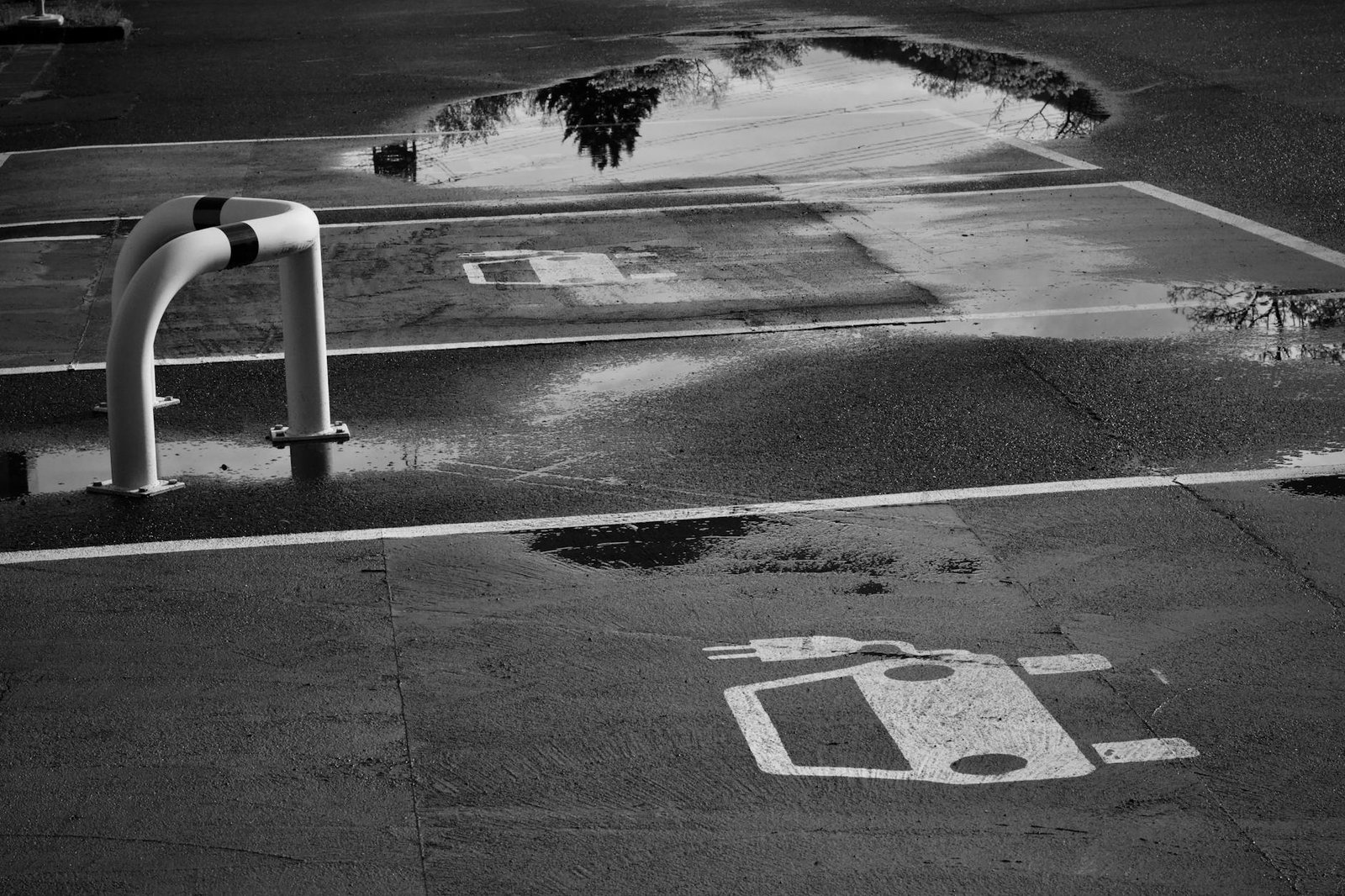
Ohio just allocated $51 million in federal funds for 64 new fast-charging stations. Each site will have at least four 150-kilowatt chargers, bathroom access, and food options. The state already has 19 NEVI stations online and expects 12 more this year. By the end of 2027, drivers will have access to hundreds of new charging ports along major corridors. This is objectively good news for anyone driving an EV in Ohio.
But the conversation around EV charging infrastructure misses where buyers actually make purchase decisions. Chargers exist in growing numbers. They exist on highway corridors designed for road trips. They don’t exist where someone sitting in an apartment parking lot decides whether to buy an EV instead of another Honda Accord.
Ohio has 126,212 registered EVs. Only 5% of new vehicle registrations in September 2024 were electric. The state built the first NEVI station in the entire United States in late 2023, yet first-mover advantage in charging infrastructure hasn’t translated to first-mover advantage in adoption. Something else is limiting buyer behavior, and it’s not the highway corridor buildout that federal policy prioritizes.
Where Charging Actually Happens
Most EV owners charge at home overnight. The Department of Energy’s data shows 80% of charging happens in residential settings. People who can’t charge at home are less likely to buy EVs, which means the population most dependent on public charging is also the population least represented in the EV market. Infrastructure planners systematically ignore this circular problem.
The 64 new Ohio sites follow the NEVI formula: highway corridors, travel centers, locations with amenities. A driver covering 300 miles needs a fast charger roughly every 200 miles, accounting for battery degradation and weather. The federal program targets these gaps first. For road trips, this makes sense.
Road trip anxiety doesn’t stop most people from buying an EV. The decision happens in a driveway or apartment parking lot, not on Interstate 70. A buyer with a two-car garage in Dublin has fundamentally different charging math than a buyer in a Cleveland apartment complex. The first buyer installs a Level 2 charger for $1,200 and rarely thinks about public infrastructure. The second buyer needs to find a reliable charging location within a few miles of home, use it multiple times per week, and build that cost into their monthly budget.
The NEVI program doesn’t address this split.
Neither do most private charging networks. Circle K just announced a partnership with Ionna to install 400-kilowatt chargers at 200+ locations. These are impressive numbers. They’re also primarily focused on convenience store locations along major routes, not residential neighborhoods. The charger you pass on your commute matters more than the charger you might use on vacation, but infrastructure investment flows toward the second category.
The Math Buyers Actually Do
A prospective EV buyer without home charging runs a simple calculation: how much will this cost me per month compared to gas, and how much time will I spend charging?
Assume 1,000 miles per month of driving. A gas car averaging 28 mpg needs roughly 36 gallons. At $3.50 per gallon, that’s $126. An EV averaging 3.5 miles per kilowatt-hour needs about 286 kWh. Home charging at $0.13 per kWh costs $37. Public DC fast charging at $0.48 per kWh costs $137. The EV saves money if you charge at home. It costs more than gas if you rely on fast chargers.
Time adds another layer. Home charging is passive. You plug in before bed. Public charging requires 20-40 minutes at a fast charger, plus drive time to the station. Do this twice a week and you’re spending two to three hours monthly on a task that gas cars handle in ten minutes.
These aren’t abstractions. They’re the actual friction points that determine whether someone clicks “purchase” or walks away. A buyer who needs public charging looks at $1,200 more per year in fuel costs plus several hours of time commitment and decides the gas car is easier. Multiply this across millions of apartment dwellers and the charging network’s highway focus becomes a genuine barrier to adoption.
What Happens When Infrastructure Leads Demand
Ohio’s EV charging infrastructure is objectively ahead of its EV adoption rate. The state built NEVI stations before most others. It has 19 operational fast-charging sites from the federal program alone, with more coming. EVs remain 5% of new sales.
The U.S. added DC fast chargers at record pace even as EV sales growth slowed in 2024. BMW’s U.S. sales illustrate the trend: Q1 2024 saw EV deliveries fall sharply while plug-in hybrid sales also declined. The infrastructure buildout didn’t prevent the slowdown because infrastructure wasn’t the primary constraint.
The constraint is housing stock and parking access. Roughly 40% of Americans live in multi-unit dwellings or homes without dedicated parking. This population needs workplace charging, curbside charging, or reliable fast-charging within a mile or two of home. None of these options are prioritized in federal infrastructure spending.
The NEVI program requires each site to have four ports minimum, rated at 150 kW, with bathrooms and food. That’s appropriate for highway travel centers. For a neighborhood shopping center where drivers top up during weekly errands, it’s overbuilt. A slower Level 2 charger at 7 kW costs a fraction as much to install and works fine for someone spending 90 minutes at a grocery store or gym. But NEVI funds can’t be used this way. The federal money flows to fast chargers in specific locations, regardless of whether that’s what converts buyers.
Industry Coverage Assumes The Wrong Buyer
Most charging infrastructure announcements frame the buildout as progress toward an inevitable EV future. Ohio gets 64 new sites, and coverage emphasizes the growing network. Circle K partners with Ionna for 200+ locations, and the story focuses on 400-kilowatt dispensers and dual-connector compatibility.
This framing assumes the marginal EV buyer is someone who already wants an EV but worries about charging availability on road trips. That buyer exists. They’re also not the buyer who moves the market from 5% to 20% penetration.
The next wave of buyers includes people who park on the street, rent apartments, or don’t have $1,200 to spend on home charging equipment. They need charging to be as convenient as gas, which means accessible within their normal routine. A highway corridor charger 40 miles away doesn’t solve this. A fast charger at the Walmart they visit weekly gets closer, but only if the pricing makes sense and the charger actually works when they arrive.
Reliability remains inconsistent. Data from 2024 shows roughly 25% of charging attempts at public stations result in failures due to payment system errors, broken cables, or software glitches. A buyer who relies on public charging can’t tolerate a one-in-four failure rate. They need the infrastructure to work every time, the way gas stations do. Until reliability matches convenience, the infrastructure numbers overstate the actual capacity.
Signals Worth Watching
Two metrics indicate whether charging infrastructure is reaching the buyers who need it: the percentage of chargers located in residential neighborhoods versus highway corridors, and the ratio of Level 2 to DC fast chargers in urban areas.
New installations clustering near apartment complexes, shopping centers, and workplace parking signal a shift toward serving the daily-use case. If the ratio stays tilted toward fast chargers on interstates, the buildout continues optimizing for the road trip scenario that affects buying decisions less than planners assume.
Pricing convergence is the other signal. Right now, public fast charging costs more than gas in many markets. If per-kilowatt-hour prices drop below $0.30, the math shifts for buyers without home charging. Network operators have little incentive to cut prices when demand is supply-constrained, so watch whether competition from new entrants like Ionna forces pricing down.
Ohio’s $51 million investment will add real capacity. Whether that capacity reaches the people who need it to justify buying an EV in the first place remains unclear. Highway chargers enable ownership. Neighborhood chargers create buyers.